

Drop Site is a reader-funded, independent news outlet. Without your support, we can’t operate. Please consider becoming a paid subscriber or making a 501(c)(3) tax-deductible donation today.
Story by Aunnab Alman
KHARTOUM, Sudan—In what has become an increasingly frequent feature of daily life in large swathes of Sudan, Afifa Mohammed spent most of Tuesday in her small home in Al-Asal south of Khartoum without electricity. The power went out at 10 a.m. and did not return until close to midnight.
Like millions of other Sudanese displaced by the country’s brutal civil war, Mohammed was forced to flee her hometown of Bara, North Kordofan, with her children in March. Added to the hardship of displacement, she now has to contend with a lack of electricity.
She stays awake late into the night when power is available and rushes to complete tasks that require electricity—like pumping and storing water. The family now buys small quantities of food daily because they can no longer depend on refrigeration. There is no reliable schedule of power cuts. Some days, electricity comes on during the day before cutting out after sunset. Other days, the pattern is reversed.
Sudan’s electricity network has been severely damaged over the last three and a half years of war with civilian infrastructure being targeted by both the Sudanese Armed Forces (SAF) and the paramilitary Rapid Support Forces (RSF). Yet a particularly intense wave of drone strikes at the end of October and into November targeting power stations, fuel supplies, and electricity infrastructure has brought the country’s power grid to the brink of collapse. The United Nations children’s agency (UNICEF) warned recently that not a day had passed during the last week of October without a drone striking a power station in Sudan.
“In just over two weeks between October 20 and November 4, 29 drone strikes, attributed to the Rapid Support Forces, hit electricity facilities and fuel stations across 11 states, triggering widespread power blackouts and further fuel shortages affecting millions far from the conflict frontlines,” the United Nations Human Rights Office said in a statement this week. “These drone strikes had a devastating impact on civilians and essential services, causing power outages that disrupted health services including dialysis and surgical procedures, access to clean water and food production.”
Two weeks after the wave of attacks, major substations remain out of service. Repairing some of the country’s most important power facilities could take months or longer, Shaker Ismail, an engineer with the Sudanese Electricity Company, told Drop Site News.
Across parts of the country, electricity is being rationed through planned cuts that do not adhere to a regular schedule, while hospitals, water systems, farms, and businesses struggle to operate on an already weakened grid. Replacement transformers must be manufactured abroad, spare parts are scarce, and the threat of further attacks is complicating efforts to restore power.
Ismail said the recent wave of attacks damaged some of the most difficult and expensive components to replace, including high-capacity transformers and digital control systems. Unlike smaller electrical equipment, the transformers cannot be purchased from local suppliers and instead must be manufactured to order in Europe or Asia to match the specifications of individual power stations. Manufacturing, shipping, and installation can take several months to more than a year, he added, particularly when equipment must be transported through a country torn apart by war.
A single large transformer can cost millions of dollars while Sudan’s electricity authorities face shortages of foreign currency, Ismail said. Additional shortages in essential supplies, including cables, circuit breakers, and insulating oil, have exacerbated the crisis while reserve stocks have been depleted following the destruction of major warehouses in Khartoum.
The Sudanese military-backed government has accused the RSF of carrying out attacks on electricity infrastructure, and the UN also cited the RSF regarding the latest wave of strikes. While both warring parties have targeted civilians and committed human rights abuses, the RSF has been accused of the most serious crimes, including actions in the group’s takeover of El Fasher in 2025 that bore “the hallmarks of genocide,” according to a UN Independent International Fact-Finding Mission for Sudan.
The conflict erupted in April 2023 when a long simmering rivalry between the two factions exploded into fighting. At least 150,000 people have been killed, with some estimates running far higher. Some 14 million have been forced from their homes and the International Rescue Committee says more people face famine in Sudan than in the rest of the world combined.
As the war between the SAF and the RSF continues to rage, the threat of renewed attacks has created another obstacle to restoring the power grid. According to Ismail, foreign companies and potential international donors are reluctant to finance repairs or send specialist engineers into areas where installations could be struck again.
One of Sudan’s most important power stations, the Um Dabakir thermal power plant in White Nile State, was badly damaged in an October 29 strike that forced it to shut down. The station supplied major parts of White Nile and North Kordofan states, supported the wider grid serving Khartoum and Al-Jazirah, and provided electricity used by water-treatment facilities, hospitals, and agricultural projects, Ismail said.
Communities around Kosti, Rabak, and Al-Obeid, including large numbers of people displaced by the war, depend on services connected to the affected network. Restoring the station would require four replacement main transformers, reconstruction of its control room and electrical feeders, and maintenance of three damaged generating units, according to Ismail. He estimated that the repairs would cost tens of millions of dollars and take at least several months.
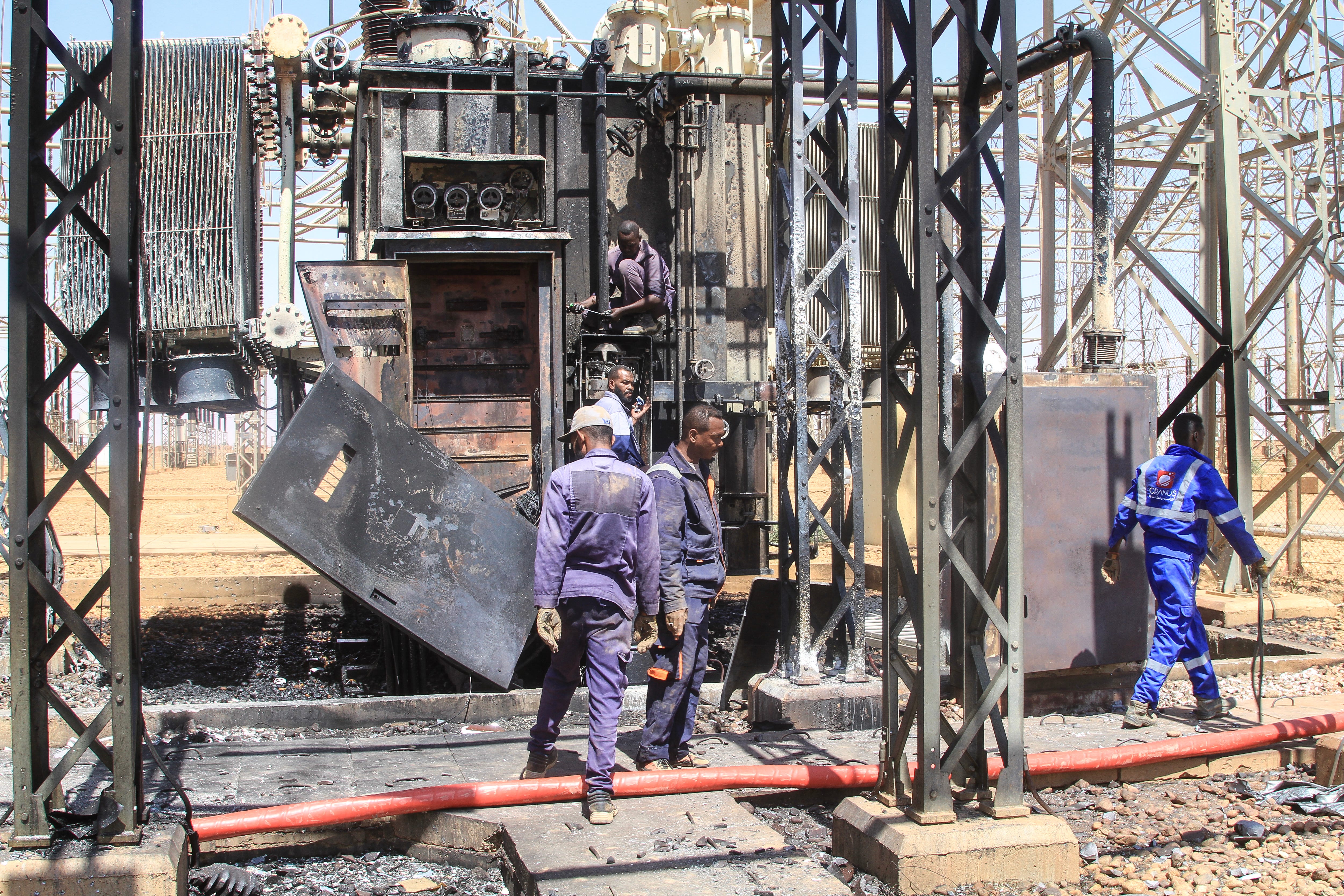
In Khartoum, the Al-Markhiyat substation west of Omdurman was also put out of service following a strike on October 27. The facility is a major connection point for electricity transmitted from Merowe Dam to Omdurman, Bahri, and parts of the capital. Its disruption also affected water infrastructure and hospitals connected to the network. Initial estimates suggested repairs could be completed within 10 days. But Ismail said the damage required imported transformers, high-voltage insulators, and other equipment unavailable locally. Affected areas continued to experience prolonged outages and scheduled power cuts as of this week.
The Sudan Electricity Holding Company and Ministry of Energy have yet to publicly announce the restoration of the major facilities damaged in the attacks. On November 15, distribution transformers were installed to restore supplies to Khartoum’s Central Market and Local Market. But these localized interventions have not resolved the wider damage to the transmission network.
Effects Ranging from Dialysis to Agriculture
At Abdullah Sheikh Al-Jumaih Hospital in Dongola, Northern State, power cuts have interrupted patients during dialysis treatment. Dr. Rasha Abdullah, a physician at the hospital, told Drop Site that a power cut in early November caused at least one dialysis machine’s electrically powered blood pump to stop functioning, leaving blood in the tubing and filter at risk of clotting before it could be returned to the patient. Abdullah scrambled to use the machine’s manual emergency mechanism to return the blood to the patient’s circulation.
“The medical situation in the Northern State is critical, as hospitals rely on electricity for up to 98 per cent of their equipment and lighting,” Abdullah said. She added that the power cuts have also disrupted the hospital’s medicine storage.
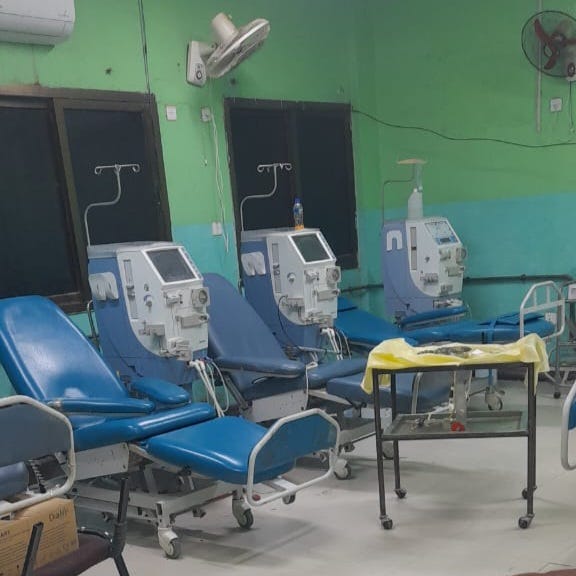
During one prolonged outage, the hospital’s refrigeration systems stopped functioning for an entire day. With no alternative available, staff were forced to discard quantities of heparin, a medication used to prevent blood clotting during dialysis, because they could no longer ensure that the affected supplies had been stored under the proper conditions, Abdullah said.
Attacks on power infrastructure are also disrupting water supplies. “The right to water deteriorated significantly, particularly as prolonged electricity cuts, fuel shortages, attacks on infrastructure and disruptions to water-pumping systems affected access to safe drinking water,” the UN Human Rights Office said in a recent report.
Workers and farmers across the economy are being affected by repeated blackouts.
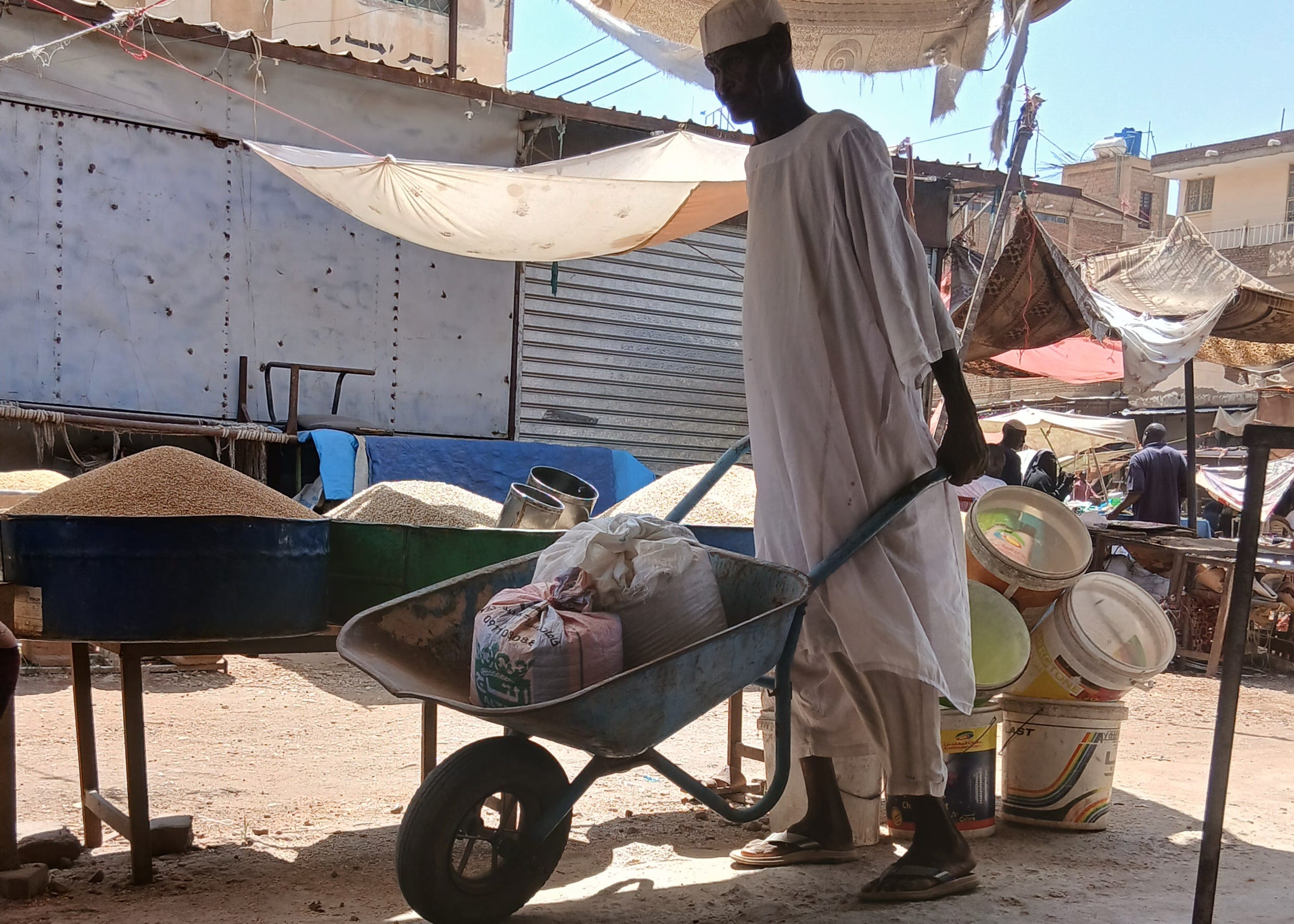
At Al-Lafa market, south of Khartoum, grain mill owner Mohammed Al-Mashkour Ali said that after the recent wave of attacks, electricity in his area was available only between midnight and 7 a.m. He has taken to working alone at night, grinding as much grain as possible before customers arrived the following day.
“During the day, the electricity is completely cut off,” Ali said. “Customers come to buy grain and have it ground, but I am unable to meet their demands.”
He initially tried using a small generator, but rising fuel prices made it too expensive to operate. “In the early days, I tried relying on a small generator, but the rise in fuel prices caused me financial losses with little return, so I stopped,” he said.
In Al-Jazirah State, farmer Sahar Mohammed said electricity shortages had disrupted the processing of agricultural products, even in areas where irrigation does not depend directly on the national grid. Mills and oil-processing facilities rely on electricity, while the cost of operating diesel-powered alternatives has increased. In Northern State, farmer Abu al-Qasim Muhammad Ahmad said the shutdown of the Al-Daba substation had left his area on an alternating electricity schedule: one day with power, followed by one day without it. He said the irregular pumping has damaged his alfalfa and orange crops.
Farmers who switched to diesel-powered irrigation faced higher costs and fuel shortages. Ahmad estimated that his production costs had doubled. He feared that continued disruptions would affect preparations for the winter growing season, particularly for crops of wheat and fava beans.
Sudan’s electricity network had suffered extensive damage before the intense wave of drone strikes that began in late October. Before the latest attacks, national generation capacity had fallen from approximately 4,400 megawatts before the war to around 1,100 megawatts, according to the Associated Press.
Merowe Dam is now the last major power source in the country, providing more than 70% of the country’s electricity and making transmission facilities that distribute its output to other parts of the country even more critical.
Ismail estimated that approximately 70% of Sudan’s electricity infrastructure had been affected by the conflict and that the cost of repairing the wider network could exceed $3 billion, though he warned the lack of comprehensive records made it difficult to establish the full extent of the destruction. The recent attacks have compounded that damage by disabling facilities that distribute electricity between regions.
According to Ismail, areas still connected to the grid are relying on load-sharing arrangements and emergency rerouting of electricity. Some communities receive power on alternating days, while others experience prolonged scheduled and unscheduled cuts.
In parts of White Nile, North Kordofan and other areas dependent on severely damaged facilities, outages can last considerably longer.
Introducing alternative energy systems, including solar power, would reduce the dependence of hospitals and agricultural projects on the national grid. Yet those systems also require financing, equipment, and maintenance at a time when Sudan’s public institutions are struggling to fund even basic repairs.
“A worrying trend is the recent intensification of drone strikes targeting power stations and fuel supply,” the UN Human Rights office said this week. “The parties to the conflict must protect civilians and uphold their international law obligations—the world is watching,” said UN High Commissioner for Human Rights Volker Türk.
This story was produced in collaboration with Egab.