

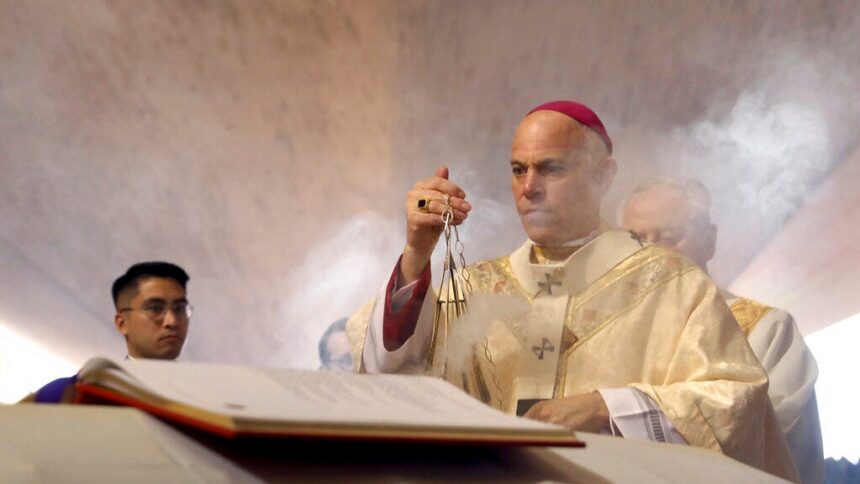
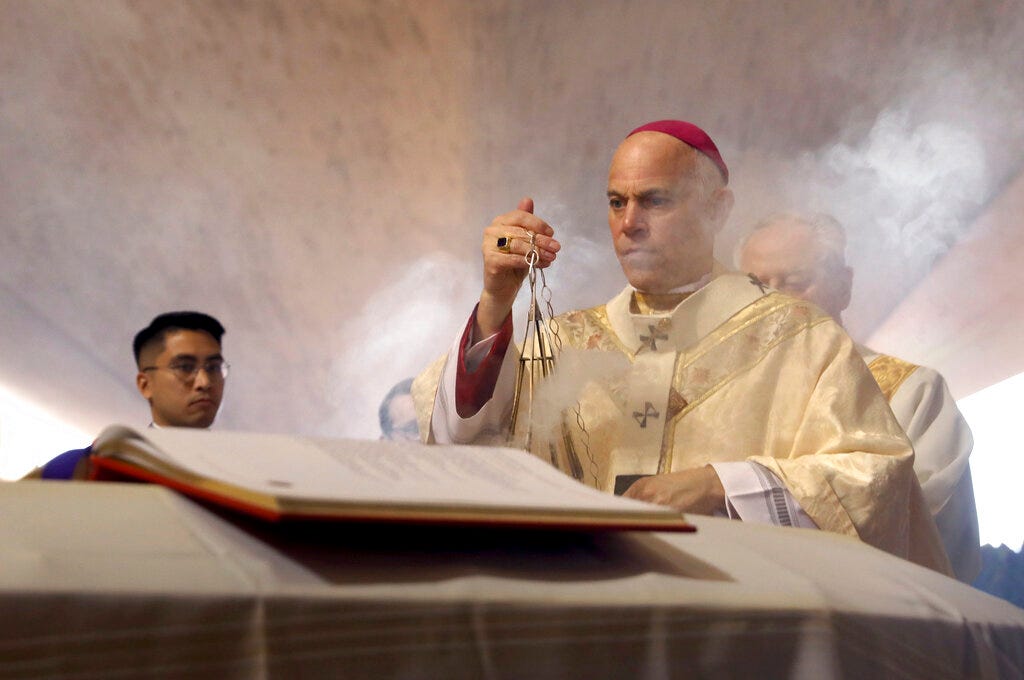
As archbishop of San Francisco, I serve in the city where some of the world’s most powerful AI systems are being developed. The people building them are making decisions that will shape how billions of us live. In my conversations with some of these developers, I’ve been struck by their concern about the dangers of the technology they’re creating—and perhaps more surprisingly, their willingness to turn to the Catholic Church for moral guidance.
Some are practicing Catholics, and some belong to different faith traditions, while still others profess no religion. Yet they share a belief that questions about the proper use of such extraordinary power cannot be answered by technological expertise alone. Many of them, even those without religious belief, have read Magnifica Humanitas, Pope Leo XIV’s first encyclical. I have been impressed by how much they appreciate the guidance it offers. Released in the spring, it is the first major teaching document of his papacy, devoted to a single question: how to safeguard the human person in the age of AI.
So, how can the Church help us navigate the unpredictable terrain of this technological frontier?
It has confronted such questions before. In the late 19th century, factories and railroads were remaking the world at dizzying speed. And while some people made vast fortunes, workers labored long hours in dangerous conditions for wages that barely kept them alive. Thrown into slums and cut off from the villages and guilds that once sustained them, workers had been, as Pope Leo XIII wrote in his 1891 encyclical Rerum Novarum, “surrendered, isolated and helpless, to the hardheartedness of employers and the greed of unchecked competition.”
Read more