

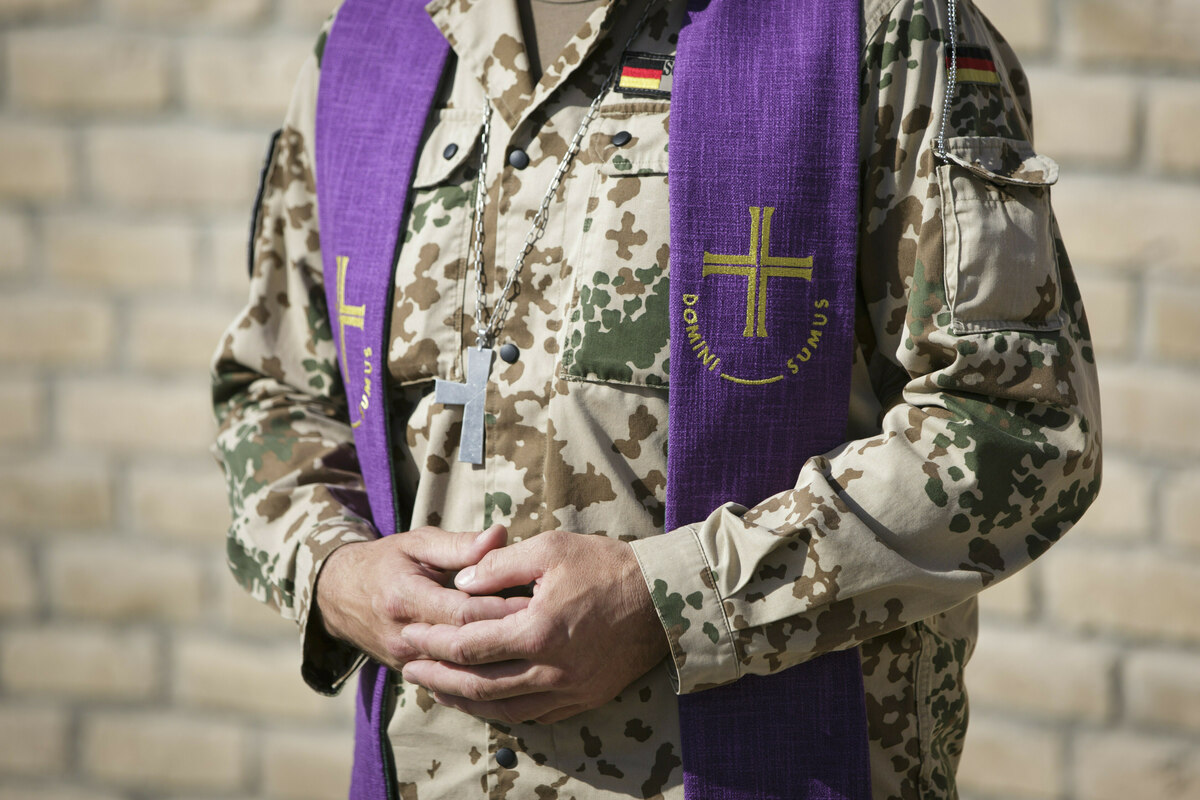
D The Bundeswehr should grow: in terms of personnel, technology and strategy. But while tanks, ammunition and infrastructure are being discussed, one institution is making completely different demands: When presenting the study, the Protestant military chaplaincy demanded “What can and what does military pastoral care do?At the end of January there was a “proportionate growth of the military chaplains”. More soldiers, more priests. A modern parliamentary army needs many things, but not state-organized missionary work. Anyone who seriously talks about a modern Bundeswehr must also have the courage to consider the abolition of military pastoral care.
Historical heritage instead of modern troop support
Die Military chaplaincy is not a contemporary instrument psychosocial care, but a historical relic. Field preachers were already part of the military order in the Prussian army, and wars were legitimized religiously and supported morally. During National Socialism, the Reich Concordat of 1933 expressly guaranteed Catholic military pastoral care. Clergy accompanied the Wehrmacht in its wars of conquest and annihilation – with knowledge of war crimes and mass murder.
After 1945, this model was adopted almost without interruption. To this day, military pastoral care is considered “res mixta”, a joint affair between the state and the churches. This special role was never subjected to serious political scrutiny.
Today there are around 180 military chaplaincies for around 183,000 active soldiers. According to the Weltanschauungen research group in Germany (fowid), in 2020 there was one clergyman for every 500 Catholic or Protestant soldiers. When the Bundeswehr was founded, one clergyman was still responsible for 1,500 soldiers, a tacitly increased care ratio. The demand for further “growth” is an attempt to permanently secure the church’s presence in the Bundeswehr.
The imbalance is particularly clear when it comes to religious equal treatment. There are still no military imams for several thousand Muslim soldiers – supposedly because of their “heterogeneity”. Since 2021, the Bundeswehr has also been setting up a Jewish military chaplaincy, with several rabbis for probably only three hundred soldiers. According to fowid, the costs are around 14,000 euros per Jewish soldier.
Missionary work and ethics of duty from the church
It is openly admitted that military chaplaincy is explicitly about missionary work. In 2018, the former Protestant military bishop Sigurd Rink spoke of an “opportunity” to reach people who are distant from the church. The so-called life skills lessons (LKU) are particularly problematic. It is mandatory for all soldiers and is intended to provide ethical guidance and life support. In practice it is only given by military chaplains.
The high costs are largely non-transparent. The Ministry of Defense admits that the expenditure on military chaplaincy cannot be precisely quantified. Conservative estimates put the figure at over 40 million euros annually, without taking into account pensions, real estate and management structures.
This money would be urgently needed elsewhere: for dilapidated barracks, functioning IT and modern equipment. What soldiers really need is professional crisis intervention and psychological support – not military bishops and missionary work in uniform.
The Bundeswehr is a parliamentary army in a secular state. Their task is national and alliance defense, not religious care or missionary work for their members. Military pastoral care is a historically developed special right of the churches. Incidentally, there was no military chaplaincy in the National People’s Army of the GDR.
The fact that no party has yet dared to abolish military chaplaincy shows one thing above all: how great the political reluctance is to end church privileges even where they are expensive and out of date.