

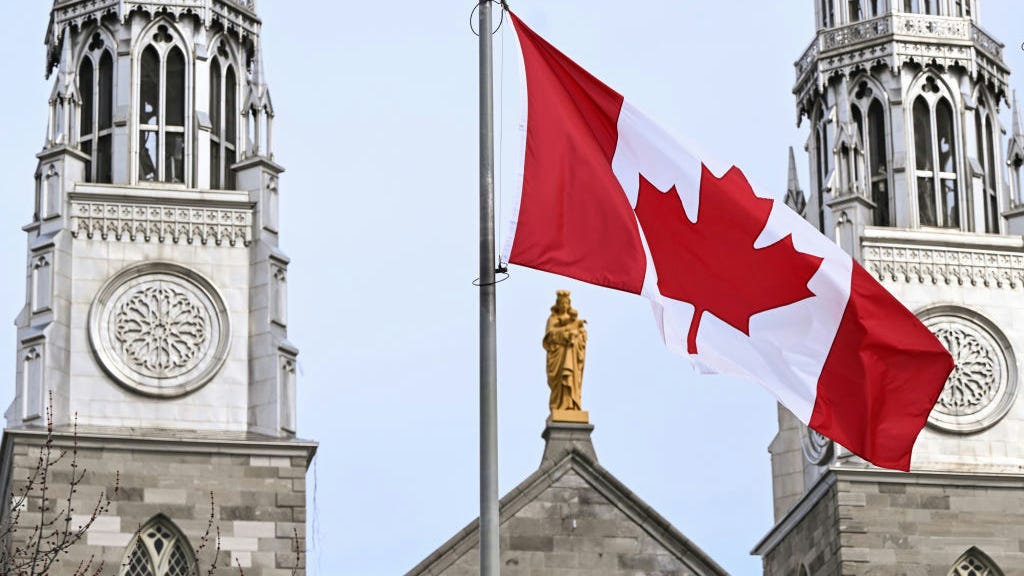
This Week in Canada examines a significant shift in the national identity as new data suggests Christians will soon become a minority within the country. Projections from the Pew Research Center indicate that by 2030, individuals identifying as Christian will account for less than half of the Canadian population.
The demographic transition marks a sharp departure from Canada's historical roots. For over a century, the nation's identity was closely tied to Catholic and Protestant traditions. In 2020, Christians made up 53 percent of the population, a significant drop from the era when approximately 90 percent of Canadians identified with the faith.
A Foundation Built on Faith
Canada’s official symbols and legal documents still reflect its religious heritage. The national motto, "a mari usque ad mare" or "from sea to sea," originates from Psalm 72. The Constitution Act of 1867 established legal protections for denominational schools, and the 1982 Charter of Rights and Freedoms begins by acknowledging the "supremacy of God."
Even the national anthem, "O Canada," which was officially adopted in 1980, contains the line "God keep our land glorious and free." The original French lyrics, penned in the 19th century, are even more explicit, containing references to the cross and courage tempered by faith. While the lyrics remain in place, the population's personal identification with these sentiments is fading.
The Rise of the Unaffiliated
The decline is expected to accelerate over the coming decades. Pew Research Center projections suggest that by 2070, only one-third of Canadians will identify as Christian. This group will be outnumbered by the "nones"—those who claim no religious affiliation at all.
This trend mirrors patterns seen in the United States, though the timeline differs. Currently, more than 60 percent of Americans identify as Christian. However, that number is also decreasing. While Canada is expected to lose its Christian majority by the end of this decade, the United States is not projected to reach that same threshold until approximately 2065.
National Developments and Labor Stances
The shifting cultural landscape coincides with other notable changes across the country. Labor unions are facing scrutiny for taking positions that some critics argue misalign with the interests of their members. Meanwhile, law enforcement agencies are modernizing their approach to public safety. Canada’s most-wanted list is receiving an update through the use of artificial intelligence to better track and identify fugitives.
These changes occur as regional political tensions continue to surface. Issues ranging from separatist sentiments in Quebec to the evolving debate over national immigration levels remain at the forefront of the Canadian political discussion. As the religious makeup of the country transforms, the cultural and social priorities of the electorate are expected to shift alongside these demographic realities.