

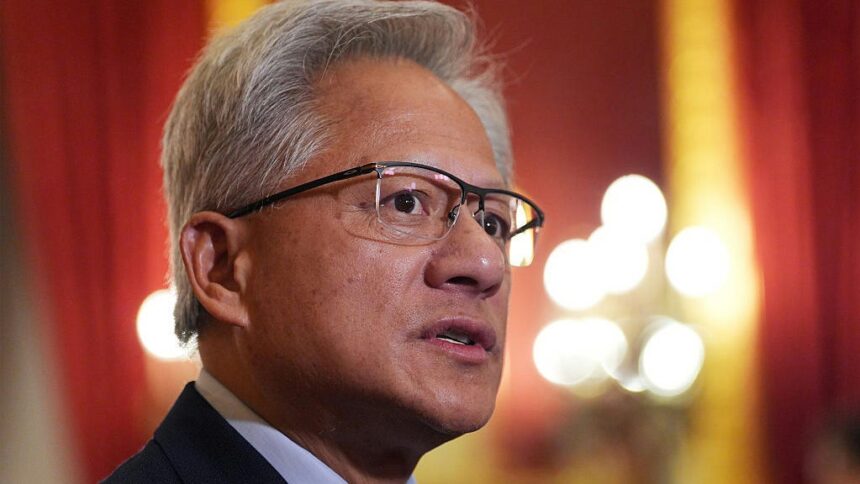
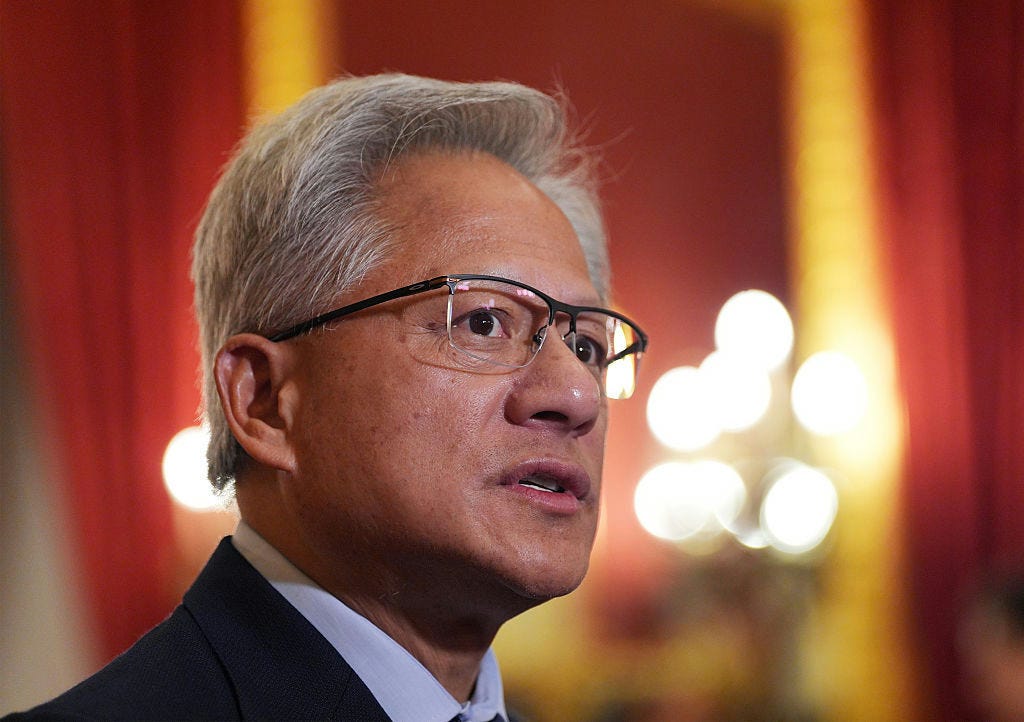
How much is a CEO worth? As I am writing this column, the Nvidia share price has fallen by more than 12 percent since the allegations of Jensen Huang’s affair with an alleged Chinese spy, followed by other allegations of affairs with women who work at Nvidia, and Huang’s subsequent exit from the company. That represents a value loss of about $570 billion, bringing the market capitalization of the company under $4 trillion. If we go back to October 6, the company has fallen in value by more than 30 percent since that date, or about $1.85 trillion. It’s no surprise that, despite everything, the Financial Times reported Sunday that Huang is considering a comeback, backed by his allies in Silicon Valley.
We’ll have a better sense of Huang’s overall value to his company once more facts are in. If his indiscretions drag down the company in the long run, along with the sudden leadership change, that will count against him. And if he schemed to evade U.S. export controls, that would partly overshadow his contributions because of the importance of national security.
But from a purely material standpoint, Huang excelled in co-founding Nvidia, driving its growth aggressively, and seeing how important it was to cultivate the AI sector as a whole to boost the demand for the company’s GPUs and other products.
Huang is an extreme example of a truth I believe is borne out by the evidence: that despite the fulminating about executive pay, many top CEOs are in fact significantly underpaid. As a first-order approximation, one might say he was worth at least $570 billion to Nvidia, far more than he was paid. His net worth previously was estimated at about $200 billion, now probably more in the range of $140 billion, and that likely comprises most of his lifetime earnings in the form of Nvidia stock. Furthermore, the Nvidia crisis has driven down share prices across the AI industry. You could attribute some of that loss to Huang’s departure, which means he was even more underpaid from an economy-wide perspective.
Read more