

In the 1930s, at the time of the Great Depression, a brutal type of event flourished in the United States: the dance marathon. Almost every city held one, and the audience – mostly female – totaled in the millions. Only the winners were generously rewarded; it was a huge deal, especially for the organizers. And the harder the times became, the more brutal the rules: whoever keeps dancing the longest wins.
Some of these marathons lasted weeks, if not months. There were precisely regulated breaks, there was food, but even while eating we often had to continue dancing.
In 1969, Sydney Pollack made a famous film about it that is still worth seeing today: “Only horses are given the coup de grace.” He could Stephen King when, just nineteen, he wrote his first novel, “The Long Walk,” in 1966, which was only published thirteen years later under his pseudonym Richard Bachman.

“The Long Walk: Death March” (USA 2025, director: Francis Lawrence). The DVD is available in stores from around 15 euros.
What King certainly knew was the basis for the film, the magnificently dark novel by Horace McCoy, which was published in 1935, at the height of the madness. This was exactly the kind of merciless hardboiled literature that King still admires today and sometimes writes outside of his main horror work.
Radicalization of the dance marathon
“The Long Walk” (Death March) is a radicalization of the idea of the dance marathon. Only there is no dancing here, but marching quite briskly; The pace was slowed down somewhat for the film, with King’s approval, who explicitly praised the film adaptation anyway. (Which means something, it wasn’t just “Shining” that the master loudly thought was a failure.)
In addition, the field of participants is not gender-mixed. Only men, at King it was boys, here they are a little older. Both the novel and the film take place in a dystopian future; after a war, a fascist oppressive regime prevails; the richly rewarded victory in the march is the participants’ only hope for money, reputation, and a future.
They run. And run. And run
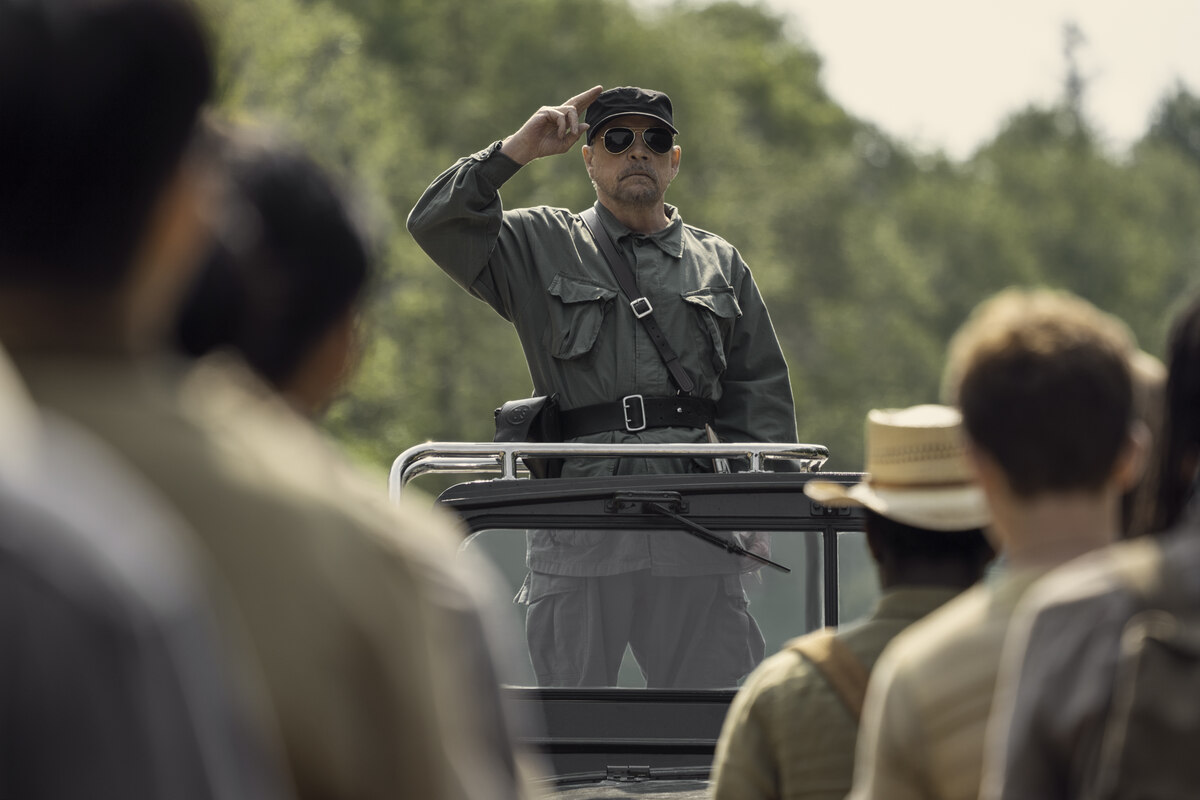
King also has the cynical whipper from Horace McCoy’s novel. Here he is called “The Major”, Mark “Skywalker” (!) Hamill plays him as one-dimensionally as he is meant to be. And the young heroes: they run. And run. And run. And – this is the dystopian aggravation compared to the dance marathons – when they stumble, they are shot one after the other.
This in turn is familiar from a tradition of death feature films that originate from Tom Toelle’s “The Million Game” (1970) through Kinji Fukasaku’s “Battle Royale” (2000) to the “Hunger Games” films.
„The Long Walk“-Director Francis Lawrence is also a “Hunger Games” veteran steeled in the matter. The fact that the plot here focuses so decidedly on running, and when running on talking, and when no longer running on being shot, could invite formal originality. The solid craftsman Lawrence is not the man for that. But at least he keeps things moving. Individual characters are psychologically modeled, mostly close to the novel; as expected, it’s about friendship, love, hope.
We would like to show you external content here. You decide whether you also want to see this element:

The dialogues, well. By the way, the script was written by JT Mollner, who also had success as a director with “Strange Darling”. Because the participants are all men, and young ones at that, it often sounds, perhaps realistically, like a walking men’s locker room. The problem of bodily excretions leads to one or two, sometimes fatal, punch lines. Who sophistication is looking for is at the wrong address anyway. Anyone who wants a nasty plot that consistently follows through on the one thing they have in mind will be well served.