

- The “independent” editorial board overseeing CNN will not be independent
- The deal only applies for five years (and in some cases, less)
- The deal lets WarnerMount opt out of its obligations if there is a strike
- The deal does nothing to guarantee that Paramount stays in California
- The deal is bad for people who care about good movies and TV
- Reminder: None of this had to happen
Four days after Paramount reached a settlement paving the way for its acquisition of Warner Bros. Discovery, the fight against the merger continues.
On Thursday, the groups leading the Block the Merger coalition filed an emergency amicus brief opposing the consent decree signed by Paramount-Skydance and 12 state attorneys general, including Rob Bonta of California. The League of United Latin American Citizens (LULAC) also filed an amicus brief Thursday, arguing that the consent decree failed to address concerns about the effect of the merger on minority communities.
If it goes through, the merger will combine two of the biggest media companies in the world and put tech heir David Ellison, son of Trump ally Larry Ellison, in control of dozens of entities, including Warner Bros. Pictures, HBO, CBS, and — perhaps most worryingly — CNN.
Twelve states filed an antitrust lawsuit claiming the merger would eliminate competition in the movie and TV business and “inflict substantial harm on movie theatres, basic cable distributors, and, ultimately, audiences nationwide.”
As recently as last week, it appeared that the lawsuit might block, or at least significantly delay, the $111-billion merger.
But over the weekend, Bonta caved for unclear reasons — following the lead of other California Democrats like Gavin Newsom, who had been pushing for a settlement. By Monday, the deal was signed, and Ellison was taking a victory lap, telling employees that he hoped to complete the takeover in two weeks. The same day, the Writers Guild of America also announced it had reached a settlement with Paramount, completing the capitulation.
Members of the Block the Merger coalition were baffled by the turn of events. As the dust has settled and the details in the consent decree have become public, it’s apparent that the deal is good for one very narrow constituency — billionaires — and bad for pretty much everyone else.
“We’re all reeling from the fact that the settlement is even worse than we thought it would be,” said Bruce Cohen, an Oscar-winning film producer of movies including American Beauty and Milk, and a member of the steering committee for the Committee for the First Amendment. “We’re trying to make sure that the public understands how bad this really is for the entertainment industry, and for democracy.”
You can read the consent decree for yourself here. In the meantime, here are some of the most concerning takeaways:
The “independent” editorial board overseeing CNN will not be independent
While the antitrust lawsuit focused on the entertainment side of the business, the fate of CNN was also a major concern, especially since the Ellisons reportedly assured Trump they would make major changes at CNN, should they gain control of the network (which was thrown out of the White House press pool last week). We have already seen what the Ellisons have done at CBS.
“To imagine what could happen to CNN, one need look no further than what’s happened to Paramount-owned CBS News since the Ellisons took over last year,” said Jessica A. González, co-CEO of Free Press, one of the Block the Merger groups.
A provision in the settlement will require the merged company (let’s call it WarnerMount) to appoint an “Editorial Independence Board,” which will be responsible for “establishing and monitoring adherence to ethical journalism” at CNN and CBS News.
But its members “will be appointed by and report to the Ellisons,” said González, co-CEO of Free Press. “By definition, that’s not independent. It’s a farce and will do very little, if anything, to stop the Ellisons from the ‘sweeping changes’ they promised Trump.”
The board will consist of five journalists, with a decade or more experience. No more than two of the members can be affiliated with the same political party.
Paramount has 180 days — or about six months — to put the board in place.
“The midterms will be long gone before that board even exists,” Cohen noted.
The deal also does nothing to address concerns about the historic news archives at CNN and CBS, which was a major concern for documentary filmmakers. “At a time when our president is literally removing plaques of our history from national parks, preserving these archives is critically important,” González said.
The deal only applies for five years (and in some cases, less)
The consent decree includes several provisions meant to address concerns about the monopoly that a combined Paramount-Warner Bros. would have over both the theatrical movie business and the cable TV market.
For instance, the deal requires that Paramount and Warner Bros. negotiate separate basic cable distribution deals, instead of negotiating as a single behemoth encompassing more than 50 channels. It also requires a 45-day theatrical release window so that the company can’t rush movies out of theaters and onto streaming platforms.
But the deal only applies for five years, making it a temporary solution to a long-term problem for the industry. Even worse, some of the provisions expire after three years, including protections for movie theater owners that would keep them from paying outrageous fees for WarnerMount movies.
“It may feel good for a while,” Cohen said, “but then it’s going to get really bad.”
Then there’s the very real question of oversight: who is going to ensure that the company follows these rules, especially when blue state AGs already have their hands full? The deal is full of behavioral (rather than structural) remedies, which are difficult to enforce, González said: “They require prolonged attention by state AG offices that are strapped for cash and strapped for resources, so it’s incredibly impractical.”
The deal lets WarnerMount opt out of its obligations if there is a strike
The consent decree includes a force majeure clause which allows the new company to ignore its obligations in case of unforeseen events like war or natural disasters.
But the clause also makes an exception for strikes, which occur with some regularity in the entertainment business.
Force majeure clauses are supposed to be there for events “that the studio or network had no control over,” Cohen explained. But industry strikes are something studios absolutely do have control over.
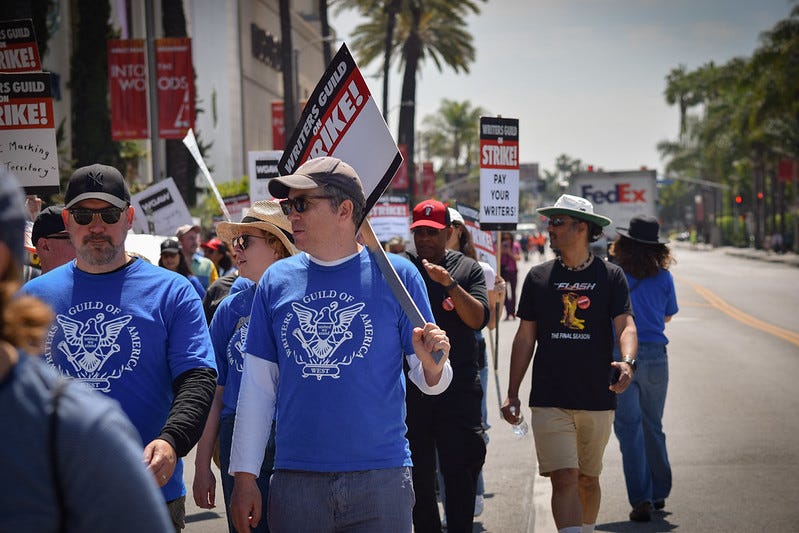
Cohen is alarmed that none of the unions that expressed support for the settlement, including SAG-AFTRA and the DGA, seem to have noticed this clause. “Either they didn’t read the fine print, or they sold the souls of their membership to the devil,” he said. “Either way is a tragedy.”
Speaking of unions, Cohen was also troubled by the WGA’s settlement with Paramount, which required the company to contribute $17.5 million to the union’s health fund. “I literally had this vision of the Ellisons collapsing in hysterics. Are there zeroes missing from this?” Cohen said. “That’s way less than the interest the Ellisons make on their fortune every single day. It’s literally nothing.”
The deal does nothing to guarantee that Paramount stays in California
Ellison had been threatening to take Paramount out of California if the merger was blocked, and it’s widely believed that the relocation threats played a major role in getting the state AGs to cave.
“That’s just blackmail, which you don’t succumb to,” Cohen said. “The fact that Newsom, Bonta, and others fell for it is pathetic, especially when democracy is hanging in the balance.”
“This is just an example of corruption winning, through and through,” he added.
Especially pathetic? There are no provisions in the deal that will actually require the company to remain in California. In a statement, Ellison said that the company would stay in Los Angeles for the foreseeable future. But as we know, a statement is not exactly legally binding.
“You would think that would at least have been part of the settlement, but it’s not,” Cohen said.
If the merger goes through, there will be massive layoffs anyway — about 4,500 jobs will be lost in LA County, according to one report. So it’s unclear how the agreement is a “win for California workers and our creative economy,” as Newsom has claimed.
The deal is bad for people who care about good movies and TV
Back in the ‘70s, Paramount was one of the most exciting studios in Hollywood, putting out edgy, era-defining movies like The Godfather and Chinatown. But that was a very long time ago. These days Paramount is known for producing Paw Patrol sequels, UFC fights on the White House Lawn, and roughly one million shows from Taylor Sheridan.
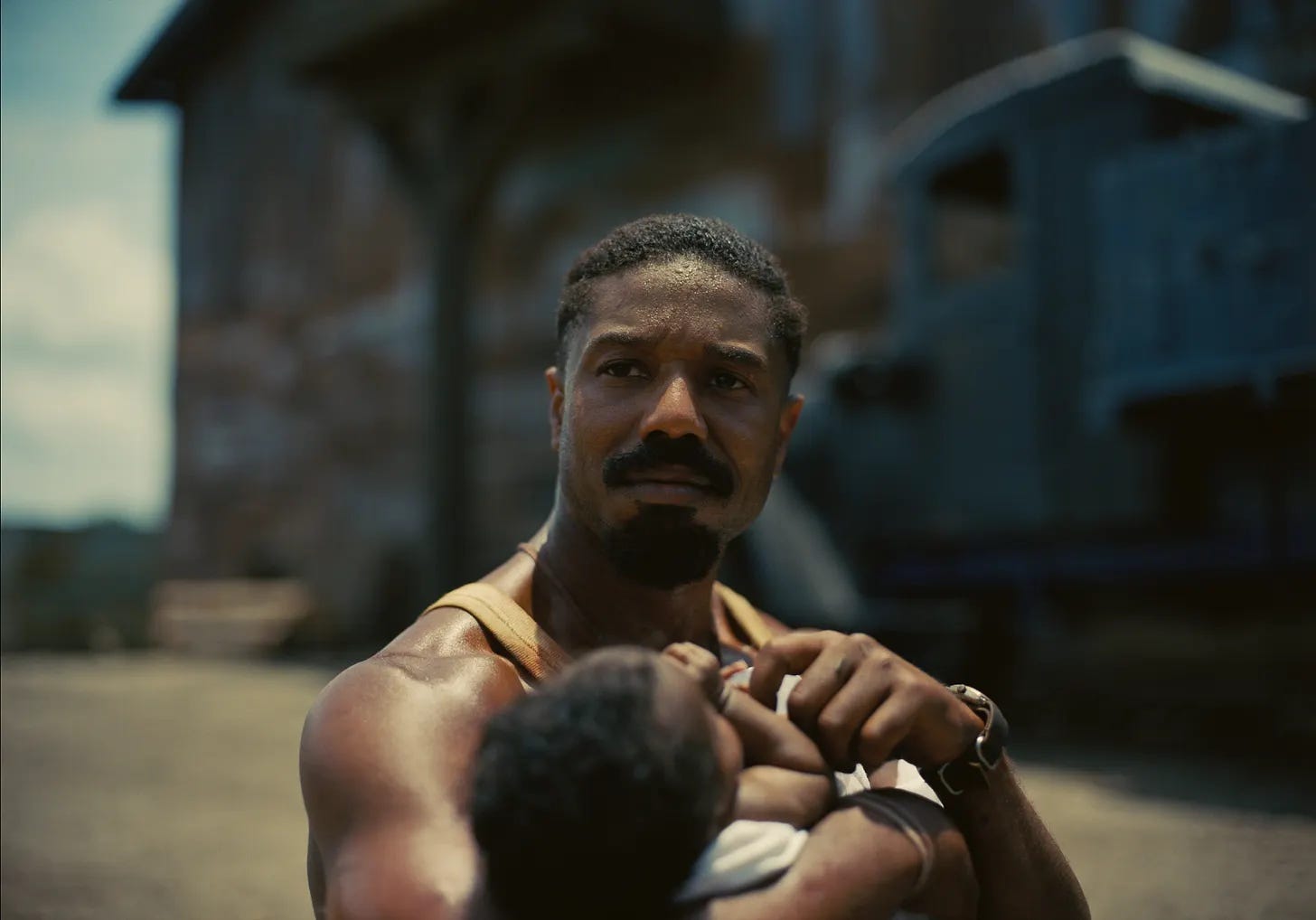
WBD, on the other hand, is home to HBO, a network that has managed to keep making acclaimed shows like The White Lotus and The Last of Us and hard-hitting documentaries —including an explosive film about Elon Musk that’s supposed to air on the network early next year — through several changes in ownership. Warner Bros. Pictures has also been on a creative hot streak lately, with bold, broadly popular movies like One Battle After Another, Barbie, and Sinners.
“Are they still going to have the creative and artistic freedom to make those movies? It’s a huge question mark at this point,” Cohen said. “Creating beautiful, lasting entertainment depends on our freedoms. Any moves towards censoring content, consolidating control, and giving more power to the corporations, the oligarchs, and the billionaires — that’s all bad news for free expression.”
The deal will require WarnerMount to distribute 30 movies a year in the United States, a total that will inch up to 32 in year three — a provision that theoretically addresses concerns about a post-merger decline in production. But only half of those movies, or 15, need to be produced by Paramount-Warner Bros. The rest could be acquisitions of independently produced films or re-releases of old titles.
The deal also includes virtually no provisions about the content of the movies Paramount does produce. “There’s no guarantee that marginalized voices will be heard at all. God only knows what those 15 films will be,” Cohen said.
Although it’s being framed as a win, the 15-movie benchmark also represents a decline in overall output. “Warner Brothers and Paramount combined produced 18 movies in 2025,” Cohen said. “So they’ve actually promised less than they were doing anyway.”
Put simply: fewer movies will get made, and there’s no guarantee of quality or diverse viewpoints.
Reminder: None of this had to happen
The only reason that this merger is even happening is because of a string of bad decisions made by executives who care less about being responsible corporate stewards and building sustainable media companies than about increasing their personal fortunes.
A little bit of history: AT&T acquired Warner Media in 2018, then spun the company off a few years later after saddling it with $58 million in debt. In 2022, Warner merged with Discovery, Inc., and last year CEO David Zaslav put the company up for sale once again.
Netflix won the first round of the bidding war, then abruptly backed out just hours after co-CEO Ted Sarandos met with White House officials. Zaslav could receive a payout of more than a half-billion dollars as a result of the merger, and has already sold hundreds of millions in stock.
Then there’s Paramount-Skydance, which includes CBS, Paramount+, and the remnants of the once-mighty Viacom. Last year, Ellison’s company Skydance finalized its purchase of Paramount, which Shari Redstone decided to sell because she “just wanted to be free” of the media business. (She reportedly made $350 million off of the deal.)
WarnerMount will now have a combined debt of $79 billion. Ellison claims he will save $6 billion through “cost-cutting efficiencies,” but that still leaves the company $73 billion in the hole.
That’s a lot of money. But Larry Ellison is worth about $200 billion, and Oracle brings in billions of dollars per year in government contracts.
“The truth is that the Paramount-Warner Bros. combined entity probably will be an economic failure, especially with the amount of debt the Ellisons are taking on,” González said, “but they don’t care because it’s really just a loss leader for Daddy Ellison’s Oracle.”
Meredith Blake is the culture columnist for The Contrarian