

As a reader-funded independent news outlet, we operate free from the influence of governments, advertisers, and corporate backers. This is essential to our mission: to report on what matters most, beholden only to the truth. In that spirit, we made a commitment to ensure that our journalism is free for everyone, not locked behind a paywall. But that means we rely on the voluntary support of our community of readers. Please consider making a tax-deductible donation to support our work today.
BAGRAM, Afghanistan— “They are back,” said Abdul Maroof, a 38-year-old resident of Kabul. “God knows what they are doing, but they are back and the Taliban are hiding it.”
Maroof had not been to Bagram himself. Like many in the capital, he heard the story from friends, relatives, and social media feeds insisting that foreign military vehicles and low-flying aircraft had been spotted near the perimeter. In Kabul, where political anxiety fuels a relentless rumor mill, the claim is repeated as settled fact. For months, viral videos and online commentary have alleged that U.S. forces quietly reclaimed the sprawling airfield north of the capital—or that the Taliban now manage it under a secret pact with Washington.
In Bagram itself, the story dissolves.
“I heard about these rumors,” said Abdul Latif, 60, a lifelong resident of the area. “Relatives called me from all over asking if the Americans were back. But it’s not true. I was here when the first Americans arrived in 2001. Nothing like that is happening now.”
Every local around the base’s perimeter and adjacent bazaars offered the same account: the only armed men entering and leaving are Taliban fighters. There are no foreign contractors and no Americans. Like Latif, residents report that their phones have been ringing continuously with calls from family members across Afghanistan and throughout the diaspora—all seeking confirmation of the same viral reports. The answer from the gates remains identical: nothing is happening here.
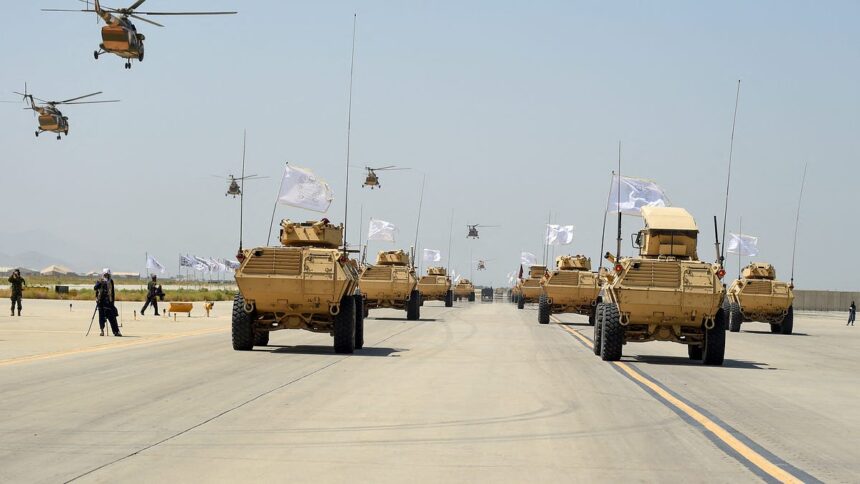
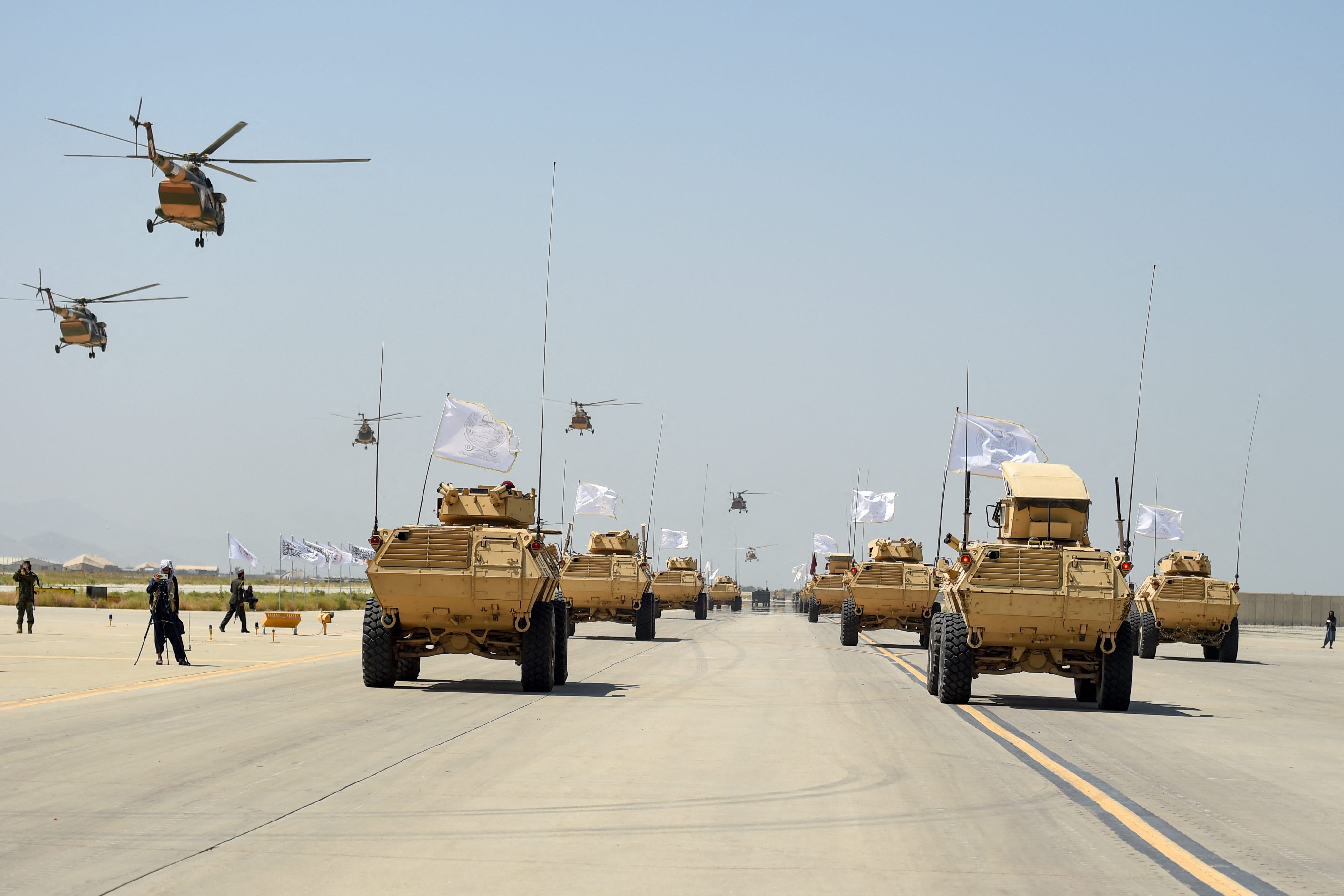
Yet while locals dismiss rumors of an American return, the skies over Bagram have not remained entirely quiet. In late February and early March 2026, amid a violent cross-border escalation between Islamabad and Kabul, Pakistani airstrikes targeted the facility. The Taliban regime claimed its air defense systems intercepted the attack, while local reporting and satellite imagery suggested strikes hit outer sections of the installation. For residents living at the base’s edge, the strikes were a sharp reminder that even without American boots on the ground, Bagram remains a target on the regional chessboard.
What was once the logistical heart of the U.S.-led War on Terror now sits under a heavy, precarious silence. Bagram Air Base’s military lineage runs deep. Built with Soviet assistance in the 1950s—when Washington and Moscow competed for influence in non-aligned Kabul—it became the primary staging hub for the Soviet Army’s brutal occupation in the 1980s, launching airstrikes and combat missions across the countryside. Following the Soviet withdrawal, the base was repeatedly contested during the civil war of the 1990s, eventually becoming a fortified front line between the Taliban and the Northern Alliance.
After late 2001, U.S. forces and their NATO allies transformed Bagram into a massive, heavily fortified garrison. At its peak, it housed tens of thousands of personnel, operating like an isolated American suburb complete with paved avenues, fitness centers, and fast-food chains like Burger King and Pizza Hut. A short distance from these amenities stood the Bagram theater internment facility, where thousands of Afghans were held without trial for years, and where severe prisoner abuse and torture were systematically documented. Bagram also served as a focal point for broader covert networks, linking into nearby CIA dark sites such as the Salt Pit, where detainees were subjected to brutal interrogation methods, including beatings, prolonged isolation, exposure to extreme cold, and other forms of torture.
A Base Washington Wants Back
The persistence of the rumors of an American return relies partly on the base’s current opaqueness. Over the past two years, security and access around the facility have tightened significantly.
During my visit to Bagram, I was accompanied by an officer from the Taliban’s intelligence service, who spoke on the condition of anonymity. He dismissed claims of a foreign troop presence outright.
“It is all fake news,” he said. “We control the entire base. No Americans are here, and we would never tolerate a foreign military presence in Afghanistan. That is why we fought them for twenty years.”
Yet when he attempted to enter the base with me, guards turned us away. Even with his credentials, he could not cross the perimeter.
“Unfortunately, it is out of our hands,” he admitted. “The Ministry of Defense decides who enters.”
This compartmentalization of authority has continued to fuel domestic suspicions about the site.
Strategic interest in Bagram, meanwhile, remains active abroad. In September 2025, President Donald Trump stated publicly that the United States should seek to regain control of Bagram, citing its strategic proximity to Chinese and Iranian borders. Situated in Parwan Province, Bagram offers a prime location to carry out surveillance operations in Central Asia, Iran, Pakistan, and western China. Local residents noted that for years, many residents assumed Washington would never abandon an asset of such strategic value.
War Memories
For many living near the base, the departure of foreign forces marked the collapse of the local economy.
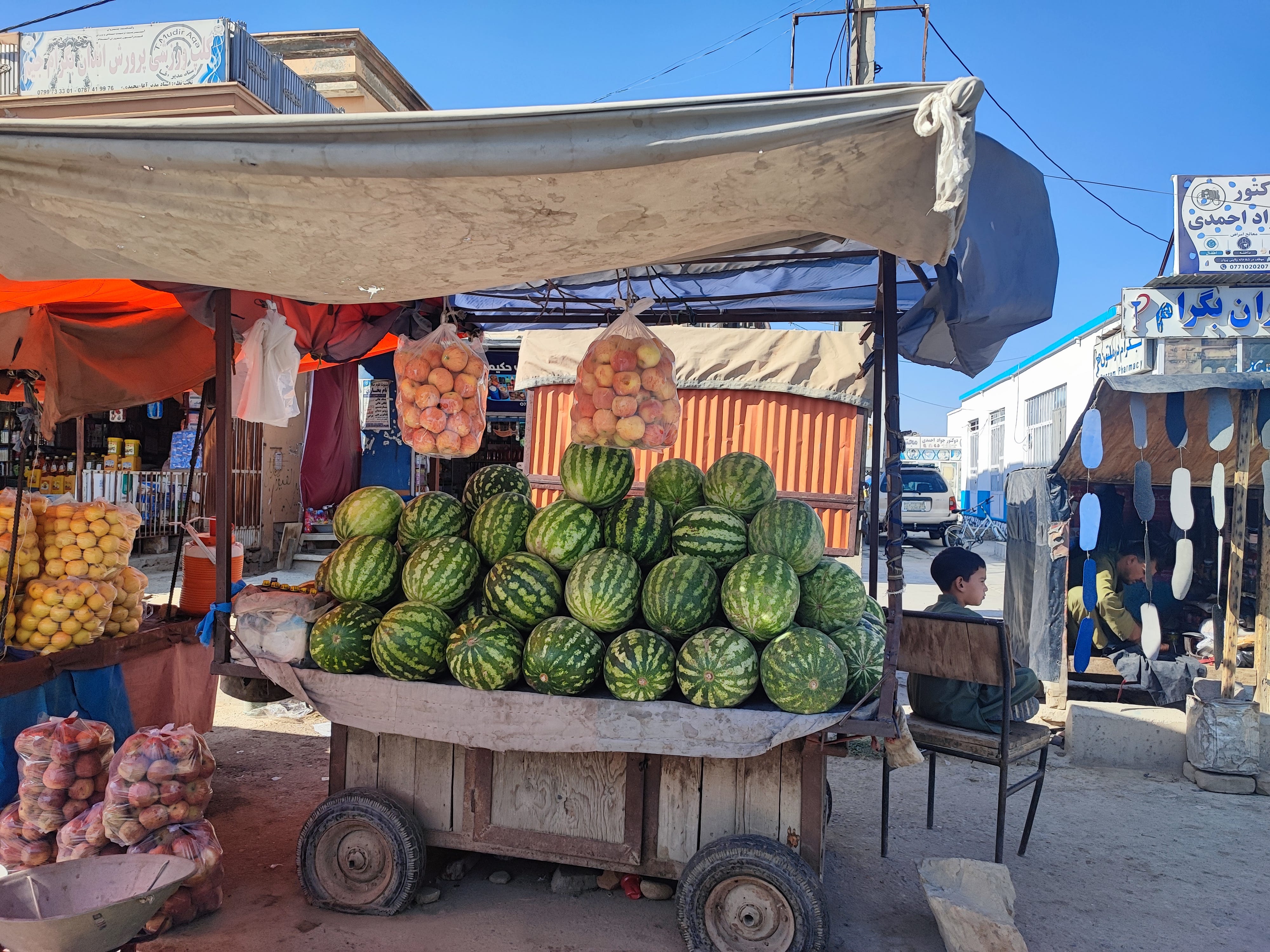
“Business was good when the Americans were here,” said Mohammad Musa, 18, who runs a shop with his family near the base gates. “There were so many people buying goods every day.”
Under the foreign military presence, a complex ecosystem of primary contractors, subcontractors, and service providers injected significant capital into the surrounding villages. While the political and human costs of the war were severe, the financial ecosystem provided livelihoods for thousands of local families.
“We worked and we could feed our families,” Abdul Latif said, speaking openly despite the presence of Taliban intelligence personnel nearby. “For us, that part was not bad.”
The accompanying officers listened to these statements without intervening or penalizing the speakers, though they occasionally countered with official regime rhetoric regarding national sovereignty and victory over foreign occupation.
These interactions reflect a nuanced reality of the conflict: for those living in its immediate radius, the foreign presence was not experienced solely through the lens of military occupation, but also as a commercial opportunity. Five years into Taliban governance, remnants of that economic dependence linger in local memory.
For others, Bagram remains defined by the systemic abuses that took place inside its prisons.
Throughout the war, the base’s detention center operated largely outside international legal oversight. Detainees were held for years without charge or legal representation. Notable instances of fatal abuse, including the 2002 deaths of Afghan detainees Dilawar and Habibullah at the hands of U.S. personnel, were documented in subsequent military investigations and investigative reports.
Mufti Abdul Ahad Hakimi, now a high-ranking Taliban official, spent several years imprisoned at Bagram during the war.
“I was tortured by both American soldiers and their Afghan counterparts,” Hakimi said, describing prolonged physical and psychological pressure aimed at forcing him to switch political loyalties. “They wanted us to accept their system. I refused.”
Hakimi was eventually released as part of the large-scale prisoner exchanges conducted under the administration of President Ashraf Ghani following the February 2020 U.S.-Taliban agreement signed in Doha. Many of those who served prison terms there during the war and suffered torture at the hands of U.S. and Afghan government troops had no ties to militant groups.
“The majority of the people detained in Bagram were not combatants,” he said. “They were ordinary civilians swept up in raids because they lived in active zones or had loose ties to prominent figures.”
For Hakimi, the collapse of the Afghan republic in August 2021 marked a complete reversal: “When August 15 came, we returned to Bagram not as prisoners, but as its liberators.”
Who Is Inside Now?
Bagram’s legacy as a prison facility has generated a second set of rumors about its current role. Reports across Afghanistan suggest that the Taliban are utilizing the facility to hold criminal suspects, alleged members of Islamic State Khorasan Province (ISKP), and political dissidents.
Hakimi acknowledged that parts of the facility remain operational under the Ministry of Defense, though he declined to specify the number of detainees, their identities, or the legal standards governing their detention.
Outside the walls, daily routines around the Bagram bazaar continue uninterrupted between moments of tension. Convoys of Taliban vehicles occasionally pass through the outer gates, but the surrounding district remains quiet. For two decades, Bagram existed as a high-security enclave of foreign military power; today, those living beside it find themselves navigating both the legacy of that presence and the lingering threat of a new regional conflict.
“It was completely different back then,” said Mohammad Musa from his shop near the road. “Now, everything has gone quiet.”