


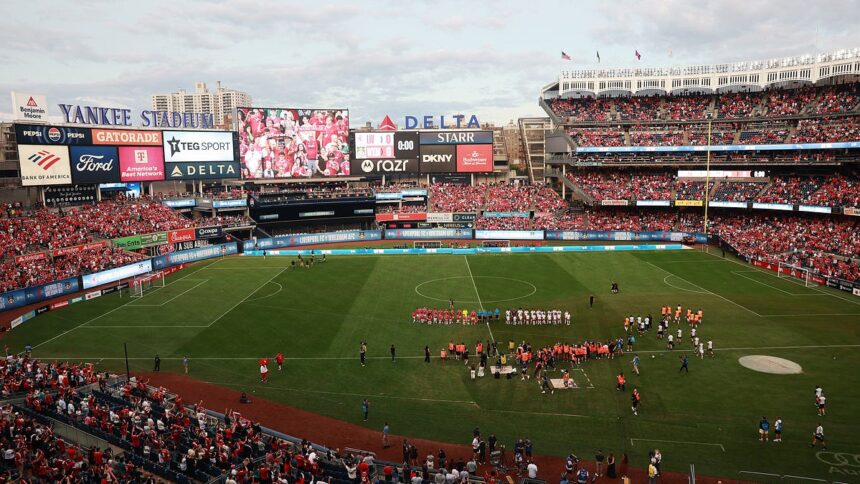
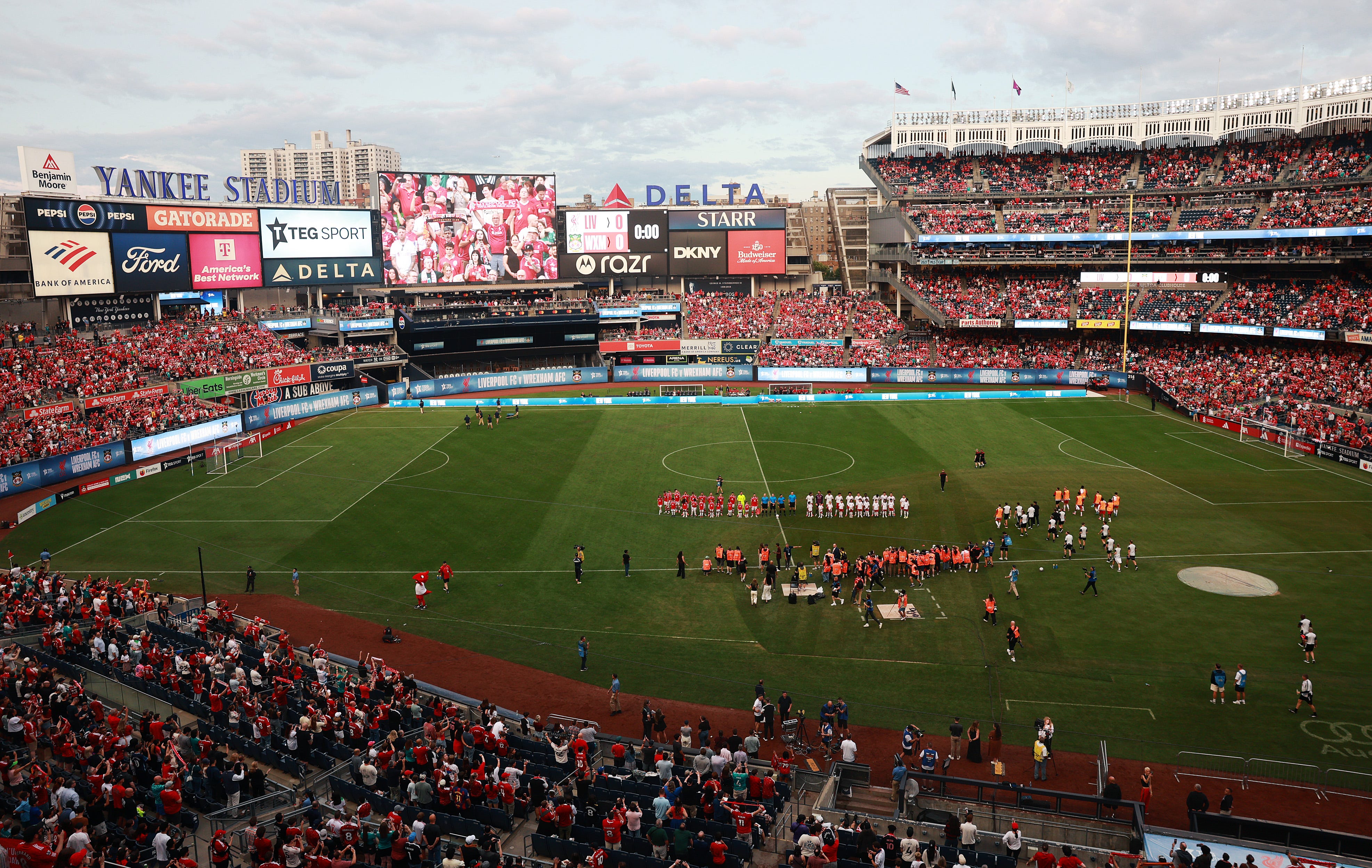
I was watching the Wrexham-Liverpool friendly at Yankee Stadium earlier this week, and I realized that most people probably have no idea how the economics of these preseason friendlies actually work. How much does a team like Liverpool get paid? What does Yankee Stadium charge to use the stadium? Where do commercial partners come into play? What happens if a star player gets injured?
These deals are much more interesting than you might think. So for today’s newsletter, I have put together a comprehensive list of things you need to know, including how much payments can be cut when a star player doesn’t show up, which teams refuse to board the airplane without receiving upfront payment, how venues monetize matches beyond just a rental fee, and why US Soccer used to receive a fee for every preseason friendly (but no longer does because of a lawsuit).
Here’s the list:
-
Individual teams are not putting on these matches. A promoter will usually put on an event in a region. They will enter into contracts with a handful of teams to play a few matches. Those teams will each be guaranteed a certain payment based on their standing, popularity, fan base, and history. These payments can range from $100,000 to $250,000 for a smaller club all the way up to $5 million or more for the bigger clubs (think: Real Madrid, Barcelona).
-
The promoter is the one taking on the financial risk. They will guarantee each team a certain amount of money and then wire them something like 25% of the money when the contract is signed, 25% when tickets go on sale, and the remaining 50% before the match begins. Barcelona is famous for never boarding a plane without the money in hand. Certain teams might be able to negotiate a share of food and beverage, sponsorships, or merchandise sales, but that is not always common. Instead, the promoter is the one who takes on all the financial risk. After paying each team, they sell tickets, hospitality packages, and sponsorships, with any leftover money theirs to keep as profit.
Read more