


Last week, the Public Religion Research Institute (PRRI) released its 17th annual American Values Survey. The results found that while Americans have grown more pessimistic about the country’s direction overall, Democrats are optimistic about the elections as Trump loses support.
One key finding was that 27% of Americans believe empathy “can become dangerous when it leads people away from building a society guided by God’s truth.”
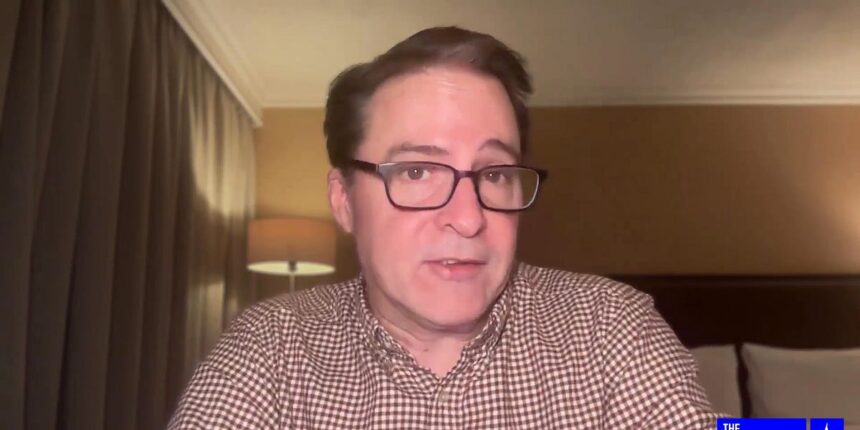
Dr. Robert P. Jones, founder and president of PRRI, joins Jen to break down the empathy gap found between Democrats and Republicans in the Values survey. They discuss the overrepresentation of Christian nationalism in the American political system, and how MAGA rhetoric impacts how young Americans are less likely to trust their neighbors and people of different backgrounds.
Dr. Robert P. Jones is the president and founder of Public Religion Research Institute (PRRI) and a New York Times bestselling author.
The following transcript has been edited for formatting purposes.
Jen Rubin
Hi, this is Jen Rubin, Editor-in-Chief of The Contrarian. I am delighted to have back with us Robby P. Jones. Those of you who are regulars of the Contrarian know he heads PRRI, which is the most prominent think tank that looks at the religious right, conservative movement. They have just completed the 17th annual Values Survey. 5,200 Americans, a lot of people, filled with fascinating studies. Welcome, Robby, it’s great to see you again.
Robert P. Jones
Oh, thanks, Jen. I’m glad to be back.
Jen Rubin
I am fascinated by the portion of the study that looks at white Christian nationalists and the issue of empathy. Talk to us about that. First of all, who are these people? What percentage of Americans are they? And what did you find out about their most basic kind of religious values around empathy?
Robert P. Jones
Yeah, well, this is the American Values Survey, so we do try to get beyond the horse race and down into what is driving people’s vote, right, at the bedrock of, like, what do they most value, what do they most… what’s really motivating them? And so, you know, we… and we asked about this question about empathy, and we had two statements in the poll, and the way we asked about this is we said, okay, we’re gonna read you two statements, tell us which of these that you agree with, and whether you agree with them strongly. Or not. So the two statements were, statement one, empathy is a foundational moral value that helps build a healthy society. Or, statement 2, Empathy can become dangerous when it leads people away from building a society guided by God’s truth. Now, many of your listeners may be scratching their heads right now about even where in the world did that second question come from. It turns out we asked this question because this is an actual, actually well-orchestrated, well-funded movement inside of white evangelical and Christian nationalist circles. to call into question the basic value of empathy. There are now books, that have sold, you know, tens of thousands of copies, called Toxic empathy. or the sin of empathy, or one of the newer ones, suicidal empathy, where they call empathy evil, toxic, dangerous. And so, because there is this big argument inside of evangel… or actually an attack, really, on the very idea of empathy being launched, in a very orchestrated way, we thought, well, we better figure out How much traction? this has, among the American public. So, in short, among Americans, you and I and everybody else will be relieved to know, that vast majority, two-thirds of the country, agrees with the first statement, that empathy is a foundational moral value that helps build a healthy society, and it’s only, less than 3 in 10, 27% that agree with the second statement that empathy Can… can be dangerous. However, there’s a big partisan divide, on this question. So it is, 84% of Democrats that picked the first statement. It is only, 54%. of Republicans who picked the first statement, right? So, it’s still a majority, but barely. But here’s the thing, we look at Republicans, they… they… it’s, it, it really is driven by Trump. So if we look at Republicans who have a favorable view of Trump, we actually see that they are evenly divided on this question, so even less than a majority agree that empathy is a foundational moral value. And if you look at Republicans who have an unfavorable view of Trump. they essentially look like independents. It’s 72% of them who say empathy is a foundational moral value. On the religion side, and here’s where it gets, scary, is by and large, most religious groups across the board for a healthy society, but we’ve got one group sticking out. This is a familiar refrain among conversations you and I have had over the years. One group that is really on an island by themselves on this question, a majority. of white evangelical Protestants, say empathy can be, agree with this. 54% say that empathy can become dangerous when it leads people away from building a society guided by God’s truth. And when we looked even further, it is, positively and just absolutely linearly correlated with belief in Christian nationalism. The more likely you are to hold Christian nationalist beliefs. the more likely you are to say empathy can become dangerous. So this concerted, orchestrated effort has found its mark and is actually gaining some traction.
Jen Rubin
It seems so counterintuitive, because The fundamental belief of most organized religions, and certainly Christianity, the Sermon on the Mount, is empathy, the golden rule. It seems.
Robert P. Jones
It was such a…
Jen Rubin
It’s an inherent part of the religion. How did this counter… Empathy, this anti-empathy movement gets started? And why did it get started?
Robert P. Jones
Well, here’s the thing. This new effort is new, in this kind of Christian nationalist format that we’ve got, but it’s actually reviving something quite old. Right? And so, like, I… I’m… this is where kind of history comes to our aid. I’m reminded of Frederick Douglass, for example, so in his autobiography. he describes his chilling thing where he indicts white Christianity and their complicity, in slavery, and he says, you know, between the Christianity of this land and the Christianity of Christ, I find the widest possible difference. He goes on to talk about the church bell and the slave auctioner’s bell ring together, and then he says this. He says, it is well known among enslaved people that the worst thing that could befall you Other than being enslaved yourself. is to be enslaved to a Christian master. And the reason he said that is because Christians could cite chapter and verse to justify their enslavement and their cruelty, and he said it was well known that Christian masters were more ready to reach for the whip quicker. than non-Christian masters, and it was all about, they had a theology that circumscribed empathy, right? And so it did not extend to people of color, to African Americans, to enslaved people. it was circumscribed among their own group. So this is old, and it’s been with us in many ways. You know, you would think we maybe learned our lesson here, but this is an attempt to kind of revive a theology that does circumscribe some people as being outside the realm. of proper Christian concern and outside the realm of proper human, really, compassion and empathy. And the scary thing to me is just to ask the question, well, why would we need such a theology? Today, in these circles, and I think there’s really only one chilling answer, and that is to prepare a people to be numb to the violence that they’re gonna see being meted out by this administration that we’re already seeing. Particularly, I think, around ICE and the treatment of immigrants. We know, for example, that the tide turned in the Civil Rights Movement when people saw Emmett Till’s coffin open, and what white supremacy had done to this young boy, when people saw German Shepherds and fire hoses mowing down people in Birming… adolescents in Birmingham. And so, that was a basic empathy that turned many white people, who had been kind of oblivious or just indifferent about civil rights into saying, no, we should change the country, and I think this is this theology whose job it is to undermine those human and humane instincts from kicking in when we see these awful images of ICE, you know, killing and maiming people on our streets.
Jen Rubin
This would be bad enough if the group of people that we’re talking about were kind of diffused through society. But what has happened is they’ve kind of congregated, correlated within one of the major political powers and parties, and therefore have Disproportionate political influence. Talk to us a little bit about to what degree this group dominates, ideologically, numerically the Republican Party, because that’s where they get political power to enact some of these views on the rest of us.
Robert P. Jones
Yeah, no, that’s right. So, it’s worth remembering that white evangelical Protestants, even though they get So much attention, or exercising so much power, are only 13%. Of the population. That’s 1-3, 13% of the population, and they’re shrinking, and part of the… part of what’s going on is as they’re shrinking, they’re becoming more radical. And so that’s part of what’s happening here. Even if we look at all Christian nationalists, people who qualify as Christian nationalism adherents or sympathizers, it’s only 30% of the country, if we put all of them together, right? But white evangelicals make up about a third of the Republican base. And Christian nationalism has now become the majority view of the Republican Party. Right, so it’s 50… in the low 50s, 53, 54%, and we’ve surveyed this a lot, but it’s a solid majority support among Republicans. So, you know, if we were in a European country, what this would be is we’d have a Christian nationalist party, and it would be about 30% of the population, and it would be over here in its own party, right? And it would have to kind of compete and form coalitions, and we see that, right, in Germany with AFD, or National Rally in France, or reform in the UK. It would be like that. But because we only have two you know, viable political parties. They’ve managed to take over the apparatus of one of our two political parties, and that has just jumped their influence, you know, really it’s multiplied almost by two, once they’ve taken over this, the two political parties. So, I love what you wrote in your recent piece, you know, that, and I echoed some things in my recent book, Backslide, that, look, the truth is. We don’t live in a 50-50 country. We live in more like a two-thirds, one-third country. The problem is just, it’s a question of power and representation, and this group has become overrepresented, and it’s got their hands on the levers of power via the Republican Party, which they have now wholly taken over.
Jen Rubin
I’m curious what you make of this recent incident with Vivek Ramaswamy, where he trotted out the mother of Amy Acton, who was married to her abuser and accused her of lying. And not only did he… Exploit this ad, but the president, the vice president jumped on it. This seems to be a perfect encapsulation of the absence of any kind of human decency, empathy. You’ve even seen a lot of Republicans recoil. How does this kind of exemplify what you’ve been talking about? And what’s the rationalization that they use for doing things like this?
Robert P. Jones
Yeah, well, look, this is exactly right to point this out. It’s bringing to mind, also, J.D. Vance and Donald Trump’s treatment of Haitian immigrants in Springfield, Ohio. These lies, right? That they were eating the dogs, or eating the pets, right? And this way of just kind of smearing an entire people group there, and did it on national television, did it very deliberately, very cynically. You know, it makes me think, like, wow, you know, you and I are old enough to remember compassionate conservatism.
Jen Rubin
Yeah.
Robert P. Jones
Remember that… remember those words that used to…
Jen Rubin
That was George Bush, right?
Robert P. Jones
But together, it wasn’t that long ago, our values voters, you know, this… this… and this kind of taking pride in, wielding a… you know, kind of entering politics with… under the banner of values, and that is long gone. Like, nobody’s even arguing that they’re doing that, anymore, and so what we have now is just a raw. real politic, power politics, and it is an anything-goes politics, here. And, you know, to this thing. you know, empathy, right? The idea that you would… or just decency, you know, you know, that these things are just so far out the window. And it is head-spinning to me as, like, somebody who, like, studied that, you know, that compassionate conservatism values voters, and everybody was doubling down and all of that, and now, like, where… where are those people arguing, right, against, against this kind of cruelty? Here, and I, you know, it’s a classic authoritarian move, too, to kind of just run roughshod over every moral guardrail that’s out there. So once you get people desensitized, right, there really is no limits, right? Anything is on the table, every tactic is justifiable. I mean, this is not the mark of a democracy where we know we have to live with each other after elections. You know, that… the mark of a democracy is that we know how to lose. And we know how to stay in relationship with our fellow citizens, and so we don’t demonize them, we don’t burn every bridge, because We know we gotta live together at the end of the day, but the mark of authoritarians is not that, right? The mark of the authoritarians is to undermine every moral guardrail there is to pave the way for the… authoritarian state power.
Jen Rubin
In the data that you collected, do you see signs that the movement is eroding in any sense, either by age group, or by within the Republican Party? Are there signs that they’re losing their grip, even as they’re becoming more fanatical within their own group?
Robert P. Jones
You know, we see a little bit of pull away in terms of just favorability, like, even white evangelicals are down by 10 points on favorability. However. They’re down 10 points. They’re still at 62%, favorable, while the rest of the country’s down around 3 and 10, so they’re still twice as likely to be favorable to Donald Trump. They just started sky high. So, a little bit there, but the movement is really, there is some movement, and I would say that, you know, the coalition that gave Trump a very narrow victory in 2024 depended on, you know, it was a hair… kind of hair’s breadth that he won, by in 2024, and it depended on an unusual inroads among Latinos in particular.
Jen Rubin
Yes.
Robert P. Jones
And the one thing that really jumped out at me, that the group of Latinos that voted for him were Latino evangelicals, right? And that’s because they have this kind of cultural shared culture and theology with white evangelicals that leads them kind of in a more conservative direction. Trump’s favorability is down 20 percentage points over the last two years among Latino Protestants. They now look like Latino Catholics do with regard to Trump, and that’s a group that always votes Democrat. In midterms and in presidential elections. So, certainly if I were a, you know, pundit or a strategist on the Republican side, I mean, that number of 20% of Latinos who have voted almost 6 in 10 for him every time he’s been on the ballot, like, that’s the group. That would worry me, especially when you’ve got a Senate seat and at least three, competitive, congressional seats up in Texas, and in those congressional seats, the Latino vote is, like, something like two-thirds in each of those districts. So, 20 points movement is… that’s the ballgame, right, for those House seats.
Jen Rubin
Absolutely. You are in South Africa, as you mentioned before we came on, and it’s relevant, I think, to what we’ve been talking about. Why are you there, and what can we learn from that?
Robert P. Jones
Yeah, well, I’m here in South Africa, in Pretoria, for a conference about a statement called the Belar Confession, that was made, by the Dutch Reform Mission Church here in South Africa in 1986, and so this is the 40th anniversary of that event, and it was, it was the statement finally calling out, apartheid as a sin, and taking… drawing a line in the sand, and saying, the church can no longer pretend to be silent, this is something we can no longer agree to disagree about, there’s a right and a wrong here, and we’re gonna draw a line in the sand. And so it was… and so it drew… it split the churches. I mean, there were still many Africaner white churches that were being now accused of being on the wrong side of Christianity, on the wrong side of morality, and so it was a big rift, but it was a courageous statement there. It’s now been adopted by a bunch of other churches, including the PCUSA Presbyterian Church of the United States as well, and churches around the country, because it was seen to be such a courageous thing. And the key insight there is that they said, yes, Christians are called to unity, but unity can never be sacrificed for justice. That was the key insight, right? So, unity can only come as a precondition when justice is on the ground, and so we can’t pretend like we’re going to be in, in communion with people who are denying the basic rights of other human beings. And as you know, you and I have talked about it, it’s very similar to a call I make at the end of my book, Backslide, you know, where I say, we’re at a moment now where, you know, when we’ve got white Christians and white evangelicals in particular, for example. supporting the construction of concentration camps on U.S. soil for undocumented immigrants, and just outwardly saying, yeah, you know, that’s something we’re for. That, you know, again, I don’t think it’s a too thin a limb to go out on and say, if you’re supporting concentration camps in the name of Jesus, you have lost your way. You know, and that’s what this confession did here in South Africa, and I really think this is where we’re heading in the U.S, where, you know, there’s going to be a rift here, and I think there’s going to be… in fact, there’s a statement coming out next week from a group of Christians saying something very similar, that, like, look, we have to… we cannot support a mass deportation effort that includes the construction of concentration camps in the name of the church, in the name of God. Like, this is not something that, that is gonna go by and have us be silent about it.
Jen Rubin
I’ll be looking forward to that. I think we’re facing, perhaps the need for a spiritual reformation or another reawakening as much as a political one. It’s certainly a moral crisis within Christianity. In our remaining few minutes. I want to ask about another aspect of the poll that I felt rather sad. And that is… The large percentage of people in this cohort who do not trust people from other countries and other religions Have they become Fearful, insular? I mean, is this the way people really want to live?
Robert P. Jones
Well, you know, I think it’s probably true that it’s not the way we want to live. And one thing I’ll point out is that what jumped out at me and did feel sad about those numbers is young people…
Jen Rubin
Those numbers.
Robert P. Jones
And they were the least trusting of those. And in particular, there was one that jumped out at me. Compared to other age groups, they were much more like… much less likely to say that they trust people that they meet for the first time. And I think that that is a real note to the kind of divisions and tribalism in our politics, because I think what this group is saying, and so I’ve got a son who’s 16, and I’m realizing that… and I have a daughter who’s 25, and I’m realizing that my son, who’s 16, has only known the country in the thralls of this MAGA movement. That’s the only reality he can remember. Whereas my daughter can remember the Obama administration, right? But my son remembers the decade, you know, we’ve had here of Trump, and I think that that’s part of it, and realizing, I think what those numbers are saying is that for young people, they’re saying, you know what, like, I gotta know which tribe… which tribe you’re in before I’m gonna trust you. You know, I need to show your colors, before, there’s not just… and so that’s a real, you know, if you step back and think, well, that’s a generational… really a challenge for democracy, right? That people aren’t… in a democracy, you kind of want to operate where you’re giving people the benefit of the doubt, right? And people prove.
Jen Rubin
Yeah.
Robert P. Jones
Rather than proving you right. And so I think for our just kind of democratic culture, this is a real… like, it’s not surprising to me, I don’t think it makes sense to me, but it is sad, right, that where the divisions have become so deep, it leads to a kind of basic, instead of benefit of the doubt, a basic level of operating with suspicion.
Jen Rubin
And part of it obviously has to do with the degree to which young people are isolated in social media and lack human contact. It speaks, folks, to something we’ve been talking about, which is… the pro-democracy movement in mass gatherings, in connecting with other human beings, how important that is emotionally, personally, politically. Robby, as always. The American Values Survey is fascinating. People can go to PRRI, their website, get the full report, and your book, Backslide. a must-read. We are very, very interested in all of your observations, so when you come back, hopefully you’ll write about it, you’ll talk to us about it, and in the meantime, safe travels. Thanks so much for making time for us.
Robert P. Jones
Oh, thanks, Jen, thanks for all you’re doing.