

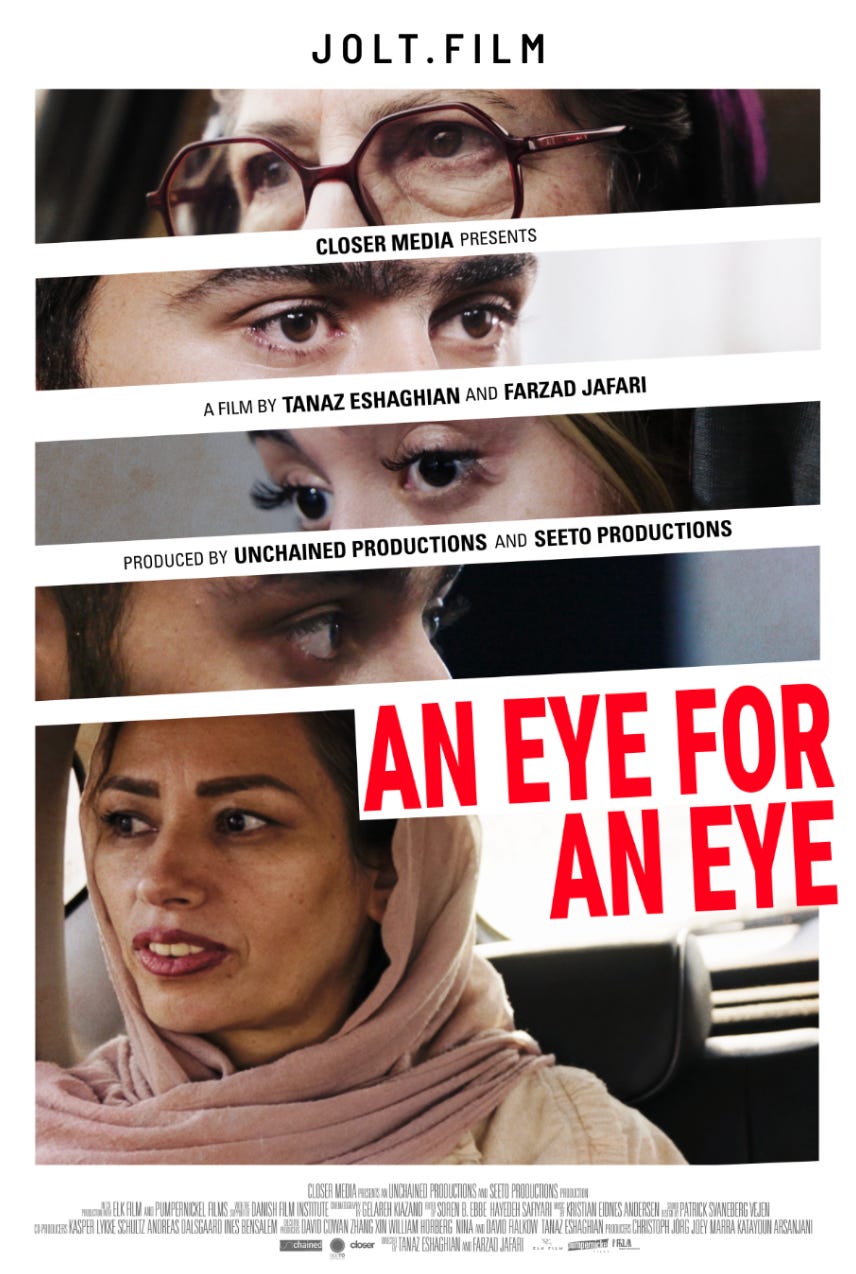
In this vHopeful Conversation, I speak with Emmy-nominated Iranian American filmmaker Tanaz Eshaghian about her searing new documentary, An Eye for an Eye, co-directed with Farzad Jafari. This gripping, real-life courtroom thriller follows Tahereh, an Iranian woman who has served fourteen years in prison for killing her abusive husband and now faces execution unless she can negotiate forgiveness—or raise the “blood money” demanded by his family. Tanaz and I discuss the moral complexity that makes the film so powerful: the competing grief, rage, need for justice, and capacity for mercy on every side; the remarkable women activists and pro bono lawyers who fight to save Tahereh’s life; and the legal, cultural, and gendered structures that shape women’s choices in Iran. We also talk about Tahereh’s devoted son Mohsen, the difficult distinction between punishment and healing, and why this intimate story of survival, negotiation, and solidarity carries urgent resonance far beyond Iran.
Transcript lightly edited. Podcast available on Apple, Spotify or wherever you listen on this Substack or Ted’s Hope for Film
Vanessa Hope I am very excited to be joined by Tanaz Eshaghian, an Emmy-nominated Iranian American filmmaker who has made incredible films including Be Like Others, Love Crimes of Kabul, and Oscar-shortlisted As Far as They Can Run. She brings a rare intimacy and moral complexity to stories too often reduced to headlines.
She has a co-director on her new film, which we’re about to discuss, An Eye for an Eye, who was able to film on the ground in Iran. His name is Farzad Jafari. He’s an accomplished Iranian filmmaker.
This new film, An Eye for an Eye, is a truly gripping, real-life courtroom thriller about Tahereh, a survivor of domestic abuse facing execution unless she can raise the blood money demanded by her late husband’s family. With extraordinary access to Tahereh, her son Mohsen, the negotiators working to save her, and the family determining her fate, the film becomes a devastating and deeply human examination of patriarchy, punishment, forgiveness, and the fragile forms of solidarity that emerge when a system withholds justice. Tanaz, thank you so much for being here.
Tanaz Eshaghian Vanessa, thank you. That was so well said.
Vanessa Good. We loved your film. It’s an incredible film. And I’m so happy it’s going to be back in theaters in L.A. and we’re going to get this out and get people to see it. It’s also on Jolt.film right now, right? People can watch it there.
Your film really does unfold with the propulsion of a courtroom thriller, and yet it’s devastatingly real. I’m curious what first drew you to Tahereh’s case, and when you understood that you could tell the story from inside her family’s experience of the legal system, which is very powerful.
Tanaz I think what first drew me was, I was looking to do a new film. I was finishing up the documentary As Far as They Can Run in Pakistan, and I was looking to do something in Iran. And I wanted to do something ideally around women’s rights, gender.
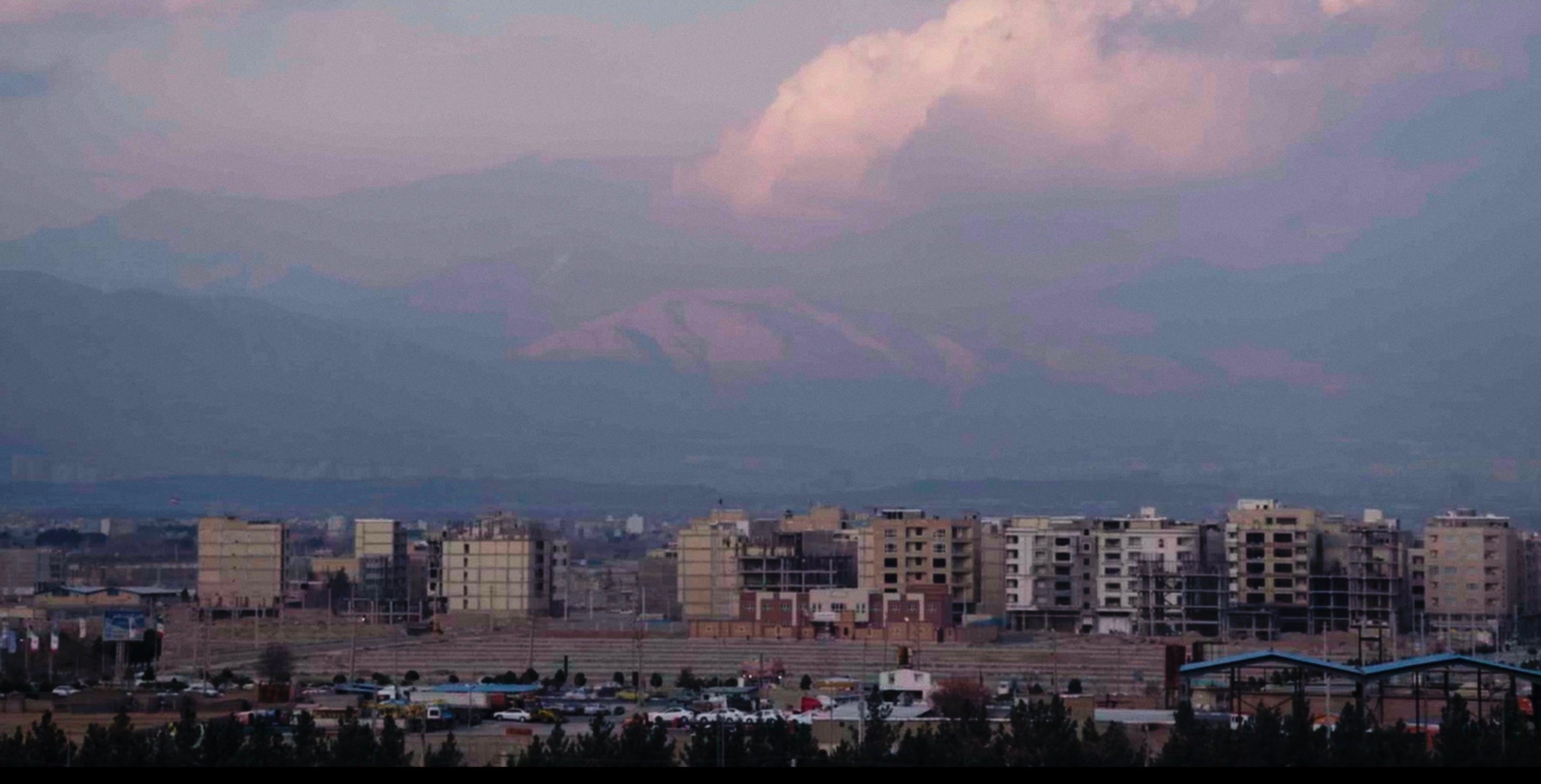
And as you may have noticed, I like films that have a built-in process. In this case, you know, the process is: will she be executed or will she be forgiven? Because when you have that sort of building process, you can hang your hat on that, have your narrative, and then get at all the wonderful cultural issues that, you know, keep most filmmakers fascinated and willing to work on something for three years.
So that was the initial attraction. I thought to myself, here is a woman on the margins of society who has taken matters into her own hands and decided that it somehow makes sense to murder her husband with the help of her two daughters one night, or she claims to have, by strangling him with a scarf. And I thought to myself, whether she did it or did not do it, she’s claiming she did that, and why would she get to a place where she thinks that’s a good idea? And why is she so willing to admit to it?
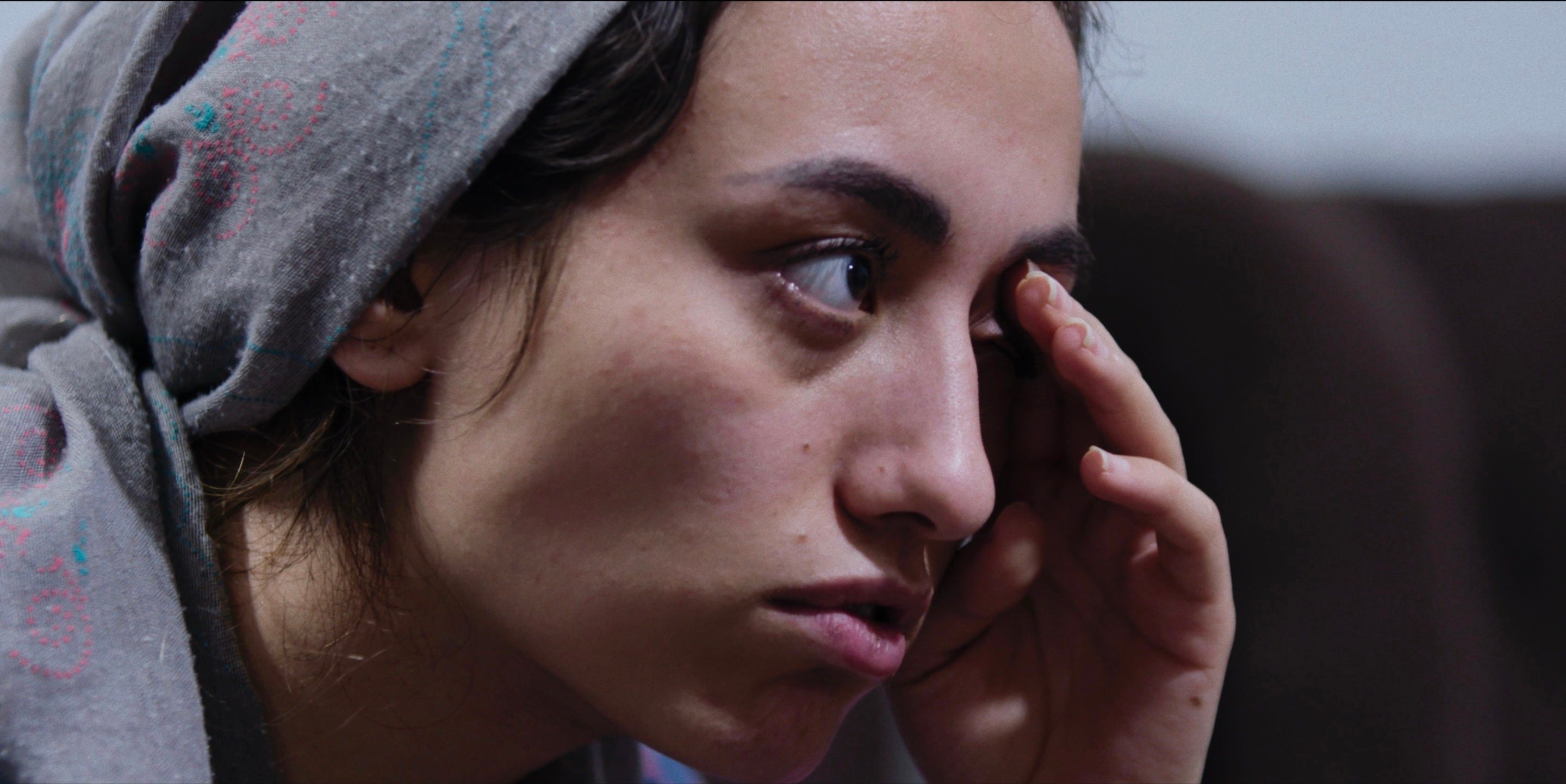
So I was like, there are just going to be so many layers of cultural complexity here. There are so many layers to peel. So I knew it would really keep us engaged.
Vanessa It does, and your access is incredible. You take us inside her story, her family’s, the legal proceedings, and all these private negotiations. How did you gain her trust?
Tanaz Well, you know what, the thinking was that we really wanted access to both sides. Otherwise, you know, it could have ended up being an advocacy film. And advocacy films, as great as they are, they don’t really interest me because you already know what’s going to be said, what’s going to be done, who the victim is. It’s just so predetermined that I can’t watch one, let alone make one.
So the idea was: how do we make a documentary that is just not black and white? It’s not simple. The victim, quote unquote, is complicated and, in some ways, not repenting and feels comfortable with her behavior. The villain, in some ways, or the people that are demanding the blood money, as much as they’re being greedy, they’re also, in some ways, really hurt.
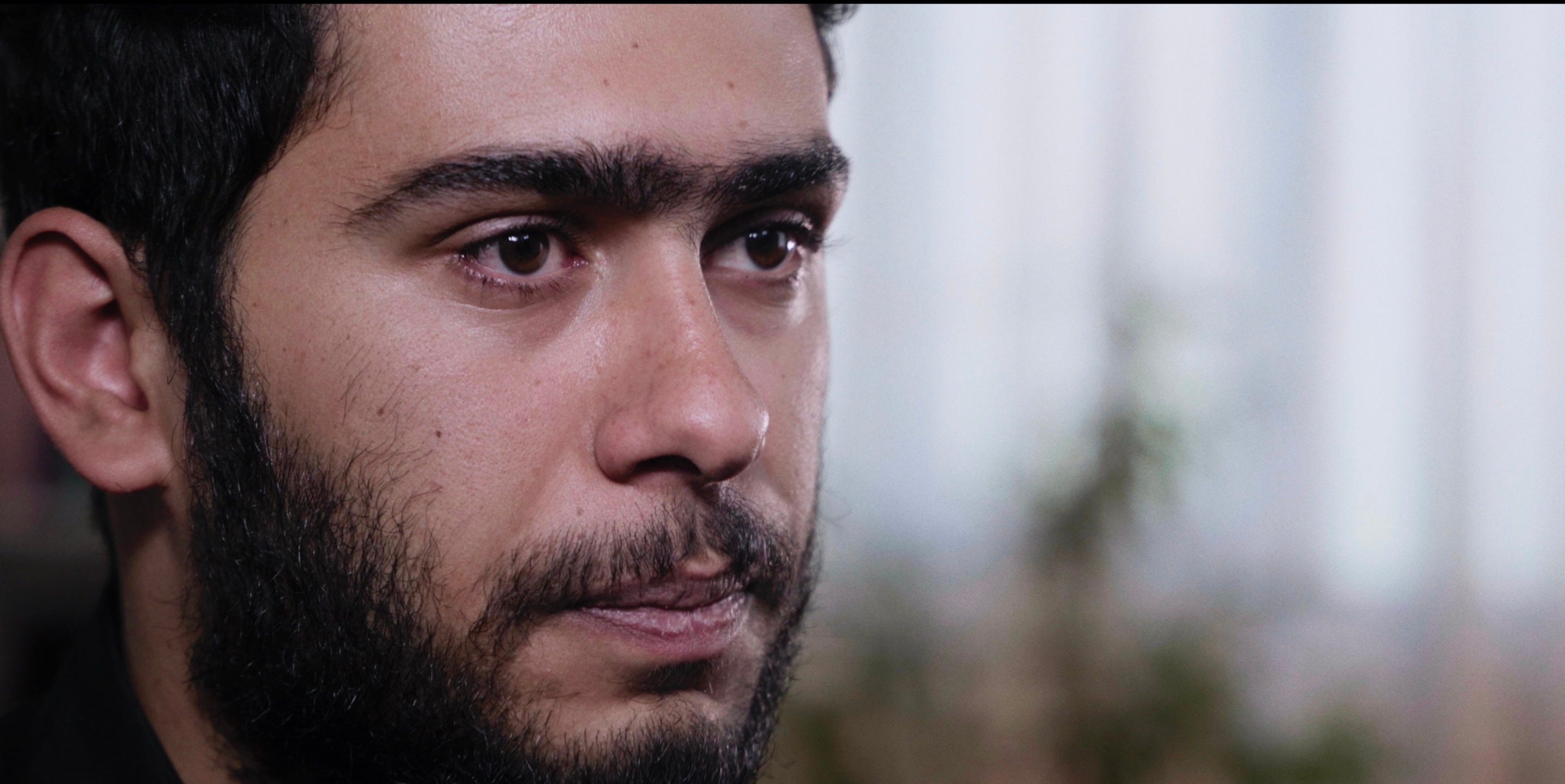
So, just as in real life, no one is purely good or bad. That’s really important to me. I’ve always made that a focus of my filmmaking because I really do think that a documentary is worth making if you are able to capture the complexity of human life, wherever it is. We all have that in common.
Vanessa That’s true. And yet Iran’s justice system and sense of moral and legal justice is a little different. Tahereh’s act is framed as self-defense—she experienced prolonged abuse—and then to be required to pay blood money to avoid execution, all of it, the stakes are so high. It’s very intense.
Tanaz It’s even higher than that. The other part that got me, I was like, so wait, after fourteen years in prison, there is still a possibility of a noose hanging around her neck? Like, what do we have? And that was like—it’s another system. And yet the feelings, the emotions, and the needs are universal, but it’s just in a different system.
Vanessa Yeah. Which everyone should see and understand, because I think it has reverberations in our own ways of looking at women and who deserves a say in their lives, in a marriage, some autonomy and choice or freedom or not, and when the state can make a decision about who gets to die, who should live. All these questions are universal.
Tanaz Exactly. Also, the feelings: you want revenge, you feel wronged, and then the other side saying, “No, I was wronged. I had a raw deal.” I mean, I know all these feelings. They’re constant. And just to see that played out in a different space makes you really get to those essential emotional truths.
Vanessa Yeah. And your character Tahereh’s son, Mohsen, is very moving. He’s attached to his mother and feels very triggered and emotional throughout this story unfolding. It’s his life. But I wonder how you looked at him and his role in the story.
Tanaz He really gave me hope. In a very difficult situation, he made me feel hopeful. I was like, look at this person, despite what he’s been through. Look at how motivated he is, how much he feels. He’s not numb. He cares. He’s devoted.
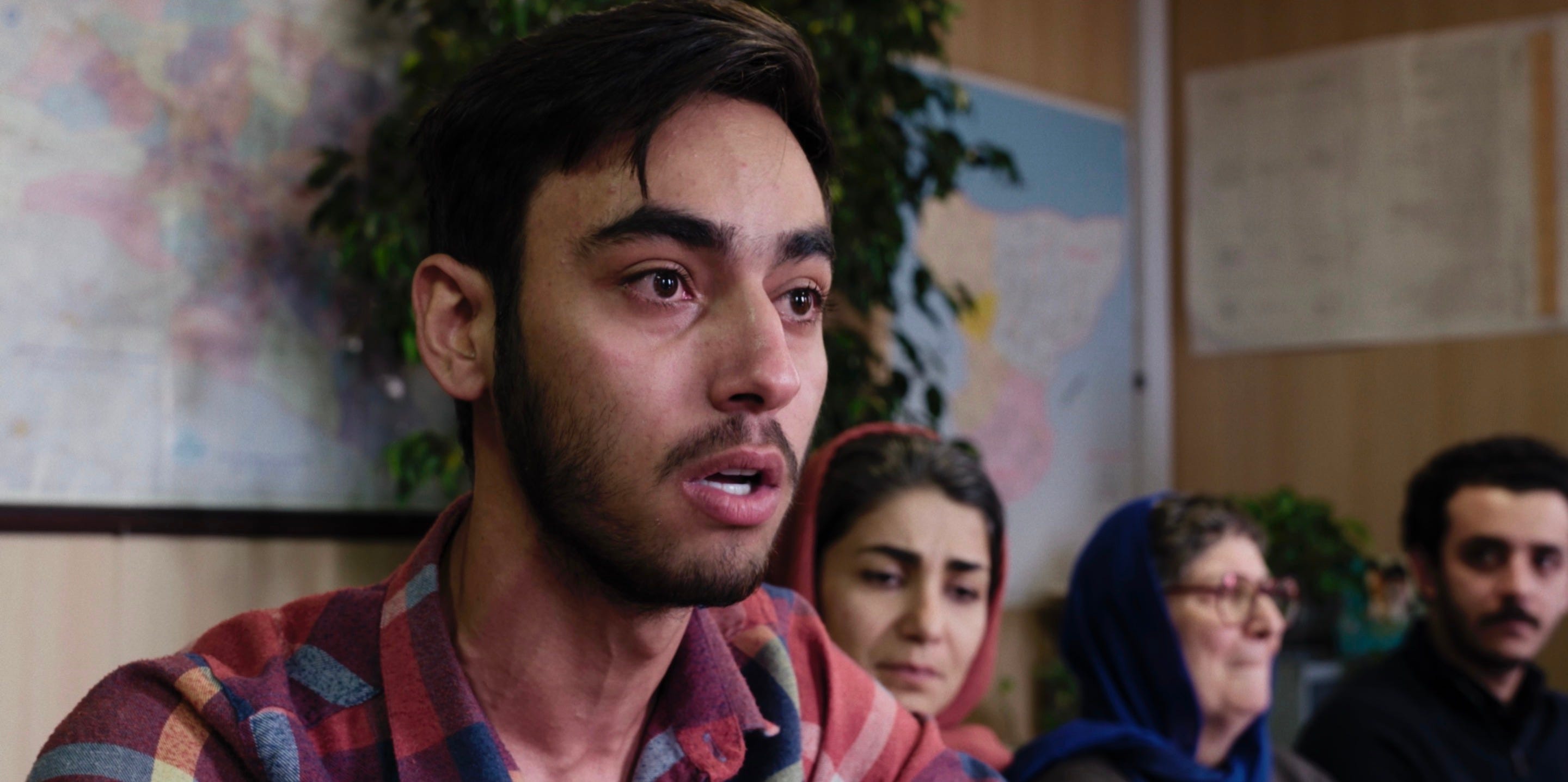
You know, I remember there were moments when we were looking at the footage and there was the human rights activist and a colleague speaking, and I didn’t put this in the film, but they were like, “It’s kind of amazing he’s not a drug addict,” you know, after what he’s been through. I mean, truthfully, he gave me hope. And I think one of the reasons I decided to make him one of the main characters is that reason.
Vanessa Yeah. How did you make the decision to foreground the legal proceedings in the way that you do?
Tanaz I really like to have a process so that you have something very simple to follow while we can explore characters, emotions, and cultural tropes like shame and honor and all that.
And in this case, it was a legal one. And frankly, a legal system is an abstract concept until people are trying to go through it. And it’s a great way to understand a society: to follow real characters in time trying to navigate the limits of the legal system.
Vanessa Yeah, and I love the characters, the women who are anti-death-penalty—or that’s what we would call it—anti-execution activists, pro bono lawyers.
Tanaz My God. That was the other part that really gave me hope. There were two things. I was like, look at this. These people, these women, do not need to be helping. They could be hanging out with their grandkids, shopping, whatever. And yet they’re going out of their way just to help those women not end up executed because she has kids.
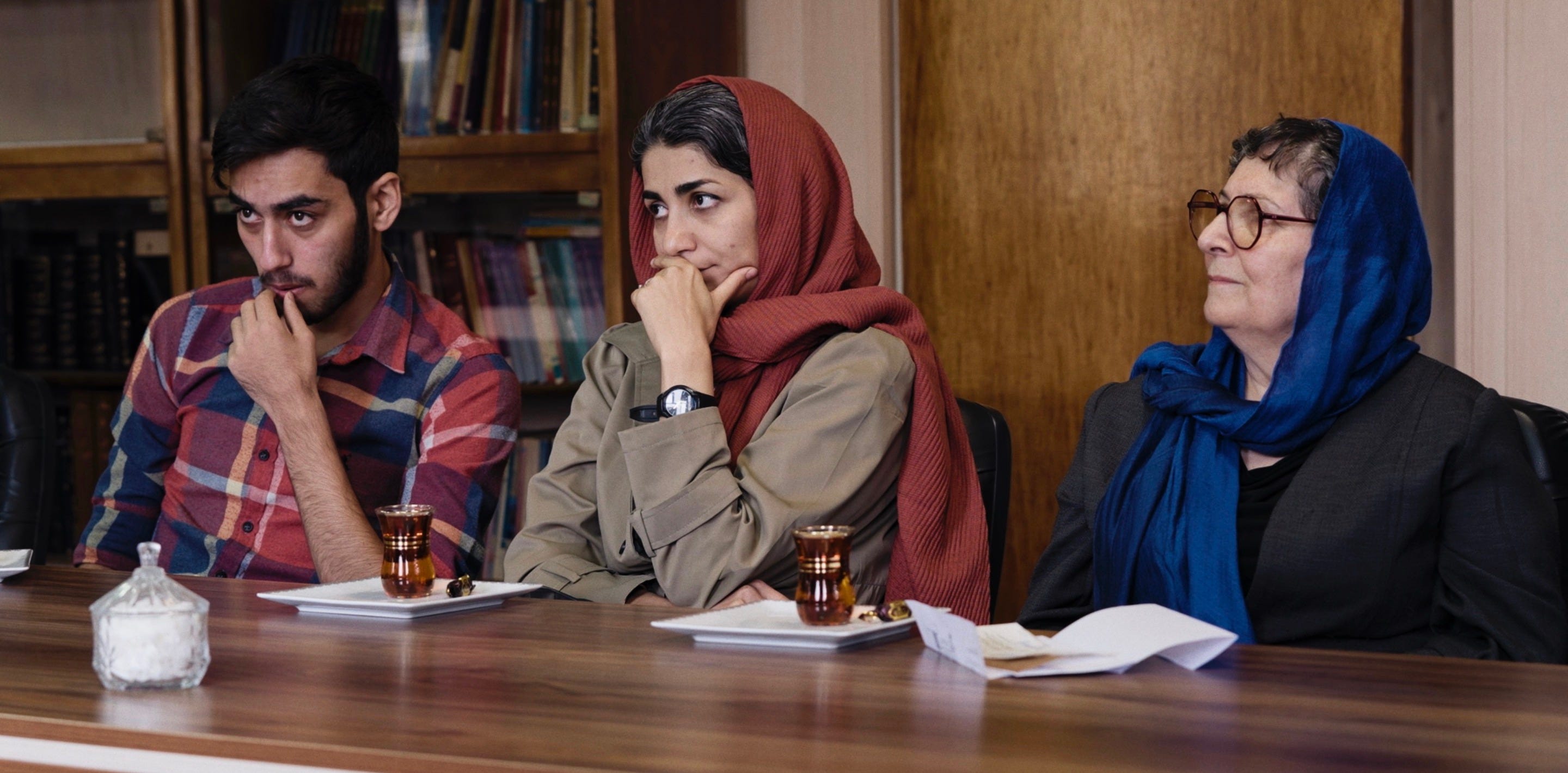
And I just like the whole thing. It gives you a sense of how life really works in countries that have been simplified to, like, the Islamic regime or the Middle East or what have you. And so that was really important to me.
Vanessa It is a moving part of the story, and it feels as if Tahereh would never have taken on the enormous challenge, as you said, after coming out of fourteen years of prison and finally having a little bit of her life back, to now owe this blood money, which is an impossible sum that she never feels she can fundraise. How is she going to gain people’s sympathy for her and her case? And these women come.
Tanaz Totally. Without the support—I mean, we all need support. Obviously we all do, but you just see it. You see what support can do.
Vanessa How much of an impact do you feel this story, this film, can have? Actually, when we finished watching, I first had a feeling of fear for the family, who are now even more exposed or more famous, although the case was already in the press, whether that was going to be a danger to them.
But then I thought, what it shows us of what is possible after a crime, a murder, in terms of forgiveness and even intergenerational healing, is profound and important, and could have a great impact. So, I don’t know, have you had experiences with it on the road already, or it being out, or how is it going to play in Iran or here?
Tanaz I think in Iran it’s not at all putting anyone in danger because I am documenting the law. This isn’t, like, something going against the norms. And frankly, if anything, I actually think it shows, in its own way, that the system is working. It’s just different. And it’s working, and people are there for each other, and it’s complicated. But it’s not like, my God, you know? So I just—it’s not harming anyone.
Positive impact? I mean, that has yet to be seen. It’s also very hard to get that kind of information. You know, the last film, when I made a film in Iran about men who have sex-change operations, I didn’t really know the positive impact it was having, and I feared it wasn’t.
But then I started to get information trickling out about how so-and-so’s cousins saw it and they no longer looked at transsexuals as, like, literally gross. They were like, “My God, they’re humans.” Literally things like that. It has a very subtle transformative experience.
Vanessa I think it really asks questions about how much punishment can actually repair harm, or whether, you know, retribution and revenge, payback, what can they really do for us? Isn’t it better, if we’re related or if we’re not even related, that we can forgive and move on?
Tanaz I mean, it’s very—as you probably know from your own experience in life—you never fully move on. It’s just life is messier than that. I think it gets at that.
Vanessa That’s true. I was shocked by the line from Tahereh in the film about—I mean, honestly, I was shocked by so many lines—and the fact that she was even ever willing to accept execution when she felt like it was hopeless trying to raise money to save her life. She also says something like, “Well, I’d rather be executed as a murderer than as an adulterer.”
Tanaz So many lines. Yeah. Well, I mean, there are two interesting points here. This idea, when she says, you know, what the other side is demanding—what are they demanding, $40,000? “Yeah, there’s no need to discuss. You can just kill me now. There’s no planet in which I’m going to do that.”
At the same time that she might feel that, if you’re an Iranian viewer, you understand it’s a negotiation tactic. It’s like, lower your price, buddy. There’s a subtext there, and depending on your background, you get multiple readings on these sorts of things. They may sound straightforward, but there are layers. It’s like, you’re negotiating from $40,000; I’m negotiating from, “I’m willing to die.” So let’s find a—
Vanessa Right, right. But I’m also curious about where adultery versus murder sits in the legal system, or justice, or thinking about morality, ethics.
Tanaz Yeah. That was something I decided to explore halfway through because I knew from a film I did in Afghanistan, which is even much more conservative than Iran. I was filming a girl who had some premarital activities with a boy in a closet—not even anything major, but some minor activities—and had been arrested for it because her father had called the police. So she’d been thrown in prison, he’d been thrown in prison, and I wanted to film their court case.
And the judge said to me, “Ma’am, I mean, you know, this isn’t a murder situation. I would allow it if this was a murder case, but this is about honor. So you can’t really film this. There’s just too much shame here.”
And it made sense. As an Iranian, I got it. I was like, my God, right. This is like, how can you hold your head up after, if everyone finds out you were in some way loose?
And as Tahereh started talking, the degree to which she was so insistent that there was no other man involved—and I remember, I was like, my God, this is going to have a similar—so then I started to ask her to bring that out, to really ask questions that would reveal that very explicitly. From the lawyer, from her, they started to basically say: how do you go around a society if you have been given the label “loose woman,” adulterer, bad woman? Like, she’s corrupted, she’ll go with anyone. You know, this is someone that’s good to go. It’s like a whole way of thinking.
And there’s also that if she is accused of adultery and found guilty, that is also a crime whose punishment is execution.
Vanessa For women, not men.
Tanaz I believe maybe for men too. I can’t recall, but I know definitely for women.
Vanessa Definitely for women. You’re making me recall the Margaret Atwood line when you talk about honor and shame: that a man’s greatest fear is that a woman will laugh at him, and a woman’s greatest fear is that a man will kill her.
That’s our society, you know.
Tanaz I get it. Totally. That’s the power they have. A man is stronger and he can actually kill you. And the only thing we have is we can laugh at them.
Vanessa Yeah, but that also can equalize or, you know, bring some levity and justice into play. And it’s so rough for Tahereh.
I think it’s interesting that in the film, you don’t need to show us her life before the murder to a great extent to understand and imagine even what horrifying abuse she went through to have been pushed to that level.
Tanaz Well, she does at some point talk about, like, when she goes to court to try to get a divorce, she says, you know, “This man hurt my skull. He literally physically attacked me.” She goes into it a tiny bit, and the court still says, you know, “Lady, it sounds like child’s play. Go home, make him a nice dinner,” basically, “and make it work.”
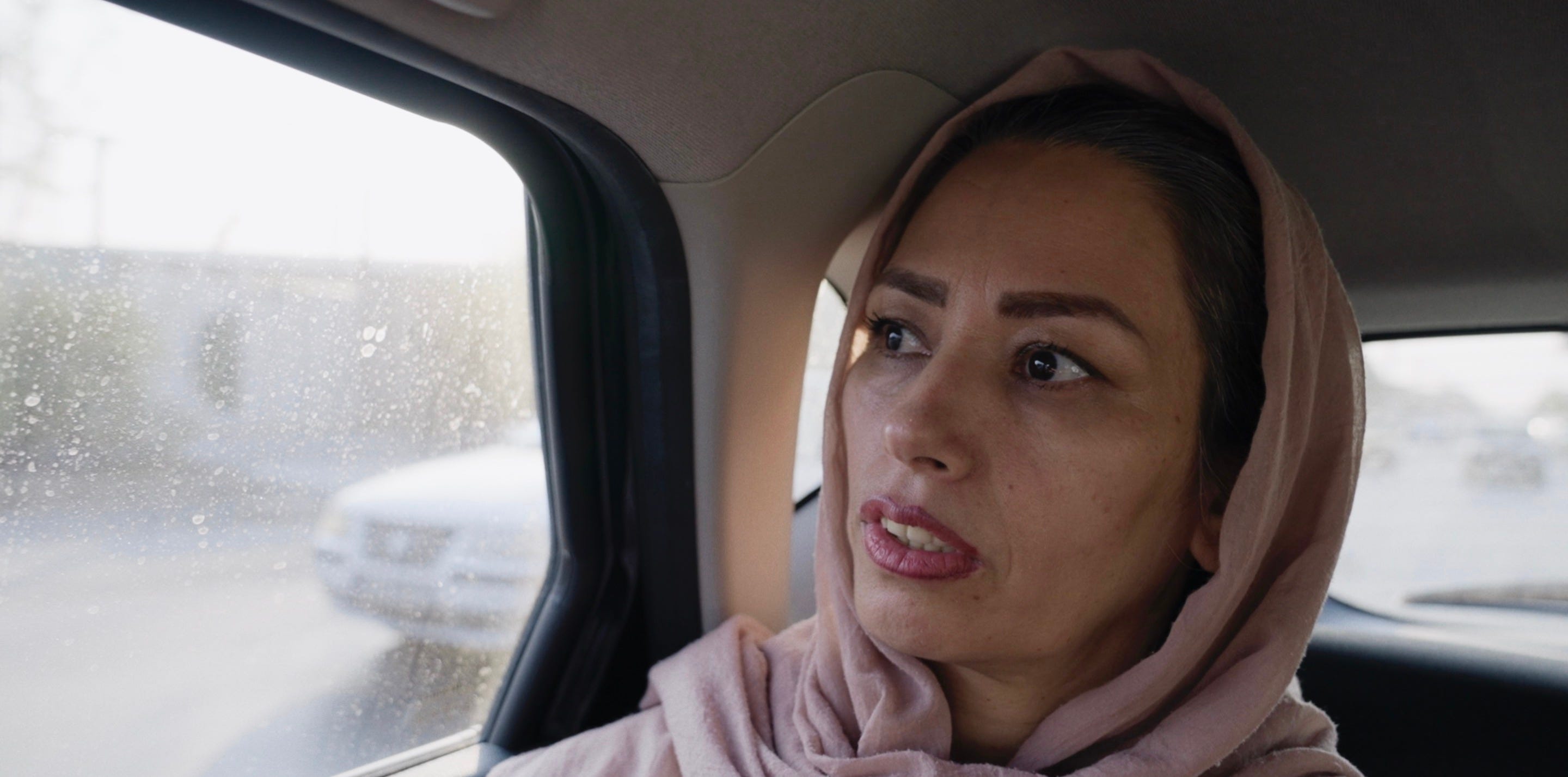
Vanessa That’s another huge imbalance that comes up in your film: that in Iran a man can go—or maybe he can just say it into the air too—“I divorce you, I don’t like you, goodbye,” it’s done, the divorce is final. And a woman can try and try and try, and if the man doesn’t want to, it won’t happen.
Tanaz That’s right. Well, that’s the case where Sharia law is applied, and it’s applied in many countries, especially for private matters. It’s applied in many, many, many countries.
Vanessa And Sharia law means—
Tanaz Islamic law. In terms of divorce, it’s what you see. There are laws around custody. Like, the man gets the kid if you get a divorce. Everything’s pretty much set up so the wife does not try to leave. And fundamentally, I think—and the lawyer talks about this—it’s not an equal situation.
She is property and he’s a human.
So it’s like if you bought something and then it tries to leave, it’s like, “What do you mean you’re trying to leave?”
Vanessa My God. You mean my wife is not a handbag? I thought I got a—
Tanaz Right, right, right. Mind you, there are plenty of men all over the world that feel that way. I’ve seen a few women that way too, by the way.
Vanessa Unfortunate. The women who view themselves as handbags.
Tanaz And they’re happy. They’re happily—…
Vanessa Ensconced and hung on a man’s shoulder. So what do you feel as someone who has navigated these worlds? You were born and raised here?
Tanaz No, I was born in Iran. Yeah, I was born in Iran. I came here—I don’t think I’d be making Iranian documentaries if I was born here. I think I need to have some level of connection. I came here when I was seven.
Vanessa So you’re fully fluent in both worlds.
Tanaz I’m not—my English is better than my Farsi—but I understand it and I instinctually understand the thinking and the culture and what people are trying to get and how they’re seeing things. So, for instance, when Tahereh is like, “I’d rather die. I’m happy to die,” I first was like, my God. And then my Iranian side, you know, I was like, she’s negotiating. I have that ability, which makes it good for documentary filmmaking.
Vanessa Right. And I wonder if we should touch on it at all, but it feels like it’s in the news a lot, what the U.S. has done to Iran historically, what—you know, it’s in Marjane Satrapi’s film Persepolis, which is something everyone should always see and keep reviewing. But also now, what’s going on. I don’t know if you have thoughts on—
Tanaz Well, I was talking about this previously with a friend and also some other interviews I did on NBC. And I was actually saying this film can be a really great window into how Iranians negotiate. And I mean, what we’re essentially trying to do right now with the U.S. is negotiate.
And what you see here is truly the ability to negotiate ad nauseam until the last minute. And, you know, it’s like: go back, go for it. And I see parallels with the headlines where Trump is like pulling his hair out, you know. And I was like, yeah, welcome to Iranian negotiating. They’re slow and steady. And they’re starting from essentially what Tahereh is doing, which is like, “Go ahead and kill me.” Like, that’s—it’s the same logic and it’s a negotiation tactic. And it’s kind of true, but it’s not. You know what I’m saying?
Vanessa Yeah, I do. But do you believe that Trump has anyone in his administration who actually speaks Farsi or knows how to negotiate with Iran or cares to know how to?
Tanaz That I don’t know. It’s always a mess regardless. They find some way to get to something.
Vanessa Yeah. Wow. So, for multiple reasons, for all kinds of audiences, this film is highly relevant and timely, urgent. People will have a chance to see it in movie theaters and on Jolt.film. And I wish you luck.
Tanaz Thank you. Actually, it’s also on the AMPAS portal. We qualified it.
Vanessa Great. That’s wonderful. And I wish I had some good saying, like, may you—is there some Farsi saying, “May you”—
Tanaz Just like “Inshallah.” But yeah, thanks. Thank you.
Vanessa Inshallah, I wish you great luck, and it was wonderful to see you again.
Tanaz Thank you. That was great. It was really nice to see you.
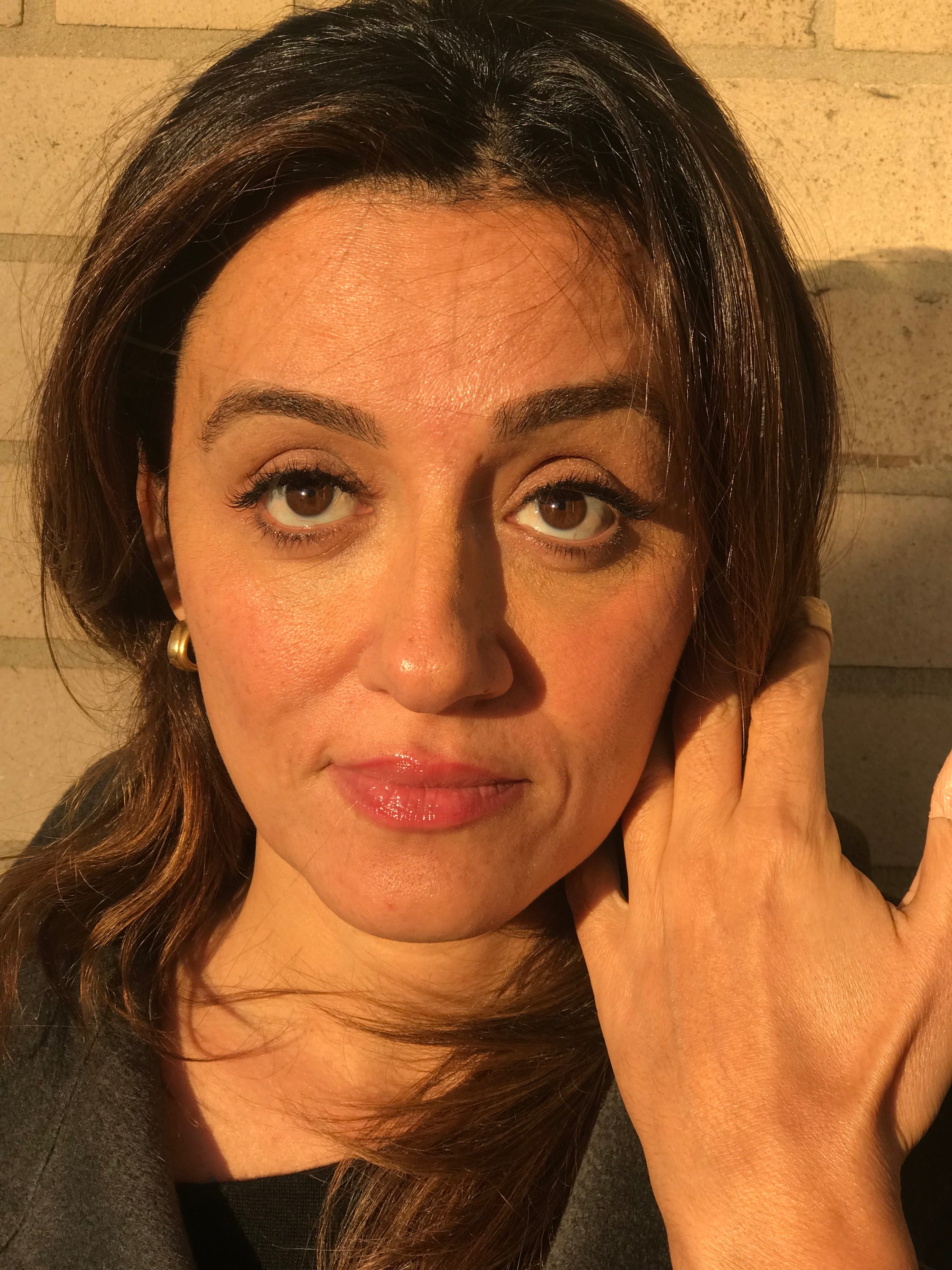
Tanaz Eshaghian (Director, Writer, Producer)
Tanaz Eshaghian is an Emmy-nominated Iranian-American director (Be Like Others, Love Crimes Of Kabul). Her latest film As Far As They Can Run was shortlisted for an Oscar.
Farzad Jafari (Director)
Farzad Jafari is an established filmmaker in Iran. His most recent films are Freedom (2019) and Shabnam (2021).
WATCH AN EYE FOR AN EYE ON JOLT.FILM
If you’re in NYC on October 6, RSVP for the special screening at Asia Society, 725 Park Ave, 6-8:30pm with a Q&A with Tanaz Eshaghian to follow
If you’re in San Francisco on November 29th there’s a special screening at 3:30 PM PT at New People Cinema – 1746 Post Street, San Francisco