
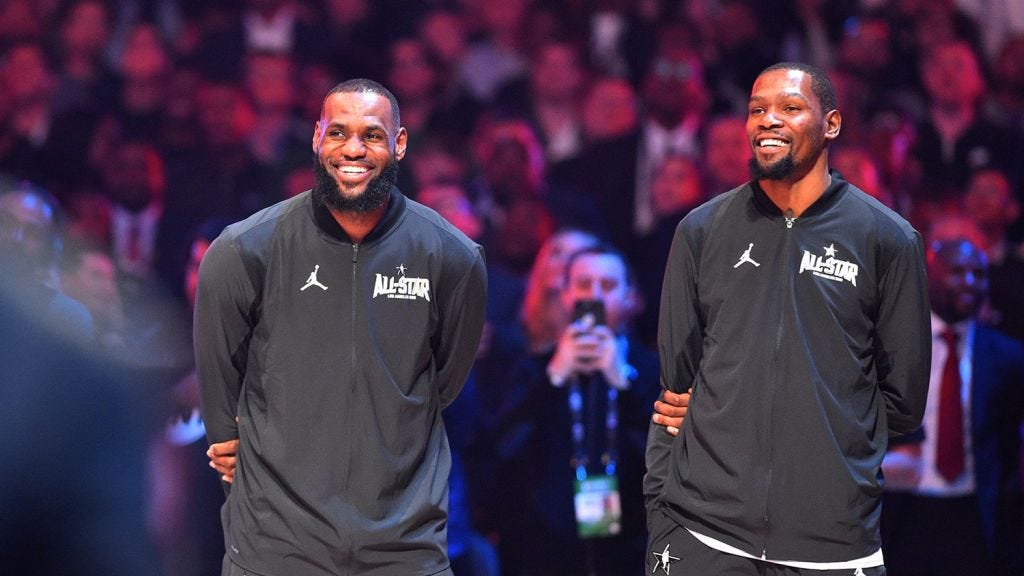
NBA stars LeBron James and Kevin Durant have partnered with a group of investors to transform elite youth basketball in the United States into a standalone, investable sports property through a new venture called The Futures League.
The current elite youth basketball ecosystem remains heavily fractured. The top prospects in the country rarely face each other on the court because they are divided across several competing circuits. Nike allocates more than $40 million annually to operate the EYBL, functioning largely as a marketing expense for its footwear division to secure early relationships with recruits before signing them to name, image and likeness (NIL) and apparel contracts. Meanwhile, Adidas, Puma and Under Armour spend an estimated $30 million combined each year on their own circuits. Because these teams are backed by rival sneaker corporations, squads from different leagues never play one another.
The existing structure also subjects athletes to grueling schedules that jam too many games into each weekend. Additionally, the vast majority of players do not receive any NIL compensation for their participation.
Previous attempts to reform the system have met mixed results. Overtime Elite has achieved traction through sponsorships and player recruitment, though it has faced challenges following recent shifts in NIL rules. The NBA also established the G League Ignite program to offer on- and off-court training for prospects, but the league ultimately shut down the initiative. Together, Overtime Elite and G League Ignite have successfully placed more than a dozen players into the NBA.
The launch of The Futures League follows other major financial moves by elite athletes, including ventures tied to LeBron James and his business operations. The new league aims to address the fragmentation, scheduling overloads and compensation gaps that have defined American youth basketball for decades.