
Nick Anderson, a Pulitzer Prize-winning editorial cartoonist, has brought his political commentary to The Contrarian as part of the publication's ongoing efforts to document government corruption. Anderson, whose career spans decades in American journalism, is recognized for his visual critiques of the political landscape and his contributions to major national newspapers.
Throughout his career, Anderson’s work has been featured prominently in the New York Times and the Washington Post. His editorial cartoons often focus on institutional transparency and the actions of high-ranking officials. The illustrator's inclusion in The Contrarian marks a continuation of his work addressing executive power and the ethical challenges facing the United States government.
A Legacy of Editorial Illustration
Anderson secured the Pulitzer Prize for Editorial Cartooning in 2005 while working for the Louisville Courier-Journal. The award committee recognized him for his unusual graphic style and his ability to convey complex political messages through poignant, often satirical imagery. Since then, he has remained a consistent voice in the debate over the intersection of money and politics.
In addition to his presence in traditional print media, Anderson has transitioned into digital-first platforms. He currently maintains a significant presence on Substack, where he provides direct updates and new illustrations to a dedicated subscriber base. This move reflects a broader trend among political journalists and commentators who are seeking independent venues to distribute their work without the constraints of traditional newsroom hierarchies.
Focus on Political Corruption
The Contrarian has positioned Anderson’s work as a central component of its mission to stop corruption within the Trump administration and broader political circles. The publication operates as a community-supported entity, relying on paid subscribers to fund what it describes as bold journalism and critical lawsuits aimed at preserving government integrity.
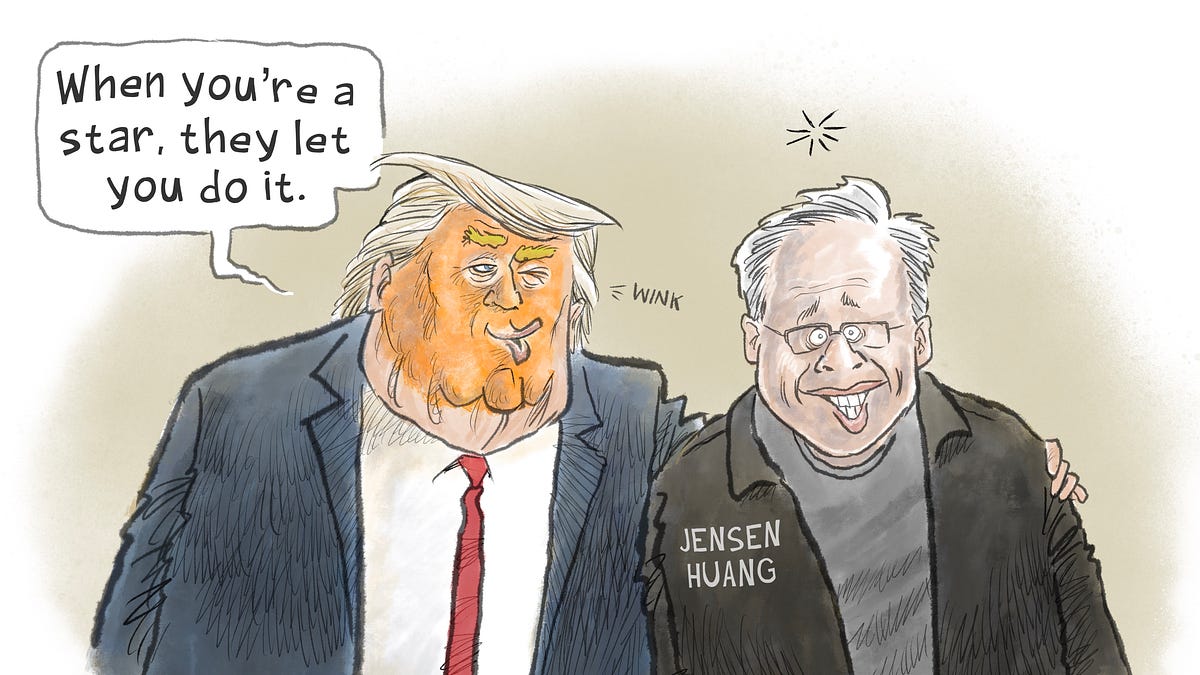
By leveraging Anderson’s established reputation, the outlet seeks to galvanize support for legal and journalistic efforts to hold elected officials accountable. The cartoonist’s recent work focuses on the specific controversies surrounding Donald Trump, utilizing visual storytelling to highlight issues that the publication argues are essential for the public to understand.
The Role of Satire in Modern Media
Editorial cartooning remains a vital part of the American political discourse, offering a unique method of critique that differs from standard reporting. Anderson’s style is noted for its directness, often stripping away political jargon to present a clear, singular argument about current events.
As the media environment continues to fragment, the work of established figures like Anderson provides a bridge between traditional journalistic standards and the new wave of independent, reader-funded reporting. His contributions to The Contrarian serve as both a historical record of current political tensions and a call to action for those concerned with the future of American democracy.
Supporters of the publication are encouraged to join the effort to monitor political activities through paid subscriptions, which directly support the production of Anderson’s work and the legal challenges initiated by the organization. This model of journalism emphasizes the direct relationship between the creator and the audience in the fight against institutional misconduct.