

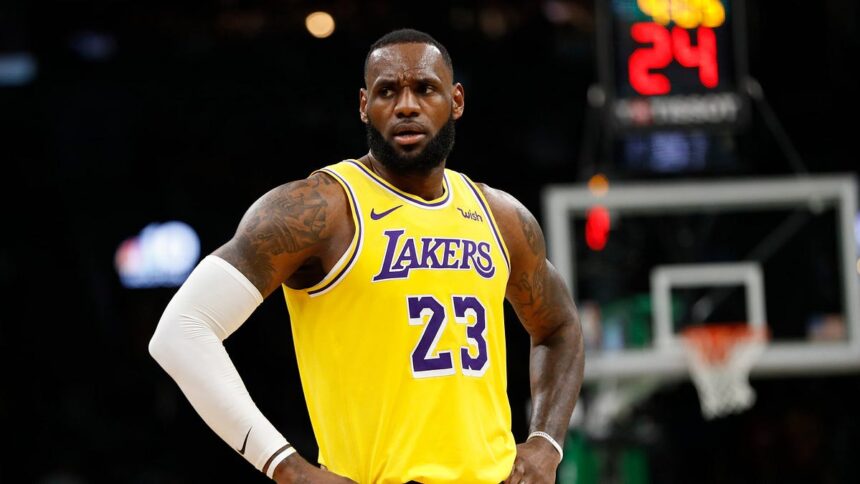
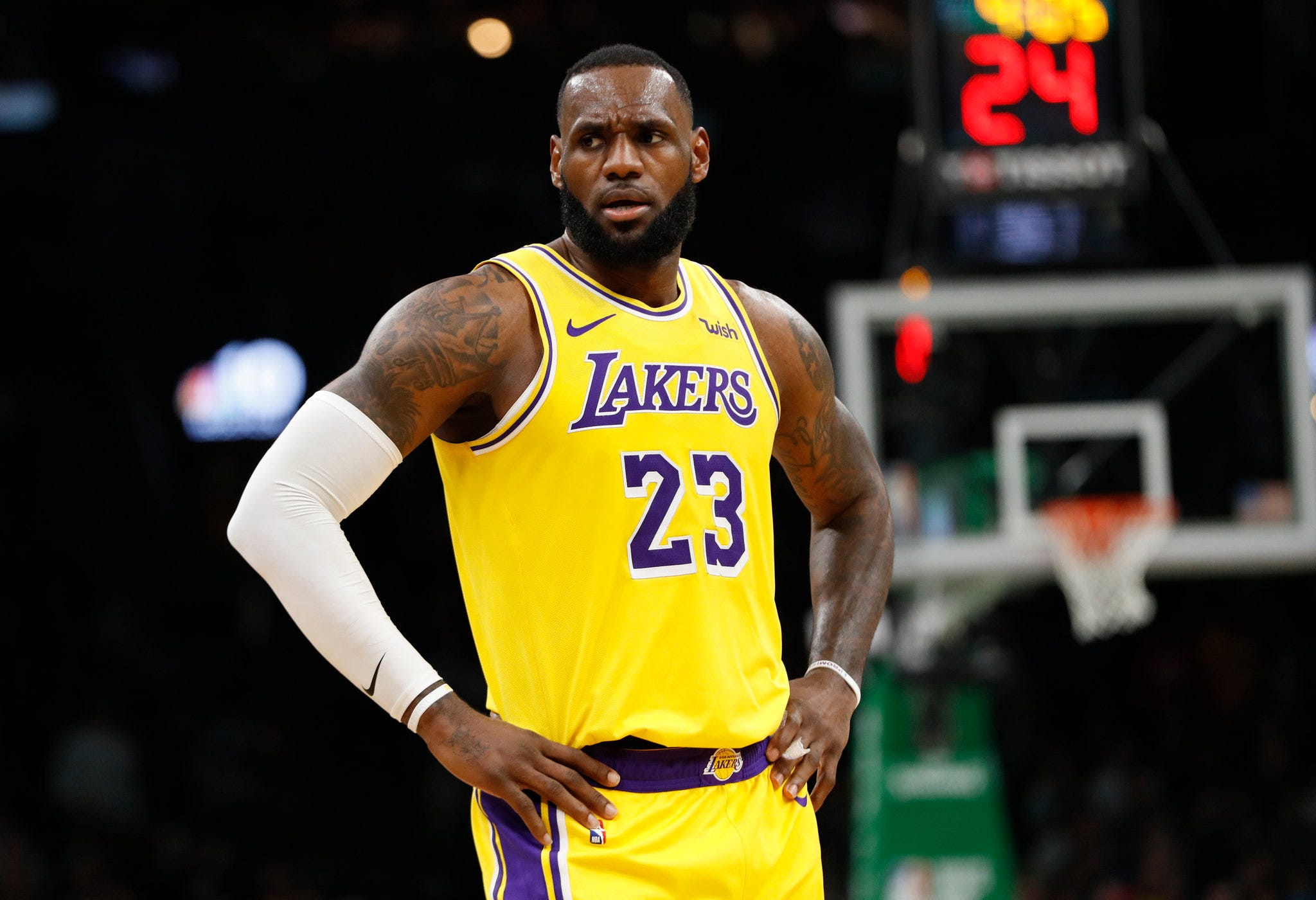
Bloomberg seemingly broke a big story yesterday. LeBron James opened an LLC in Ohio, issued $300 million in bonds, and two life insurance companies tied to Mark Walter’s asset management firm, Guggenheim, bought them. That’s pretty juicy, and then when you add in the fact that LeBron James played for Walter’s basketball team in Los Angeles, the cap circumvention stories write themselves.
But is this actually a story? Bloomberg certainly thinks so, and judging by the social media reaction, many others do too. I guess the theory is that Mark Walter set this loan up for LeBron to entice him to come to the Lakers, with the idea being that adding LeBron would make the franchise more valuable, therefore driving up the value of his equity in the team, which he just sold for $12.5 billion.
That sounds plausible — except the details don’t support that theory. For starters, the LLC is standard. Musicians and celebrities borrow against their future earnings all the time. The interest rate was fair. The deal was disclosed to the NBA and approved before it got finalized. LeBron was still on the Cavaliers. The LLC is literally named “King James Funding,” which is probably not the name you would pick if you wanted to hide the money. And even if you ignored all the facts I just presented, Mark Walter would have had no reason to give LeBron James a sweetheart deal because he didn’t buy a piece of the Lakers until four years later.
There are other important details, but we’ll come back to LeBron in a second.
I’m sure even my youngest readers have heard the name David Bowie. The now-deceased rock star pioneered celebrity bonds. In 1997, investment banker David Pullman helped Bowie issue $55 million in bonds. The bonds were backed by Bowie’s royalties from 25 albums that he recorded before 1990. As fans bought records or played his older songs, the incoming royalties did not go to Bowie. Instead, that cash flow went directly to the bondholders to pay back their principal investment and the 7.9% annual interest rate. The rise of digital file-sharing and online music piracy eventually reduced the value of physical albums, which subsequently caused Moody’s to downgrade the bonds closer to junk status. But the bonds never defaulted; all investors were paid in full when the bonds matured ten years later, and 100% of the royalty rights returned to Bowie.
This context matters because Bowie essentially created a new financial vehicle for musicians and other celebrities. Rather than waiting decades for long-term compensation, artists can now receive cash today via bonds/loans securitized by future revenue streams. It’s straightforward and a commonly used structure today.
Here’s how the flow works: a musician or celebrity creates an LLC to serve as the special purpose borrower → the securitized revenue streams (think: royalties, licensing deals, guaranteed endorsement contracts) flow into the LLC → bondholders receive their required payments → the issuer keeps whatever money is left over after debt service and regains the royalty rights after maturity.
Outside of the Walter investigation, the LeBron news raised eyebrows because you rarely see athletes do these types of deals. However, LeBron also isn’t your average athlete. While sports contracts rarely guarantee compensation for more than a few years and endorsement deals can go away the second someone makes a mistake, LeBron has a lifetime contract with Nike. That deal will reportedly pay him more than $1 billion in total. That’s guaranteed money, but most of it won’t come for years, if not decades, which makes it the perfect fit for Bowie Bonds.
LeBron receives almost $300 million today instead of waiting decades for Nike payments. If he invests that money and earns an after-tax return above the bond’s all-in cost — 4.8% plus fees — he profits from the spread. For example, earning 8% while paying 4.8% creates a roughly 3.2% annual spread before taxes. He also benefits from inflation, as fixed future payments become cheaper in real terms.
I’ll admit that it sounds weird when you consider the fact that someone’s money for retirement or life insurance is going to LeBron James, but these securities are sort of perfect for life insurance companies. Customers pay premiums, and then those premiums are invested in stocks, bonds, etc., so that the life insurer can pay out the plan when it is due. Since those obligations can extend for 20, 30, or 40 years, life insurers deliberately seek long-duration assets that produce predictable cash flows over a similar period. Think of LeBron as a corporation. He has multiple revenue streams, predictable cash flow from recurring contractual payments, and pledged income that considerably exceeds annual debt service.
In other words, this would be a normal deal if Nike were issuing the bonds; the only difference is that LeBron is the entity sitting between Nike and bondholders.
In fact, this arrangement is so common that fintech companies are now building entire business models around it. I literally got an email this morning from a PR rep for a company called Working Capital Partners (WCP). WCP says it provides $10 million to $150 million in upfront advances against guaranteed contracts for elite athletes, musicians, creators, and entertainers, “giving the broader sports and entertainment middle-market access to the exact liquidity LeBron unlocked.”
Not to mention, it’s not like LeBron got some special deal. I reviewed the filings, which anyone can purchase online, and it looks like there were two separate transactions. The first raised almost $300 million, carried a 4.8% interest rate, will mature in 2049, and was backed by future off-court income, including his lifetime Nike contract. LeBron’s LLC then issued about $60 million in additional 34-year bonds at 5.75% in 2022. The two insurance companies that bought the bonds still held about $245 million at the end of 2025, but that means 1) LeBron agreed to pay a slightly higher rate than similar investment-grade securities would have yielded at the time and 2) he has consistently been paying down the loans.
So yes, LeBron borrowed hundreds of millions backed by his lifetime Nike contract. He can put that money to work today, potentially earning a positive return while reducing inflation risk. But David Bowie pioneered this strategy three decades ago, and I’m just surprised it took an athlete this long to copy him.
If you enjoyed today’s newsletter, share it with a friend.