


The results of the midterm elections will send a signal to Washington—stick to the course set by President Donald Trump, or set a new direction. So far, the polls show moderate voters revolting against the White House’s direction on the Iran war, the economy, and immigration. If Democrats win big, Trump could lose support for his agenda.
Yet sometimes an urgent issue demands perseverance, even when the political heat is on. That’s what Douglas Murray argues about the need to reverse the trend of illegal immigration, which has transformed Western countries over the past decade. Douglas has warned about mass migration for more than a decade, beginning long before the issue came to dominate our politics. Today, he argues that politicians wise enough to see the problem must take the next step, and summon the courage to reverse it. —Mene Ukueberuwa

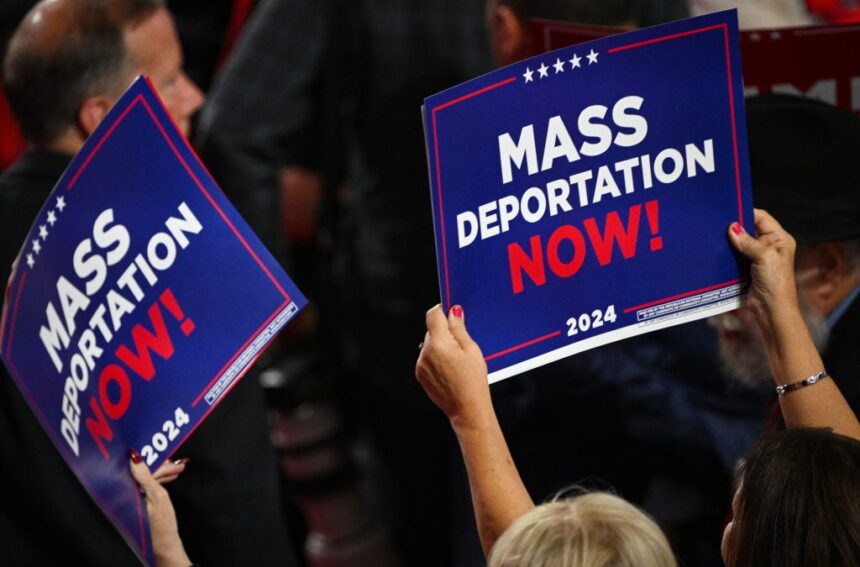
Can a country allow mass lawbreaking and retain its integrity? For almost any crime you can think of, the answer is no. No country would allow people to walk into another person’s house or let them drive on the wrong side of the road. Yet many politicians behave as if they have no choice when it comes to mass illegal immigration. It appears that even some Republicans are losing their will to deport illegal migrants and reverse the lawbreaking trend.
Their hesitation is understandable, since the public has little stomach for the reality of deportations, and the tactics of Immigration and Customs Enforcement (ICE) have turned off many would-be supporters. A Gallup poll in June found that the share of Americans who support deportations has fallen to 39 percent from a recent high of 47 percent in 2024, while the share who oppose them has risen from 51 percent to 58 percent. On cue, Republican politicians are distancing themselves from the policy, going well beyond condemnations of the worst ICE excesses. Representative María Elvira Salazar became the face of this shift last week when she released an ad excoriating the president for detaining illegal migrants who “had no criminal record”—meaning those whose only crime was to cross the border in the first place.
It is a fact that reversing illegal migration is a logistically difficult and often unsightly business. Ten years ago, when I was researching my book The Strange Death of Europe: Immigration, Identity, Islam, I spoke with politicians across the Western world about the problem, which was already roiling global politics and seemed certain to get worse. One thing struck me: No matter how “right-wing,” “far-right,” or “populist” the politicians I spoke to were, almost none had thought much about how to actually reverse mass migration.
Read more