
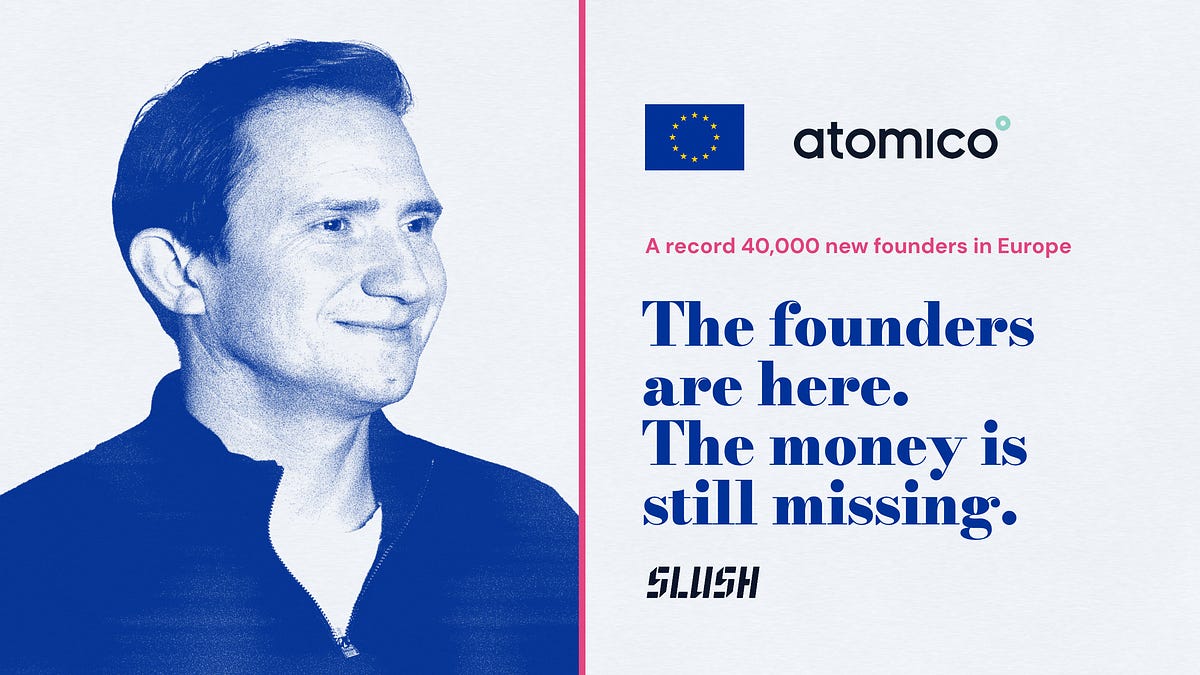
Europe produced 40,000 new tech founders this year, marking an 80% increase from two years ago and surpassing the United States in new founder creation for the first time. The findings, released in the 12th annual State of European Tech report by venture capital firm Atomico, highlight a shifting landscape where European entrepreneurs now account for 29% of the world's new tech starters.
A Rebound in Investment
The report projects that $81 billion will be invested in European technology by the end of 2026. This represents a 62% increase over the $50 billion recorded in 2025 and stands as the second-highest annual total on record, trailing only the $94 billion peak seen in 2021. The recovery is driven largely by massive late-stage rounds, including 13 investments of $1 billion or more in the first nine months of the year.
Atomico partner Tom Wehmeier, who has authored the report for over a decade, notes that the total value of the European tech ecosystem has reached $4.4 trillion. The region now counts more than 450 companies valued at $1 billion or more. Wehmeier suggests that the historical ambition of reaching "unicorn" status has been replaced by a race to $1 trillion valuations.
The Capital Gap and Institutional Barriers
Despite the surge in founders, the report identifies a persistent disparity in institutional backing. European pension funds manage approximately $13 trillion in assets but allocate only 0.006% of that capital to European venture funds annually. This rate is less than a quarter of the investment pace seen among US pension funds.
Wehmeier identifies an "expertise gap" as a primary hurdle, noting that many institutional boards lack the specialized personnel required to manage venture capital programs. While public institutions like the European Investment Fund and national banks in France, Britain, and Germany have historically anchored the market, the report argues that private institutional capital remains the largest untapped pool for the continent's growth.
Structural Friction and Founder Resilience
The report highlights that the complexity of operating across European borders—often seen as a disadvantage—may actually serve as a training ground for global expansion. Companies like Spotify and Revolut had to navigate diverse regulatory environments and languages from their first year of operation, building a level of operational resilience that helps when scaling into the US and other international markets.
However, early-stage funding remains a point of concern. While mega-rounds are flourishing, "first-money-in" rounds fell by nearly 30% between 2021 and 2025. Atomico attributes the high volume of new founders to the lower costs of building via artificial intelligence and a robust "alumni flywheel," where former employees of successful startups like Palantir and various European unicorns leave to start their own ventures.
Policy and the Future of 'EU Inc'
To further streamline the ecosystem, Wehmeier advocates for the adoption of "EU Inc," a proposed pan-European company form designed to compete with the simplicity of Delaware incorporation in the US. The goal is to reduce administrative friction and foster a unified market that encourages risk-taking.
“We’ve built a world-class ecosystem here. I think we sometimes don’t act like we’ve done that,” Wehmeier stated, emphasizing that the current era is the most opportune time for European entrepreneurship in the report's 12-year history.
Investment Trends by the Numbers
- $81 billion: Projected total investment for 2026.
- 43,000: Number of alumni founders spun out from European unicorns.
- 29%: Europe's share of the world's new tech founders.
- $1.24 billion: Record fund closed by Atomico in September 2024 to support early and growth-stage firms.
The report concludes that while Europe has effectively solved its "founder problem," the challenge for the coming years remains a "capital problem," specifically regarding the mobilization of domestic institutional wealth into the venture asset class.