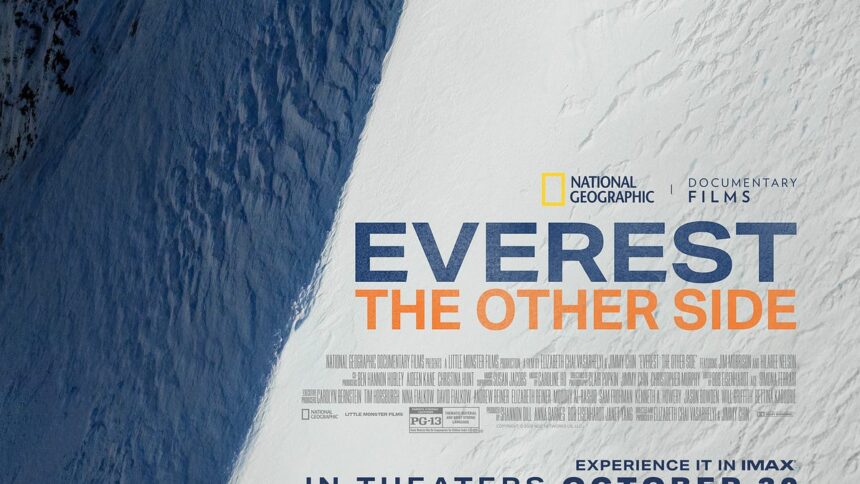
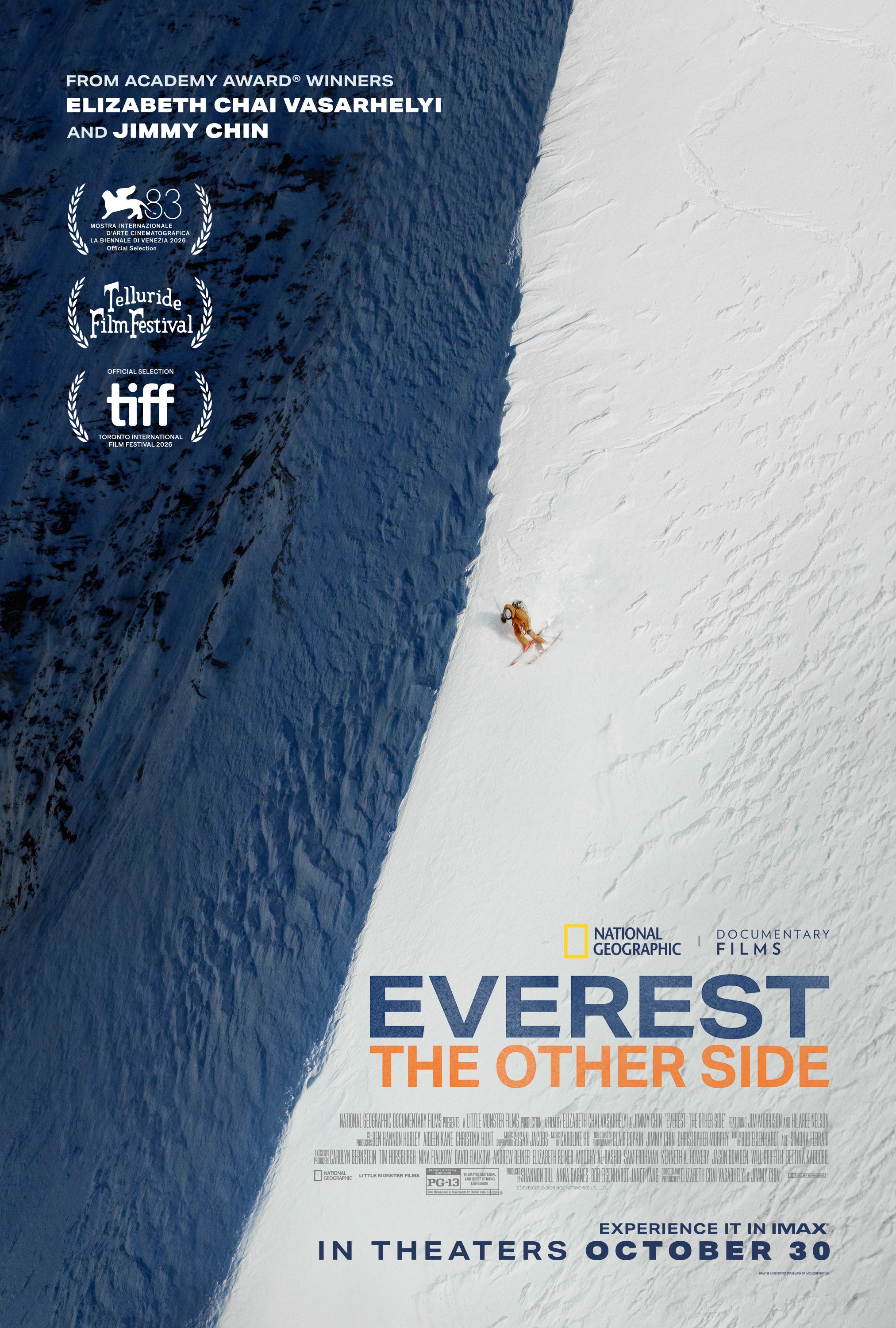
In this vHopeful Conversation, I talk with Oscar winner Elizabeth Chai Vasarhelyi about Everest: The Other Side, her last film with co-director Jimmy Chin. It begins as a love story about ski mountaineers Jim Morrison and Hilaree Nelson and their dream of skiing Everest’s direct North Face. When Hilaree is killed in an avalanche, it becomes a reckoning with grief and with what such dreams truly cost. Chai talks openly about her decision to show the avalanche on screen. She also describes the strange position of making a film in which the father of her children was risking his life. She pays tribute to the Sherpas, who carry most of the danger on the mountain, among them Yukta, who has since died on Broad Peak. She reflects on what it means, as a Chinese American, to film from Everest’s Chinese side while the two countries are barely in dialogue, and on the immigrant parents who hoped she would become a doctor. After six years given to this film, she tells me why she is giving herself room to find the story she wants to tell next.
Transcript lightly edited. Podcast available on Apple, Spotify or wherever you listen on this Substack or Ted’s Hope for Film
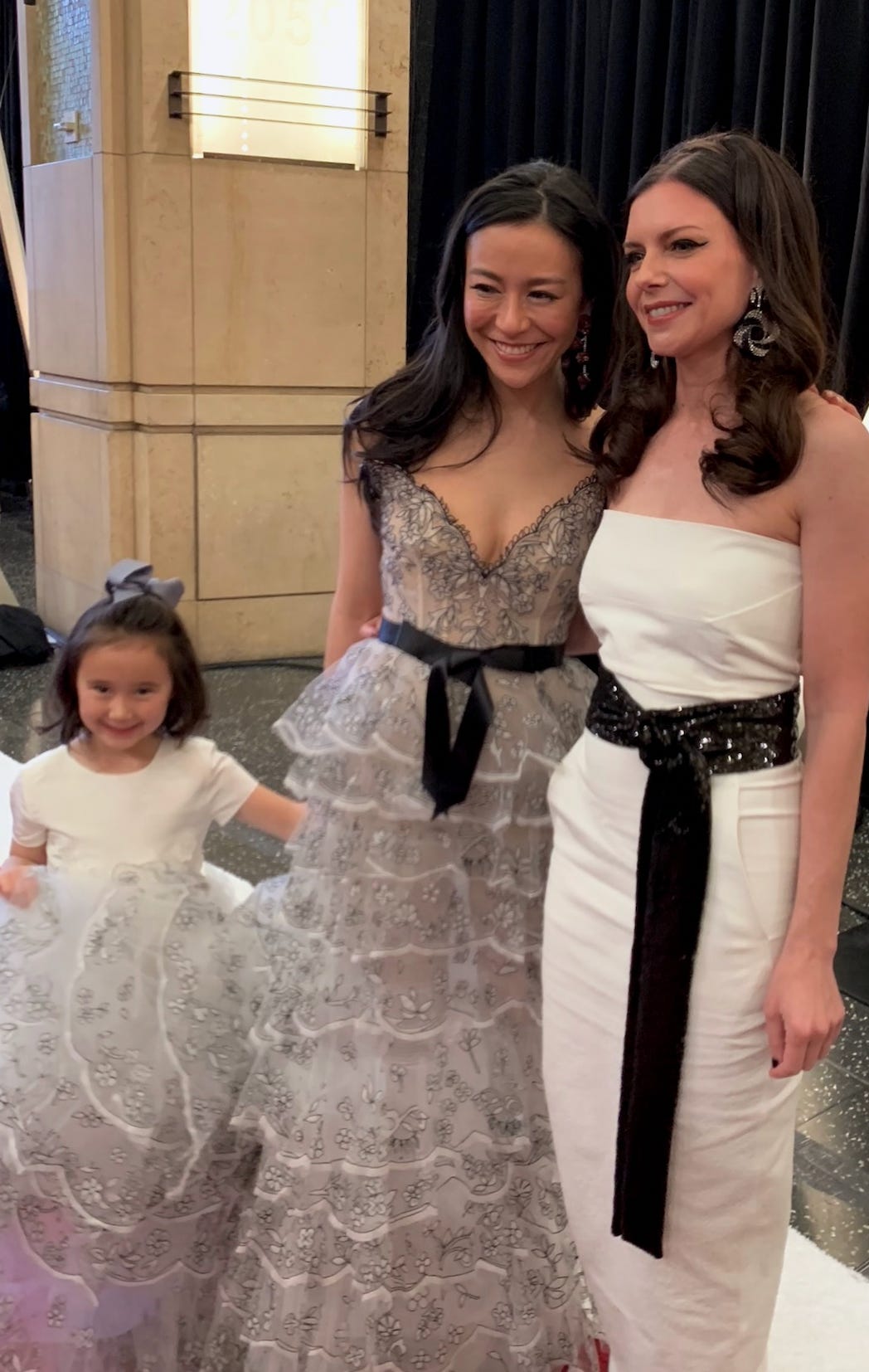
Vanessa Hope: I am extremely excited to speak with Academy, Peabody, and BAFTA Award–winning filmmaker Elizabeth Chai Vasarhelyi about her new film, Everest: The Other Side, which she co-directed with Jimmy Chin. It follows ski mountaineers Jim Morrison and Hilaree Nelson and their shared dream of climbing and skiing Everest’s direct North Face, a dream that becomes a story of love and of grief.
Chai’s recent films include Lost in the Jungle, which won the 2025 Emmy for Outstanding Current Affairs Documentary, and Love+War, about photographer Lynsey Addario. She co-directed her first scripted feature, Nyad, which earned Oscar nominations for both Annette Bening and Jodie Foster. She also co-directed The Rescue, nominated for a BAFTA and a DGA Award, and the series Photographer, which won a Peabody.
With Jimmy, she won the Academy Award, a BAFTA, and seven Emmys for Free Solo, and their first film together, Meru, won the Audience Award at Sundance. Mind-blowing. Her earlier films include Incorruptible, Youssou Ndour: I Bring What I Love, and A Normal Life, which won Best Documentary at Tribeca.
Chai, I have no idea how you do it all, how you also have a life and a family, but you’re amazing.
Chai Vasarhelyi: Thank you, Vanessa. When you list it off that way, it sounds like a lot, but it doesn’t feel like a lot.
Vanessa: You’ve lived many lives through many films. It’s significant. And Meru, Free Solo, and now Everest: The Other Side span more than a decade of your life. Looking at them together, what do you see, maybe, that you couldn’t see making each one? And how have they changed you as a filmmaker or a person, across three outstanding award-winning films?
Chai: So Jimmy and I have made films about individuals who have this audacious dream of free soloing El Cap, or swimming from Cuba to Florida. But this is our first that examines both the idea of the dream as well as the real-life costs of such a pursuit. And it became the most personal film, and actually the most complicated, you know, complicated in what transpired in the film. And it was just really, really personal.
Vanessa: It’s unbelievable what you’ve captured, because you, as you say, set out to tell this love story of Jim and Hilaree and their shared dream. And you lose Hilaree, and we see this in the film. How did you decide to keep making the film? How did you think about your responsibility to the family, her sons, and how to tell the story after that tragic accident?
Chai: Oh, yes. So, first and foremost, it never entered my mind that Hilaree could die. And so when she did, when the avalanche happened, you know, it was first and foremost kind of living life and trying to support Jim and support the family.
But what happened was, it wasn’t really about whether we’ll continue the film. It was, do I want to make the film that it’s going to be now that she’s passed? Because, you know, Jim has this, like, terrible backstory, where he had a very, very significant loss earlier in his life. And so grief was always part of our story. But, you know, with Hilaree’s death, I felt responsible for trying to explore, to the best of my ability, the real costs, and trying to also hold our participants accountable for those costs, right?
But it was the first film where Jimmy, who is the father of my kids, put himself in the line of fire. So suddenly my professional aspirations were in direct conflict with my personal interests. And that’s, like, a very strange place to be, especially as a nonfiction filmmaker. So it became about trying to be as close to the intention of what I want to say while I was making this film.
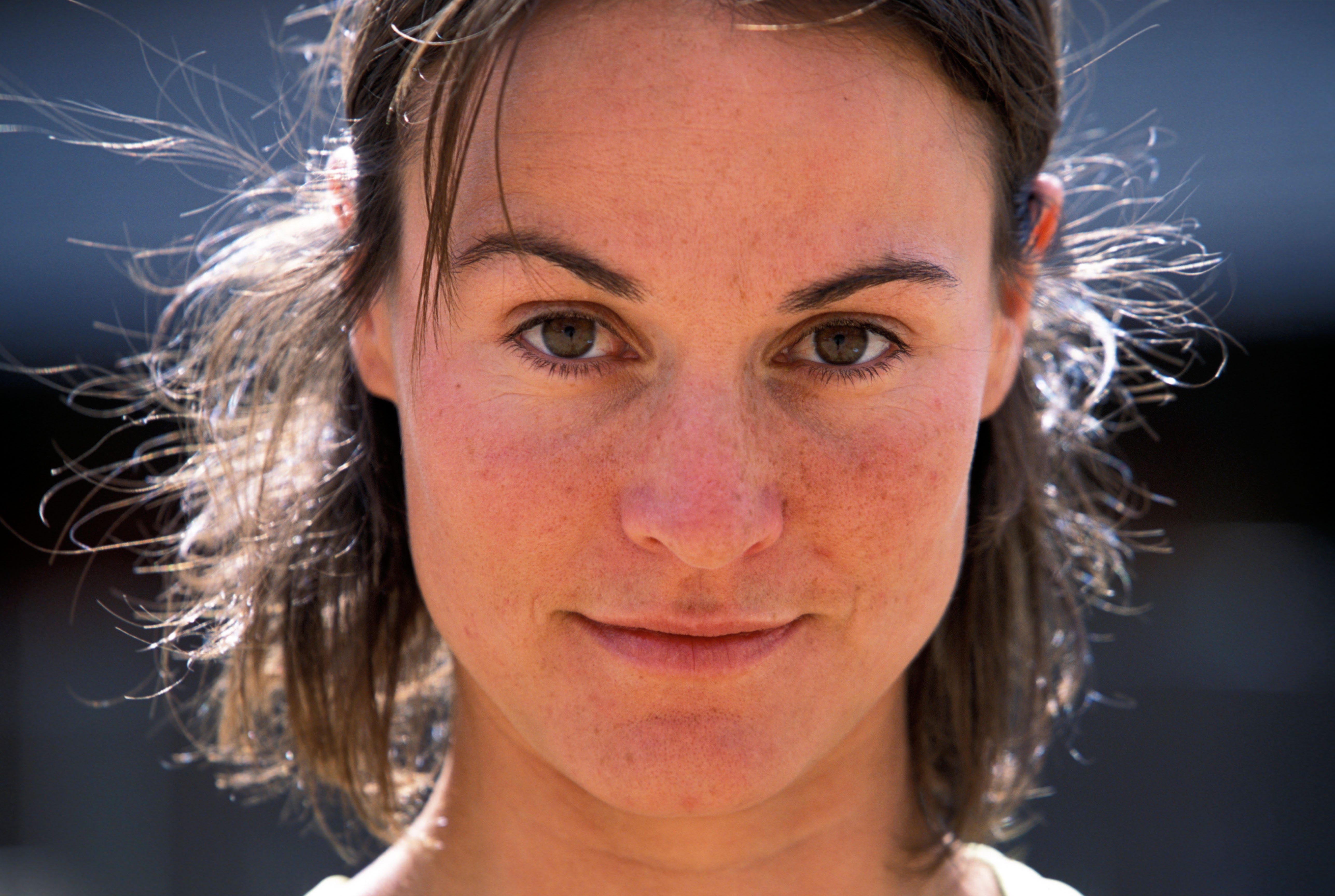
And the reason why it all began was because of Hilaree. You know, we had made a bunch of these films about individuals who have these audacious dreams. Hilaree was a little different because, one, she was a woman, and she was a trailblazer. A lot of people in the outdoor world really look up to her, like it was possible to be a mom as well as have this fabulous career. But she also was disarmingly candid with how she spoke about risk. There’s a clip in the film where she says, “I know it’s just a mountain, but it’s everything to me.” And that lack of romanticism, and just the honesty, that she can say that, was something I hadn’t really heard before in those words.
Alex does say that. Alex Honnold (Free Solo), it’s very clear to him how important his objective is to himself, and just himself. But often there’s a romanticism in it. It’s like the same thing when people talk about war now. And I’m like, no, we have a volunteer army, military. So people who are going, yes, there may be financial needs, but they’re also choosing to do that. You know, Lynsey Addario is very clear that she really believes in her work, and it’s really dangerous, but she has changed policy.
So that was kind of the question: do I want to make that film? And how do you keep Hilaree’s legacy alive, but also persevere through this journey of grief that Jim Morrison embarks on?
Vanessa: That line of Hilaree’s that you quoted completely jumped out and stuck with me, so I’m glad you’ve highlighted that. And I appreciate you were in the shoes, in many ways, of your subjects, because you had Jimmy on the mountain risking his life, and you have a family, and that is deeply unsettling, to say the least, when you’ve now also witnessed the death of someone who was a friend. It makes me want to ask you about that moment in the film where you do appear briefly, just to kind of talk to Jimmy about how many people you two had at your dinner table who lost their lives, right?
Chai: So Hilaree’s death certainly changed my understanding and relationship to the risk of ski mountaineering. It didn’t change Jimmy’s. So I think it’s more like I finally understood. And it was an understanding that was almost impossible for me to grasp, because it’s terrifying to think of the father of your children in these positions. But then Hilaree’s death forces you to look at it straight.
And I’ve hung out in this community for so long. I know so many athletes. And it’s really Jimmy who always talked about, like, well, you can get hit by a car in the street, and you can, you know, fall in the bathroom. And that’s why I’m like, no, no, no. If you’ve sat at my dinner table, and you are a ski mountaineer or alpinist, and you go to the Himalayas, I would say it’s a 50-50 shot of you living right now, if you look at who was there at the dinner table and who lived. So I used to joke about getting some math PhD to actually figure out the algorithm to prove my point. But, you know, it’s just that.
And I wanted to make a film where we can be as honest as possible. And yes, it’s hard not to judge the actions of anyone. Like, you know, that’s kind of what we do. Making a documentary, it’s my opinion of the events. But I also wanted to present the loss as viscerally as possible. And that’s why the clip of Hilaree’s avalanche is in the film, which was a really difficult decision. And of course, we had consent from the family. But I was like, you just need to see it to really understand the loss. Because, again, people disappear in the mountains, and it’s like there’s a romantic notion. And I was like, no, no, no. This is a horrible thing that happened. And you can see that it was almost random. You know, it didn’t break when Jim skied. It was when she did. And he could have easily been second. And that’s just, you know…
So at the same time, I thought the only way to tell an honest story about Hilaree and Jim is to try to bring audiences to understand, and maybe experience, why these pursuits are so meaningful to them. And, you know, it’s kind of this funny thing, that you feel all these different emotions, but at the end, you are rooting for them.’
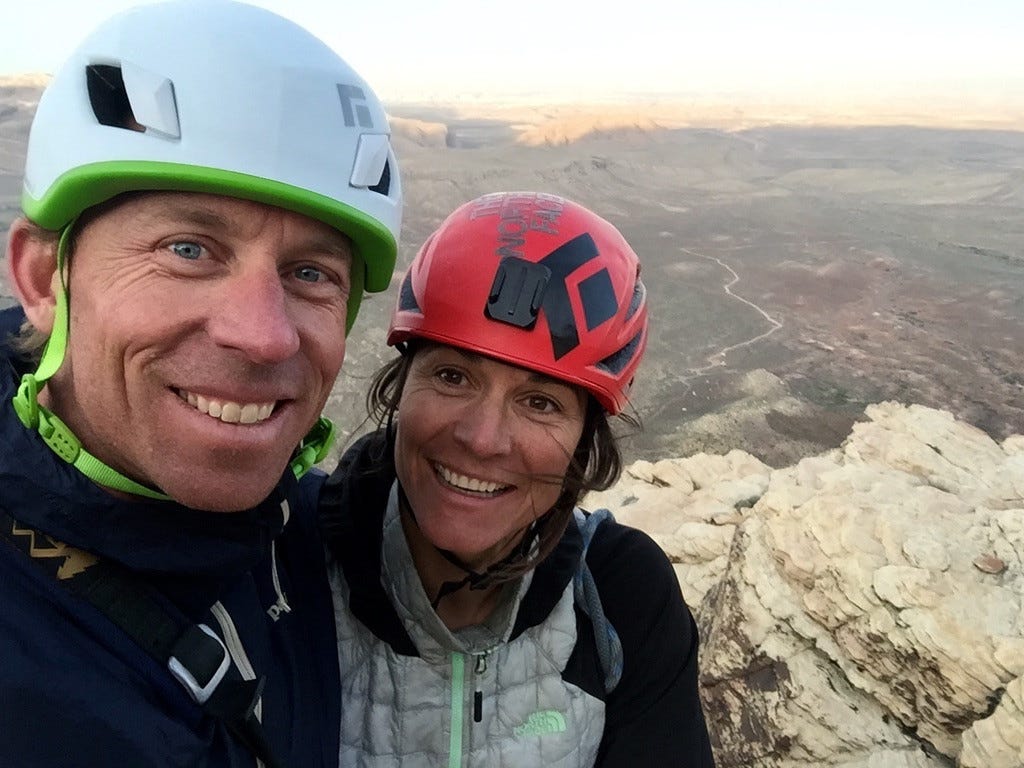
Vanessa: Yeah, absolutely.
Chai: And so I feel like everyone has something to say when they finish watching the film, that people have really different types of reactions. And that’s kind of the point. That’s what I wanted to make.
And I had never been… When Hilaree died, I just had this moment of, wow, we have been so lucky. And Jimmy would phrase it as, this was just unlucky. You know what I mean? And I was like, no, no, no, we’ve been so lucky that no one got hurt on any of these other shoots we did, other films. And that changed my comfort level, and my understanding, too, of, you know, ski mountaineering, and how to ethically represent these stories. I don’t know, you know.
Vanessa: Yeah. I was curious about the Chinese side of Everest, what that means. You’re in Tibet, it’s the harder-to-reach side, it’s one of the impossible goals, it’s never been done before, all of that. But did that mean anything to you in other ways?
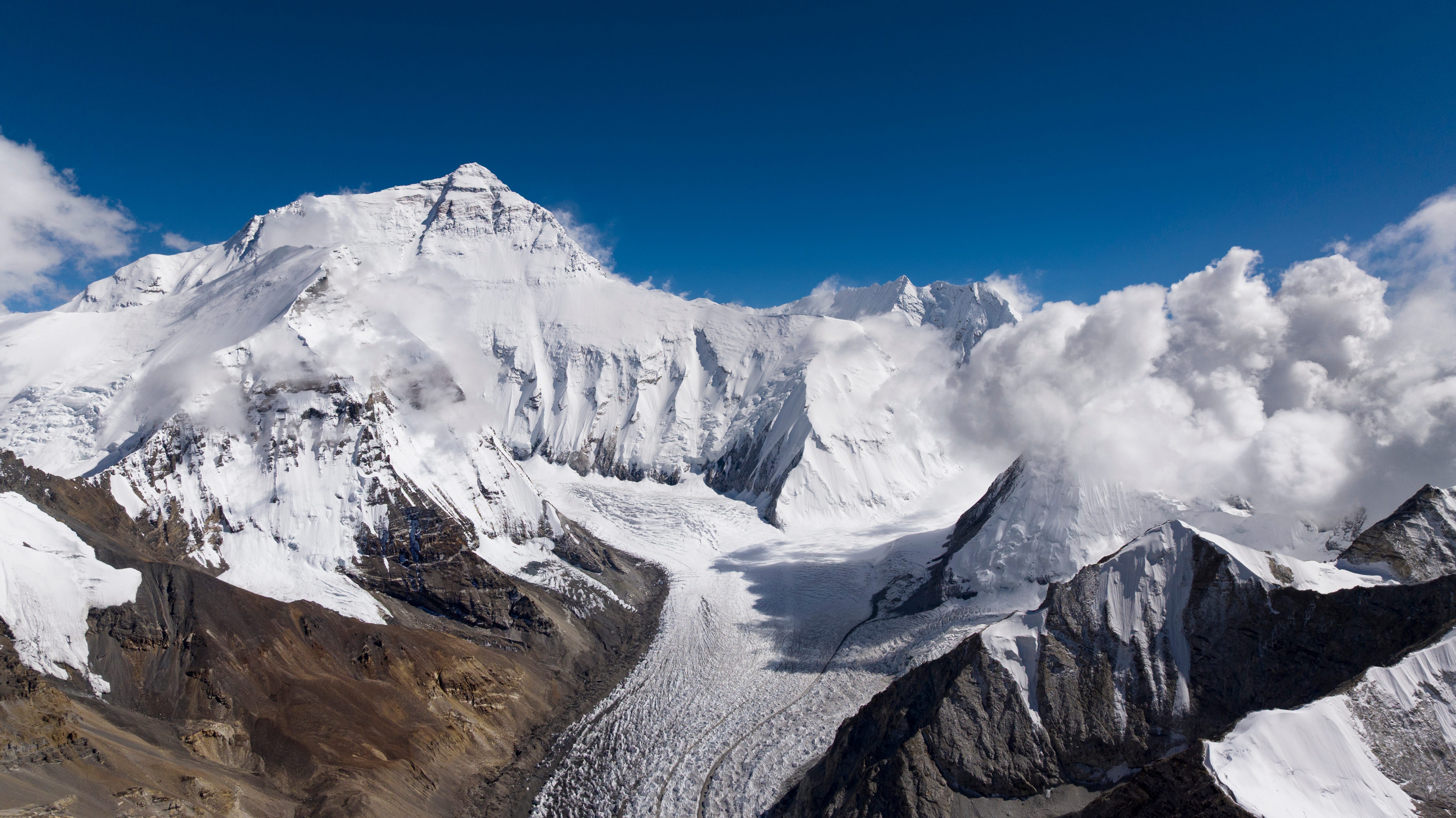
Chai: Yes, it’s a really good question. So first, just to explain it, because it’s sometimes really hard to get your head around: all the images you have seen from Everest are normally from the south side, which is accessed through Nepal. And those are the images of commercial climbing expeditions, where you see 100 people waiting in line. Roughly 13,000 people have summited the south route, the South Face. Whereas the North Face, which is accessed through China, was first summited in 1963, and only five people have subsequently ever made it up.
And if you look at it, it’s huge. And if you’re a skier, they always say the line is so beautiful. But if you actually really look at it, you see that line also happens to be an avalanche trap, because all the snow in the mountain is funneled through. And the North Face is traditionally, because it’s more in the shade, supposed to be harder, right? And that’s why the brand is called The North Face. Like, you know, everyone’s like, are we skiing south-facing or north-facing today? It’s part of the culture.
So, yes. But there was an added dimension of meaning, because, you know, for me, being Chinese American is incredibly important to me. I’m actually half Hungarian, half Chinese, but I chose that my kids’ first language is Mandarin, right? We have a Chinese-speaking household. Their nannies were always only Chinese-speaking, which was really hard in the beginning, but it’s worth everything now. I’m so proud that they speak it.
Because I think that was always one of the ways that Jimmy and I really connected: we both were the children of immigrants, Chinese immigrants, whose parents were pretty tough on us. You know, Jimmy played the violin until he went to college. I played the piano. And also, we both were compelled to really push against that, the expectations of being a doctor or a lawyer, or going into finance. Because, you know, my mom, even after Meru won the Audience Award at Sundance, she’s like, “It’s still not too late to go and be a doctor.” And my dad, who’s a professor and really the true champion of my career, his response is really quite funny, where he’s like, “Do you really want our daughter to put her hand up other people’s asses?” And, you know, it’s crazy. And my dad is a professor of accounting. But that was kind of the thing, where he made space for me anyway.
Vanessa: Yeah. I would say, let’s just pause and say you and Jimmy are both wildly successful in your chosen fields. And whether, you know, that was helped by needing to escape being a doctor or a lawyer or someone on Wall Street, or if it comes from certain levels of expectations from Chinese immigrant parents, like, wow, what you two have accomplished is really amazing.
Chai: Thank you, Vanessa. But, you know, Jimmy has this large social media following, and he’s quite unique in the outdoor industry as a Chinese American who’s a prominent mountaineer. But he’s never leaned into that. Whereas my feelings about representation are very, very important to me. I think it’s really important to talk about it.
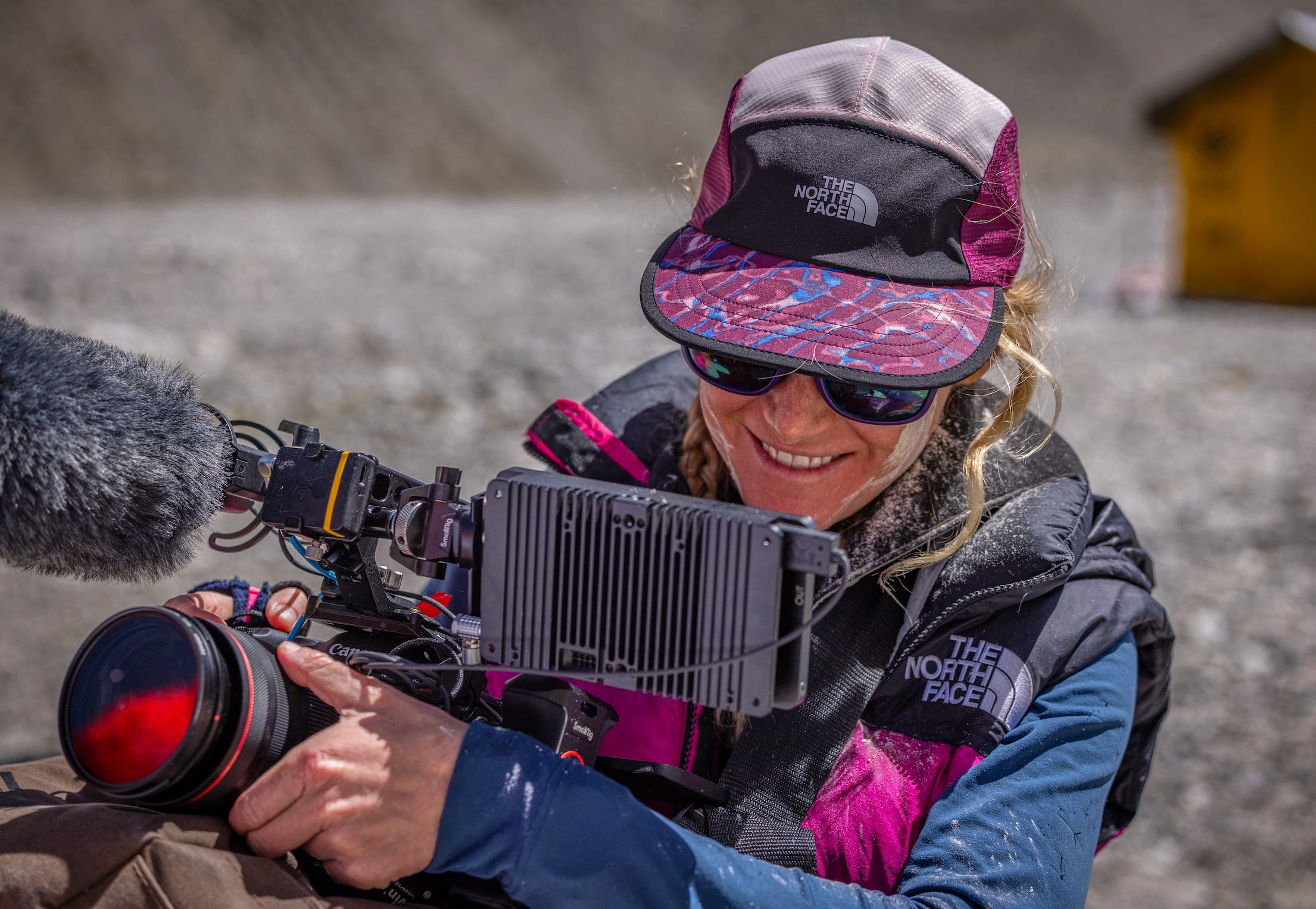
We have lots of different types of people who work in our offices. I’ve very, very explicitly hired women and brought women into the mountaineering filming world that we created. There was a young woman called Savannah Cummins. She was a mountaineer, she was interested in photography, and she ended up shooting on Everest: The Other Side.
Vanessa: Wow.
Chai: It’s interesting, because I think, the China part of it, we felt like, of course China should let us come in, because we are Chinese Americans. And this is kind of the moment where relations are at their very worst. You know, it’s just terrible. There’s really no dialogue between China and America. And this being a sports endeavor, it seemed like a good opportunity to be able to create connection without overly politicizing decisions. The film is opening on November 6th on 4,000 screens in China.
Vanessa: Wow. Amazing.
Chai: Yeah. China has the most IMAX screens, at 800, so it’s all their IMAX screens plus 3,200 normal screens.
Vanessa: This is a first?
Chai: No, Free Solo did it. Free Solo played in China.
Vanessa: Free Solo did it. Incredible. So you have a following.
Chai: I don’t know. But it was very interesting that all my mom’s friends in Hong Kong or in New York began getting this funny chatter about me when Free Solo was released there, about what I was wearing. So it’s a totally different culture, and a different cinema culture, too. They love going to the movies. It’s something to do.
And I think that, again, because of the delicate relationship between the States and China, there are not that many American films that are released every year in China. And so for Disney, our film was a real opportunity to bring a story to the Chinese market. So we’re all going, and I think it’ll be really interesting.
And I think also China has made this real push. President Xi has talked a lot about keeping the great outdoors pristine. And it’s exciting, because this is the first time you’ve ever seen the North Face of Everest like this. It’s the most remote place on Earth. It’s the highest place on Earth. And hopefully, between the cinematography and the storytelling, you get to feel it a bit, and also remember the awe that comes both from the spectacular landscape, and from this reminder that we’re this big in a huge, huge universe.
Vanessa: Yes.
Chai: And that humbling moment. So, yeah. That’s funny, you very much got it. And Jimmy and I have always, with our films, done some Chinese press and had, you know, Asian American screenings. We always screen at the Asia Society. So the Asia Society screening was actually on Sunday night, before our premiere, and, you know, it was really special.
Vanessa: I bet. You spoke about the ethics of the filmmaking, which you take very seriously. And in your film, we see the Sherpas. How did you go about making sure they were honored and credited? Or think about working with them?
Chai: No, it was a priority for me. And also, an expedition of this size has never been documented like this. Because it’s a tale as old as time that when you approach this type of climb, you employ a lot of Sherpas, and they take on the majority of the risk. But you’d be shocked at how many people are like, “Wait, the Sherpas are going first?” And yeah, they go first until Camp 3. And then once you’re almost to the top, the professional mountaineers start going first. And each one of them has a Sherpa buddy, you know, a partner.
So, you know, there are a lot of characters in this film. That was a hard part of creating the film. But we knew from the beginning that the Sherpas were really important. And, you know, Pemba’s mom, she’s crying about all the sacrifices. She worked hard. She sent her son away at five to get an education, and he still returned to the mountains. That I completely understand. And she must live in fear. Because, I mean, she and I were in the same position. Not my son. It was, you know, the father of my kids.
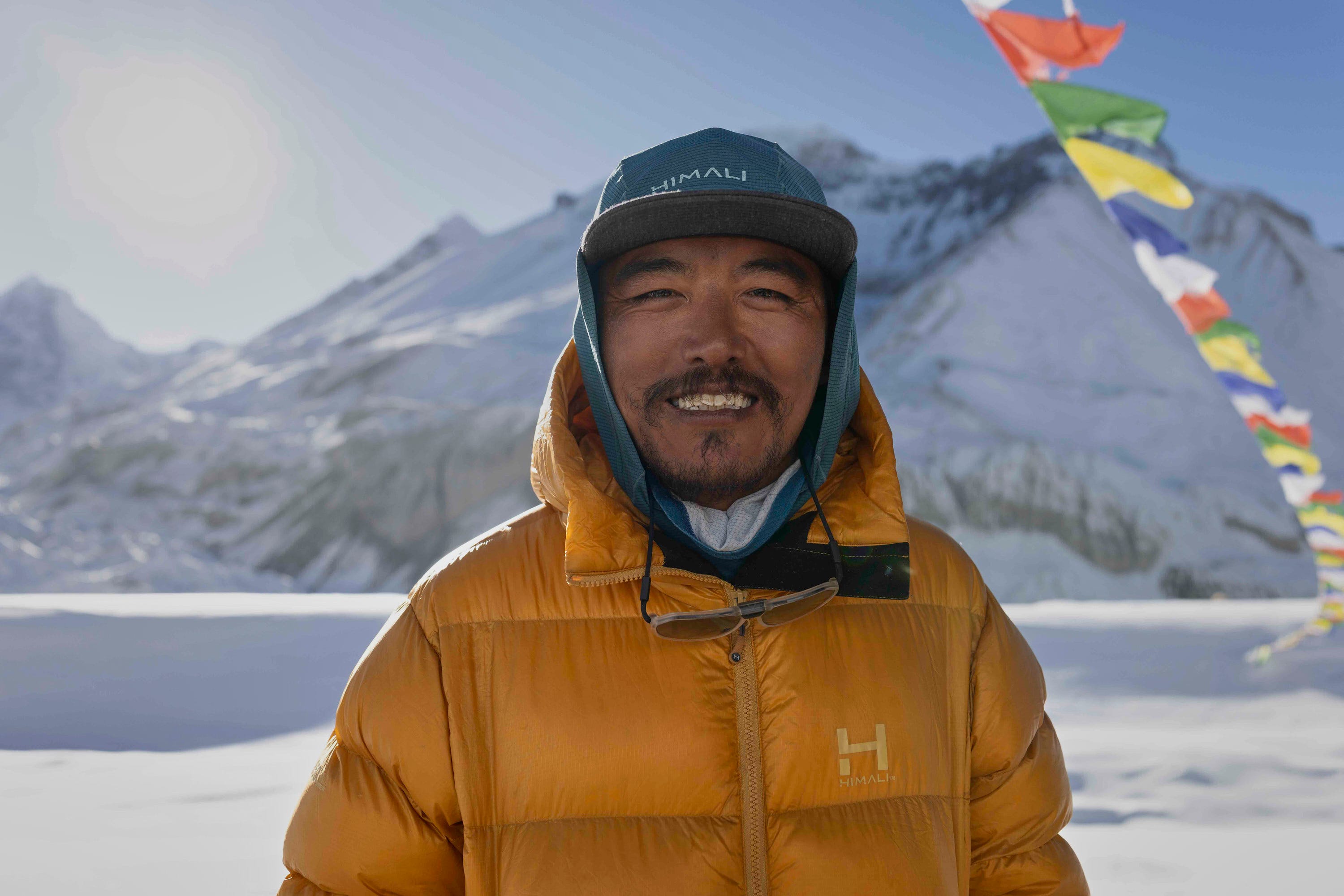
And then, honestly, the worst happened. So Yukta, the Sherpa in the film who’s our lead fixing Sherpa, and who breaks his leg on the second expedition but summits on the third, died [on July 30, 2026] in an avalanche on Broad Peak in Pakistan. Nims was also there, and we produced a film called 14 Peaks about Nims. And it’s just, again, to my point: when you’re in this line of work, the hazards are real, no matter how good you are. Because Jim and Hilaree were the best. They are the best. Jimmy is the best.
And I’d say their job is primarily risk assessment, right? And now you’ve got all these tools, from meteorological reports and aerial photography, so you can see what the challenges are. But still, you know, one should acknowledge that risk, and then also really think about how that risk functions in the reward of the pursuit. Is that why you’re doing it? Which I don’t think it is. I think it’s a calling, and that’s the only way to talk about it. And I think that, you know, maybe you and I would not make those decisions, but I think I’ve gotten as close as I can to trying to understand that type of decision-making.
Vanessa: Yeah. And there is something where, as you said, they’re the best at what they do, they know what the risks are, and they’re humbled by nature, by the mountain. They’re almost worshipful of it, in this kind of spiritual way. I think you have Hilaree talking about that in a really interesting way. Both of them do.
Chai: No, I agree. But then again, the cynical part of me is like, well, it’s also because you’re depriving your brain of half its normal amount of oxygen, which is kind of a thing. You know, the only person who’s actually thinking clearly is at Base Camp. I mean, it’s at 50%, I think, by the top. We can look up the numbers. But yes.
And I think still the part that most interests me is what compels you to the base of that mountain, and what’s pushing you up it. Because everyone’s running from something or running towards something. And this is an extreme case. But, you know, Jim’s expedition to the summit of the direct North Face really started when he was in his 20s and his family died, and those first 10 steps he took in his driveway are what led him here. So I think there’s a universal human… Looking at these extreme cases can help us wrangle and wrestle with our own fear of loss, our own fear of grief.
Vanessa: It is. It’s a processing of loss and grief. The film really gives you a sense that there is no such thing as closure, maybe, but there is a way to manage it. Live with it.
Chai: Live with it, you know. And that even living with it can inform quite a meaningful life. And that you can learn to just live alongside it. It’s not going to go away, but you also don’t want to forget these people. They’re so important to you.
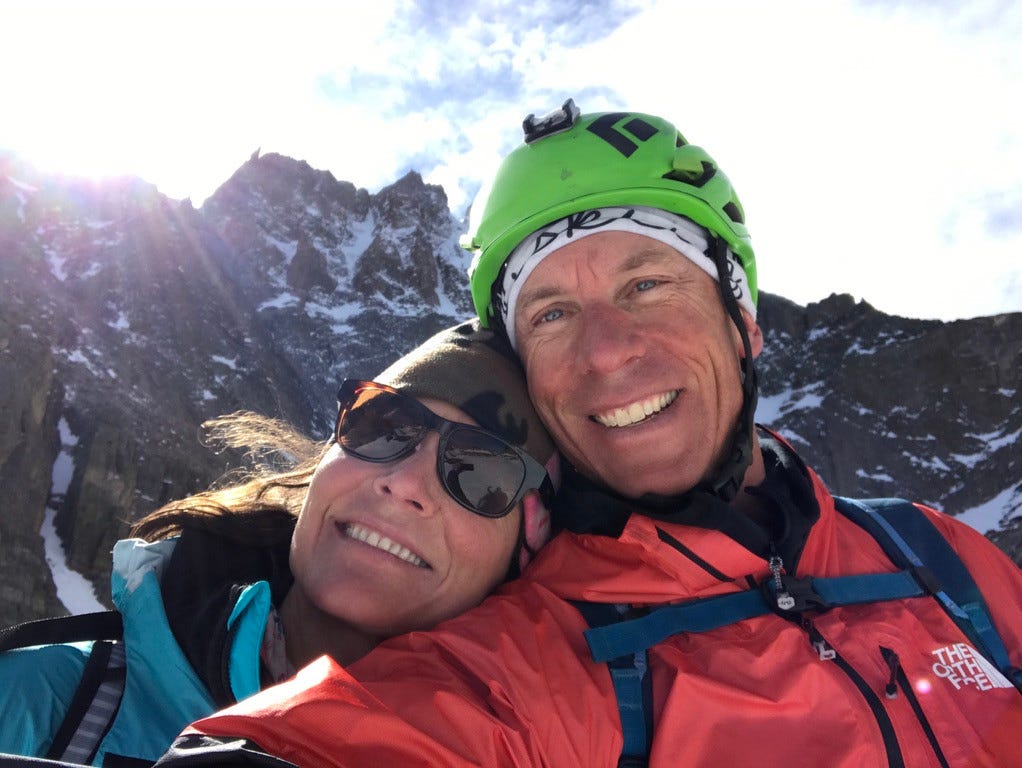
And for me, I have just, I think like many people, I’m very scared of the unknown. And something about Jim’s experience gives me almost physical comfort, to know that even when the worst happens, if you really try, you can probably move through it, you know? And that’s ironic on many, many levels with this film. But, yeah, I hope audiences feel that.
Vanessa: Yeah, it’s such a moving film. It’s a profound, profound film. I am very curious, Chai, about what you’re thinking next. What is your next project, your film, going to be?
Chai: Well, speaking about oxygen, this film took up all the air of my life for the past six years. And it was only because of the pandemic, and China closing for three years, that I could even make Nyad in between. Because it was a lot of pressure to carry, and a lot of risk to live alongside, and the production was so difficult and so complicated.
But, you know, really, I was desperate to make another fiction film right after Nyad. But this was my responsibility, to finish this film, especially because we have such a long history with National Geographic. And, you know, Jim is our friend, and Hilaree was. So yes, there are a few fiction projects that I’m excited about. But I love docs, so hopefully I’ll make some docs.
This is the first time in 10 years I’m not in production on two films at once. And I’m not even in production on a film. Yeah. I mean, I made four films before I met Jimmy. And then once we met and began directing together, I think it was like baby, film, baby, film. The Telluride Film Festival, which transpires in September, for me is like, I think of it as back to school. Because for four years in a row, we go to Telluride, we leave early because school starts the next day, and you get them to school for those four days, and then you go to Toronto for the weekend and then come back. That has been my routine. And then you go to London (for the London Film Festival), because the same thing has happened for all these years. And London is Indigenous Peoples’ Day, so the kids can come. So my life has been… there’s been absolutely no space.
So I’m excited to really think about what type of story I want to tell. I think, you know, movies are still incredibly important, probably more important than ever. And especially the type of movies I’ve made, which is, they’re entertaining. They’re about connection. You can experience it with friends, your parents and your kids can watch it, and then everyone will talk about something for like an hour afterwards. Certainly The Rescue and Free Solo are like that, even Nyad.
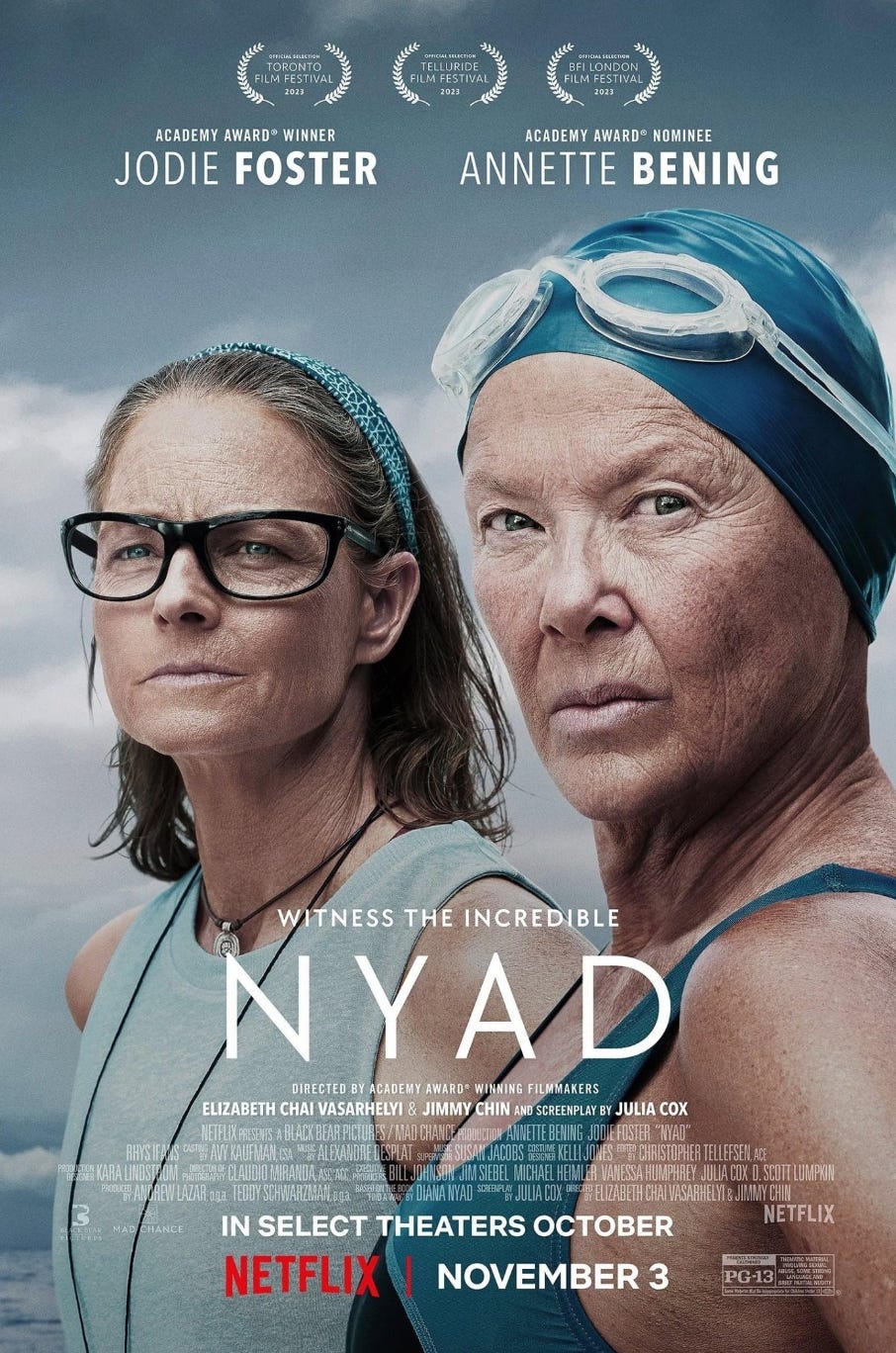
So I would like to just think about what I really want to do. And the experience of making Nyad was really meaningful to me, because how many times do you actually evolve in your 40s, you know? I just started really early, so I’ve made a lot of movies. So it was incredible to be in my 40s and have the challenge of a fiction film, and then be able to do it. You know, be able to rise to the occasion.
So yes, I’m going to take a break. And it feels like there’s some great closure, as this is my last film with Jimmy. And I don’t want to say my last mountain film, because I’m still fascinated by this character and this type of character. But I’m just going to take a little bit of a break.
Vanessa: I love it, and I really cannot wait for your next film. I love this film, and I’m so glad that you have a minute to be on the road with it, because I’m sure everyone in every audience is benefiting from meeting you and hearing your Q&As, and you’re such an inspiring person and filmmaker. Where can we tell people to see your film next?
Chai: I would highly recommend… The film was shot for IMAX, and there’s something about the vertiginous nature of that screen, and seeing the material on that screen, that’s just astonishing every single time I see it. Because normally I’m like, I can’t watch my films anymore. But for this one, I’m like, oh, I should go in for the last 20 minutes so I can experience it. So I highly encourage you to go see it in IMAX.
Vanessa: Love. Thank you so much, Chai. Thanks for taking the time. I really appreciate getting to talk to you.
Chai: Thank you, Vanessa. It’s always a pleasure to speak with you.
Elizabeth Chai Vasarhelyi (DIRECTOR AND PRODUCER)
Elizabeth Chai Vasarhelyi is an Academy® Award-winning filmmaker with a storied history of critically acclaimed films. In 2019, she, along with co-director and co-producer Jimmy Chin, was awarded the Academy® Award and a BAFTA for Best Documentary Feature for “Free Solo,” an intimate, unflinching portrait of rock climber Alex Honnold. The film also received seven primetime Emmy® Awards. In 2023, she co-directed her first scripted feature, “Nyad” for NETFLIX, which saw both stars Annette Bening and Jodie Foster receive Academy Award nominations. More recently, she directed and produced “Love+War” for National Geographic Documentary Films, about acclaimed war photographer Lynsey Addario, and “Lost in the Jungle,” the incredible true story of four children who survived a plane crash in the Colombian jungle. The latter film won the Outstanding Current Affairs Documentary Emmy for 2025. In 2021, she co-directed the BAFTA and DGA-nominated documentary “The Rescue,” chronicling the enthralling, against-all-odds story that transfixed the world in 2018: the daring rescue of 12 boys and their coach from deep inside a flooded cave in northern Thailand. Other projects include “Return to Space”, about SpaceX and NASA’s first joint spaceflight, which hit the Top 10 on Netflix’s most-watched films list, and the series “Edge of the Unknown” for National Geographic. Vasarhelyi was also honored with a Peabody and a News & Documentary Emmy Award for co-directing and producing the acclaimed National Geographic series “Photographer.” Her feature “Meru” won the Audience Award at the Sundance Film Festival in 2015 and was on the 2016 Oscar shortlist for Best Documentary Feature. Vasarhelyi’s other films as a director include “Incorruptible” (Truer Than Fiction Independent Spirit Award 2016); “Youssou N’dour: I Bring What I Love” (Oscilloscope, 2009), which premiered at the Telluride and Toronto Film Festivals; “A Normal Life” (Tribeca Film Festival, Best Documentary 2003); and “Touba” (SXSW, Special Jury Prize Best Cinematography in 2013). Vasarhelyi has directed two New York Times Op Docs, two episodes of Netflix’s nonfiction design series “Abstract” and two episodes of ESPN’s nonfiction series “Enhanced.” She has received grants from the Sundance Institute, the Ford Foundation, the Rockefeller Brothers Fund, Bertha Britdoc and the National Endowment for the Arts. She is a member of the DGA, the Academy of Motion Pictures Arts and Sciences (AMPAS) and The British Academy of Film and Television Arts (BAFTA), and she holds a bachelor’s in comparative literature from Princeton University. Vasarhelyi lives in New York City with her children, daughter, Marina, and son, James.
See EVEREST: THE OTHER SIDE
in theaters and IMAX worldwide:
https://www.fandango.com/everest-the-other-side-2026-246958/movie-overview