

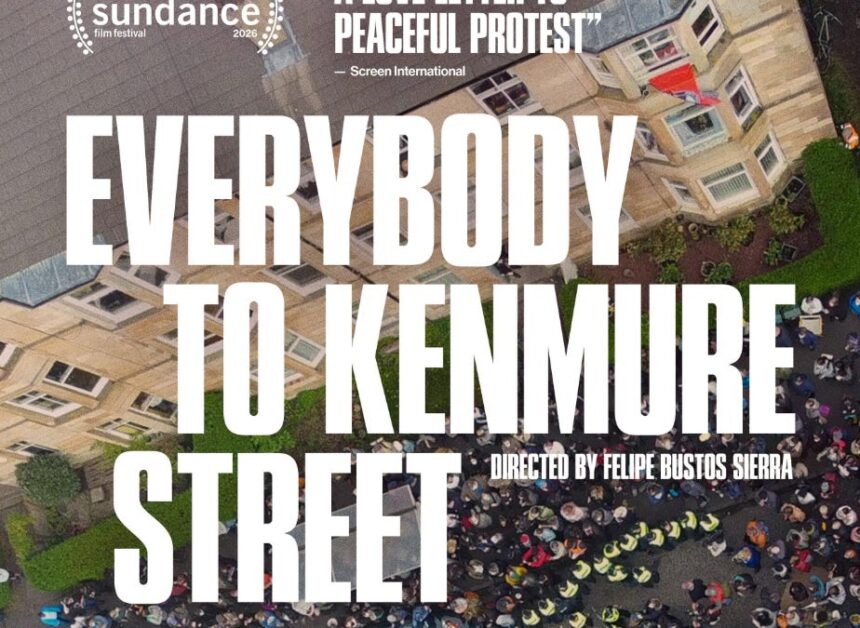
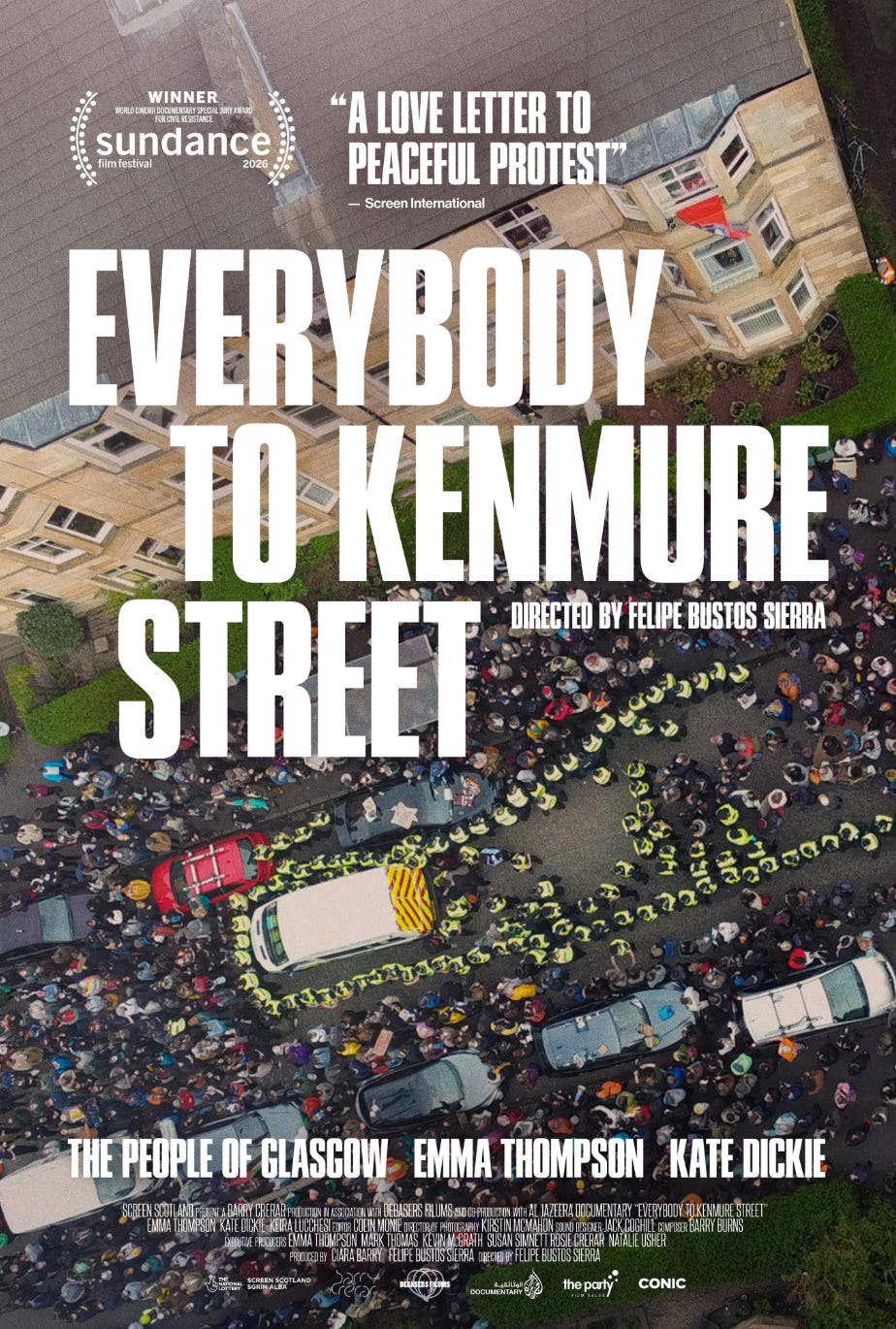
In this vHopeful conversation, I speak with Chilean-Belgian filmmaker Felipe Bustos Sierra about his exhilarating Sundance-winning documentary, Everybody to Kenmure Street, which brings us inside the extraordinary eight-hour 2021 uprising in Glasgow’s Pollokshields neighborhood, when hundreds of neighbors gathered on the first day of Eid to stop a Home Office van from deporting two local men. Felipe reflects on why he initially did not go, how the legacy of his family’s Chilean exile and the Scottish solidarity at the heart of his first film, Nae Pasaran, shaped his response, and what he learned from listening to more than 150 people who took part. We discuss the film’s urgent blend of participant-shot footage, archival material, and inventive reenactment, including Emma Thompson as the anonymous “Van Man,” as well as the profound care, imagination, and collective courage that transformed one street into a living lesson in resistance. At a moment of intensifying anti-immigrant rhetoric and attacks on protest, Felipe’s film reminds us that ordinary people, acting together, can make solidarity real and can change what seems possible.
Transcript lightly edited. Podcast available on Apple, Spotify or wherever you listen on this Substack or Ted’s Hope for Film
Vanessa Hope: I’m very excited to be joined by Chilean-Belgian filmmaker Felipe Bustos Sierra, whose acclaimed debut feature, Nae Pasaran, told the extraordinary story of Scottish factory workers who refused to repair warplanes for Pinochet’s regime in Chile—a profound act of international solidarity rooted in Felipe’s own history as the son of a Chilean exile.
His powerful new documentary, Everybody to Kenmure Street, which won the World Cinema Documentary Special Jury Award for Civil Resistance at the 2026 Sundance Film Festival, takes us to Pollokshields, Glasgow, on the first day of Eid in May 2021, when a UK Home Office immigration raid sparked an extraordinary, spontaneous uprising. Hundreds of neighbors gathered to prevent the deportation of two local men. The film is a thrilling, moving, and deeply timely portrait of what ordinary people can do when they refuse to look away, and of the collective courage, care, and solidarity that can turn one street into a force for change. Felipe, it’s so great to meet you and have you here.
Felipe Bustos Sierra: Thanks so much, Vanessa. Thanks for having me.
Vanessa: Yeah. So, before we get to this extraordinary film and the day itself, I want to start with you and how your own family history prepared you to recognize that something profound was happening on Kenmure Street.
Felipe: I mean, it’s a tricky question to answer because I didn’t go. I didn’t make it to Kenmure Street, and I lived in Govanhill, which is the neighboring neighborhood. You know, it was a 10-minute walk away.
My first film that you mentioned, Nae Pasaran, which was already a story of Scottish solidarity, was on TV at the time. So I was getting a lot of messages from people who knew me, but also people who had just seen the film, saying, “This is happening on our street, and we need the same attitudes as the old guys from Nae Pasaran.”
And I was resharing it, but I just remember at the time looking at the picture and thinking, with the way the world was going at the time—I mean, it’s kind of gotten worse since—and a lot of my research for Nae Pasaran had put me in offices with civil servants from the Foreign Office of the British government and shown me their very lackadaisical attitude to protest.
I remember one guy telling me that when there was a million people marching outside his office in London against the war in Iraq, over 20 years ago, it got a little noisy, so all he did was basically close the window. You know, just lowering the window was enough to get back to work. And so it made me feel, well, the government really doesn’t take protests seriously.
And then there’d been quite a few, you know, on the back of Black Lives Matter, which had obviously been this global movement, which had a huge impact in Scotland. Some of that influenced our film.
Vanessa: Yeah, that was very sweet to see. I loved your intro sequence and seeing those Black Lives Matter protesters in Glasgow—the solidarity. It’s so, so sweet, the fact that it’s global.
Felipe: I mean, because it was key to make you understand why people took a chance on somebody they didn’t know anything about and took a risk for. But it also made a lot of people understand Glasgow and Scotland’s own relationship with slavery and the transatlantic slave trade.
Vanessa: Yeah.
Felipe: Which is something that I think, at the time, you would have had to spend some time on to find out. Now it’s a lot more widespread; it’s a lot more understood. There is pushback against it, but you could see people on the streets already at that point. There was a frustration that something so big, so massive, so deeply felt hadn’t really translated into any actual policies that lasted.
On the other hand, we could see how the police, you know, I mean, both in the U.S. but here as well, were clearly responding in quite violent manners. There was that sort of consciousness that we were looking for: when you know more about your own history and how you place yourself in history, and the role police had played historically, none of that seemed to have coalesced into more compassion, more understanding of maybe what people were protesting about.
So it was all these, you know—
Vanessa: So many. Yeah.
Felipe: All these and various other things that were happening at the time in the UK made me feel anybody turning up there is going to get a baton to the face. We don’t have guns. Police don’t have guns in the UK, but they can carry batons and they absolutely can respond quite violently. And so I remember just—
Vanessa: It’s a great thing they don’t carry guns, though. I mean, it’s terrible; the violence is terrible with a baton too. But still, the gun violence in our country is beyond belief.
Felipe: I mean, it’s interesting. Obviously, it’s not really a film about police violence per se, but it’s been interesting screening the film in the U.S. How that’s where the conversation goes straight away, right? I think the fact that they cannot carry guns does remove the fast track to violence that you guys have over there. And I think it does plant some filters where, you know, what we’re talking about is a sort of consciousness that protesters need to be taken into account. And I think it allows for maybe different options straight away.
But yeah, so I saw the picture, I shared it. I think I took a moment to think what could happen, and it wasn’t despair, but I didn’t see any potential good outcome out of it. Whatever was going to happen, it was going to be bad, and I didn’t want to feel that that day.
I’ve been involved with solidarity movements since I was a kid. You know, my father was a political exile from Chile. I was born into solidarity movements. I’ve been to so many protests, and yeah, I just didn’t feel it. And I sort of went back to my work.
As it progressed, I kind of caught up with it on social media and realized it became something completely different. And something so different made me realize this thing that I’ve always hoped for, right? Like, how often do you go to a protest and think exactly what you want within eight hours?
And get to feel that with strangers who’ve all showed up for the same reason.
You know, without spoiling what happens at the end of the protest, it’s something I’ve always hoped for and I didn’t get to feel it. And part of making this film was a bit of a work of atonement because I knew, because there was a lot of support for Nae Pasaran, that I had a way in to make a new film fairly quickly. But there was also, you know, it was my neighborhood, and I think there was a sense that people who’d been interviewed, people who refused to be interviewed because of the sometimes patronizing perspective of the media, might actually talk to me. So the next day, I was on the street talking to people.
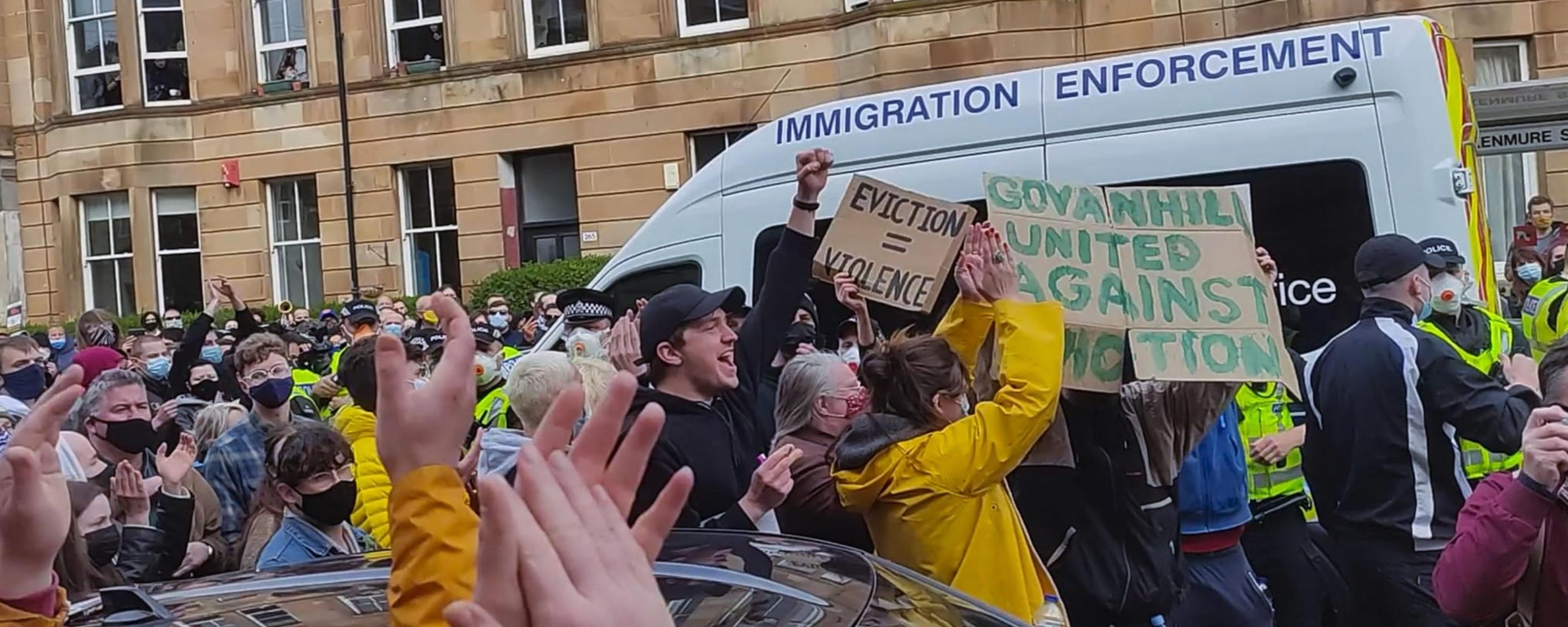
Vanessa: Yeah. It’s funny, I was about to ask you about how you came up with your title, because I like the title, and then I realized something as you were speaking: that it’s an invitation for everybody, meaning you and the audience, to go to Kenmure Street too. I mean, you’re sharing it, you’re making it global. I mean, I don’t know if that was your thinking, but it’s a great title.
Felipe: No, but I think you’re right. Like, in hindsight, part of making the film was, how do I get as close to the emotion that people felt that day, right? And because I wasn’t there and I wasn’t filming, 80% of the film is smartphone footage. And so it has this sort of immediacy.
Within a week of talking to people, I realized that there’s something new about solidarity that’s being articulated, but also the way it was captured. And I felt like this must be a way to tell this story in a way that feels like it’s almost in real time, at once, and then, you know, place the audience at specific points of the day, hopefully in the shoes of the protester, and make them feel, “This thing is about to happen. I have a split-second decision to make. Which one is it going to be?” And that felt very immediate, and I think that felt very exciting.
Vanessa: So this Home Office raid—and, by the way, I think maybe Americans or people from other countries outside the UK might not quite understand, though your film makes it clear—but Home Office means this is coming from Westminster, this is London. They are the ones making this call. And it’s a dawn raid on the first day of Eid.
And in Pollokshields, it seems to be a very particular kind of neighborhood, and you give us a sense of Glasgow and the history and this street and this neighborhood. But can you help audiences understand, for this discussion, what it was about that particular place that was so critical to the way people came together and joined in solidarity?
Felipe: It is quite key because I think it charged up the day from both sides. You know, it was Eid, which is the equivalent of Christmas on the Muslim calendar. A holy day. It’s the end of Ramadan. It’s a day of celebration, it’s a day of feasting.
And Pollokshields and Govanhill form the south side of Glasgow, and historically that has always been a landing space for immigrants. It started with Gaelic-speaking Scots coming from the Highlands, cleared off their lands by landlords who wanted to redevelop their lands to be more productive and not as a place where people could live.
They were the first wave of immigrants to that neighborhood, who were replaced by Irish immigrants fleeing the famine, fleeing British occupation. They were then replaced by Jewish immigrants who were fleeing pogroms and oppression with the rise of fascism in Europe. And in turn replaced by other people, Italians and Polish people, again fleeing Nazism in Europe. And since the ’50s and ’60s, it’s been South Asian folk.
And so it’s always been an incredibly diverse neighborhood. It is still the most diverse neighborhood in all of Scotland, and I think the majority is Pakistani Muslim people.
Vanessa: Fascinating.
Felipe: And so obviously Eid was a big deal that day. There was a mosque right around the corner, so Eid prayers were going on, and that is such a key element of celebrating the day. And so you can imagine all this is going on. People are expecting to relax, enjoy themselves, be outside. It’s COVID at its height, so there were already a lot of precautions with that. And then the van arrives.
Almost immediately, the way it was reported, and I think that influenced my perspective that first week, it was very much reported as this action that neighbors had taken. It was never seen as, maybe these guys were just living their lives and this van came out of nowhere and absolutely disrupted their own community day, which was already disrupted by COVID, but this was a layer on top of it.
So the idea of being a community under attack was not a perspective that seemed to appear in the headlines of newspapers. So this idea, living there, having quite a few friends in the neighborhood already, understanding also how that community has been policed because it’s a community of immigrants—it’s a community that had to deal with poverty over the years, with a lot of discrimination, racial discrimination. So it’s a heavy police presence. It is a community that has been on the back foot for many years and has had to learn how to not just organize, but to kind of look after itself. So this was another thing that they had to deal with that day.
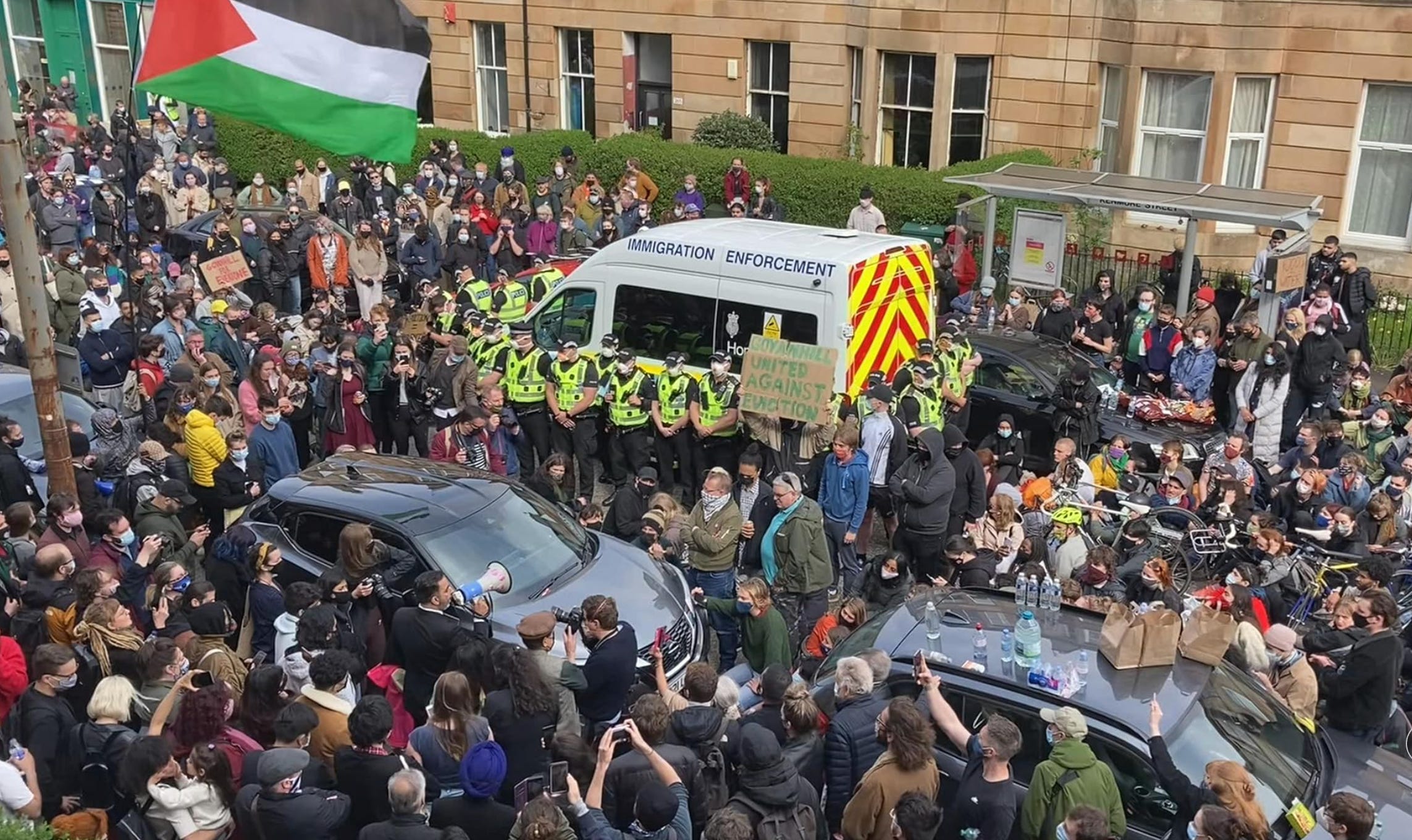
Vanessa: And they’re a community who wake up early, because dawn is quite early. And I think the first person you interview in the film says something like, “I was just eating my muesli, and then I got this message and I walked outside.”
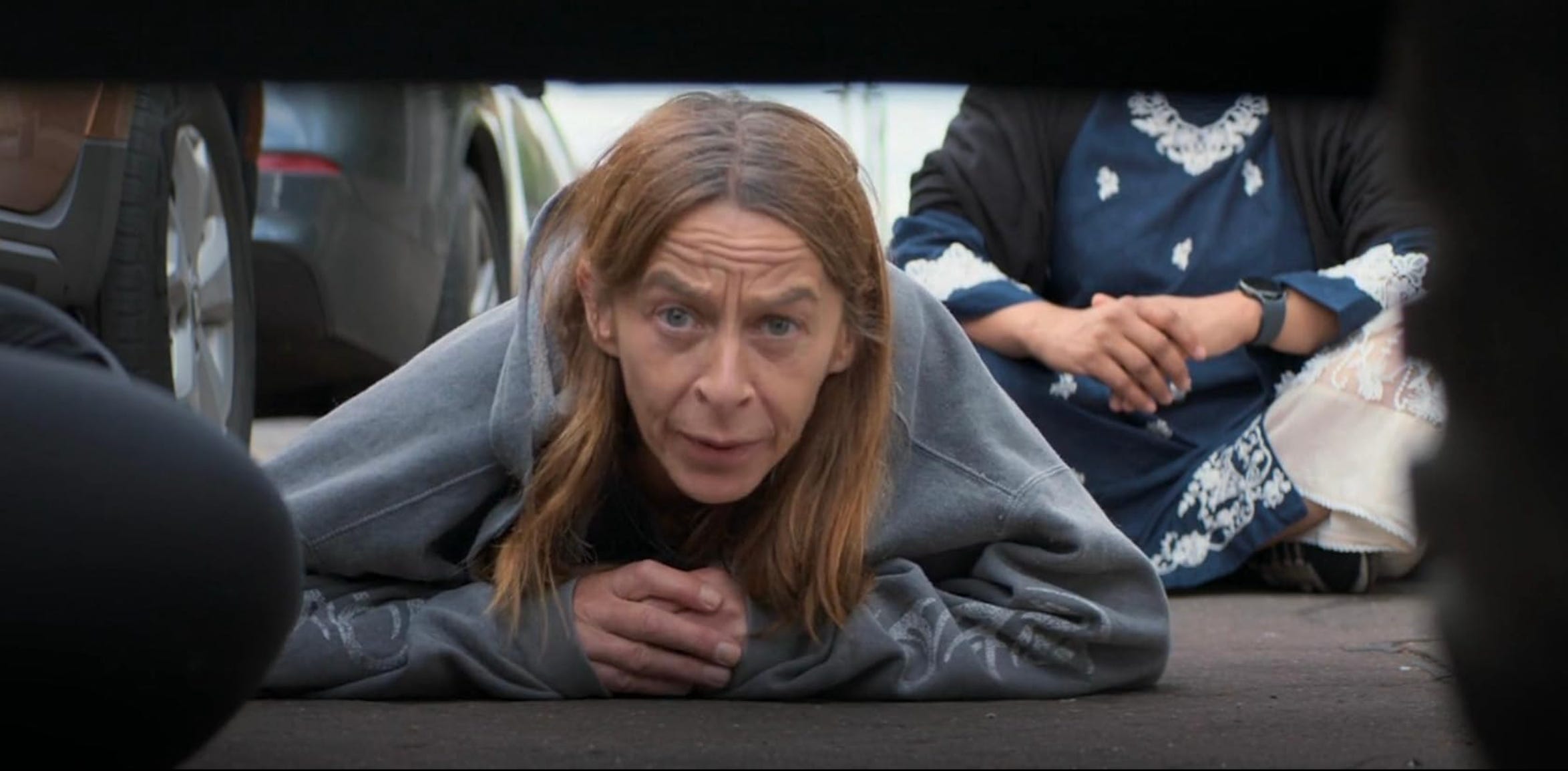
And obviously the person who throws themselves under the van that would otherwise have taken off in an otherwise ordinary way, the way those vans just come and grab people on the regular, took tremendous courage and sacrifice. And then you feel, as the community starts to build and gather around the van, how much they want to take care of each other. It’s not just about protest. There’s this caretaking: food, water, blankets, a nurse checking on the man under the van. I mean, that felt extraordinary. I don’t know if that’s unique, again, to the neighborhood.
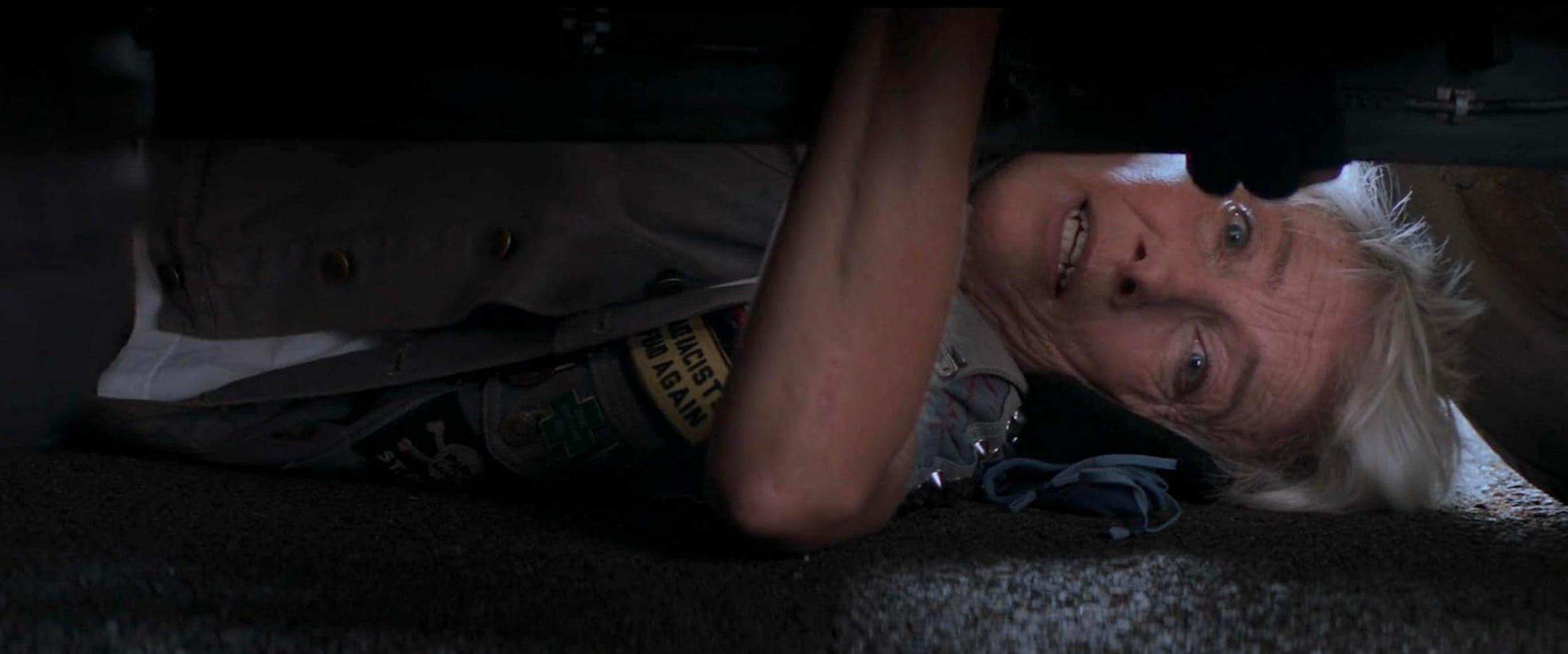
Felipe: I don’t know if it’s in the neighborhood. I think, obviously, yeah, there’s this character called Van Man, who was a person who lived nearby and arrived very quickly. He received the same message that I received; we were on the same WhatsApp group. But he went and found himself in a position where the van was completely empty, the officers were up in the flat detaining the two guys, and he had to make this moment, like, “What do I do?” Right? And he had really no idea.
And so he felt, “I’m just going to go underneath, wrap my arms around the axle, and maybe that’s going to delay the momentum. They might not leave, which might give more time to notice the van.” And I think there was this understanding because it’s a community that—I mean, it was a very spontaneous protest, but because it’s a community that has had to deal historically with these kind of incursions, there is a great sense of solidarity. There’s a great sense of shared humanity. It doesn’t matter where you’re from, it doesn’t matter your gender, color of skin. It’s a community where people show up for each other. So I think he betted on that quite successfully.
But the interesting thing is, you know, I think he created this sort of—he turned the space into a bit of a no man’s land for everybody, where the police did not know how to deal with that situation all of a sudden. The protesters did not know what to do with this. Most people turned up to voice their protest at this, but nobody actually thought, “We’re going to turn into something different. There’s actually a way out of this and a positive way out of it.”
But I think Van Man, I think people could realize how the police were reacting to this and were taken aback. And automatically, I think that gave some confidence to the crowds and made them feel, maybe this is something new. And if this is new, what else could be new? And I think it definitely introduced an element of imagination to the protest. We were like, “Maybe we don’t lose this. Maybe these guys don’t get to go home, but how do we figure this out?”
And, you know, it took weeks, because I was researching this film during COVID and there was not really any practical filmmaking to be made. A lot of my time was just spent going around the local park with a different person each day, safely with our masks, and talking about the day. And I did that with about 150 people.
Vanessa: Wow.
Felipe: We ended up filming months later with about 50 different people, and there’s 33 of them in the film. And meeting Van Man came out of those conversations and very much this kind of circle of trust. And one of the first things he said, and obviously that’s going to lead to some of the creative choices for how to tell that story, is he realized—
Vanessa: Stay anonymous. Yeah.
Felipe: Keep his anonymity, stay anonymous, absolutely. And he said he preferred it that way because it allowed him to read how the papers were describing his action. And what came up over and over again was the fact that he was a man. And as you can see briefly in the film, he’s quite a corpulent man. And that came with a certain bravado, as if these were the qualities necessary for the day to be successful.
And one of the first things he said he told me is, like, “I wish I wasn’t so corpulent.” It just made the day a lot more painful for me. He literally had the imprint of the van on his ribcage for a few hours after he managed to get out. And he says, you know, somebody much smaller than me would actually have had an easier time of it.
But also, he said, “I was useful for about eight minutes.” After eight minutes, more people joined in and surrounded the van. And then I realized, “What do I do?” And I realized I’m in a really precarious position here, but also my physical well-being. And that’s when, you know, this nurse turns up. And at that point it was quite—it felt quite lovely because it felt like she hadn’t been mentioned in anything. I hadn’t seen her in any footage. Nobody had really paid attention to her, but he said to me, “She saved my life.”
Vanessa: Wow. Right.
Felipe: She just kept me moving throughout the day. She organized people. I was very invisible under the van. She made me visible to the right people, to other protesters, and that’s when hot-water bottles, blankets started coming in, some food for him. And it very much felt like this did start this kind of chain reaction.
And I think the two of them became a sort of ace in the sleeve for the protesters. Like, you know, a bit like The Avengers, they keep talking, “We have a Hulk here.” They were like, “We have a Van Man, and you don’t know what to do with him, and we’re going to use it to our advantage.”
Vanessa: Right. Clearly, you did tons of research and took your time in crafting this story. It’s beautifully told, using all kinds of footage, and then you make this very creative choice to preserve the anonymity of the Van Man and the nurse and one other person, to use actors. And how did that come about?
Felipe: Out of those walks in the park, really. Like, in the first four months of the project, which I suppose, in terms of filmmaking, is not really sustainable because it takes so much time, but I think it completely shaped some of these choices and gave time to kind of think about it and figure out how it would work.
And by the end there were many ways to sort of justify it. It was a bit of a gamble, but I felt more comfortable with it. Because I think there was this thing of, we’re telling a story with a certain bias. We’re not involving the government, we’re not involving the police, so we’re sort of losing that impartiality that broadcasters like the BBC would require.
And I think I was really keen on making quite a pure documentary of just, “Let’s use just the smartphone footage.” But then Van Man, and the nurse as well, and then the young person who was arrested, they all wanted to keep their anonymity for different reasons.
I think Van Man was a little more poetic. There was a bit more poetic justice to it. I think there was very much the sense that he didn’t want those attributes I mentioned earlier to be focused on. He said, “Anybody could have done it. My superpower, if you had one, was just being on time and making a decision.”
The nurse was more, you know, she works in emergency services, which means she deals with the police on a regular basis. And she said, “I want to have the privilege to keep doing this type of stuff. And if they know my face, if they know who I am and they see me coming, I might lose this ability to just kind of help out spontaneously at protests.”
And the young person who was arrested, that was an incredibly traumatic experience. She’s the only person out of the whole day who ended up with a police record. And she felt it was important enough to tell her story, or at least to have a presence in this film, but it’s something that she’s still processing.
So they all agreed at least to give me their testimonies, to give me their words. And then part of the contract was like, “Your words are going to be used verbatim, and I’ll figure out how to make that work with the rest of the film.”
But as we’re walking around in the park, I had the idea of how, okay, so my really pure documentary now is going to have this artifice—where are the voices coming from? There’s not enough footage of them to also kind of have their voices on top of the footage. And I thought, maybe actors.
But then how do we keep that sense of mischief and that sense of humor that the Van Man, as a sort of symbol, kind of brought to the protest, and that sense of disruption and that ace in the sleeve that gave the protesters an edge? You know, I think filmmaking, it’s always obstacles. How do you turn obstacles into an asset?
Years later, when Nae Pasaran came out, you know, it was a story that I heard as a kid, son of a Chilean exile. The coup in Chile has defined most of my life. And it’s a story that I think, if you know it well enough, it does the same for you. I think it stays with you. And it has shaped the consciousness, the political consciousness, of so many people that I’ve met over the years.
And Emma Thompson tried to make a film years ago about singer-songwriter Víctor Jara, who was killed in the days following the coup. And it never happened, you know, as these things tend to go. But clearly the story stayed with her. So when she saw Nae Pasaran, I received this beautiful handwritten letter from her about how much she appreciated Nae Pasaran, her own connection with Chile. And, you know, when Emma Thompson writes to you, you have to write back.
And so we kept a correspondence, a very light correspondence over the years, without really any sort of purpose really, just because she’s a lovely person to keep a correspondence with. But then, as I’m thinking, okay, we might need to use actors for this, I just had this flash of Emma Thompson going on the van saying, “Hey, I’m Van Man,” and it made me laugh. And I thought maybe this is it. Maybe this will mirror in the film what Van Man actually brought to the streets.
And so I sent her the transcript, I explained where the project was, and within a couple of days, she said yes. It was great.
Vanessa: Incredible. That’s incredible. By the way, one of my all-time favorite films is by Julie Gavras, Blame It on Fidel. I love that film.
I wonder how you and your cinematographer, Kirstin McMahon, thought about setting up the interviews, because that’s quite unique, the framing and backdrop.
Felipe: I mean, I suppose we realized we had to come up with something that would work for a lot of people. So we shot everybody on a green screen. And we knew, because our funding was so scarce, it wouldn’t really come in drips and drabs, that it’s something—a process—that we’d have to repeat over the years. And, you know, it took five years to finish the film.
And there was also a sense—it was very clear, you know, the fact that I didn’t go was a bit of a barometer for this—that it was important that there’d be as many voices carrying the narrative of the film.
And at the same time, because we were making the film at a time where clearly fascism is on the rise, we knew we were telling a story that would be considered a counterculture story, a story of opposition. And we knew this was going to be in cinemas, and we felt we also don’t want to paint a target on the backs of people.
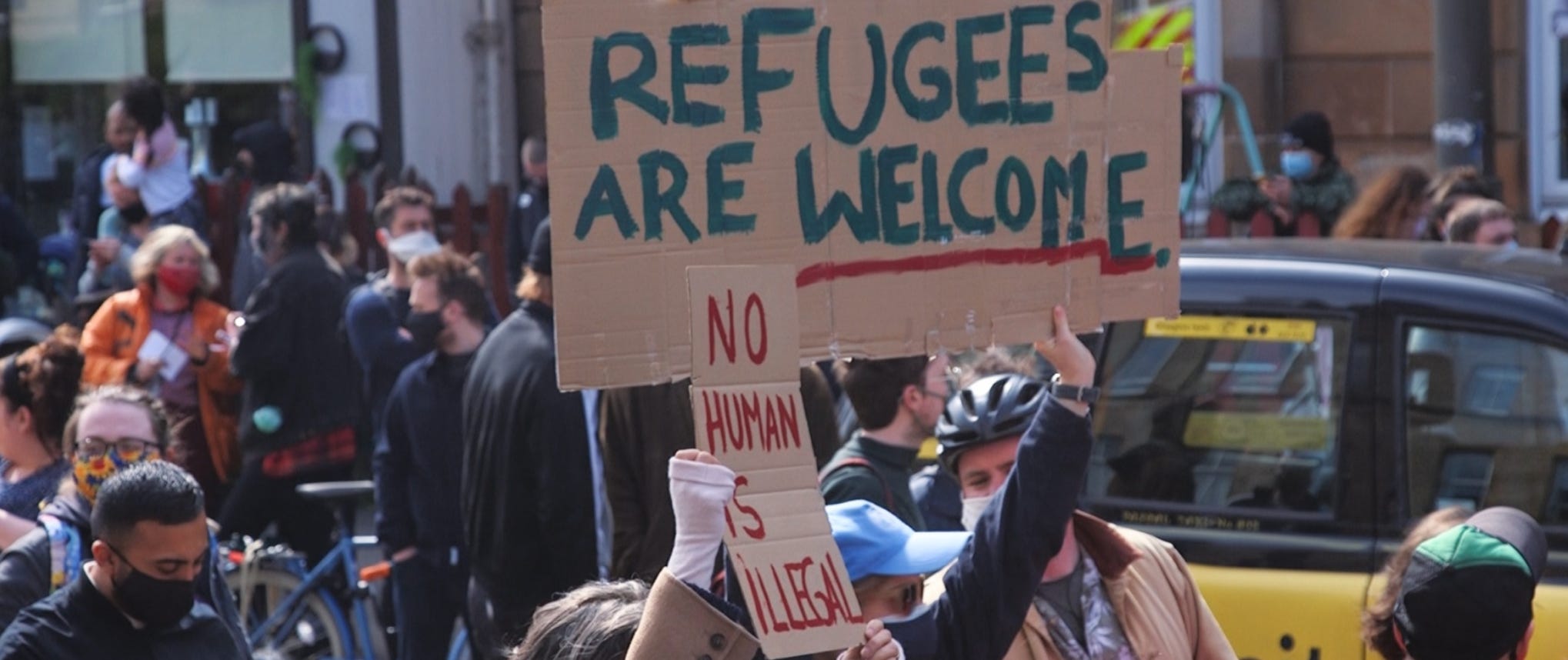
So part of it was, how do we split up the narrative? So nobody, as it was on Kenmure Street, nobody’s a leader, nobody’s a clear leader. They’re all a part of the chain that’s going to carry the whole story. There was an element of safeguarding to this.
So from the beginning, I think I knew that, you know, we can’t film everybody right now, but how do we kind of create a look that we could apply quickly to everybody? And Kirstin’s idea of just angling them slightly and putting them center frame, which we thought, when we get to the edit, might give us the ability to basically cut mid-sentence: somebody sets up a story, somebody else adds more detail to it, and somebody else finishes it.
And it felt like, again, it would mirror what happened on the day, all these voices kind of coalescing. And finding the rhythm. I think it was interesting that everybody seemed to have a different idea of what this was. Everybody had a different idea of what they should do about it and where this might go, but the act of sharing the street together—and I suppose being in that space with most of these people, it was their very first protest, most of these people, their first time standing up to the police. And I think that changes your brain chemistry a little bit, how you articulate things and how you think about things.
And I think immediately the solidarity of those strangers next to you, who are sort of united at least in the same cause, maybe not in the same direction, very much helped. And the passage of time on the street, I think, eventually started to narrow certain directions they could take.
And so I think some of that went into how do we position people within the street and make it look very cinematic. I had this experience with Nae Pasaran. You know, I mean, I’ve loved cinema since I was the age of 12. Nobody has to convince me what it can do to you. But we had this incredible screening of Nae Pasaran in the UK, and we didn’t know that somebody in the room was one of the—it wasn’t somebody obviously in the story, but in the aftermath of the coup, many Chilean Air Force officers who had decided to remain loyal to the constitution and to the elected president and refused to take part in the coup were then condemned, some of them to death, and were put in jail after a trial. And one of these people who survived was watching the film.
Vanessa: Wow.
Felipe: And he had this incredible visceral reaction, where he said, “This is my story. This is my story.” And I was like, “I’m really sorry. Is this—have I missed out something really obvious? Should I have interviewed you?” And he was like, “No, no, no, no, I had nothing to do with it. But this is what I’ve been through, and I’ve never seen it on the big screen. I’ve never seen it where, you know, it’s my colleagues and they’re treated like experts, not like victims.”
Vanessa: Yeah.
Felipe: “And I’ve never seen that before.” And he kept mentioning the soundtrack. And he’s like, “It feels like a film. It feels like a Hollywood film. And for the first time, we’re not on the receiving end. We’re not the bodies in a Hollywood film. We’re the heroes.”
And I hadn’t really, I guess, thought of it that way. But I think you had this visceral reaction when you have, you know, many of these people were interviewed, who are not media trained. They’ve never been interviewed in that way before where it’s like they’re a witness to an incident. It’s like, you are a participant and you’ve done something amazing, and I just want to hear your story.
And I think that change of perspective, how you approach participants, I think made these interviews a lot warmer, a lot more engaging. A lot of them, their personality came out. And yeah, I think part of the look and the setup was, how do we make sure people know that this is a moment of celebration for them?
Vanessa: Yeah. And have you found, on the road with the film—and maybe this was your intention in making the film—that you’re bringing solidarity to people who are afraid to fight against the crazy anti-immigration rhetoric, or this criminalization of protesting, or police attempts to divide communities, and all the politicians doing the same?
Felipe: I mean, it feels like something is happening. This has become the most successful Scottish documentary of all time in UK cinemas. It’s the longest-running film, not just documentary, the longest-running film in Scottish cinemas here. People are coming to the cinema to watch this film and discovering that they’ve got cinemas in a neighborhood that they didn’t know about. It’s been quite a surreal experience, to be fair with you, considering the hardship we were under to make the film, how much people are carrying it on their sleeve.
Vanessa: Wow, that’s amazing.
Felipe: We’ve had some incredible reactions. And I think, again, it speaks to that. I think as a filmmaker, there’s sort of the relief of, like, the film works. But there’s something about, I guess, the power of Emma Thompson.
We had a screening a few months ago here in the UK, and most Q&As, people will ask, “What’s Emma Thompson doing in this film?” You know, it feels like an incongruous choice, I guess. And I explained what I’ve just told you. And this woman kind of took it in, and then the Q&A ended and she came forward. Myself and Tab were there as well. Tab was one of the first people on the street, whose footage is pretty much the first two hours, almost like broadcasting live, and has the last words in the film. She was a mother of five who was preparing her Eid dinner that day.
So we’re doing this Q&A together, and this woman comes and she’s shaking and she says, “I don’t think I’ve ever really thought about why people might need to immigrate. And I only thought about immigration in those terms. And I’m embarrassed by my former opinions.” And she broke down crying. Tab gave her a big hug, and she walked away. And then I realized, this person came to see an Emma Thompson film and found a very different film instead.
Which I guess, you know, maybe she didn’t know that much about Emma Thompson because she’s an incredible activist as well, who has adopted a refugee. I think she absolutely wears causes on her sleeve too. But I think part of the goal was to make a very immersive film, to make people feel what it might have felt to be there, make them question, “Why didn’t I turn up?” like I didn’t.
Vanessa: Yeah.
Felipe: And make them think, maybe, maybe I’ll go next time, because there’s clearly something larger than life that happens when people put themselves on the line peacefully—or not sometimes, you know—but have a goal that is clearly for the benefit of their community.
It’s interesting making this film from Scotland where you think, I’m just making this for my community, I’m making this for Glasgow, maybe for Scotland. But obviously, with the sad state of the world, it seems to resonate in a completely different way.
I got to watch this film with a very young audience at a high school in Washington, D.C. And it was a high school that had been targeted by ICE a few months before.
Vanessa: Shit.
Felipe: And I think initially, I think they were mostly happy to be there because it meant they were not in class and they were getting to watch a movie. But by the time of—there’s a bus stop scene in the film where everybody started to organize, bringing food and putting water, and looking, “I think this might take a long while, and let’s get organized, let’s get people fed”—you know, this kind of nurturing happens—and they all got quiet.
And by the end of the film, I felt like I was at a football match where they were cheering for a team that I never knew they were supporting and that had always lost but was about to win. As a filmmaker, if I die tomorrow, I’ve had these experiences. The film works. I’m good. I’m good.
Vanessa: Wow. Amazing. So, how can we tell people to see the film now? Where can people see your film?
Felipe: So, in the U.S., it’s about to get released on the 2nd of October. It’s going to be in Los Angeles and Santa Barbara. We’re still playing at quite a few film festivals. I think the next one is the Mill Valley Film Festival. But in L.A., it’s at the Laemmle Royal, playing for a week from the 2nd of October.
Vanessa: Great.
Felipe: And yeah, we’re partnering up to run basically an impact campaign and trying to get the film seen in as many high schools as possible. And then we’ll see where we go.
It’s very much a film that has done disproportionately well, considering all resources, on word of mouth. I’m quite envious, I think, of the American perspective on this because I think clearly everybody in Scotland knows how the day ends, and in the U.S. you don’t. And so the film plays quite differently. I think it feels more like a thriller with a very surprising ending. And I wish I could rewatch the film that way.
Vanessa: It’s wonderful to watch the film that way. You’re right. And I’m looking forward to everyone getting a chance to see the film and to go to Kenmure Street. That’s really what they’ll do when they see your film.
Thank you, and I wish you so much luck and look forward to having you in California.
Felipe: I hope so. It’s a lovely bit. Best food in Scotland. In the south side of Glasgow.
Thank you very much. I really enjoyed the conversation.
Felipe Bustos Sierra, Director
Felipe Bustos Sierra is a Chilean-Belgian filmmaker based in Scotland with Debasers Filums. His debut feature-length documentary, Nae Pasaran (2018), won the Best Feature award at the 2018 BAFTA Scotland Awards. Bustos Sierra is an alumnus of the Eurodoc, Berlinale Talent Campus, the Independent Filmmaker Programme, and the EIFF Talent Lab. Everybody to Kenmure Street is his second feature.
UPCOMING SCREENINGS
USC School of Cinema screening and Q+A on 9/29 at 7pm at the Eileen Norris Cinema Theater: https://cinema.usc.edu/events/event.cfm?id=73340
Opening at the Laemmle Royal on Friday, October 2nd https://www.laemmle.com/film/everybody-kenmure-street
There will be a Q+A following the 7pm show on 10/2 moderated by Robert Abele
There will be a second Q+A following the 7:30pm show on 10/3.
MVFF49 screening on 10/7 at 4:00pm at the Smith Rafael Film Center: https://app.mvff.com/film/everybody-to-kenmure-street