
Intro:
Hello. I am Randy Greenberg. I run The Greenberg Group as a producer, consultant and global entertainment advisor for IP owners and financiers. I have taught at UCLA Extension for over two decades, the last fifteen of them teaching the Business of Entertainment course I created there. Ted asked me to take over for the day, and instead of curating five things that inspired me, I want to give you one thing I have never published anywhere. It is about the part of this job nobody puts in a panel description: the waiting, and what it takes to outwait it.
Every producer I know starts their day the same way.
They scroll through their email, texts, WhatsApp, WeChat, Discord, TikTok, Facebook, X, Instagram, Slack, Teams, Signal, or Threads to see who has responded.
Not the news. Not the calendar. Who responded. Because on any given morning a producer is waiting on writers, investors, distribution partners, co-producers, agents, bankers, managers, stars, directors, attorneys, production designers, costume designers, directors of photography. I think you get it.
All of it for projects the producer believes in. None of it generates a paycheck. Not until a film closes its financing or is greenlit by the studio, which most producers do not control.
I want to be precise about who I am talking about. Not the producer who runs a film fund. Not the producer who owns a library of IP. Not the producer with an over-all or first-look deal at a studio and an office on a studio lot. I am talking about the producer who starts every single project from scratch, from their kitchen table or back house. No institutional backing. No built-in deal flow. No safety net. On the films I am about to describe, that job, my job, carried the credit of Executive Producer.
It is an invisible job. And the silence that comes with it, the non-responses, the passed-on projects, the dead ends, can feel very personal.
It is not personal. It is the business.
I have been doing this for twenty-one years. Before that I spent over a decade inside the studio system, at Warner Bros., then MGM, then Universal Pictures. I was the person on the other end of the call or the email. I knew what it meant to someone when I picked up or wrote back.
My father taught me that. I grew up in Omaha, Nebraska, and my dad said returning a call within twenty-four hours was how you showed respect for another person and their time. I have carried that into every job I have ever had.
For the last twenty-one years I have been the one waiting on the other end. I am not alone. Not even close.
Most people in positions of power in this industry are W2 employees. They get paid every two weeks regardless of what they do or do not do. Producers are not. A producer’s paycheck is conditioned on a greenlight that may or may not come, on a deal that may or may not close, on an investor who may or may not return the call.
So when someone responds within twenty-four hours it can genuinely change the day. Because it means someone saw you. In an industry that is very good at looking through the people it does not currently need, being seen is not a small thing.
In 2007 I was consulting with Platinum Studios, which controlled a library of over 5,600 comic book characters. One was Dylan Dog, an Italian graphic novel by Tiziano Sclavi that had sold over 56 million copies in 17 languages. A script existed. Platinum controlled the rights. What did not exist was a financing structure, a production partner, or a path to making the film.
I reached out to several foreign sales companies. They didn’t respond. That was a pass. Then I reached out to Ashok Amritraj at Hyde Park Entertainment. Hyde Park said yes, came in as co-production partner and foreign sales company, and brought Standard Chartered Bank in Hong Kong to lend against their estimates. That did not solve the equity.
Platinum had gone after equity investors. No luck. Then I read about an Australian company called OmniLab in Screen International. They owned a VFX company and were starting to invest in production. I had no relationship with them. But I knew we would need VFX, and thought that might be the way in. I reached out cold.
They were interested.
Let me clarify. For every company that passed, several never responded at all. Not a no. Nothing. I sent scripts and financing structures into silence, then checked to see whether anything had come back, and checked again. Writing the cold email to OmniLab took four minutes. The part I remember is everything after I sent it, which was nothing, for a while.
Being in the right place at the right time only works if you put yourself in the right place and pay attention. You have to be reading the trades at the right moment. You have to recognize the opportunity everyone else is scrolling past. You have to actually make the call.
What followed was close to a year of negotiation across three time zones, against the backdrop of the 2008 global financial meltdown. Hundreds of calls. Dozens of redrafts. I was rarely the person with the ability to say yes or no. What I did was find the parts, put them together, and keep everyone playing nice in the sandbox long enough to close.
And there was a clock running the entire time. The rights had a reversion deadline. If the financing did not close before that date, the rights reverted and all of the dealmaking would be for naught. We closed approximately three weeks out. Principal photography started on time.
The press release at the time read: “The Greenberg Group’s Randy Greenberg, who brought all of the parties together.” That is the public record of what my job was.
Dylan Dog: Dead of Night was released in 2011 on 875 screens with a $5 million marketing spend. Too small to be big, and not a big enough spend to get noticed. It did $1.2 million at the domestic box office and $4.6 million internationally.
I say that without apology or spin. The financing closed. The film got made. The creative execution and the distribution scale did not match the opportunity that had been built. That is not a failure of producing. That is what can happen after the Executive Producer’s job ends and other parts of the production machine take over.
The Executive Producer creates the conditions for the magic to be possible. Without the financing there is no set. Without the set there is no magic. Whether the magic actually happens is a different question entirely.
One of the best moments of my career came when writer and producer Belle Avery hired me to work with her on The Meg. Belle had the rights and knew how to make it happen. She believed in it and she believed in me. I was introduced to her by Tsunami Worldwide Media’s Melissa McComas, my wife Ruthie Briggs-Greenberg’s literary agent, who also represented Steve Alten, author of the MEG novels. Melissa had every reason to want that book made into a movie. That is the point. The best connections are the ones where the interests already line up and somebody bothers to notice and make the call. Melissa noticed.
Even with Belle, and even with that book, we waited. I reached out to multiple studios. Not everyone responded. Three did. A response is not a meeting. Getting one onto a calendar takes weeks. Then it goes well, and you wait for the answer, which can take longer than everything before it.
That stretch of silence is exhausting. It tests your confidence. It eats your resolve while you sit still and appear, to everyone who is not you, to be doing nothing at all.
We closed the deal with Warner Bros. The Meg was released in 2018. The sequel followed in 2023. Together those films grossed over $900 million, almost exactly what Belle said when we first met: “this is a billion dollar franchise.”
It was not the size of the deal that stayed with me. It was the certainty, rare and specific and unmistakable, that something you believed in was actually going to get made.
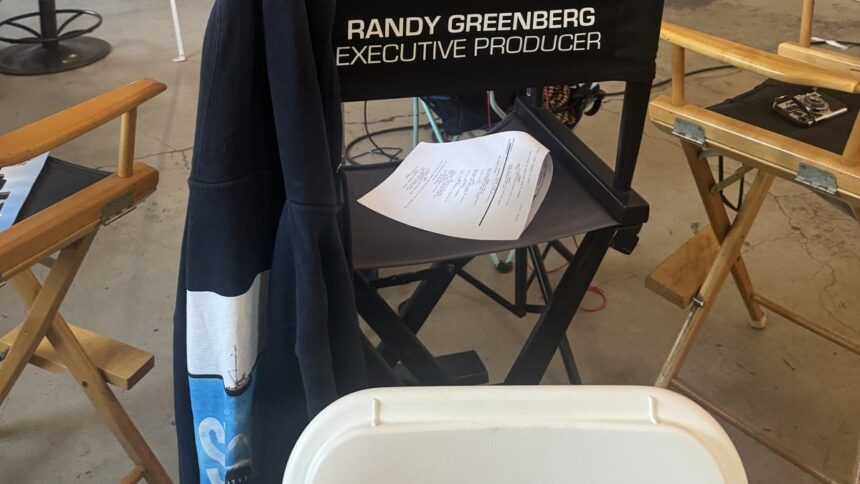
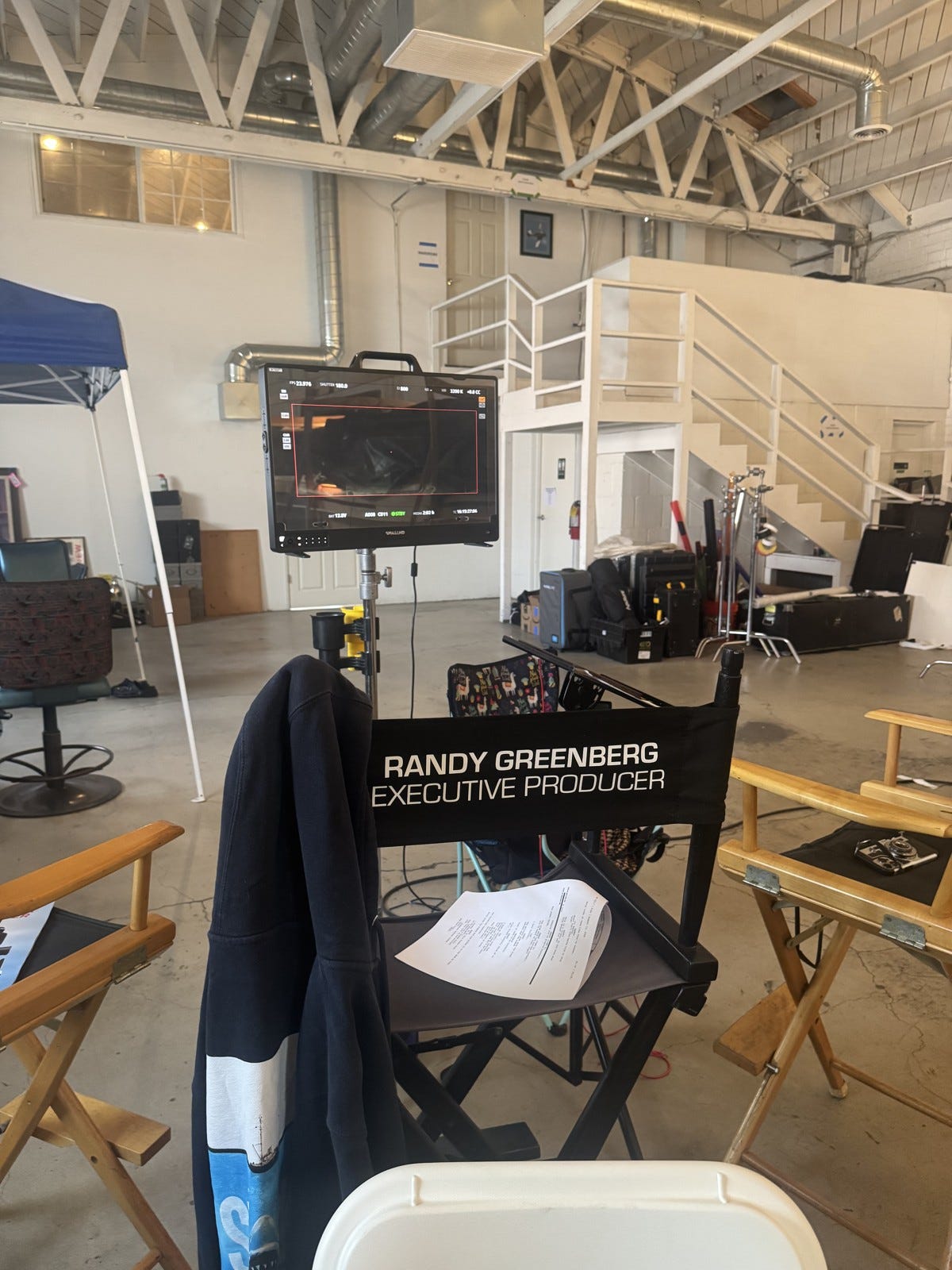
Let me be concrete, because I am not telling you this from the far side of it. As I write this I am waiting on a studio for three film pitches I took directly to its film CEO, and on that same studio for two television ideas. I am waiting on another studio on a contained airplane thriller with a finished script and a low budget. On a financier for a documentary they have already told me they want to fund in full. On an A-list star’s production company. On a consulting deal. On a financier to move forward on a yes they already gave me. And I am writing this from a folding chair on an ultra low budget set, a $350,000 picture, between placing a vegan lunch order for a cast member and myself.
That is one week in August, twenty-one years in, with a franchise and major studio experience behind me. Nothing about this graduates you out of the waiting.
Dylan Dog and The Meg are what happens when you outwait the waiting. That is what producing really is. Not the pitch. Not the deal. Not the close. It is being the one who is still standing there, with the project intact, when the answer finally comes.
The unreturned calls are not about you. The passed-on projects are not about you. The dead ends are not about you. They are the cost of this specific job.
So here is the only thing I know to do with the waiting. You cannot control who writes back. You can control whether you are ever the reason somebody else is sitting there checking. My father’s rule was twenty-four hours, and I have kept it my whole career, not because it is polite but because it is the one piece of this equation that belongs to me. Return the call. It costs four minutes. On the other end, it can be the thing that makes somebody’s week survivable.
Persevere anyway.
Onward,
Randy
1
The Number That Has Not Moved Since 1971
The standard development fee is $25,000, a flat rate set in 1971. Half on commencement, half if the project dies. It has never been adjusted, and most producers will tell you it is symbolic and hard to collect. Career producers could not fix this alone, having no ability to bargain collectively. So Producers United, formed in 2023, went to the studios one at a time and kept going, and Warner Bros. Discovery, Disney, Paramount, Universal and HBO have now agreed to terms. Barbara Broccoli, Christine Vachon, Dede Gardner, Jason Blum. Two years of being told nothing yet. That is outwaiting the waiting, done collectively.
LINK: https://variety.com/2025/film/features/movie-producers-united-hollywood-1236584944/
2
Twenty Years Before I Got There
Steve Alten wrote MEG while broke and sold his car to pay his editing fees. Disney optioned it in 1996 before the book was finished. Then two scripts that did not work, a studio president fired, the rights reverting, and twenty years of directors attaching and unattaching. My part came near the end of that road. Whatever you think you are enduring, somebody in your story has been enduring it longer.
3
Ask Steve Alten Who The Hero Is
I could tell you what Belle Avery did on The Meg, but it lands better from the author. Alten calls her “the big hero of this” and says without her it does not happen. He describes the body blows she absorbed, the round-the-world trips she paid for herself, and the money she raised that brought Warner Bros. in. She hired me to solve a specific problem. The picture was hers.
4
Fifteen Years On A Shelf
My wife, Ruthie Briggs-Greenberg, wrote and illustrated a children’s book called Felicity the Dragon in 1999. It went on a shelf. In 2014 it sold and came out the following year. Fifteen years between finishing a thing and someone else deciding it was worth publishing. Outwaiting is not a producing problem. It is a making problem, and it shows up anywhere somebody else holds the yes.
LINK: https://www.ruthiebriggsgreenberg.com/
5
An Idea For FilmStack: The 24-Hour Challenge
Ted runs a Challenge of the Month, so here is one. For thirty days, every member of this community answers every filmworker who reaches out, within twenty-four hours. Yes, no, not now, wrong person, try this person instead. Those are all answers. Silence is not. It costs four minutes and it is the only part of this equation any of us controls. If a few thousand of us did it at once, we would learn whether the ecosystem problem is structural or just a habit nobody has broken.
LINK: https://www.hopeforfilm.com/t/filmstack
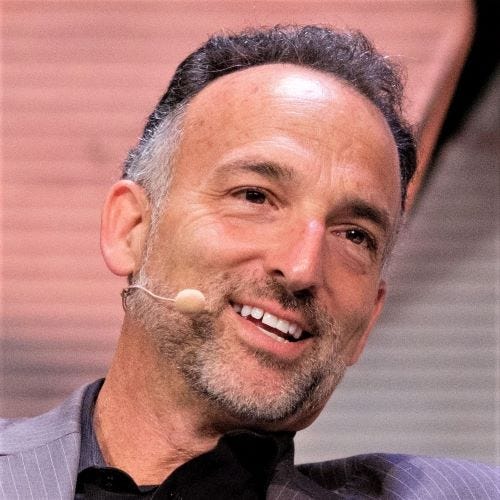
Randy Greenberg is Executive Producer of The Meg franchise, President of The Greenberg Group, and an instructor at UCLA Extension where he teaches the Business of Entertainment. He publishes The Business of Entertainment: Unfiltered on Substack.