

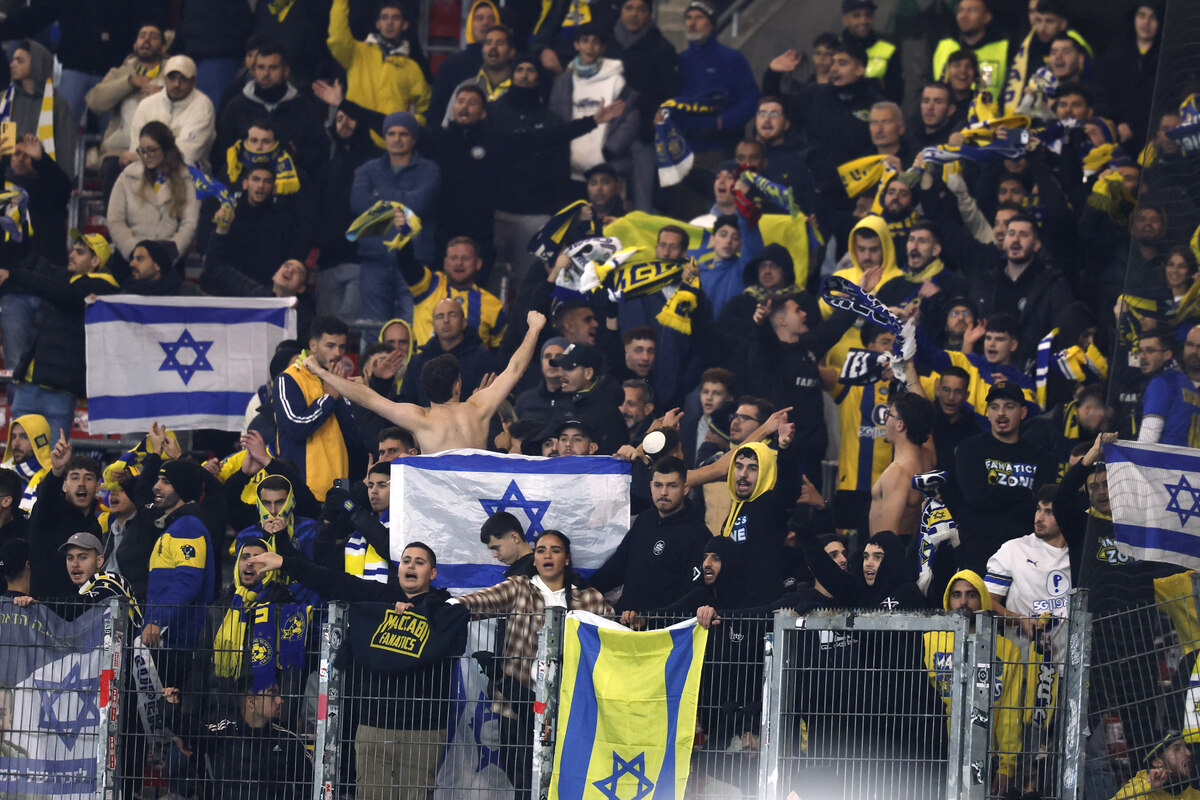
I n the Freiburg city society, similar to Stuttgart, leaves the game in the Europa League against Maccabi Tel Aviv Traces: a barely there police presence, a fan boycott because of repressive measures, including banner bans, a petition against Israel. But in the rest of the republic things remain remarkably quiet about the games. They only take place as a security issue, especially in relation to anti-Semitism. The clubs also refuse to discuss Israel’s crimes against the Palestinians.
NGOs like Amnesty International classify Israel’s actions against Gaza in the aftermath of the Hamas massacre on October 7th are currently classified as genocide. According to Unicef, at least 400 people, including a hundred children, have been killed since the ceasefire, and the illegal blockade continues. This is not a side note. Germany has a legal duty to prevent genocide and to exert diplomatic pressure. The long-standing annexations, murders and expulsions in the West Bank continue consistently, and systematic torture against Palestinians is well documented.
But German football is not just silent. With banner bans outside the curve, which are clearly directed against statements of solidarity with Palestine, as well as the invitation of the mayor of Tel Aviv, he legitimizes and supports this system. Even the otherwise opinionated local ultras have nothing to say on the subject. And when Maccabi fans sang “Death to the Arabs” against Stuttgart, there was hardly any response in the German media. What would have legitimately happened if Arabs had sung “Death to the Jews” here?
None of this is surprising, of course. That human rights serve as a performative narrative against rival powers or for one’s own interests and are of no concern to allies, has been sufficiently analyzed. You cannot rely on the German state or the national associations. But the rest of the public needs to speak up.
Protest on site is often more effective
What an effective strategy for the games can look like is a more complex question. The Palestinian solidarity movement likes to call for a sports boycott against Israel. There are morally good arguments for this. But sport, with its pyramid structures and billion-dollar global corporations, is not the cultural industry – boycotts are structurally difficult to enforce in the long term, are therefore usually ineffective and often involve problematic collective punishments. In addition, if the standards were the same, an impractical number of countries would have to be excluded because, contrary to what some Palestine supporters suggest, serious human rights crimes do not only occur in Israel.
On-site protest has often been iconic and powerful in sports history, while absence is quickly forgotten. Resistance can include: fan protests, player protests, pressure from clubs, minutes of silence, not inviting Israeli politicians, donating game revenue to Gaza like in Norway. Clubs should not only seek advice from organizations against anti-Semitism, but also from organizations that support Palestine solidarity and independent NGOs. Anyone who believes in the power of independent sanctioning institutions should also advocate for one in sport. Last but not least, there are many possibilities for financial sanctions against Israel’s sport.
All of this is pressing. In view of the global shift to the right, sport must – whether on the subject of the USARussia, Israel, Gulf autocracies or on your own doorstep – finally develop smart strategies without getting lost in emotional boycott debates. We don’t just owe this to the victims. Violence also affects perpetrators. A society that does not address certain violence normalizes it. And highly militarized games with restricted expression are a dangerous template for the future.