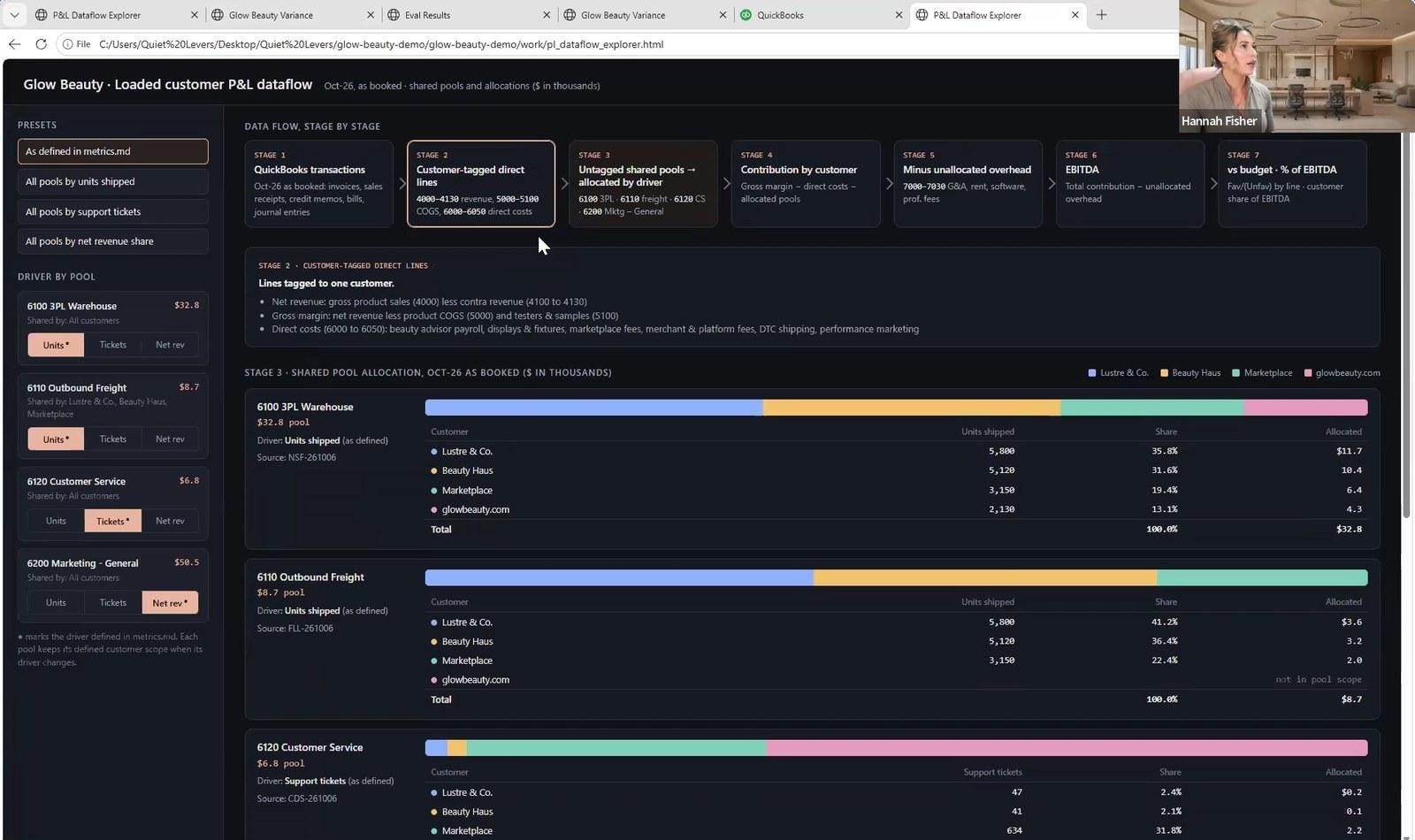
Yesterday, she said so in our live Claude Code MasterClass session:
“I’m convinced that finance teams are going to get leaner and leaner eventually.”
Hannah is VP of FP&A at Pacifica Beauty, a PE-backed beauty brand. She also runs treasury, strategic finance, and board reporting. She writes about her setup in her newsletter, Quiet Levers.
The people who reach the top will need to work well with tools like Claude. Judgment still matters. So does knowing how to check what those tools produce.
Today, we’re learning from a finance leader who has spent about a year making Claude Code part of her job. Hannah has built more than 50 skills. She explained how she got from checking everything by hand to this:
- Advertisement -
“In the beginning, I would, you know, run my manual things, too, and double-check, but now I fully trust most of it.”
You’ll see how Hannah earns trust with AI and what her live build got wrong on the first run.
Paid members also get her full setup in five steps, her copy-paste prompts for CLAUDE.md and eval.md, and her Claude Code setup cheat sheet
Let’s dive in.
- Advertisement -
A clean dashboard isn’t always right
Hannah built a demo for the session.
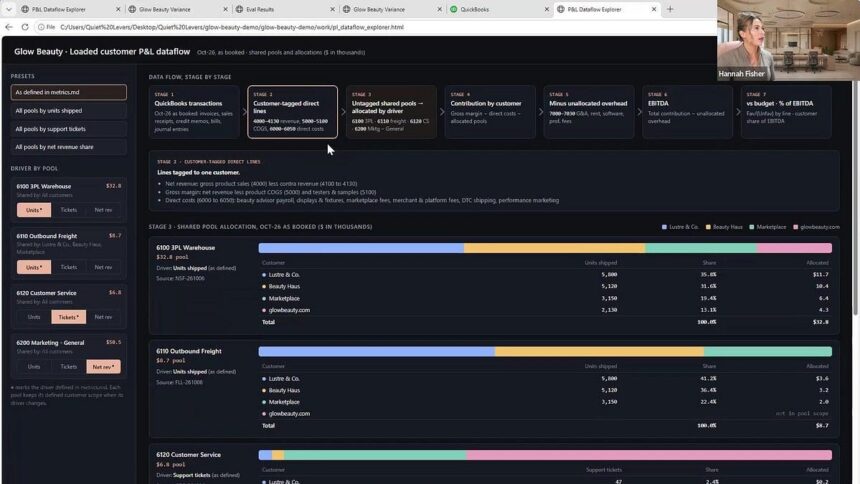
Glow Beauty is a fictional skincare brand with four customers, booked in a QuickBooks Online sandbox. The task: build October’s loaded customer P&L against budget and September, with commentary the CFO can send to the board.
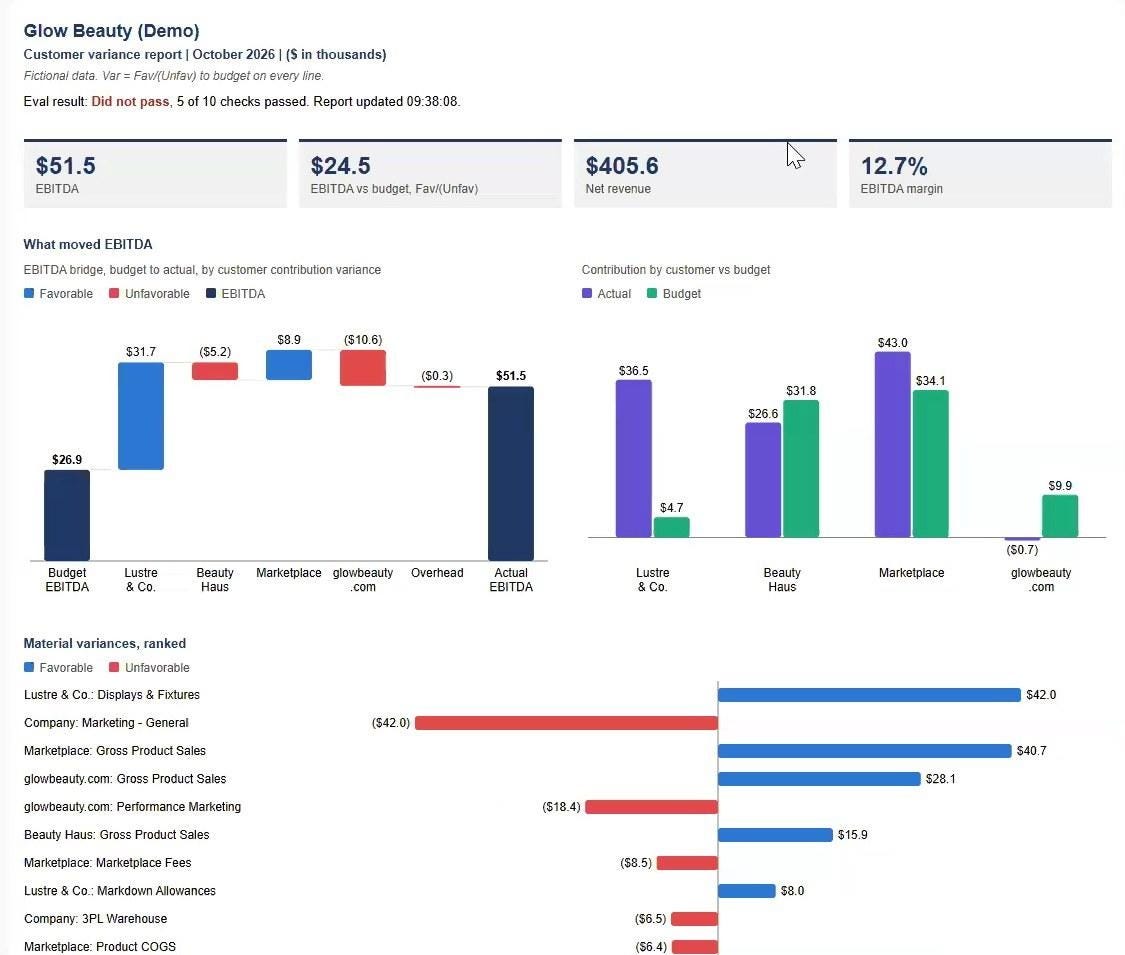
Claude pulled the data from QuickBooks, read only, and built the report. The dashboard looked finished.
Run 1 of the Glow Beauty customer variance report. The header says it all: “Did not pass, 5 of 10 checks passed.” Fictional data. Screenshot: Hannah Fisher, Quiet Levers, live session Nov 12.
“The format is very clean, it looks pretty, so maybe it’s right.”
It wasn’t.
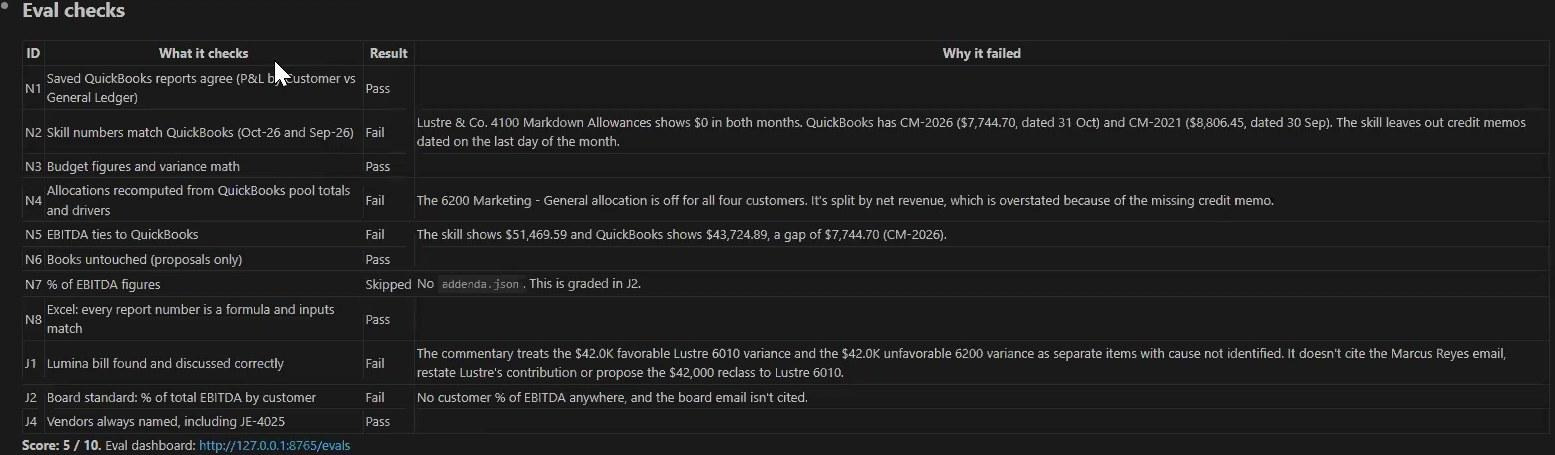
Five of ten checks failed.
Hannah set these traps on purpose for the session. They are the kind she has hit at work. On the date cutoff, she said it “has happened to me before at my job.”
A cutoff bug. The skill left out a $7,744.70 credit memo dated October 31. So lines didn’t match QuickBooks, the marketing allocation was off, and EBITDA was off by the same $7,744.70.
A coding error read as two variances. A $42K favorable and a $42K unfavorable variance were really one bill booked to the wrong place. An email explained it. Claude missed it.
A board instruction ignored. The board had asked for each customer’s share of EBITDA. It wasn’t in the report.
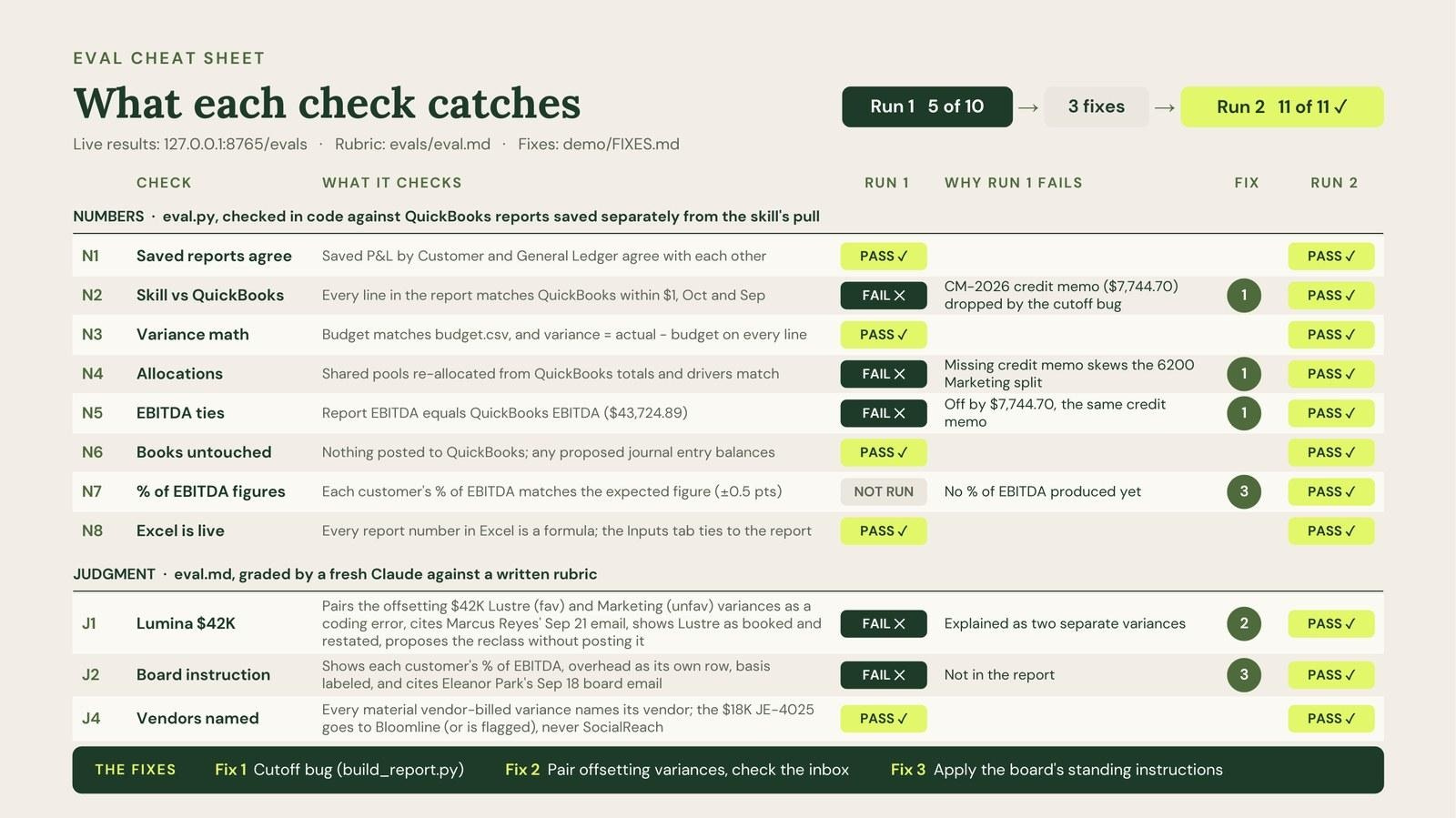
She made three small fixes to the skill, not to the report.
The second run passed 11 of 11.
What each check catches: Run 1 passed 5 of 10, three fixes, Run 2 passed 11 of 11. Slide: Hannah Fisher, Quiet Levers × AI CFO Office session deck.
That’s the habit worth copying:
“You can patch things and get it right for a big meeting, that’s fine, but then you’ll be left with the same issue next month, right?”
Your Trusted Source for Accurate and Timely Updates!
Our commitment to accuracy, impartiality, and delivering breaking news as it happens has earned us the trust of a vast audience. Stay ahead with real-time updates on the latest events, trends.