

By Brandon Kramer & Lance Kramer
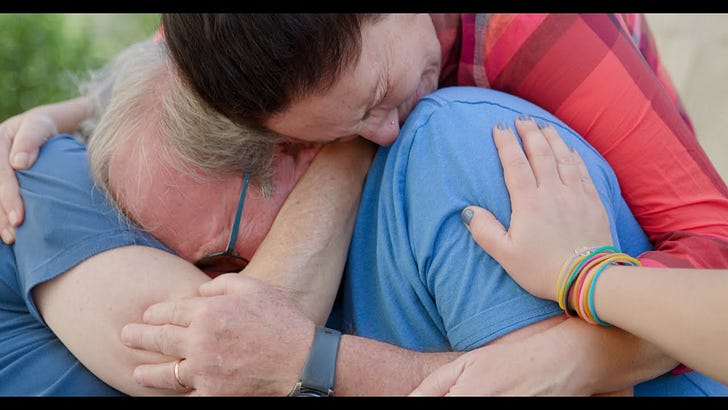
After his daughter and son-in-law were kidnapped from their kibbutz and taken hostage to Gaza in October 2023, our relative Yehuda Beinin faced a choice: would he seek revenge or reject efforts to use their captivity to justify violence against Palestinians?
Yehuda ultimately chose a path of reconciliation. Other members of his family strongly disagreed. The tensions and schisms within his own family defied any kind of reductive definition of a “hostage family.”
When we started production in October 2023 on Holding Liat, fractures over Israel-Palestine were also rapidly escalating within families and communities around the world. It was precisely these fractures both within the family and the broader culture that motivated us to pick up our camera and dive into documenting our relatives’ experience. We committed to letting our questions and curiosity guide us, seeking to understand and observe each family member’s emotional and political response to this crisis.
We asked ourselves: if one family could hold such radically different responses to the same trauma—and stay together—could the larger public also hold more complexity than pundits and politicians led us to believe?
Knowing how daunting it would be to tackle this story on our own independently, we tried to seek the support of an established distribution outlet to partner with us. However, when we pitched the film to dozens of broadcast, streaming, and distribution executives in the United States both during production and leading up to the premiere, not one would take on the film.
These gatekeepers consistently passed for a range of reasons: the film did not have enough “balance;” it would upset “pro-Israeli” audiences due to some family members’ critique of the Israeli government; or it would upset “pro-Palestinian” audiences because the film didn’t focus enough on the suffering of Palestinians. Paradoxically, they often deemed the same film too critical for one side and not critical enough for the other. Most just said that anything dealing with Israel-Palestine was too “third-rail” to touch at all.
Some opted to not even view HOLDING LIAT, making a quick judgement about the film simply based on its premise.
Given the severity of the crisis on the ground in the Middle East, and the increasingly polarized discourse, we felt great urgency in getting the film into the world. We raised all production funds independently, primarily through donations (all philanthropic, none with any editorial strings attached), a few key grants from foundations such as Jewish Story Partners, filmmaker support from Film Independent Fast Track, Women in Film & Video, Kartemquin, Protozoa, and a community of independent filmmakers.
For distribution, rather than wait for the gatekeepers in the US to change their mind, we pursued a different path: we would seek out brave festivals and community leaders who would stand behind the film wherever we could find them, even if they knew it would challenge their audiences.
We started by focusing on screening the film internationally, where we realized some festival programmers were more willing to take risks. At our world premiere at the Berlin International Film Festival, while we did not have a sales agent, we were able to get The Film Collaborative to come onboard to handle festivals. After Holding Liat won both the Berlinale Documentary Award and the Ecumenical Jury Award, the film was then immediately invited to several other international festivals: Millenium Docs (Poland), Zagreb Dox (Croatia), the Hong Kong International Film Festival, It’s All True (Brazil), and Doc Aviv (Israel), which The Film Collaborative was able to book rapidly.
These international festivals started to show a starkly different reality than what the gatekeepers feared. We found a public less fueled by divisiveness than exhausted by it. At each screening, we encountered audiences frustrated with the limited options they are being presented about this conflict, and desperately seeking opportunities to ask questions, to learn, and to find rooms where empathy for human suffering doesn’t have to be a choice between one side or the other.
For example: at our world premiere in Berlin, a Lebanese man was the first person to speak in the post-screening Q&A. He had never met an Israeli person in his life. For him, Liat and her family represented a “light in the darkness.” In front of a full house of 700 people, he asked if he could come on stage to hug Liat and her family. He did exactly that, to resounding applause from the audience.
In Tel Aviv, the sold-out audience of 1500 at the Tel Aviv Opera House at the opening night of DocAviv—Israel’s largest documentary film festival—burst into applause nearly a dozen times throughout the course of the film. Most applause in Israel occurred when a protagonist expressed a critique of the Israeli government. Dozens of people thanked us for showing the complexity of an Israeli-American family who is seeking reconciliation with Palestinians, while also acknowledging their own pain. They expressed how rare this kind of film is in modern Israeli society.
Not everyone left our screenings loving the film – and that’s the point. At almost every screening, there were also a few people who were upset that the film did not empathize enough with either the suffering of Israelis or Palestinians. Some expressed anger toward us, or even at the family themselves.
In a sense, the gatekeepers weren’t wrong to predict friction. But here’s what they fundamentally got wrong: tension in the audience isn’t a failure of the filmgoing experience, but the experience itself.
Social media would lead us to believe these experiences are not possible in today’s polarized world. Our screenings demonstrated that the binaries that we are made to believe dominate our public life do not always hold up. There is something fundamentally democratic about sitting in a room with people you may disagree with, watching the same movie, encountering an idea that unsettles you, and then looking at your neighbor and acknowledging each other’s humanity, as you talk about it together.
These kinds of early international festival audience responses from actual people who saw the film started to provide critical reference points for other programmers to use as case-making to show the film in their communities. A constellation of festival programmers in the US and beyond also started to recognize the value of this form of storytelling. This began with Tribeca, followed by the San Francisco Jewish Film Festival, and eventually expanded to more than 60 festivals in over two dozen countries worldwide.
For us, community dialogue and engagement were critical. Instead of following traditional windowing which might dictate holding “community screenings” back until a later point in the release, we began community screenings right away. At the strong insistence of The Film Collaborative, we began to program community screenings right after the US premiere at Tribeca. With our impact partner ALBI, we invested significant effort in bringing the film directly to global audiences through a NonDē approach. We held early screenings in synagogues and college campuses, to build allies and to pilot different approaches to post-screening discussions which ultimately informed the creation of our Discussion Guide. HOLDING LIAT ultimately played in more than 100 community settings, reaching tens of thousands of people of very different backgrounds.
In spaces ranging from our childhood synagogue in Maryland to a South Asian film center in Seattle, from college campuses across the US, to screenings across Israel and with Palestinians living in the West Bank, we continued to hear from people who were both inspired and challenged by the film in a meaningful way. The post-screening discussions often felt as important as the film itself, and audiences often expressed appreciation for the rare opportunity to listen to conflicting perspectives. In that spirit, after each screening of Holding Liat, we also encouraged our audiences to see other independent films that highlight other critical narratives, told from both Palestinian and Jewish perspectives such as No Other Land, The Voice of Hind Rajab, Coexistence My Ass, Letter to David and Children No More: Were and Are Gone. No single film can hold the entirety of this conflict.
Without the support of a distributor in the US, we encouraged our international sales agent MetFilm to move forward trying to secure international distribution and not wait for an all-rights deal that would likely never materialize. The team at MetFilm was able to secure nearly a dozen international territories, including a BBC Storyville broadcast in the UK, ZDF broadcast in Germany, VPRO broadcast in the Netherlands, Yes Docu broadcast in Israel, streaming rights on Filmin in Spain, DocPlay in Australia, and theatrical distribution in France through L’Atelier D’Images and Japan through United People.
We are strong believers in the importance of playing documentary films in theaters. For our prior film, THE FIRST STEP, we invested significant effort on an impact-driven theatrical release working with Jon Reiss and 8Above, which was the subject of a recent study by the Center for Media & Social Impact. When it came time to develop a US theatrical release strategy for HOLDING LIAT, in the absence of having a distributor, The Film Collaborative added theatrical screenings into their existing scope. Together, we engaged community partners and booked the film in 40+ independent theaters nationwide, including Film Forum, Coolidge Corner, Cinema 21, and AFI Silver.
As an independent film without the means for a separate awards campaign, we combined our “awards campaign” with our theatrical release, and kept all of our efforts focused on engaging and building our audiences. While the milestone of being Shortlisted for the 2026 Academy Awards for Best Documentary Feature proved to be powerful indicators of the film’s ability to move audiences, it still did not move any US distributors to take action. When the theatrical screenings started to wind down over the summer, rather than wait for a streaming license, we began running pilot virtual screenings on Kinema throughout the summer, to continue the momentum and engage partners who had a broader national footprint such as Rabbis For Ceasefire, T’ruah, J Street, and the Parents Circle.
Finally, we decided to work with an aggregator (Bitmax) to launch the film on TVOD digital platforms (Apple TV, Amazon Prime, YouTube Movies) and an educational distributor (Collective Eye) to launch the film on Kanopy. We found that the aggregator approach, while incredibly time consuming and requiring an up-front expense, was one of the only options to bring a film labeled as “politically risky” to audiences at home on these commonplace platforms. We structured our digital release as an opportunity to re-engage all of the audiences from the past festival, theatrical and community screenings, and all of the respective partners, to help promote watching the film at home through word-of-mouth.
Avoiding controversy might sound like a considerate way for gatekeepers to protect their audiences. This is a misguided choice with serious consequences. When institutions decide not to platform films because they think one “side” or the other may criticize them, they’re actually amplifying the political polarization that harms the foundation of democratic life.
The question should not be: “what do we risk by platforming these kinds of stories?” It should be: “what do we risk by not making room for stories that open up space for understanding and dialogue?”
We were tragically reminded of this frightening paradigm this month, as government officials in Israel threatened filmmakers Yuval Abraham and Rachel Szold after their new film NAZA won the Special Jury Prize in Venice. We are witnessing a terrifying escalation of government officials not only deciding that the public should not see a film out of fear, but threatening the safety and security of these artists and journalists. We stand in solidarity with Yuval and Rachel, and against the authoritarian attacks on them and their film.
In a functioning democracy, it is critical that we have a chance to engage with independent art because of the distinct ways that they can challenge our assumptions, biases, and preconceived notions. Producing and sharing these stories offers audiences the space for people of diverse backgrounds to meaningfully connect, even when the circumstances and experiences might feel excruciatingly difficult. Prosecuting filmmakers, as some have recently called for Yuval and Rachel, or not allowing audiences to see films and form their own responses to art, only contributes to the dehumanization and sends a chilling message that art and suffering are only welcome when it aligns.
The public does not need to be protected from complexity and truth. It needs more opportunities to encounter it. Allowing fear to dictate the stories we experience only etches this reality into our future.
For three years, we thought we were making a film about a family that refused to fit into the categories offered to them. We didn’t expect to find the same refusal in the people who came to watch it. They disagreed. Sometimes they were angry. Sometimes they were deeply uncomfortable. But they sat together. They listened. And, long after the credits rolled, they kept talking.
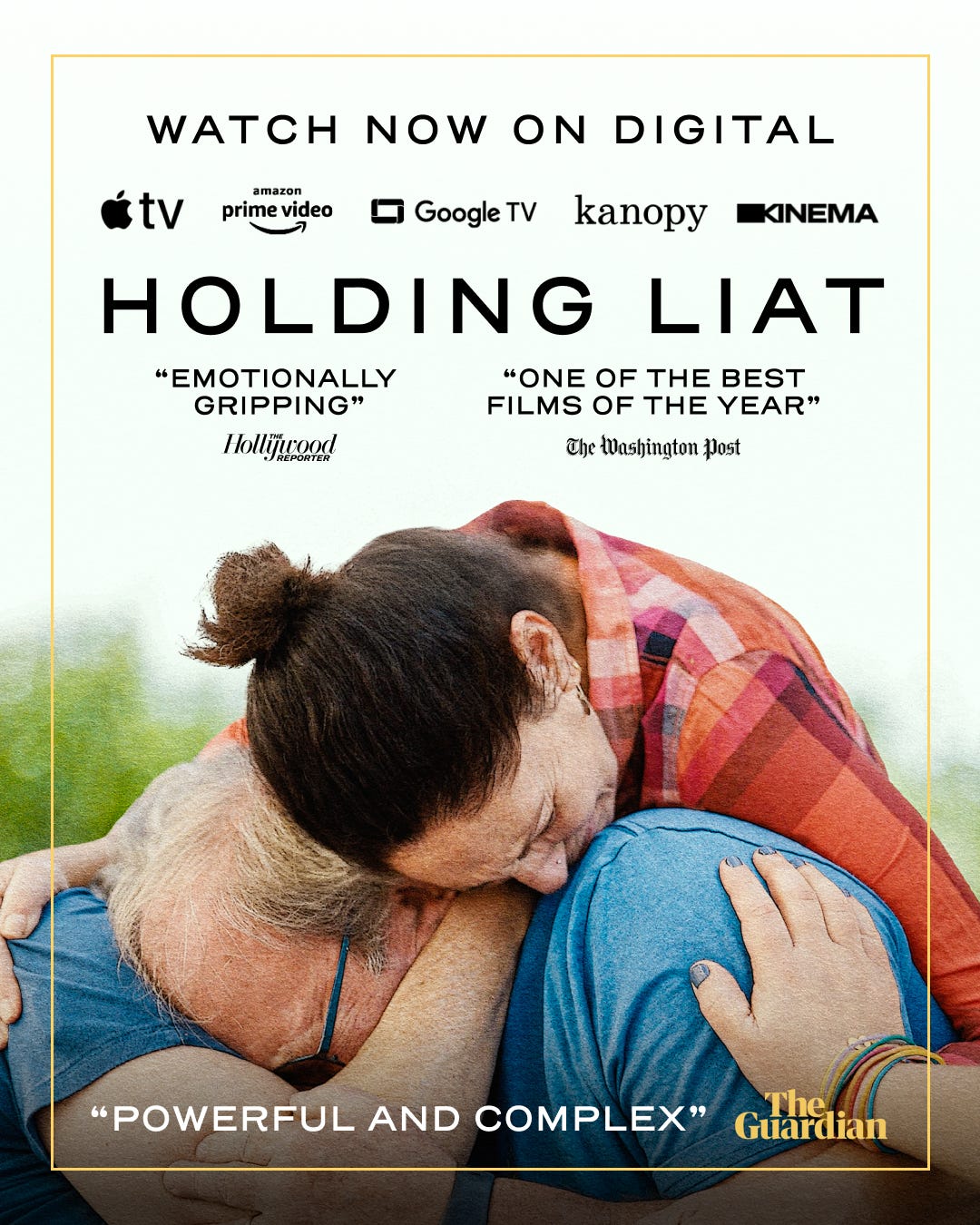
HOLDING LIAT is now available on digital platforms and for educational institutions through Collective Eye.
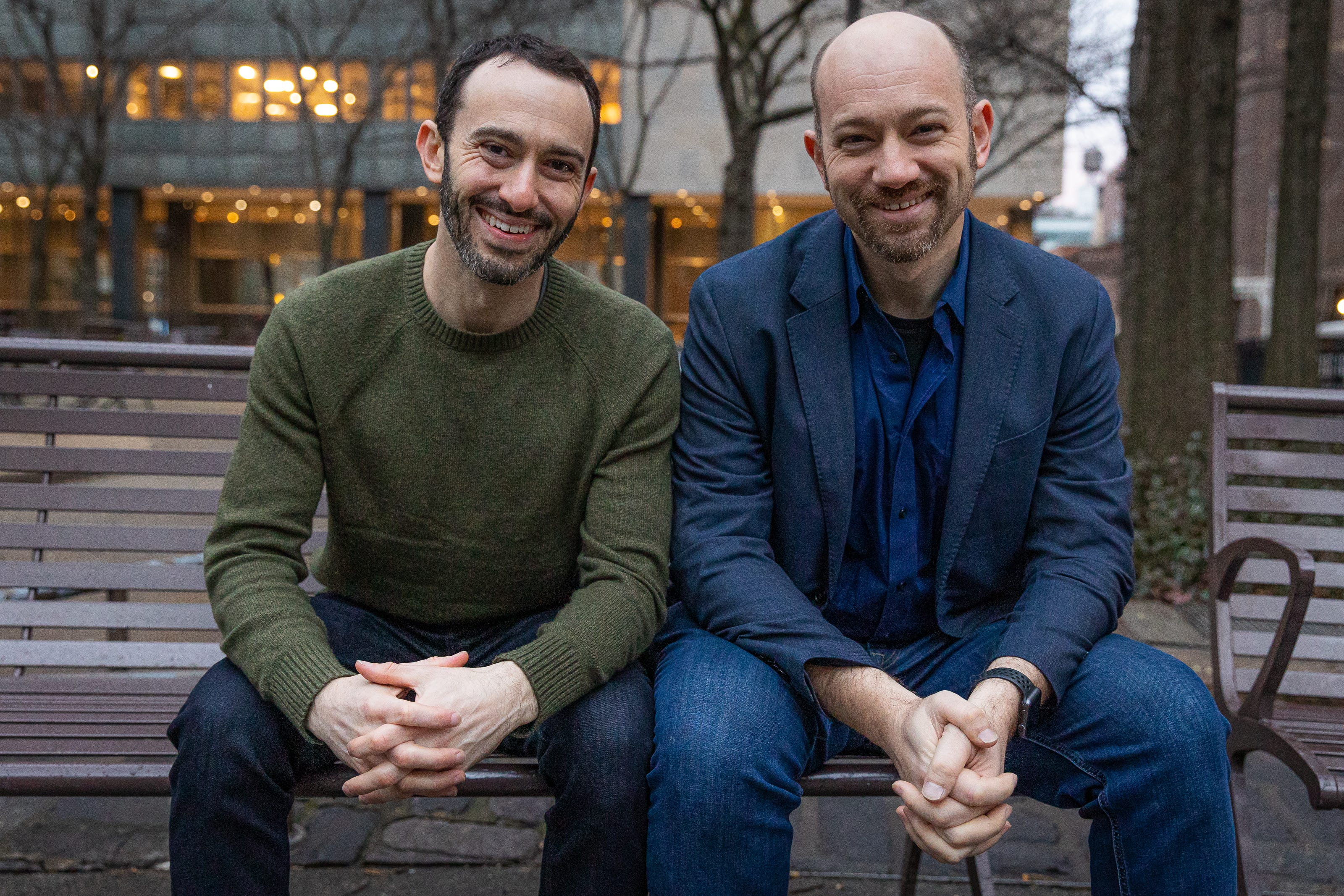
Lance Kramer Bio: Lance Kramer is a Washington, DC-based filmmaker and co-founder of Meridian Hill Pictures. Lance produced HOLDING LIAT (Berlinale Documentary Award Winner, Oscars Shortlisted, CPH:DOX); THE FIRST STEP (Tribeca, AFI DOCS); CITY OF TREES (Full Frame, PBS, Netflix) and the Webby Award-winning series THE MESSY TRUTH. Lance has served twice as an advisor in the Sundance Producers Lab, was a Film Independent Fellow and Fast Track participant, was a fellow in the Sundance Creative Producers Summit and Impact Partners Documentary Producers Fellowship, and was named to the DOC NYC “40 Under 40” list. Lance received the DC Mayor’s Arts Award in 2014, the highest honor given to working artists in the Nation’s Capital. Lance is a former Board Member of Docs in Progress, a member of the Documentary Producers Alliance, and currently serves on the board of the Foundation for the Augmentation of African Americans in Film (FAAAF).
Brandon Kramer Bio: Brandon Kramer is a Washington, DC-based filmmaker and co-founder of Meridian Hill Pictures. Brandon directed HOLDING LIAT, which was shortlisted for the 2026 Academy Awards, won Best Documentary at the Berlin International Film Festival, was selected for the Winner’s Circle at DOC NYC, and was broadcast on BBC Storyville. He also directed THE FIRST STEP, which premiered at the Tribeca Film Festival; CITY OF TREES, which was distributed by PBS and Netflix; and the Webby Award-winning documentary series THE MESSY TRUTH, which aired on CNN. Brandon’s work has been supported by the Sundance Institute, Jewish Story Partners and the National Endowment for the Arts. Brandon is a Film Independent and Mandel Institute Fellow, and holds a bachelor’s degree in film and cultural anthropology from Boston University.
For more on HOLDING LIAT,
read/listen to this podcast: