I I notice how hesitant I am now to say numbers from Iran. I know what happens almost reflexively: the frown, the cautious “That can’t be independently verified,” the seemingly factual reference to a lack of confirmation. What resonates here is one thing above all: doubt. The Iranians are – once again – not believed.
As the exile medium Iran International Speaking of 12,000 deaths in the nationwide protests against the regime in Iran, a familiar ritual immediately began: too close to the diaspora, too emotional, too little verifiable. You have to be careful, they said, wait and classify.
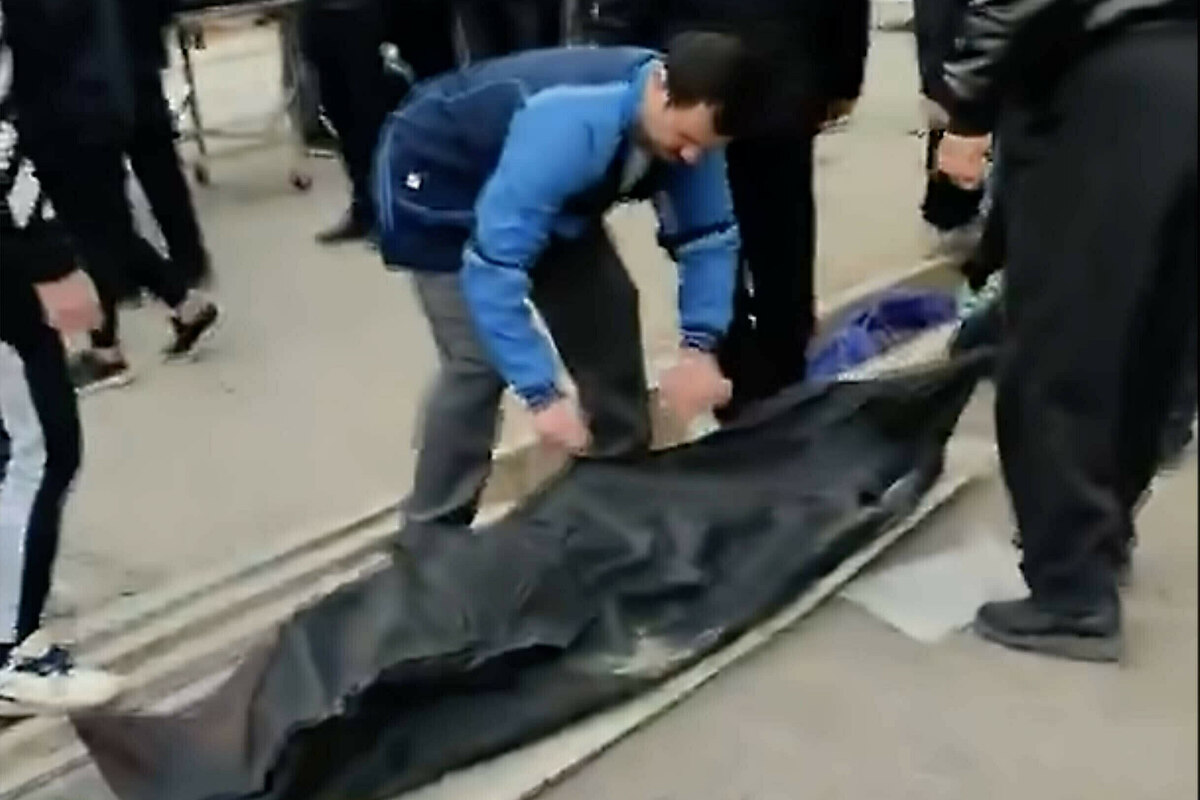
That’s exactly the point: the fact that nothing can be completely verified is part of the crime. The regime has completely shut down the internet for almost two weeks switched off, International telephone calls are cut off, journalists are intimidated and arrested, hospitals are militarized and stormed, bodies are often not handed over to the families. Those who report lower numbers under these conditions do so not because fewer people are dying, but because less can be documented.
Even organizations that are traditionally more reserved say exactly that. On the 22nd day of the protests, the confirmed Human rights organization HRANA at least 3,919 deaths, although another 8,949 deaths are still being investigated. Given the extent of the violence, organizations can hardly keep up with counting the dead. Amnesty International speaks of “mass unlawful killings on an unprecedented scale” and at the same time emphasizes that the actual number of victims must be significantly higher. It’s not about dramatizing anything. Mass murder is harder to understand in the dark than in the light.
Too subjective, emotional, not resilient
Only fragments reach us from Iran itself. A man from Karaj who was able to speak on the phone for a few minutes said: “Those numbers you’re hearing – 10,000, 12,000 – it’s a joke. It’s nothing compared to what’s happening here.”
Such voices are often dismissed here as subjective, emotional and unreliable. They are the only thing we have when a state systematically destroys any form of documentation. And: The people in Iran all independently confirm the same thing, namely that outside Iran we only see fragments of what is actually going on in the country. That the violence is much higher than we can even imagine.
Even the Islamic Republic can no longer completely deny the extent of the violence. Ayatollah Ali Khamenei, the Supreme Leader, spoke on state television of “several thousand” people killed since the protests began.
He blamed the protesters themselves, calling them “foot soldiers of the US” and claiming they were armed. This is the well-known perpetrator-victim reversal. But the statement stands for itself: the man who ordered the violence can no longer deny the deaths himself, as he did for years before.
Take the word mass murder seriously
The British one Sunday Times is now assuming at least 16,500 deaths, based on reports from doctors on site. They speak of 330,000 injured. This number is treated with much less skepticism in the media. Maybe because she comes from London and not from exile in Iran. Maybe because Western sources are still considered more credible than those affected themselves. As if the truth needed a European passport.
But perhaps there is another, uncomfortable reason for our skepticism. Four-digit death numbers in just a few days are almost unbearable; Five-digit numbers go beyond the imaginable. They force us to take the word mass murder seriously.
To admit that so many people could have been killed in 2026 while the world watched, hesitated and relativized. Maybe that’s why the numbers are being questioned. Out of defense, out of shame. Because it’s easier to doubt a number than your own inaction.
This automatic skepticism towards those affected shifts the standard of credibility away from them and towards Western confirmation authorities – and it plays into the hands of the regime in Iran, which relies on exactly that: doubt and the eternal “We don’t know for sure yet”.
We know enough. We know that people are being targeted and shot. We know the internet is shut down to cover tracks. We know that there is currently martial law on the streets and that the regime is using heavy weapons against the civilian population. And we know that any further relativization is not a sign of sobriety, but rather a conscious turning away.
The Iranians must finally be believed. A truth that only applies when it seems tolerable to us is not a truth. Every relativization is a silent acquiescence to violence.