

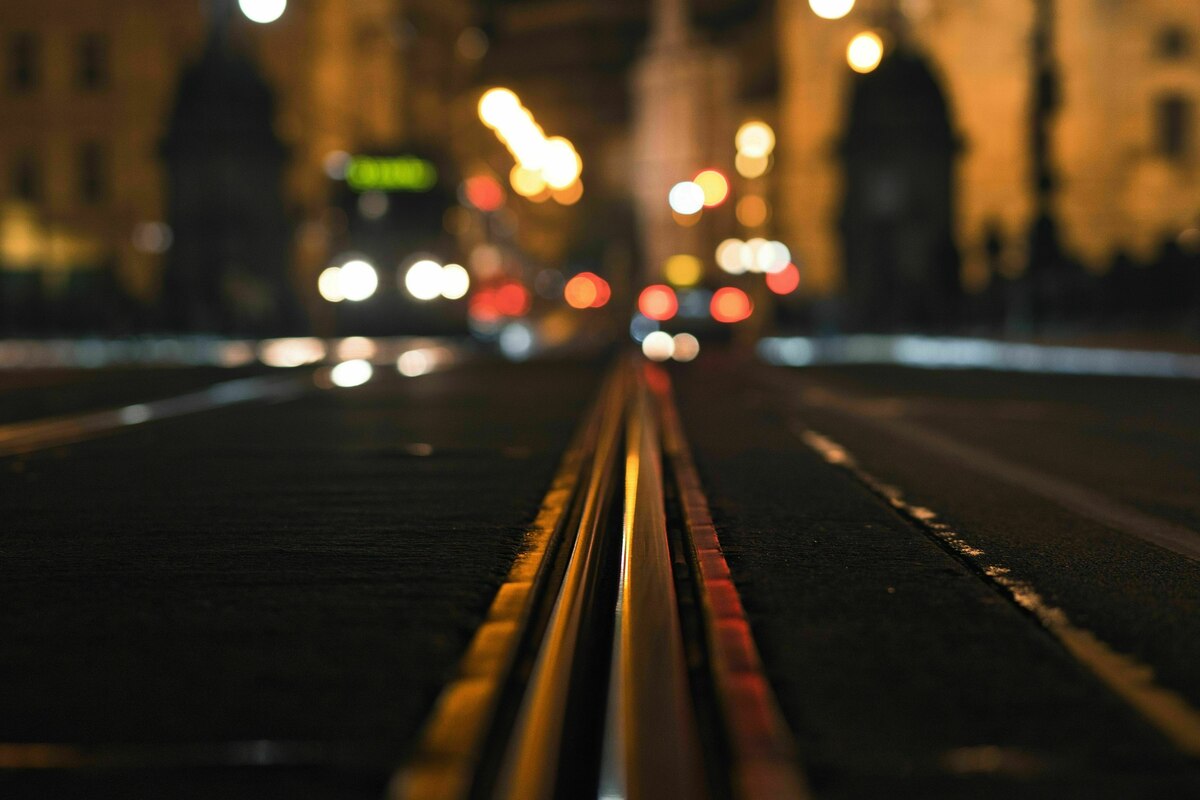
The “other” city that this extraordinary novel is about is teeming with animals. These cross the narrator’s path with regularity, and not always with friendly intentions.
But without exception, each of his encounters with other living beings ends miraculously well, which is an indication that – if we decide to recognize a consistent narrative logic behind the text – we are not dealing with a manifest counterworld, but with a phantasmagoric dream world, whose boundaries to generally accepted reality are, however, much more permeable for the first-person narrator than we can normally imagine.
He himself says at the beginning: “For us, only what moves in the paths of our world makes sense and is understandable,” or “The border of our world is a line that only has one side; there is no way out and cannot be.” And yet, with his stories, he proves the opposite, so to speak.
Michal Ajvaz: “The Other City”. Translated from Czech by Veronika Siska. Allee Verlag, Munich 2025, 208 pages, 27 euros
A city behind the city
In an antiquarian bookstore, the narrator finds a book printed in a strange, unfamiliar font. He buys it, begins to study the incomprehensible signs and suspects that they belong to another world that is inaccessible to him, to a city beyond the Prague he knows. He begins to look for this other city – or perhaps only now to really see it.
At night he goes to different places that reveal a completely different being than during the day – and in which completely different creatures cavort. On Petřín Hill he discovers an underground cathedral where a priest preaches, whom he recognizes the next day as a waiter in a café.
This waiter’s daughter, an absent-minded café assistant with poor arithmetic during the day, mutates into a fierce defender of the other world at night. On the tower of St. Nicholas Cathedral she sets a shark on the narrator, and a bloody battle of life and death breaks out.
The dream tram to the other world
Other episodes involve, for example, a ray flying over the rooftops of Prague, a pair of lovers drowned in the Vltava but very much alive, or a herd of miniature moose living in the statues of Charles Bridge. A green, marble dream tram, which, as the narrator learns, takes people irretrievably from the real city to the other city, appears repeatedly as a leitmotif, but he never lets himself catch up with it.
On the one hand, “The Other City” is not a conventionally easy read. On the other hand, it’s best to treat them as just that. There are a lot of sentences in it that you would like to skewer and hang on your wall – on the one hand because of the beauty of Ajvaz’s language, which Veronika Siska has translated into no less beautiful German; on the other hand, because it might be worth staying longer mentally in one place or another.
But perhaps the most important thing here is not to get behind something mentally, but rather to surrender as freely as possible to the narrative flow that meanders back and forth between the worlds – in order to be able to feel what it is like when you are suddenly carried by the power of signs from the visible to the invisible world, from the concrete to what is hidden behind it.
Michal Ajvaz, born in 1949, was able to publish his literary texts in the Czechoslovakia did not publish officially and only began his true existence as a writer, literary editor and literary scholar after the Velvet Revolution of 1989.
The two-faced nature of Prague
“The Other City”, originally published in 1993, takes place in a Prague that in reality has not been freed from its cultural double-facedness for very long – a city in which, in addition to the publicly visible culture, there was also a very lively underground for decades. It is not unlikely that the basic feeling of an involuntary double existence has flowed into Michal Ajvaz’s poetics of a hidden world beyond the superficial limit of perception.
And undoubtedly has too Franz Kafka The inspiration for Ajvaz’s “other” Prague, although Kafka often described the city in great detail in his somnambulistic prose but never named any places. Ajvaz does exactly the opposite, attaching his narrative to the names of real streets, squares, bridges, buildings and cafés. When the “other” city appears behind this very pointedly concrete outer city, the feeling of what the “real thing” might be here shifts when reading.
The city’s visible places seem to dissolve into arbitrariness; their true meaning seems to lie beyond their external shape. The concrete city is a realm of signs, and behind it lies a sea of narrative possibilities.