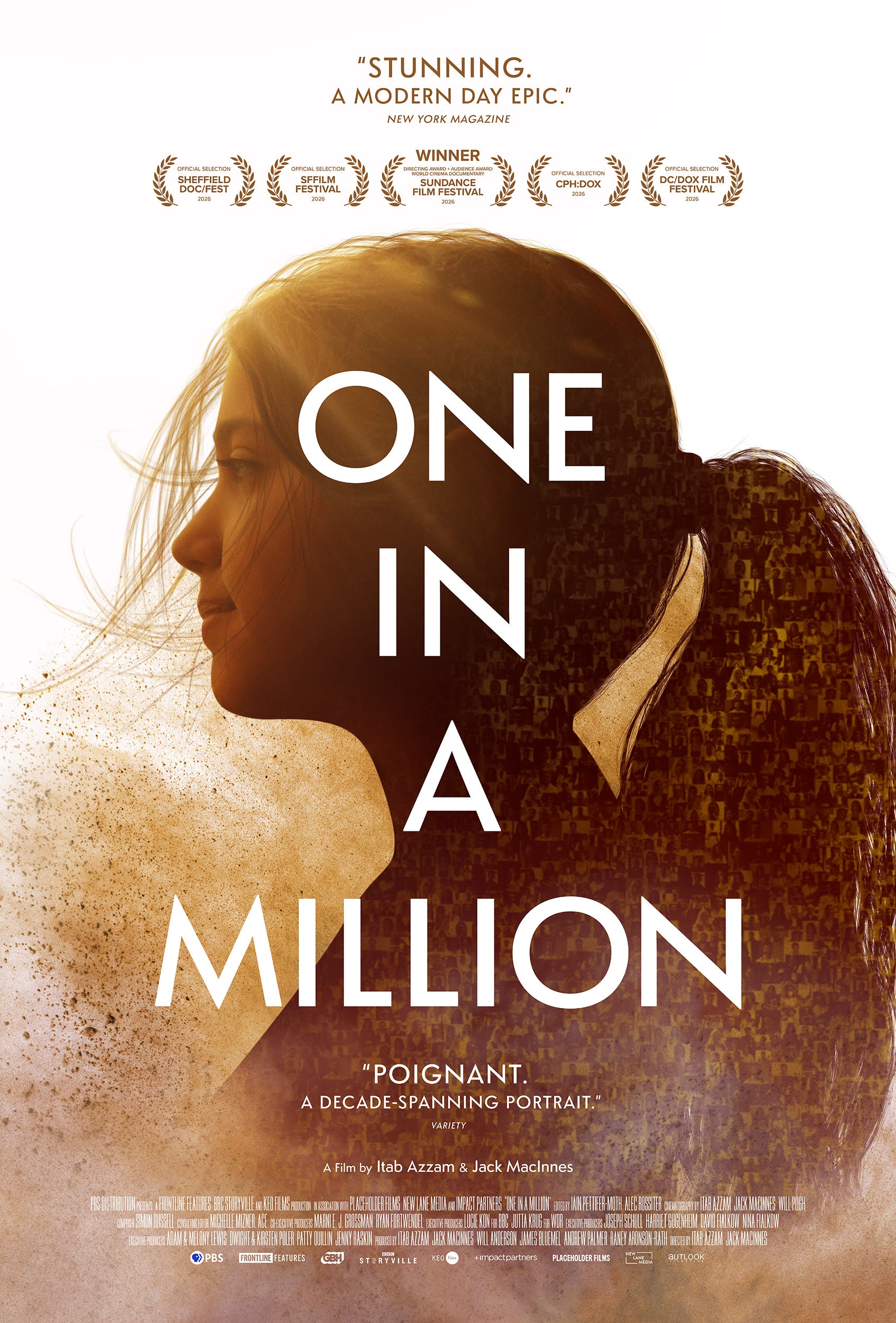
In this vHopeful conversation, I talk with Itab Azzam and Jack MacInnes, directors of the extraordinary documentary One in a Million, about their decade of filming Israa and her family as they fled Syria and built a new life in Germany, and about the trust, commitment, and emotional honesty that allowed them to capture the deeply personal experience of displacement and migration. We discuss how sharing the family’s journey challenged the boundaries between filmmaking and friendship, what it meant to be “humans first and reporters second,” and how they found the heart of their film in the love between a father and daughter. We explore the different ways family members experience freedom and belonging, and what it means to build a new life while maintaining a connection to the home you left behind. Itab speaks candidly about learning to let go of her own hopes for Israa and respect the young woman’s choices, as well as her own experience of exile and the upheaval in Syria during the edit. Jack reflects on the challenges of translating the meaning of home across languages. It’s about looking beyond the label of “refugee” to recognize individual lives, complicated relationships, and the right to imagine—and choose—one’s own future. (Note: It was pure coincidence that all three of us wore blue denim shirts! If you watch to the end, you’ll meet a surprise special guest.)
Transcript lightly edited. Podcast available on Apple, Spotify or wherever you listen on this Substack or Ted’s Hope for Film
Vanessa Hope: I am extremely excited to welcome Itab Azzam and Jack MacInnes, the directors of One in a Million, a documentary I absolutely loved that won directing and audience awards at Sundance in January. It was filmed over ten years. This is extraordinary. One in a Million follows Israa from age eleven and her family in their flight from Syria to life in Germany and eventually their return to the country they left behind. It’s a coming-of-age story about family, freedom, and the search for a place to belong. The film’s honesty and empathy for its subjects and for the divisions in our world is profound.
I am so happy to welcome Itab, a Syrian-born filmmaker and humanitarian whose work includes helping refugee women tell their own stories through film, and Jack, a British documentary filmmaker who met Itab while living in Damascus, where their partnership in life and filmmaking began. Itab and Jack, it’s so nice to meet you here, and thank you for joining.
Jack MacInnes: It’s so nice to meet you too, Vanessa, and we’re really happy to be here. Yeah, thanks for having us.
Vanessa: I loved your film. And I love that you followed Israa’s story for ten years, and I love how you met her selling cigarettes in Turkey. Can you share what happened between you that made you feel this connection was something to follow?
Itab Azzam: Yeah, well, let me tell you. You know that I’m Syrian, and I was living in the UK at that time, and, you know, I was going through my own kind of experience of exile and the conflict of identity and finding my own place. And 2015, as you know, was the height of the refugee crisis. And I was just desperate to kind of tell stories about Syrians and refugees.
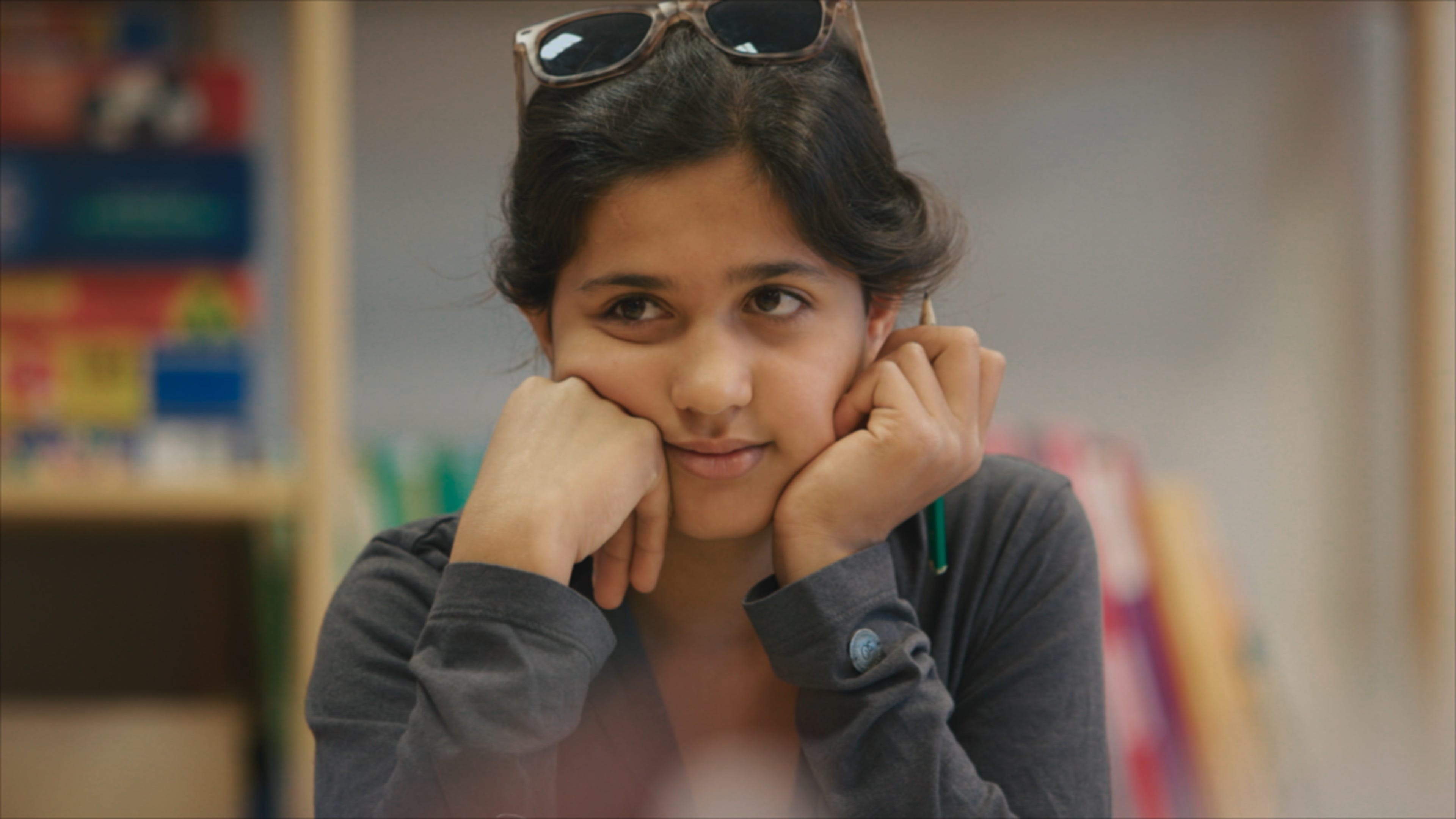
So Jack and I went to Izmir, where there’s this square in Izmir that’s called Basmane Square, which is like a hub where refugees and smugglers kind of do deals. And we spent quite a long time there, and just one day we were in the square and, you know, amongst all these miserable faces, this kind of ray of sunshine just appeared, and that was Israa, smiling at us. And then she said hello, and we were like, okay, hello. And then we started talking to her, and yeah, it was like love at first sight. And we thought, like, you know, that’s it. And she was interested in the camera, and she wanted to film herself. And yeah, that’s how it all started.
Vanessa: And you two met in Damascus, and you were building a life there. Can you tell me what you felt you found in their family’s experience that would help people understand the larger story of what was going on?
Jack: Yeah, you know, I went to Damascus in 2010 to make a film, and Itab and I ended up working together. So, we kind of made the decision to start a life. Itab had just lived a whole life there, obviously, but I made the decision to make a life in Syria kind of nine months before the war started. And so we were making all these plans, and we had this idea of setting up a production hub in Damascus, and we were doing this.
And then, Itab got a master’s to go and do film studies in London, and at the same time the war was starting. So we went back to London, where I’m from, and we thought it was just for a short time. And then that kind of became sort of indefinite because of the war. And so, yeah, I think Itab was going through a lot of sort of suppressed trauma through this, as this world that she’d grown up with had disappeared. So it was a great outlet to be there making this film.
And I think what we loved about Israa and her family was that, you know, we didn’t want to make poverty porn about Syria, and we didn’t want to make an Oxfam ad, which is quite often how these things get portrayed. We wanted to see the full roundedness of what Syrian culture is: the fun and the naughtiness and the edginess. You know, her dad was a bit of a wheeler-dealer. He was kind of skirting on the edge of the law, and that’s how he lived his life. And Israa wasn’t just adorable, she was ballsy. You know, she was holding her own with these quite dangerous smuggling gangs and guys. And we just kind of thought, yeah, this is the Syria we recognize, that we want to show the world.
Vanessa: And she’s only eleven when we first meet her in your film. How did you negotiate the filming with her, so that you gained her trust and clearly bonded in this way? I imagine you were just constantly updating her on what was happening, or she you. How did that happen?
Itab: I guess when we met her and we started talking to her, she introduced us to her father, who she was helping in Basmane Square, selling cigarettes. And we explained to him what we were trying to do. Initially we wanted to just film the journey, and that was kind of the essential thing that we wanted to do. And there were lots of journalists and filmmakers around there, so it wasn’t like a strange idea to kind of film. So they were like, yeah, happy. And they wanted to tell their own story. Then he took us back home and introduced us to the wider family. And so the consent at the beginning was with the father.
And as we went through the journey, we kind of experienced every bit of the journey with them. So we were there on the refugee trains. We slept in the street with them. We were kind of stuck in the rain at the Croatian border for six hours, in freezing conditions. So we experienced everything with them, and that’s how the trust kind of built between us and them. And by the end of it, we became like a family. When we arrived in Germany, we had bonded and we had become a family, and we thought, okay, we can’t leave you here.
Vanessa: I wonder, too, if your being a couple helped the situation. I wonder if it would have been harder if it was one or the other of you alone.
Jack: It totally did, certainly. I think that, obviously, Syria’s got an incredible culture of hospitality. And so, you know, a family making a visit to another family, sitting down and telling their story, is just the stuff of everyday life, right? And I kind of always joke that, you know, there was something not professional about it. It wasn’t like we were reporters. It was like we were humans first and reporters second.
And so quite quickly, we kind of had that relationship. And often, going through this over the years, the camera kind of felt secondary, to them especially. The battle we always had was when we were having a meal, they’d be like, come and sit down, come and sit down. And I’d be like, yeah, but let me just film for a bit first. Because, as far as they were concerned, they just kind of accepted the camera as part of that relationship we had.
I think the fact that, you know, obviously Itab was Syrian, and that I had been living in Syria and so understood some of the references and understood some Arabic, just took us away from being kind of reporters. And we were living our own, like, less dramatic version of their story. It kind of accelerated that whole relationship. I always say that our camera became a member of the family, because it was just sitting there, and it just became normal to have.
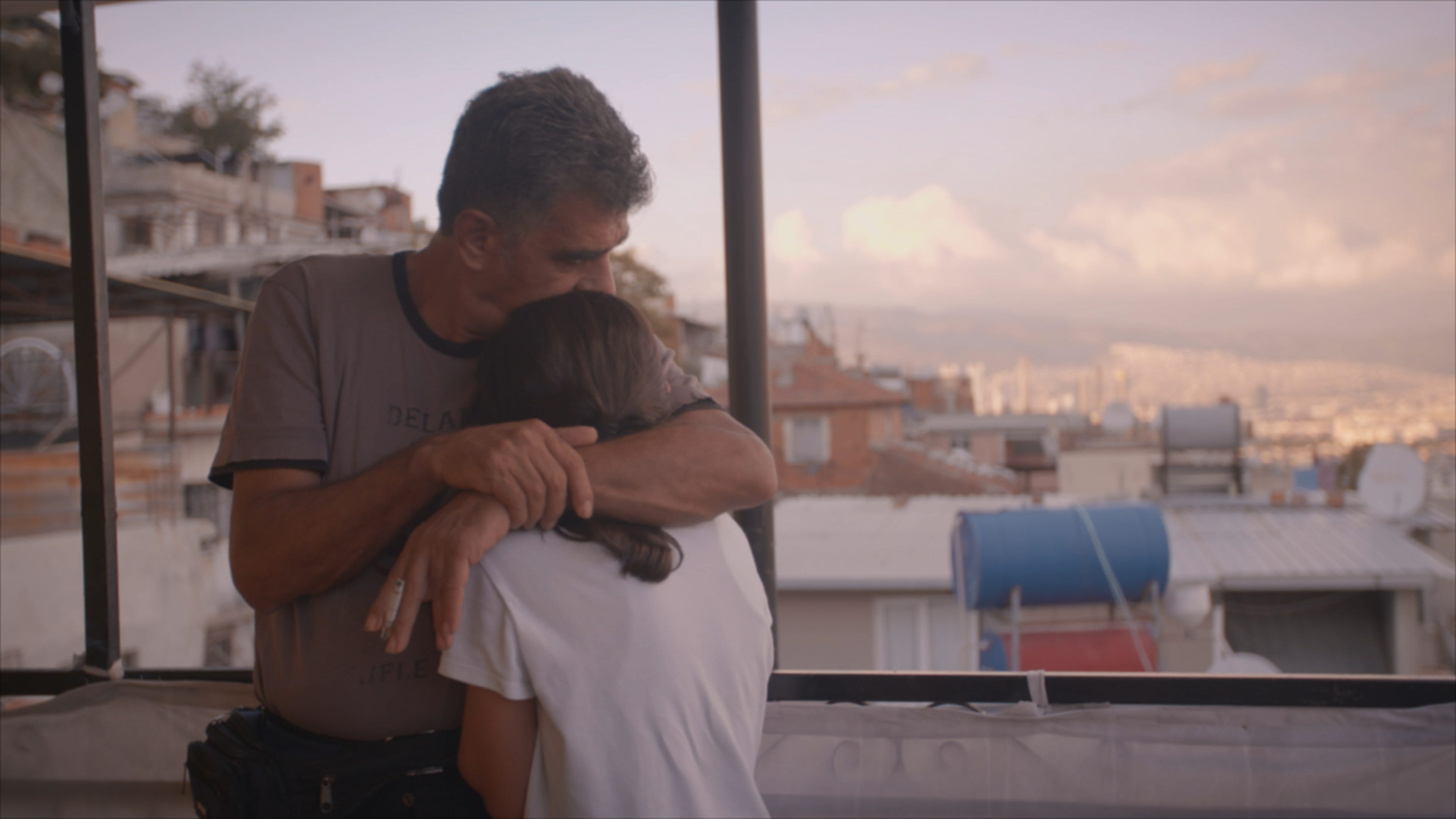
And they would pick it up, like, let’s sort of pick up the camera for a bit. And the kids would always want me to stop so they could have a go. And I think Tarek loved it as well. I think it was a great outlet for him, you know, because obviously he was feeling a lot of anger about what had happened to him under the Assads in Syria, and he was going through this thing. And I think it felt like it was giving him a bit of meaning to what he was doing, that he could be expressing himself through this film. And I think all the family felt that at different points.
Vanessa: Yeah. That’s interesting, because your film has both vérité, where, as you say, you’re following them through their entire journey, you’re with them across all of these different countries, and then you also do these sit-downs where they get to speak directly to the camera and share what’s going on. And I feel you get this extraordinary insight into their characters, into what they’re experiencing, into who they are. Can you speak about that, about Israa’s mother first, maybe?
Itab: Yeah, Israa’s mother. Actually, when we met them in Izmir in Turkey, we really didn’t hear from her at all. Back in Aleppo, she never left the house. She didn’t know anybody. The only other house that she visited was her parents’ house. She really lived a very kind of limited life. And then in the film, the first time you actually hear from her is while we’re crossing the Croatian-Serbian border, and suddenly she looks at me and says, this is freedom. And I was really shocked. Here we are, all shivering, it’s cold and rainy and muddy, and, you know, for her it was like an adventure of freedom.
From that moment, you know, I tried my best to get closer to her, and we really bonded. And now I know everything about the extended family in Aleppo, like who married who and what children they have. We really have this relationship. And when we arrived in Germany, bit by bit, she started to understand, you know, this is a country where they respect women’s rights, and I can actually have my rights, and I can have a voice, and I can have my opinion.
And so she understood that if she wanted to lead the life that she wanted to lead, she had to go for it. And she did that. And it’s really incredible, because it takes a lot of strength to do that, to get out of this tradition. There’s a lot in that community where people talk and judge women. And you did that, and you did that. And she really did that, and it’s amazing. And the sit-down interviews really gave her a chance to reflect and just be really bold, and just say what she wanted to say.
Jack: Yeah, and I think when we sort of worked with those interviews in the edit, it was a decision for us that we wouldn’t use those interviews to narrate the story. We wanted the actuality to speak for itself. But then we started to realize that there were moments in those interviews that were scenes, that were actuality. And that’s when we really turned to them for moments that just felt telling. In that sort of space, they became this kind of neutral space where you could see how they were evolving.
And there’s this kind of amazing moment where we were just transitioning between interviewing Israa and interviewing her father, and she starts saying, you know, khalas, can we stop talking in Arabic? It’s boring, Dad. Why don’t you just go off and have a cigarette so I can speak in German? And that just said so much about where their relationship was and how she was evolving. So we found those moments really telling once we were looking back at them sort of six or seven years later. And yeah.
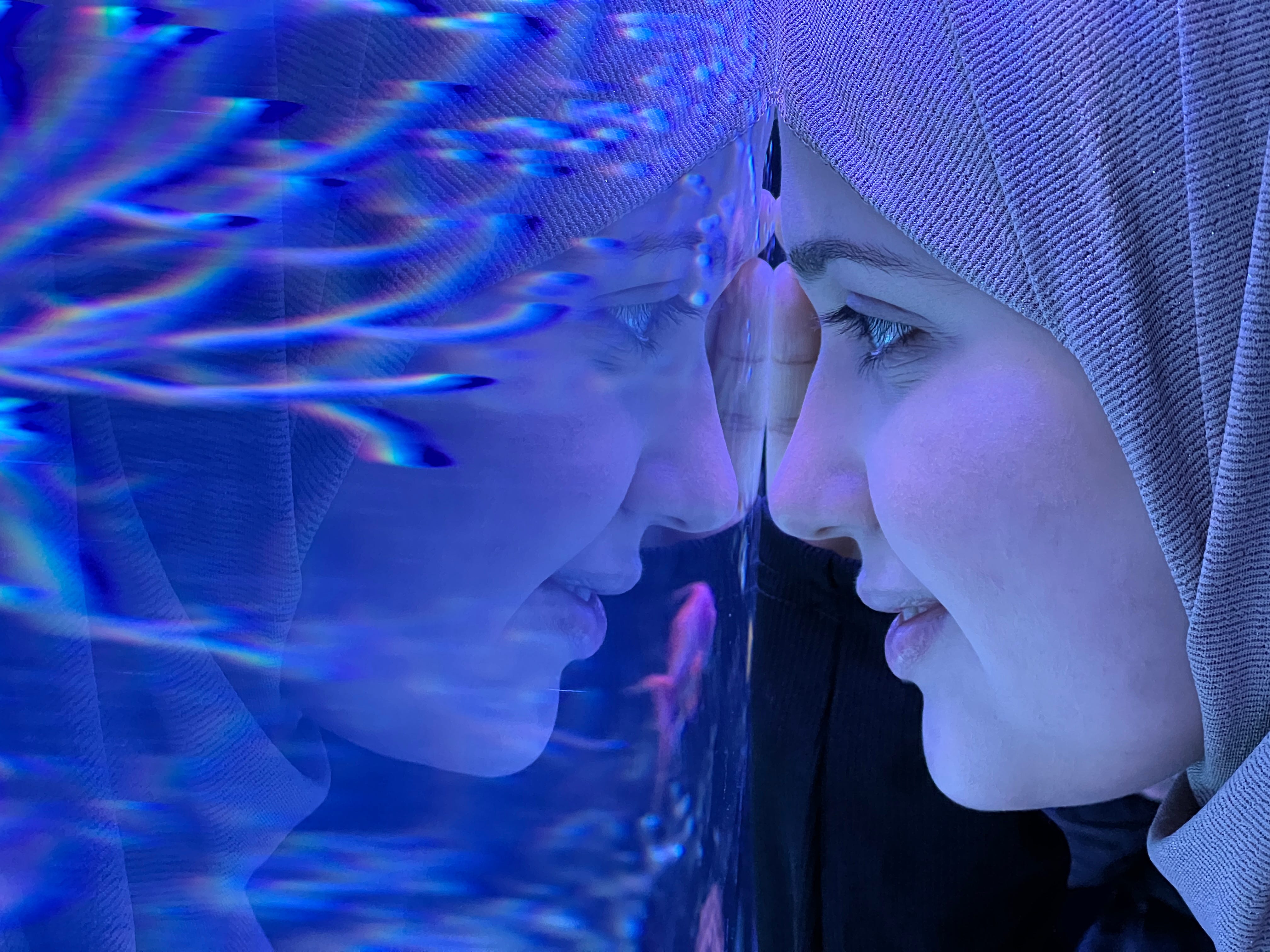
Vanessa: Yes. There’s a big evolution of the relationships, because, actually, what a pivotal time period in someone’s life, from age eleven to twenty-one. And to understand her evolution with her father, really, like what he goes through, a big change. They’re all going through big changes. How can you not? Were those changes surprising to you? Were they unexpected? You were experiencing them as they happened.
Itab: So, for us, just to be completely honest, when we arrived in Germany, she always kind of said to me, I want to be a lawyer, I want to be a doctor. And I had really high hopes for her. But I also brought my own kind of opinions about, you know, women’s rights and feminism and all of that. And I wanted her to be like, you know… not like me, you know, just be liberated, just do whatever you want. That’s what I wanted for her.
But then, you know, what she went through is completely different from what I went through. She experienced a really difficult life. She had to grow up at a very young age. You know, she was making money to support her family. She was raising her siblings. And she was desperate for stability and love and security. That’s what she wanted, and that’s what made her happy. In the end I was like, yes, okay, the most important thing is happiness, that you’re happy. And yeah, she chose a different lifestyle to what her mother chose. And it’s interesting, but yeah, I understand it.
Jack: And I think that you’re totally right. The thing about making a longitudinal film like this is that you have to surrender agency as to what the story is and what this film’s about. And I think there were things we probably predicted a bit. You know, we kind of knew she was going to go into a teenage period as a Syrian girl in Germany, and that was maybe going to throw up some issues.
But if I’m honest, we were probably more focused in the beginning on what the relationship would be between this family and Germany. You know, would there be a sort of racist backlash against refugees? Would they experience this? Would they be in danger of deportation? How would they experience that? And it was quite, you know, uncomfortable, but I also think it made the film more unique, that it really became a family story and the tension became within the family.
I think what we loved about that was that it sort of answered that question: refugees and migrants are not a sort of bloc. Each individual, each different group, experiences that differently. And the fact that it’s acknowledging that, like, Israa and Nisreen, as two Syrian women, both had, you know, different experiences of navigating that. And Itab has her own experience, and that’s different too. And so it sort of started to illuminate all those shades of gray. There isn’t just a binary between integrating and sticking to your culture. There are so many different ways to approach moving to a new place, and the way that can affect you.
Vanessa: Yes. And first I just want to say, listening to Itab talk about the relationship with Israa and expectations, you sound like the ideal parent. I mean, it’s so interesting to reflect on your two families kind of coming together, how lucky, how fortunate everyone really was to be able to go through these incredibly hard circumstances together and to share, but to allow individual identity and growth and relinquishment of expectations. It’s interesting.
You know, I studied anthropology, which is about participant observation, but also about being honest about your view, where you’re coming from, and your impact on a story, which is always there in documentary, no matter what. But it feels like in the case of your film, you’re especially honest about it, and you’re especially empathetic, and you’re especially attuned to what it is to be Syrian in Europe or the UK, that you could bring all of this. So I’m curious about how that sense of Syrian identity evolved, maybe both for you and also for Israa and her family.
Itab: So, my Syrian identity. Yeah, I mean, when I left Syria… So I come from a really different place to Israa in terms of, you know, culture and even religion. I grew up in a secular family, and from a very early age I was very feminist. I just really cared about women’s rights, whereas they really grew up in a very, very conservative environment. But for me, in Syria, I used to work in film and media, and I visited all of Syria. I worked in a Quranic school for three months, women teaching each other the Quran in Syrian schools as well. So I have experience of dealing with families like Israa’s family.
But again, yes, I feel like I also changed being with this family, and my judgment towards other people also changed. I feel like I’m definitely way less judgmental than I used to be. I have very, very strong opinions about how women should live their lives, and I used to interfere in all of that. And now I feel like it’s not my place. People choose to live their life the way they want to live it, and if they’re happy, then that’s fine.
And the thing about Israa is that she’s really bright, and she also understands. We both know that we come from different backgrounds and we have different opinions about things, but we understand that about each other, and it’s a really good relationship. And Israa always says, like, we’re sisters.
Jack: I think there was a really creative aspect to how the relationship worked, which was that both Itab and I, in different ways… Like, you know, I’m Western, but I’m not German, though I speak German. And Itab is Syrian and a Syrian woman, but I think she was enough outside of their culture, sort of in and out of their culture, which gave us enough familiarity with the world they were in that we could relate really well, but also enough of a distance that we were great people for them to talk to.
As you say, there can be quite a lot of judgment in their community, and Itab became like a great… I think Nisreen in particular, and Israa, loved having Itab to talk to about what was going on, in a way that they knew she would be interested and wouldn’t judge, but would get it, you know. And there were times when Israa started to kind of abandon her heritage and want to speak in German, and then it was suddenly great that I could have this relationship with her, where she didn’t want to speak Arabic.
And you know, there are moments in the film where I get to ask the stupid questions about what’s going on in her culture. Like, why is your dad upset that your mom’s putting makeup on? Which she would explain to me, because she liked having someone who didn’t get it, you know? And so it became this quite interesting thing, where we had all these different sort of dynamics that we could use in the film. And I think we really wanted to be honest about that. We didn’t want to be these kind of filmmakers in the background who didn’t acknowledge our presence. Yeah.
Vanessa: It’s great. It works so well, because it’s a level of trust and comfort and ease that you rarely ever see, especially in such challenging circumstances. And then to see that you brought us her whole love story at the end of the film, it’s so beautiful. You’re right there with her, and you feel it, and you’re so happy for her.
So I wonder how in the world you took ten years’ worth of filming and cut it into two hours of a film. How could you condense it, compress it? How did you make those choices? Those must have been so hard to make.
Jack: Yeah, I mean, it was so hard. Obviously our first cuts were so long, and we were sort of trying to break it into five acts, and then each of those acts was like an hour long, and it was so hard. And then basically the breakthrough was when we stood back and we were looking at this story, and we realized that the heart of it was this love story between father and daughter. And then that suddenly gave us a shape and gave us a yardstick by which to judge what scenes were doing.
And so, obviously, there are scenes we loved which hit the cutting room floor because we felt they weren’t advancing that narrative. We covered Israa’s relationship with Mohammed in great detail, and it was all lovely, but obviously that had the trajectory of a relationship. They got together, they got engaged, they got married, they had a baby scan, they had a baby. And we felt, for us, we don’t actually need to play that all out at length.
What really felt unresolved towards the end was this relationship she’d had with her father, which was so moving at the beginning. How was that going to resolve? And that felt sort of symbolic of her relationship with Syria. And so once we made that decision, it started to get a bit more rational, and it started to have shape.
Itab: And at some point we really wanted to have more of Nisreen, the mother, because her story is great, but we ended up not being able to do all of that in one film.
Vanessa: And it’s so much also a story of belonging and what we call home, or where we find home. And I wonder, for you both, and now also for this family, Israa’s family, how that question can be answered.
Jack: I mean, it can’t, can it, really? I don’t think we came up with any answers. I guess we came up with a bit of an illumination of the problem, really, of the question.
Itab: I mean, I’ve been living here in Britain for 14 years, and I love the UK. I consider this my country, but still, it’s not my home. And it’s so weird, because it’s like you will never be able to achieve that in a country that you weren’t born in, where you didn’t have your childhood and all of that. So even though I want to live in this country, and, you know, my son goes to school, and we all have friends, other families, there’s still something missing all the time.
And when the regime fell in Syria, both of us were like, you know, it was such a relief. We thought, we can go back, and we can maybe establish a life there, because, you know, that’s always where home is. I guess for Israa, I heard her talk about that. She really feels like she’s half German, half Syrian, because she grew up in Syria and Germany, really.
Jack: I think, you know, obviously this is really close to the bone. I hope you don’t mind me bringing this up, Itab, but, like, you know, when we were in the middle of the edit… You know, it’s a family home, so this is an interruption.
Vanessa: Okay. That fits, that’s fitting. If your son wants to come in, you’re totally fine.
(Their son joins the conversation)
Itab: Yeah, just say hello quickly and then go back. Hello. We’ll come down in 10 minutes. Okay.
Vanessa: Oh my goodness. Hi… Excellent.
Jack: Sorry about that.
Vanessa: Not at all. Well, actually, I can tell you in this little moment, since you speak German and I don’t: in the new Paweł Pawlikowski film about Thomas Mann, Fatherland, it’s Thomas Mann’s journey from Los Angeles back to Germany in 1949. And he’s immediately in a press conference and being asked where he finds home, and he answers, well, my home is in Los Angeles. But then there’s a German word, Heimat or something, like, where you belong? And he said that’s still a question.
Jack: Heimat. Yeah. It was actually really interesting when we were doing translation and realizing, you know, we obviously have three languages, Arabic, English, and German, and the words for home are slightly different. It’s a very hard word to translate accurately.
But what I was going to talk about, and maybe I suggest you talk about it, because I know it’s quite a big, sort of painful thing for Itab, is that, you know, it was ironic that, like, in the middle of this edit… You know, do you want to talk about it? What happened?
Itab: Well, I was telling you that when the regime fell, we felt really, very excited and happy, and we had a whole party in our house. But then, in the middle of the edit… We are from a minority group in Syria. There were attacks on our community, and my parents’ village was completely burned down. My dad had a library of more than 7,000 books, and it was all burned down to the ground. All my cousins, my uncles, they had to leave and flee.
Vanessa: Oh my God.
Itab: And it’s still, like, our village and another 36 villages in our community are occupied by this extremist faction of the government. 1,500 people were killed. So in the middle of editing this film, I had to go through this trauma, and I had to kind of… get my parents out of Syria, and all of that. And also, you know, from feeling that, okay, we have our country back, and we want to go back, and I want to introduce my country to my son, who doesn’t know… He says he’s half Syrian, but he’s really never visited. We had to deal with this trauma, and yeah.
Vanessa: I’m so sorry. That is unbearable.
Jack: It already was a very personal story that we were making, and then it just felt even more personal as we were editing this material: Israa, who was at a different stage of her cycle, where she was sort of ten years on, revisiting the scene of all that, just as it was feeling quite fresh for Itab and her family, and realizing that the cycle continues. You know, it just moves on. The trauma in the Middle East is just ongoing.
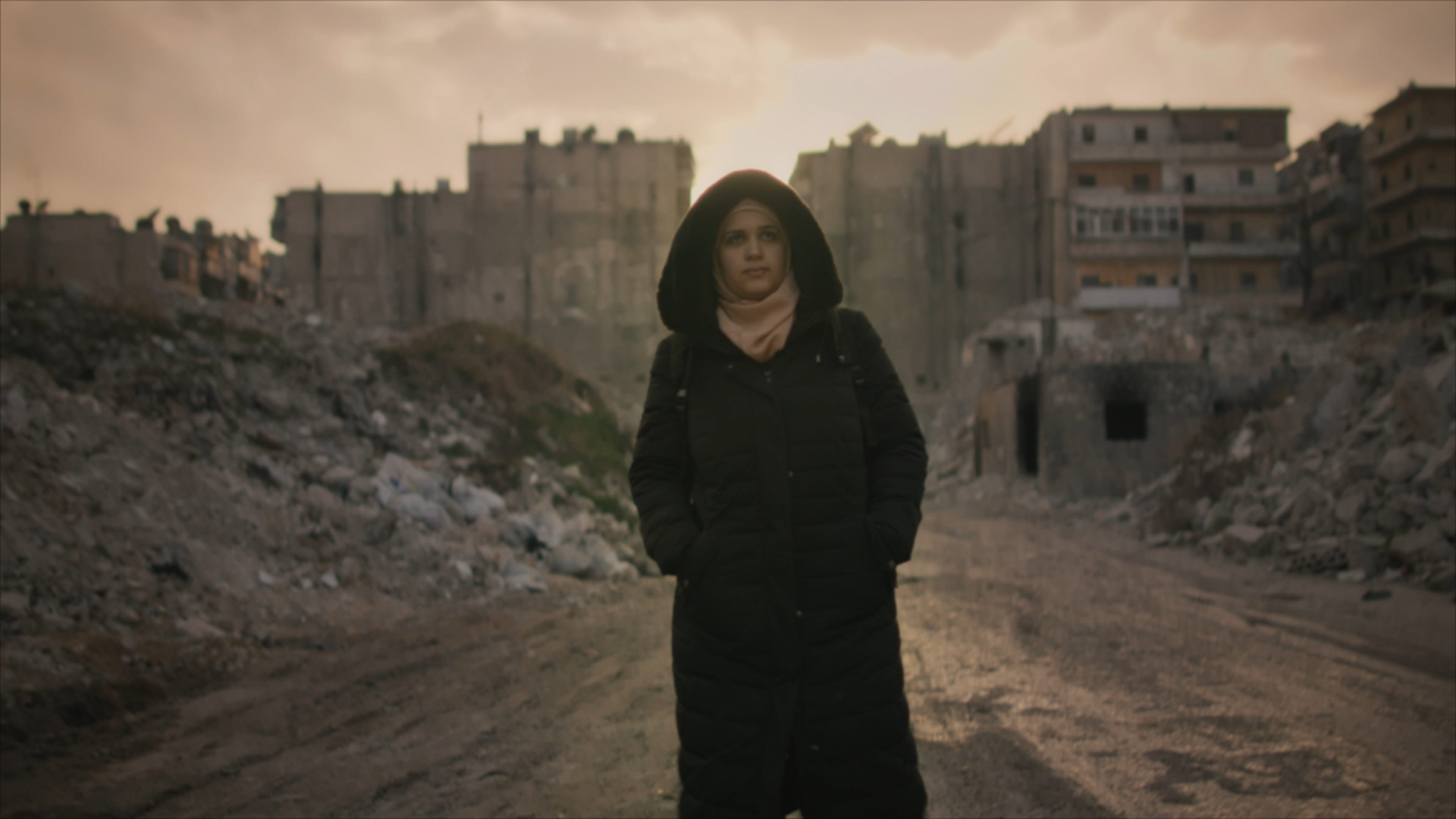
But those questions about home, and what it means to be at home, and what happens when your home disappears, we’re living right now. You know, today we got the keys to Itab’s parents’ flat in London for the first time. So they’re trying to sort of make a new life, you know…
Vanessa: Wow.
Jack: Obviously it’s very specific to Syria, but it’s also something that so many people around the world are experiencing in different ways, having to negotiate that question. And I don’t think you ever fully answer it. You become a bit of a divided personality. And I think we always wanted to call it One in a Million because we wanted it to be one person’s story, but also to speak to something much bigger.
The refugee experience, the migration experience, is such a massive feature of how the world is today. And it doesn’t necessarily have to be as violent and dramatic as what happened to Israa. There are all sorts of reasons why people have to move. And we’ve been amazed, as we’ve shown this film around the world, how many people it has resonated with for that reason, either for them or for their parents. There are some people, second-generation immigrants, saying to us how they really understood what their parents went through. And that’s just wonderful for us to hear, just to get this kind of conversation going about what this means, even if we don’t have the answer. Yeah.
Vanessa: Yes. I imagine it’s really connecting with audiences all over the world. So you have been on the road since January, and now you are going to be screening… Where can we tell people to see the film next?
Jack: Right, so next is Woodstock, in America.
Vanessa: Great festival.
Jack: And then the cinema release in America at the IFC Center, IFC Center in New York, October 21st. And then we’re at the Montclair Film Festival a couple of days before that. Then we’re releasing at the Roxie Theater in San Francisco and the Laemmle in LA. You know, so, yeah. Great.
Vanessa: Wonderful. Great. We’ll welcome you here. Excellent. Well, I’m going to put all this information in the post, and I hope everyone gets out to see your film. It is truly deeply moving and meaningful, and so urgent for these times. And you’ve done such a wonderful job. It’s incredible. Thank you. Thank you for making the film.
Jack: Thanks so much, Vanessa. Cheers.
Itab Azzam | Director
Itab Azzam is an award-winning filmmaker, producer, and humanitarian. She works with Syrian refugee women in Lebanon and London on empowerment, education, and through therapeutic arts projects including, Film for Freedom, an initiative that trains refugee women in filmmaking. Born in Syria, she currently resides in London.
Jack MacInnes | Director
Born and raised in London, filmmaker Jack MacInness moved to Damascus where he met and ultimately married co-director Itab. His work has appeared on Netflix, BBC and PBS and received the Emmy, BAFT A, Peabody, Grierson, and Prix Italia Awards.
One in a Million opens theatrically on
Wednesday, October 21 in New York City
and expands nationwide throughout the fall.
Upcoming screenings from the website: oneinamillionfilm.com:
Woodstock Film Festival
Woodstock, NY
October 16, 2026
Q&A with the filmmakers
—
Twin Cities Film Festival
Minneapolis, MN
October 17, 2026
—
IFC Center
New York, NY
Q&A with the filmmakers and Israa October 21 and October 22
Opens October 21, 2026
—
AFI Fest
Los Angeles, CA
Q&A with the filmmakers
October 23, 2026
—
Rialto Cinemas Elmwood
Berkeley, CA
Q&A with the filmmakers and Israa
October 24, 2026
—
United Nations Film Festival (UNAFF)
Palo Alto, CA
October 25, 2026
—
Roxie Theater
San Francisco, CA
Q&A with the filmmakers and Israa
October 24, 2026
—
Smith Rafael Film Center
San Rafael, CA
Q&A with the filmmakers and Israa
October 25, 2026
—
Reel Talk with Stephen Farber at Laemmle Royal
Los Angeles, CA
Q&A with the filmmakers
October 26, 2026