



Who Builds What Next?
In Parts One and Two, I tried to map the problem.
There’s plenty to smile about. America’s filmmaking community has built a remarkable network of support organizations. These orgs develop artists, help projects get made, celebrate the finished work, and introduce it to audiences. We should be grateful for all of that. I sure am.
But Part Two also showed what happens when the film steps out of those well-tended zones. We identified seven zones no one wants to own, at least when it comes to our cinema support orgs. Ownership starts slipping away. Distribution becomes somebody else’s headache. The audience relationship gets handed off, useful information disappears behind closed doors, and the capital rarely seems to circle back. The filmmaker is then expected to dust herself off and somehow summon the resources to do the whole thing again.
Now comes the useful question: what are we actually going to do about it?
I don’t think the answer is simply handing every film organization a longer to-do list. Most are already stretched, stressed, and scrambling for resources, and please, cinema gods, spare us another panel explaining that filmmakers need to hustle harder. We have squeezed quite enough hustle juice out of the artists already. The more interesting challenge is figuring out who wants to raise a hand, who can expand work they already do, and where collaboration might accomplish more than another new initiative. Together, everyone must show a willingness to work in collaboration to build the parts of the ecosystem that have been left unattended.
Time to weave that beautiful tapestry of unity, friends. If our larger goal is to build a cinema culture less dependent on concentrated systems that steadily strip away leverage, then our institutions have to help us create some leverage of our own.
Support Has To Mean More Than Getting The Movie Made
For decades, film support has often meant helping a filmmaker get a project made, seen, or recognized. That work remains essential, but today support needs to extend farther into the life of the film, the career of the artist, and the building of a non-dependent cinema ecosystem. NonDē, campers, NONDĒ!
If we help somebody make a movie and then release her into the marketplace without ownership, a durable audience relationship, useful information, or any plausible path toward the next film, how supported was she really? A modern cinema-support system should care about what the artist carries out the other side. The question is whether the support leaves her stronger and more capable of continuing, rather than simply having survived one more production.
The same goes for the ecosystem around her. If supporting one film helps strengthen a distributor, deepen an audience relationship, or create some capacity the next filmmaker can use, then the investment has done more than rescue a single project. That is the larger promise of NonDē: enough non-dependent capacity that artists and audiences are not forever waiting for the same platforms, conglomerates, financiers, and gatekeepers to decide what gets made, what gets seen, and who gets paid.
If we want SC-Indie Film to become meaningfully independent again, support has to leave behind more continuity, control, and compounding value than it found.
Six Responsibilities Our Cinema-Support Ecosystem Needs To Claim More Aggressively
Hope For Film keeps asking questions because somebody has to. We push this very heavy rock up the hill, it rolls backward, we curse a little, and then we push again. With enough of us doing it together, perhaps we can finally get the damn thing over the top.
Here are six places where Organization needs to push harder.
1. Make Ownership Part Of Artist Development
We teach filmmakers how to make the work. Could we perhaps also teach them how not to give the whole thing away?
Labs and fellowships already spend enormous energy helping artists develop projects and prepare them for the marketplace. Somewhere in that education there should be a serious conversation about what the filmmaker is actually building and what may still belong to her when the deal closes.
Ownership literacy is not some boring business-school add-on to the creative process. It is part of what makes a long career possible. The rights bundled into a film can become the economic memory of the artist’s work, and if those rights are surrendered over and over again, there is precious little left to compound.
A filmmaker leaving a prestigious lab should understand what she might be giving up, what she could reasonably try to retain, and why those choices may matter years later. Some artists will still sell everything. Fine. But let them make that decision with their eyes open rather than discover afterward that “independent” somehow meant independent only until the work became valuable.
You know where I stand on this. Creative development should include economic development, and one useful NonDē test for any artist-development program is whether the support leaves the artist with more control than she had before.
2. Build Distribution Capacity, Not Just Distribution Advice
How many times have you heard somebody tell a filmmaker to “think about distribution earlier”? Great advice. Where exactly should all that early thinking go?
We need more places for it to land. That means supporting the people and organizations actually building routes from films to audiences rather than simply reminding filmmakers that distribution exists. New distributors need room to learn and survive. Old circulation models may need to be revived or reinvented. The work needs pathways that do not depend entirely on squeezing through the same narrowing commercial door.
And no, we do not need to invent all of this from scratch. The Film Collaborative, Women Make Movies, Firelight Media, and others are already showing us pieces of what a healthier system can look like. Learn from them. Strengthen them. Connect what they know to the organizations upstream that are still busy developing the films.
A grant that gets one movie finished can be enormously valuable, but imagine the leverage in strengthening a distribution system that can help many films find audiences over many years. That infrastructure keeps working after the premiere applause fades.
We have spent decades developing filmmakers. How about some serious distribution development now?
3. Help Artists Keep Their Audience Engaged
Part Two spent a good deal of time on the absurdity of artists creating audience interest and then watching everybody else collect the relationship. Why do our support organizations accept that arrangement as inevitable?
Every festival screening, community event, theatrical engagement, or public conversation can do more than promote one film. The encounter can become the beginning of a longer relationship between an artist and the people who care about her work. Right now, we too often create that moment and then allow the connection to disappear into the systems of whoever happened to control the ticket, the platform, or the event.
I am not suggesting every nonprofit theater become a data company. I am asking whether the institutions that bring artists and audiences together can help establish practices that allow people who want to remain connected to actually do so. A festival could create a permissioned bridge back to the filmmaker. A ticketing system could be built with portability in mind. Shared audience tools could help artists accumulate relationships instead of returning to zero every time a new movie begins.
We have become frighteningly efficient at creating attention that somebody else monetizes. Supporting the artist should mean helping some of that attention become an enduring relationship she can carry forward.
A MESSAGE FROM OUR SPONSOR
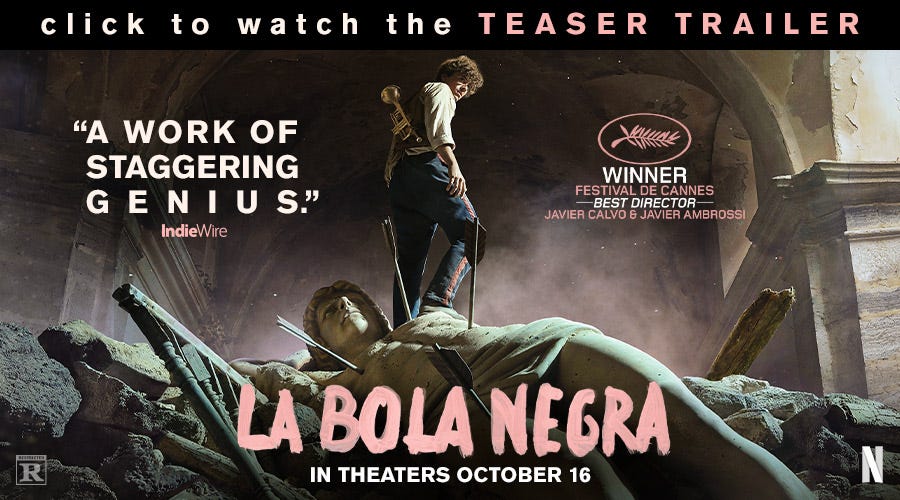

From Cannes-winning Directors Javier Calvo and Javier Ambrossi — popularly known as Los Javis — LA BOLA NEGRA follows three generations of men across pivotal moments in Spanish history, bound by pain, desire, and love. Carlos (Milo Quifes) longs to belong in a fractured Spain. Sebastián (Guitarricadelafuente) finds connection across enemy lines. And Alberto (Carlos González) uncovers a long-buried family secret — one that finally gives voice to truths the past tried to erase.
Starring Guitarricadelafuente, Miguel Bernardeau,
Carlos González, Milo Quifes, Lola Dueñas, Julio Torres,
with Academy Award® Winner Penélope Cruz
and Academy Award® Nominee Glenn Close
IN THEATERS OCTOBER 16
—
@LaBolaNegraFilm
4. Make Transparency A Collective Demand
Here is a job individual filmmakers cannot realistically do alone.
A producer can ask a giant platform for meaningful performance data, but we all know how much leverage she has after the film is delivered and the contract is signed. The same goes for clearer accounting or a better understanding of what the release actually accomplished. One filmmaker asking alone is easy to ignore. Institutions asking together become harder to dismiss.
That is where our support organizations can use some of the collective weight they have accumulated. Basic performance and financial information should become a normal expectation rather than a special favor, and the information should be useful enough to help artists and investors learn from what happened.
Our institutions could also turn some of that scrutiny inward. If a festival, funder, or fellowship is going to claim that a program changes careers, we should know what happened after the photographs and press releases. Did the intervention create opportunity that lasted? Did the artist become more capable of continuing? Did the support actually alter the trajectory?
SC-Indie Film has survived on folklore for far too long. Reliable information creates leverage, but it also creates memory, and we badly need both.
5. Treat The Artist’s Career — And Our Ecosystem — As The Unit Of Support
Projects are wonderfully convenient things for institutions. They have beginnings and endings, budgets and deliverables, and eventually somebody can put a checkmark beside them.
Careers are messier, and ecosystems are messier still, but unfortunately those are the things we actually need to sustain.
A filmmaker making a first feature may need one kind of support. Ten years later, she may be trying to keep a company alive, use a body of work to create leverage, or find a path to a larger canvas without surrendering everything she built along the way. Why should institutional support forget what it knows about the artist each time one project ends?
The same logic should extend beyond the artist. If public or philanthropic resources support a piece of work, some benefit ought to remain in the ecosystem afterward. Perhaps the film helps strengthen a theater’s relationship with a community or gives a distributor a chance to build a new route into an audience. The precise outcome will vary, but the larger question should become routine: what survives after the project is over?
A premiere matters and an award is lovely, but I am increasingly interested in what is still standing after the sparkling people go home. If the artist is stronger, and the system around her has gained some capacity too, then we are beginning to talk about something resembling sustainability.
6. Advocate For The Rules Of The Game
Somebody has to work on the rules.
The big media companies understand this perfectly well. They do not wait for policy to appear and then shrug. They organize around their interests because they know the structure of the market determines what their businesses can become. Our community, by contrast, spends much of its energy figuring out how to survive inside whatever rules show up.
That needs to change. Streaming transparency, consolidation, creator rights, and fair competition all shape whether an authored cinema culture can survive. Policy may sound distant when discussed in the abstract, but it becomes pretty damn concrete when there are fewer buyers, less bargaining power, and less information about what happened to the work.
Encouragingly, somebody is starting to pull up chairs. The Future Film Coalition is moving into broader industry and policy questions, while Producers United is organizing around the economic conditions facing Career Producers. Those efforts deserve strengthening because artists should not be expected to fight structural battles project by project.
We can keep teaching filmmakers how to play the game, but at some point we have to stop pretending the rules came down from Mount Sinai. People wrote them, and people can change them. NonDē requires enough collective power to try.
Okay, So Who Does What?
Here is where I want to resist one of our favorite habits: discover a problem and immediately create another nonprofit to solve it. We already have a lot of organizations, and Part Five will show just how much useful work is already happening among them.
The better question is where existing organizations can stretch intelligently, where partnerships make sense, and where the absence is so real that something new truly does need to be built. Sundance, Film Independent, or The Gotham might push ownership and economic fluency deeper into artist development. Exhibition organizations might find better ways to connect willing audiences back to filmmakers. Advocacy groups can build more muscle around transparency and competition. The point is not that each organization should do all of this; the point is that somebody needs to decide each responsibility matters.
We also have examples worth studying rather than endlessly reinventing. Color Congress strengthens the organizations that support filmmakers. Art House Convergence helps exhibitors learn from one another. The Film Collaborative has accumulated serious distribution knowledge and built its work around filmmaker-friendly principles. Those models raise a more interesting possibility than simply founding something new: what happens when existing strengths start connecting?
I am not interested in handing down commandments from the Hope For Film mountaintop. These organizations have histories, communities, funders, staffs, and problems of their own, and many are just trying to keep the doors open. But nobody gets to claim the world has not changed.
Imagine every cinema-support organization sitting down at its next strategic retreat and asking what part of the filmmaker’s long-term sustainability it is willing to take responsibility for. Then ask what the organization is doing to strengthen the NonDē ecosystem around that artist. The answers should differ because we need division of labor, not fifty organizations chasing the same grant category.
Some of what worked wonderfully in 1995 is not enough in 2026. Raise a hand, pick a piece, find a partner, and please don’t leave the middle empty again.
And Then We Have To Make It Work
Claiming responsibility is only the beginning because a good intention does not automatically become a functioning ecosystem. We can build new programs all day long, but if every organization keeps its learning to itself and every filmmaker keeps rebuilding the same machinery, we will have created a prettier version of the same inefficient system.
That is where Part Four goes next. How do we make NonDē operational? How do our organizations remember what works, improve what does not, share what can be shared, and leave the next filmmaker farther ahead than the last one? Part Four is less about identifying another set of problems and more about changing the habits that keep forcing us to solve the same ones repeatedly.
Then Part Five gets empirical. We are going to put 38 American cinema-support organizations side by side and see who is actually doing what. I suspect some of the results will surprise us. They surprised me.
We have diagnosed the Missing Middle. Now we have to decide who wants responsibility for filling it — and then make damn sure what we build actually works.
Still to come:
Part Four — Building NonDē: From Good Intentions To Better Operations
Part Five — Who Does What? Mapping America’s Cinema Support Ecosystem
Start With A Broader Definition Of Support
For decades, film support has often meant helping a filmmaker get a project made, seen, or recognized. That work remains essential, but today support needs to extend farther into the life of the film, the career of the artist, and the building of a non-dependent cinema ecosystem. NonDē, campers, NONDĒ!
A modern cinema-support system should ask whether the filmmaker can retain meaningful ownership, build an audience that engages with them, and carry value forward into the next work. It should also ask whether the surrounding ecosystem itself is becoming stronger: are there more viable ways to finance, distribute, and exhibit authored work, along with the other functions we need, without repeatedly surrendering control to the same dominant intermediaries?
That is the larger project of NonDē: building a cinema ecosystem with enough non-dependent capacity that artists and audiences are not perpetually reliant on a handful of platforms, conglomerates, financiers, or gatekeepers to determine what gets made, what gets seen, and who gets to participate in the value.
If we want what is now just SC-Indie Film to become meaningfully independent again, then support has to include continuity, control, and compounding value — for the film, for the artist, and for the ecosystem around them.
Six Film Support Org Responsibilities We Need More Of
We are going to figure this out together. Hope For Film is asking questions, sharing opinions and pushing this really heavy rock up an ever-growing hill. With your support — be it as a free subscriber, frequent commenter, tremendous sharer or financial supporter — we are going to build the path to the brighter future for all artists and entrepreneurs.
1. Make Ownership Part Of Artist Development
Artist-development organizations are well positioned to expand what “development” means. Labs and fellowships already teach craft, pitching, and project strategy; ownership, rights strategy, and deal literacy should sit alongside them.
A filmmaker leaving a prestigious lab should understand what they are building, what they may be giving away, and what value they can carry forward. That knowledge strengthens the artist and the larger NonDē ecosystem, because every retained right and preserved asset reduces future dependence.
You know where I stand on this. Creative development should include economic development. Some artists will still decide to sell everything, and fine — but let that choice be informed, intentional, and strategic.
And this is where the NonDē test begins: does the support leave the artist with more control and our ecosystem with more retained value than before? If yes, we are starting to build something durable.
2. Build Distribution Capacity, Not Just Distribution Advice
We have no shortage of people telling filmmakers and their financiers to think about distribution earlier — but you have to wonder why it has taken so long to catch on. What we lack is enough durable infrastructure to give that advice somewhere to land.
Some organizations are already demonstrating pieces of what that could look like — The Film Collaborative, Women Make Movies, Firelight Media and others among them. We should study what is working, connect more of it, and expand the capacity rather than pretending we need to invent every solution from scratch.
The sector needs stronger support for emerging distributors, shared booking and marketing tools, and regional circulation systems, while leaving plenty of room for other approaches to develop once we start treating distribution as infrastructure. Foundations and existing film organizations could make a real difference here by supporting the companies, cooperatives, and networks that help many films move through the market instead of only one project at a time.
A grant that helps one movie finish has real value. A system that helps fifty films reach audiences year after year has a different kind of power, because the benefit keeps building. We need more distribution development, and we need to treat it with the same seriousness we have long brought to filmmaker development.
The NonDē test here is pretty straightforward: does this create more routes to market that we actually control, influence, or share? If every film still has to squeeze through the same narrowing channels, we have not really changed the dependency.
3. Help Artists Keep Their Audience Engaged
If audience is an asset — and of course it is — then filmmakers should be able to retain more of the relationship they work so hard to create.
Cinema-support organizations could help establish better standards around opt-in audience data, direct communication, and portability, while also building tools that let filmmakers maintain relationships with people who discover them through theaters, festivals, and other encounters. The point is to let willing audiences keep engaging with the artists whose work brought them there.
Imagine if every meaningful screening did a little more than create awareness. What if it also helped strengthen an artist’s long-term audience base? Then the next film could begin with some community, credibility, and connection already in place.
We have become very good at generating attention. We need to get better at turning attention into attachment, and attachment into engagement. A NonDē ecosystem should help artists carry audience relationships forward rather than repeatedly renting access back from platforms.
4. Make Transparency A Collective Demand
No individual filmmaker has much leverage demanding better data from a giant platform or distributor. Institutions have more — and it is time for them to use more of that power for more of the common good.
This is where collective advocacy could make a meaningful difference. Filmmaker organizations could push for standardized reporting, clearer accounting, and meaningful performance information, while establishing basic expectations that become harder for the marketplace to ignore.
Start with a few fundamentals: what was spent, what came back, and what the audience actually did. There are plenty of other useful metrics, but even those basics would tell filmmakers, producers, and investors far more than many receive today. And of course those support organizations that are also film festivals or award bodies could lead the way by embracing greater transparency around what they do, how they do it, and what the results were.
Think about how strange our current situation is. We ask people to make multimillion-dollar decisions with incomplete information and then act surprised when capital gets cautious or mistakes repeat themselves. When reliable information is scarce, folklore fills the vacuum, and the cinema gods know too well how SC-Indie Film has accumulated enough folklore.
Transparency creates learning, leverage, and a little less magical thinking. For NonDē, it also means reducing dependence on the entities that currently control the information required to understand the market.
5. Treat The Artist’s Career — And Our Ecosystem — As The Unit Of Support
Much of our infrastructure is organized around projects because projects fit neatly into application cycles, budgets, and annual reports. Careers are messier, and ecosystems messier still, but both are probably more meaningful than any single or one-off endeavor.
Support organizations could track filmmakers across multiple works, help them build durable business structures, and tailor assistance as their needs change. The filmmaker making a first feature may need basic business fluency; the filmmaker making a fifth may need stronger financing leverage or a better way to manage a growing library. You get the idea, right?
Let’s push that measurement even farther though. Did supporting that filmmaker also strengthen something around them? Did it build audience capacity, distribution capability, or reusable capital? In other words, did the intervention help one artist and also make the NonDē ecosystem a little stronger? Couldn’t all this be built into our individual greenlight processes?
A premiere matters, and so does an award, but what happens afterward probably matters more. Did the artist gain leverage and now have the ability to carry others through the door they opened? Did the work leave behind resources, making it all better than we found it? Did our ecosystem gain capacity?
Those questions tell us far more about whether support actually produced sustainability. Let’s reach higher in all we do.
6. Advocate For The Rules Of The Game
Somebody has to represent artist-driven cinema in the policy arena. Commercial media companies do this constantly through lawyers, lobbyists, and trade associations, while SC-Indie Film tends to approach policy in a more fragmented and reactive way.
The sector needs sustained advocacy around streaming transparency, competition policy, and creator rights, with other structural concerns incorporated as they emerge. This work could sit within an existing organization, a coalition, or something entirely new; I care less about the logo than whether somebody actually owns the mandate. The Future Film Coalition is a step forward in this direction, as is Producers United for some issues specific to producers.
Policy determines power more than most filmmakers like to think about. If the rules governing consolidation, reporting, and rights repeatedly favor the largest players, then all our wonderful development programs eventually send artists into the same tilted marketplace, owning no rights, having no access to the data their work generates, and never sharing meaningfully in their work’s success.
NonDē requires more than individual entrepreneurship. It also requires rules that let non-dependent enterprises exist, compete, and survive. We can keep teaching people how to navigate the game, but sooner or later somebody should also work on the rules. Maybe some entity wants to grab this seat before the music ends.
What Existing Organizations Could Actually Take On
We should not prescribe identical responsibilities to everyone. There are, however, some natural places each could start.
Artist-development organizations such as Sundance, Film Independent, and The Gotham could push further into ownership literacy and career sustainability. Exhibition-centered groups could strengthen circulation and audience engagement. Advocacy organizations could make transparency and competition more central to their work, with other institutions picking up responsibilities that fit their own strengths.
And some organizations are already pointing toward other possibilities: Color Congress by strengthening the organizations around filmmakers, Art House Convergence by building connectivity among exhibitors, and The Film Collaborative by treating distribution knowledge and execution as shared filmmaker infrastructure. We don’t have to invent every model. Sometimes we need to recognize, reinforce, and replicate the good ones already sitting in front of us.
Those are examples, and certainly not commandments to be handed down. Each organization has its own history, constituency, and constraints, and many are struggling simply to maintain what they already do. I’d like to believe they know what is best for themselves. Maybe they do. But I would also like to see each acknowledge where we are now and demonstrate some willingness to move on from the past.
Imagine what might happen if every major cinema-support organization asked two additional questions when it revisited its mission: What part of the filmmaker’s long-term sustainability are we willing to take responsibility for? And what are we doing to strengthen the NonDē ecosystem around them?
Those questions could start shifting priorities from isolated support toward shared strength. I know I’d be a happier camper. What about you?
But raising a hand and claiming a responsibility gets us only so far. If our community keeps losing what it learns, rebuilding the same systems from scratch, and repeating the same operational mistakes, we will keep paying tuition for lessons we have already learned.
Part Four is about how we stop doing that: how we capture what our community learns, improve our operations, build resources that endure, and make NonDē smarter every time we use it. Then Part Five will put 38 American cinema-support organizations side by side so we can see who is already doing what, where the overlaps are, and which gaps still need more hands raised.
Still to come:
Part Four — Building NonDē: From Good Intentions To Better Operations
Part Five — Who Does What? Mapping America’s Cinema Support Ecosystem