

taz: Mr. Kühn, didn’t you have to constantly rewrite your presentation because new fuses are lit on this topic almost every day?
Ulrich Kühn: That’s correct! I may even have to adapt the talk on the day I give it. At the moment, world events are not only moving at a speed that we have never experienced before, but are actually moving at a speed that we have never experienced before. According to my diagnosis, this speaks of a transition period from a phase of stability, which has characterized at least Europe for the last three decades, to a phase of instability, of which we do not yet know exactly what it will look like.
taz: Until a few years ago, it was a contradiction in terms for a peace researcher like you to fundamentally position yourself for rearmament.
When we look at what Russia has been up to over the last 25 years, we have to ask ourselves: Who is next? And would we be able to defend ourselves?
Ulrich Kühn: Yes, and that is actually a criticism that was made to me personally and to colleagues. But in peace research we have to deal with how the world is before we think about how it should be. Of course, I would also like to get back to the point where we have a cooperative security system in Europe that is inclusive and fair and in which the crude language of power does not have the last word. But when we look at what Russia has been doing over the last 25 years, we have to ask ourselves: Who is next? And would we even be able to defend ourselves? And because we are currently not, we cannot avoid upgrading.
taz: What’s particularly wrong?

In the interview: Ulrich Kühn
is head of the arms control and new technologies research area at the Institute for Peace Research and Security Policy (IFSH) at the University of Hamburg. He also leads a research and transfer project of the same name in collaboration with the Federal Foreign Office.
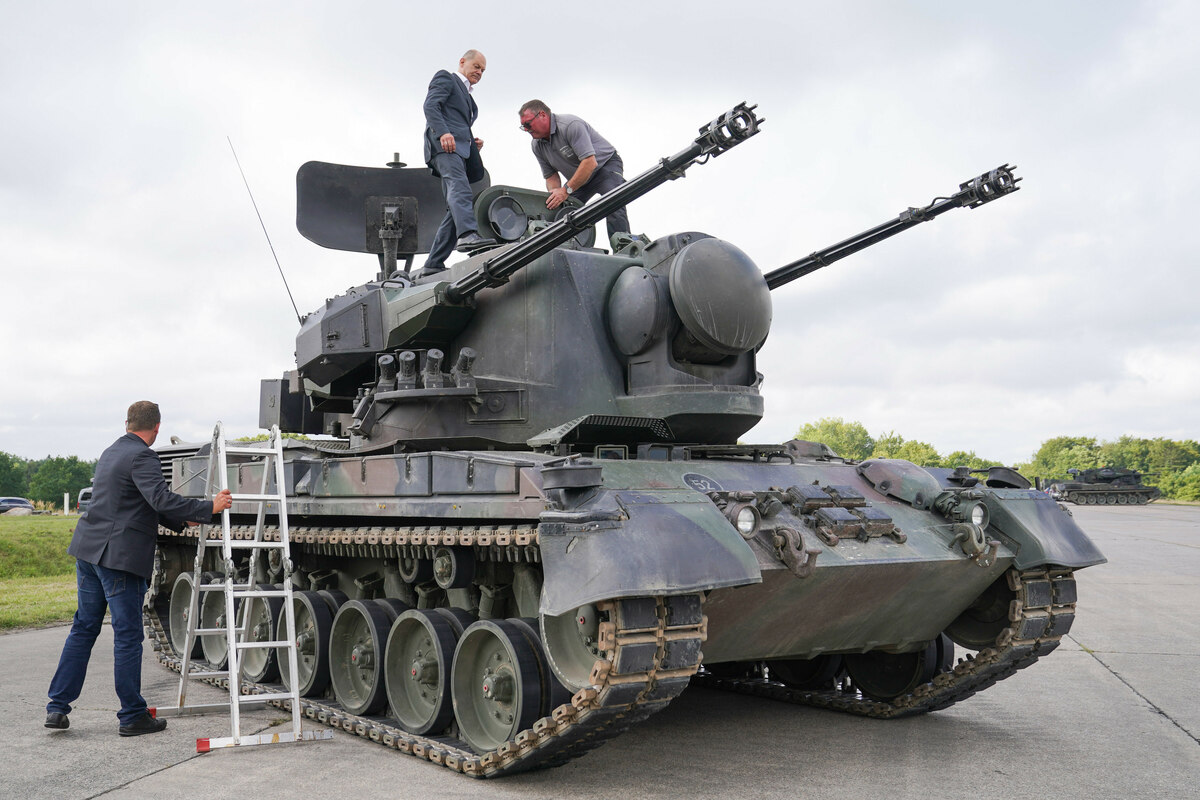
Ulrich Kühn: It is the nation state and the bureaucracy that worry me. Because of course it makes no sense for the Germans to purchase a certain type of tank and the Poles and the Slovenians to produce a similar type themselves, even though it is much more expensive. A division of labor would have to be achieved so that an absurd amount of money is not burned. Because of course we will in the next few years and probably decades spend a lot of money on defense and we need a discussion about this in civil society and in politics because this money will be missing elsewhere.
taz: Has the use of nuclear weapons become a real possibility again?
Ulrich Kühn: If you look at the current situation, then… the people who mainly sit on the red button like Trump, Xi Jingping, Kim Jong Un, Netanyahu or Putin very questionable characters. One thing I’m currently working on as a scientist is the fall crisis of 2022. At that time, according to US intelligence, we came relatively close to the area where the Russians were thinking about possibly using tactical nuclear weapons in Ukraine.
taz: What would that have meant?
And that would have been the biggest breach of civilization in the last 100 years, because The so-called nuclear taboo has been in effect since 1945. And that was an achievement of humanity that we can certainly be proud of. I’m still at the very beginning of my work on this because a lot of it involves classified information that is of course not accessible. But it shows us that we are again living in a world in which these weapons appear to not only fulfill a theoretical function in terms of their psychological impact, but could also have a practical function for certain states.
“War and rearmament: Will we ever get out of this again?” January 20th, 7 p.m., Schauspielhaus Hamburg, Malersaal
taz: How seriously can you answer the question in your lecture title “Will we ever get out of this again?” still present today?
Ulrich Kühn: As a peace researcher you are allowed to have utopia Don’t completely lose sight of it in the firmament, although there is little to suggest it.