

David took over HFF for the first time back in September. Now he’s back and I don’t know about you, I like having some more recent events and news here in HopeForFilmland. Let me know if you do too, okay? Please check out his substack here.
The news last November that Chicago’s Video Data Bank (VDB) was abruptly laying off three of its five staff members was a jarring blow to a small but vital organization whose mission is “ensuring the future of the collection for generations to come.” In its 50th year, VDB is one of a small but storied group of distributors of experimental film and video that emerged from the counterculture of the 1960s and 1970s. With long histories, but operating on short budgets, these maverick non-profits are essential to moving image culture, bringing provocative mind-opening work from the past and present to new audiences. The VDB crisis sounded an alarm for the field; the New Channels Initiative, launched in response by a group including its fired staffers, put together an important meeting in Chicago last week that brought together kindred distributors, along with interested experts (archivists, programmers, and an artist), to assess the damage and figure out how to move forward.
A pioneering distributor of video art, VDB was founded by Kate Horsfield and Lynn Blumenthal in 1976. Devoted to an art form that offers fresh alternatives to the conventions of commercial television, VDB has thrived in what seemed to be a supportive environment, housed at the School of the Art Institute of Chicago (SAIC), which established a video department in 1970 and was the first college to offer a degree in video art. Along with New York’s Electronic Arts Intermix (EAI), founded in 1971, VDB has long been a go-to source for programmers, curators, professors, artists, and writers interested in works by such groundbreaking artists as Joan Jonas, Bruce Nauman, Sadie Benning, Martha Rosler, the Videofreex Collective, and many more.
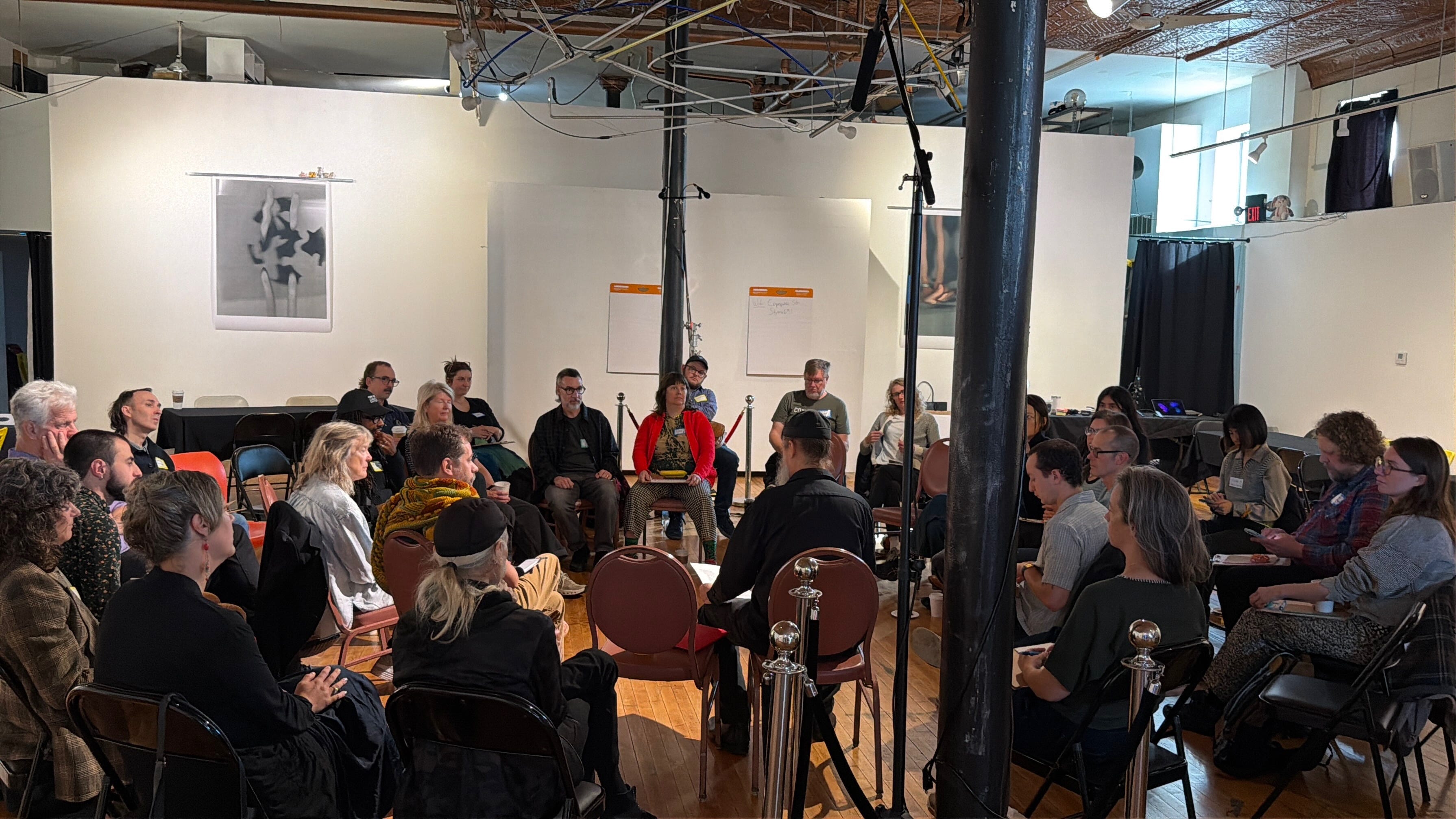
Along with the layoffs came reports that all new acquisitions and programming would be curtailed. The aftershock was substantial; VDB represents more than 600 artists in its collection of 7,000+ titles, and its future was suddenly in doubt. Tom Colley, VDB’s laid-off director, who had been with the organization for 27 years, and Nicky Ni, who was its distribution assistant, organized the New Channels Initiative Convening, a three-day meeting whose participants are listed below. Among the attendees was Tiffany Sia, the acclaimed Hong Kong-born New York-based artist with eight titles in the VDB collection, who made it clear that she and many of her peers have lost faith in VDB and are looking for alternatives.
The meeting was intense and intimate, three days of non-stop conversations, in large and small groups among just over thirty attendees. The uncluttered simplicity of the event was exhilarating. There were no Powerpoint presentations, keynote addresses, screenings, or other distractions. Just deep conversations. The goal was to form alliances, and to find ways to keep at bay the “overlords”–a word that was uttered frequently on the first day, referring to everything from universities facing budget cuts and shrinking enrollment, to media conglomerates, and companies like Vimeo, now run by venture capitalists who replaced its large creative team with AI. If there was a key goal of the New Channels meeting, it was to create ways to work together and forge a united front and a bulwark against the growing algorithm-driven monoculture.
A few of the possible action items to emerge:
-
Establish the New Channels Network as an ongoing entity, with its own operating budget, to provide services to its members, sharing information and collaborating when possible on everything from offering health insurance to staff, to building databases about artists and venues. FIAF, the International Federation of Film Archives, is a model of this kind of network.
-
Develop new ways to build audience engagement. An exciting recent development is the explosion of microcinemas around the country; there are young, eager audiences for experimental work, both in cinemas and online. One exciting idea was to create a subscription-based OTT (over-the-top) video streaming service, something like Ovid, which would feature works from all of the member organizations.
-
Engage in joint fundraising, building a fund that would not only support New Channels, but could help fund the individual organizations. Potential funders could see a multiplying effect in supporting a group, thus strengthening the entire field.
-
Increase the use of PeerTube for sharing collections, especially in the educational marketplace. PeerTube is a video platform that provides ad-free and algorithm-free hosting, an appealing alternative to YouTube.
-
Keep the momentum going. The first New Channels meeting felt like an unqualified success. As head of the Film-Makers’ Cooperative board, I spent more uninterrupted time talking with New York colleagues from EAI, Women Make Movies, and MoMA, than I ever get to at home. Hopefully, this will be the first of many to come.
-
VDB 2.0? Will a new distribution entity emerge, in the wake of changes at VDB? There was a lot of interest in the possibility. We’ll see if anything emerges. In the meantime, there was cautious optimism by the end of the meeting that there are ways to keep the overlords at bay, and keep a challenging, taboo-breaking, vibrant experimental culture alive.
The Stakeholder participants at New Channels:
The West Coast’s prime distributor of avant-garde film. (Founded 1961)
A remarkably eclectic archive of films depicting the Midwest, launched from the Chicago Public Library’s collection of 5,000 film prints.. (The Murder of Fred Hampton is among its many treasures.) (Founded 2003)
New York-based distributor of video “as a means of personal and creative expression and communication.” (Founded 1969).
Distributor that galvanized New York’s avant-garde film scene, celebrated recently in the Museum of Modern Art Series Long Live the Underground! (Founded 1962)
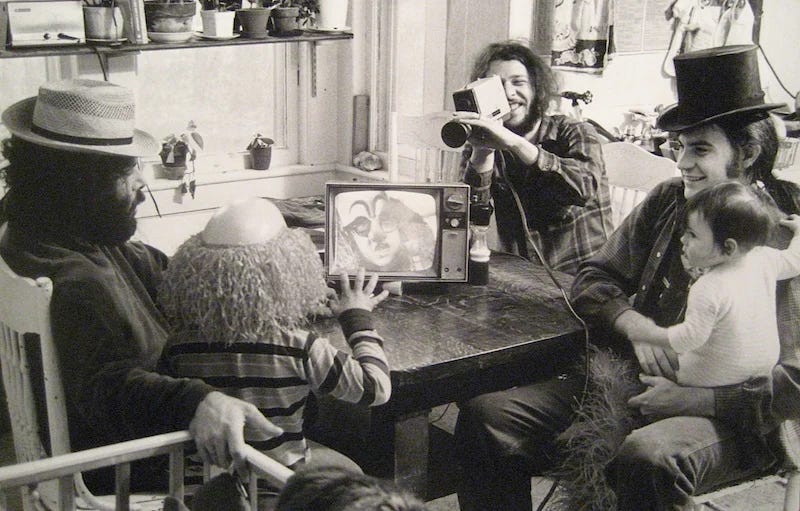
Archive that preserves the history and the ongoing evolution of the 1970s Guerilla Television movement, exemplified by the unabashed 1972 feminist documentary The Politics of Intimacy. (Founded in 2003).
A multifunctional hub for digital art and culture, including such features as the Rhizome ArtBase for works dating back to the 1980s. (Founded 1996)
Formed as a nationwide network of filmmakers creating 16mm documentaries, it focuses on both the production and distribution of films serving marginalized communities. (Founded 1968)
A full-service organization helping filmmakers to find the resources and training for production, and to distribute finished work. (Founded 1972).
In addition to these principal participants, the meeting also included representatives from the Museum of Modern Art, Video Store•Age, AV Geeks, the Library of Congress, Video Trust, Pioneer Works, Open Television, Block Cinema, the University of Chicago Film Center, the Media City Film Festival, and Lived Places Publishing.
David is an independent film curator and writer. Former Chief Curator at Museum of the Moving Image. Currently writing for publications including Filmmaker, Film Comment, Screen Slate, Reverse Shot, Criterion, and more.