

“You fuckers are screwing us!” I’ll never forget the sound of Vic Skolnick, usually a mensch, berating a National Endowment for the Arts staffer on the phone sometime in the early 1980s, on getting the news that the New Community Cinema wouldn’t be receiving any federal money for the coming year. A history teacher, and hippie at heart, Vic and his wife Charlotte moved from Brooklyn to Long Island in the late 1960s with their toddler son Dylan, and injected a shot of culture into their adopted quiet community, founding the Cinema in 1973 by showing 16mm prints of repertory titles at night in a Huntington dance studio.
With a penchant for mixing in politically progressive films with a classic rep-house blend including the Marx Brothers, Bergman, and Godard, the Cinema built a devoted following, growing and evolving, while fending off occasional resistance from the conservative town government. Eventually becoming the three-screen 35mm-and-digitally equipped Cinema Arts Centre (but known to its many friends as simply the Cinema), it has long been a role model and beacon, the epitome of what a regional independent cinema could be. The Cinema was a template for the Jacob Burns Film Center in Pleasantville, to cite just one example. Among its countless achievements was that it recognized and promoted American independent cinema in the pre-Sundance days; in 1979 Les Blank cooked a massive vat of rice and beans and wheeled it around the theater while showing his New Orleans documentary Always for Pleasure, serving it up after the Q&A. That’s just one indelible memory among the millions created there under Vic and Charlotte’s leadership, and then under the leadership of Dylan, who stepped in to run the theater when Vic died in 2010. (Personal aside: I was a regular audience member as a teen, then a volunteer, and a part-time program assistant and writer before going to work at Museum of the Moving Image; I owe my career to the Cinema).
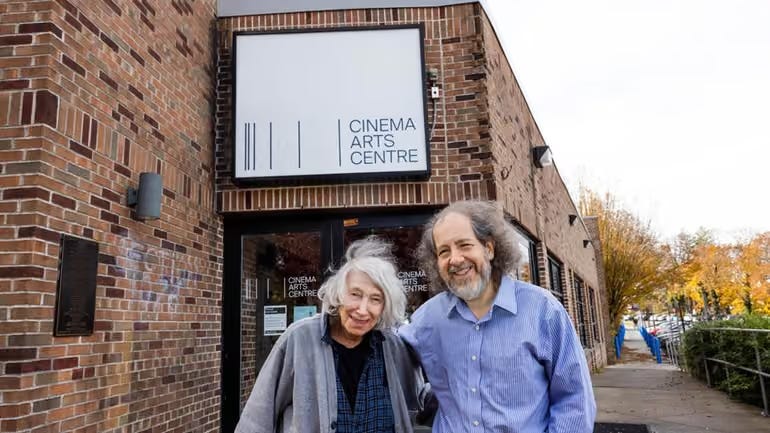
I mention the Cinema’s early history because there has always been a deep personal bond between the theater and the family–Vic, Charlotte, Dylan. I met Dylan when he was a precocious kid, voraciously reading books, watching movies, and eating Friendly’s hotdogs. The Cinema is Dylan’s life, as much as Anthology Film Archives was Jonas Mekas’s, and Film Forum was Karen Cooper’s, but even more so because Dylan’s ties to the theater are genetic and lifelong (he was born in 1967; the Cinema six years later). He inherited his folks’ passion for cinema of all kinds, along with their general menschiness. I don’t know anyone in the film world as widely respected, appreciated, and beloved as Dylan. A de facto Art House Convergence leader and the go-to-guy for any programmer around the country looking for an obscure hard-to-find film, Dylan has always been calm, down-to-earth, and willing to lend a hand. But he is now having his “you fuckers are screwing us” moment, and this time the trouble for the Cinema is coming not from the local or federal government, but from within.
On September 2, the Cinema’s board, with leadership installed two years ago, abruptly fired Dylan, with the unspecified, vague, ominous explanation “The Cinema parted ways with Mr. Skolnick after discovering and communicating to him what it believed to be, and continues to believe was, serious misconduct.” The implication was an egregious misdeed, either sexual harassment or a financial crime. Neither of these options made any sense. Eventually details about the “misconduct” came out. Dylan’s “crime” was that he had a modest side-gig, booking films for a handful of theaters around the country. (For transparency’s sake; he books films for the Barrymore FIlm Center in Fort Lee, New Jersey, a theater that I program). This freelance work supplements a rather meager $75,000 salary from the CAC; meager considering that he has always worked around the clock to create an insanely packed schedule, while toiling away as both the theater’s chief executive and artistic director. Along with a busy schedule of new releases and repertory titles, he fills the calendar with special events; silent films accompanied with live music by Ben Model, a film noir series hosted by Foster Hirsch, a preview screening club programmed and hosted by Isil Bagdadi, and much, much more. That Dylan’s freelance work (which had been approved by the previous board leadership) was the excuse for his firing only emphasizes what a destructive and shameful act that was.
The backlash has been strong and immediate. Magnolia Pictures pulled their picture Late Fame, and independent distributor Jessica Rossner withdrew plans for an Andrzej Wajda centennial retrospective. Guest presenters, including Foster Hirsch, Ben Model, and Isil Bagdadi, mentioned above, have put their participation with the CAC on hold. I program a popular annual Jewish Film Festival at the CAC, and will not continue my involvement until Dylan gets his rightful job back. There was a town meeting earlier this week, with Dylan, and Charlotte (who is 95) in attendance, urging for a boycott. The outcry among members, many of whom have been loyal to the Cinema for decades, has been intense. Box office at the theater was down more than 60% last weekend, compared to the weekend before Dylan’s firing.
Boards can be capricious, and plenty of good people get fired. But Dylan’s firing is of a different order; it feels like an existential blow to the very idea of the Cinema Arts Centre, to the idea of independent cinemas everywhere. I always preferred the Cinema’s original name–the New Community Cinema, because the Skolnick and Sky family did genuinely forge a community. Whenever I return there to present a program, I’m warmly greeted by what feels like a hundred aunts and uncles. The Cinema’s members feel like a family, and they seemed universally happy to have Dylan step into his parent’s shoes and lead the theater. To remove his is almost literally to rip the heart out of the place.
When I was at college at Purchase, I drove down to the Cinema with Hal Hartley to see a screening with Werner Herzog in person. I grew up in Huntington; Hal in Lindenhurst. He used to see movies there all the time. He would eventually return as a frequent guest to show his own films. So I’ll give the last word here to Hal. But please join the fight to get Dylan his job back, and restore some sanity to the fragile world of independent exhibition. You can start by signing the petition below. If you’re a distributor or filmmaker, consider boycotting the Cinema unless and until Dylan is reinstated. Don’t let the fuckers win.
From Hal Hartley:
The New Community Cinema is the most significant and un-damaging cultural achievement on Long Island in the last fifty or sixty years. More than anything political, commercial or technological. But it affects all three of these things because at least a portion of the community becomes more informed of the wider world from seeing what is regularly shown at the cinema rather than from other more mainstream entertainment (as good as it might be) that simply reinforces their acquired assumptions about that wider world.
I imagine Vic and Charlotte were an unlikely couple to successfully introduce all this to Huntington. They seemed to me to be of the Left and judiciously critical of mainstream American social values. Which I was encouraged by.
And I’ve always thought Dylan carried on the mission, so to speak, gracefully, including newer trends as they came up—when the distinction between what was once called mainstream or alternative, or just far-out, was harder to distinguish. It became a popular venue because of its breadth of interest. I guess what we call now “inclusive.”
In terms of business: I’ve never had more straight-forward financial dealings with an independent cinema as I have had with Dylan.
Links:
Sign this petition to support Dylan’s reinstatement.
Local News12 story about community backlash
Rafer Guzman’s Newsday coverage. (There’s a paywall, but you can get a 6-month subscription for 25 cents!)
Facebook group Save Cinema Arts with Dylan Skolnick
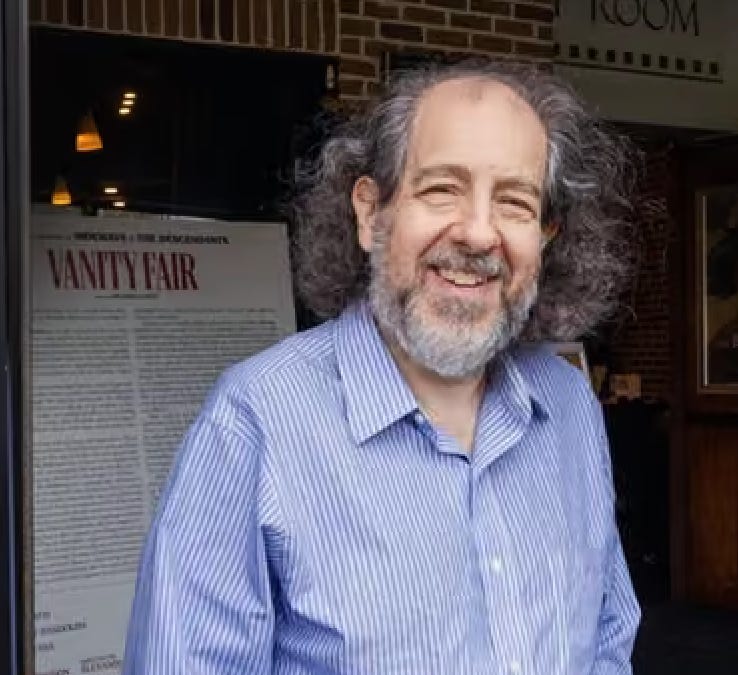
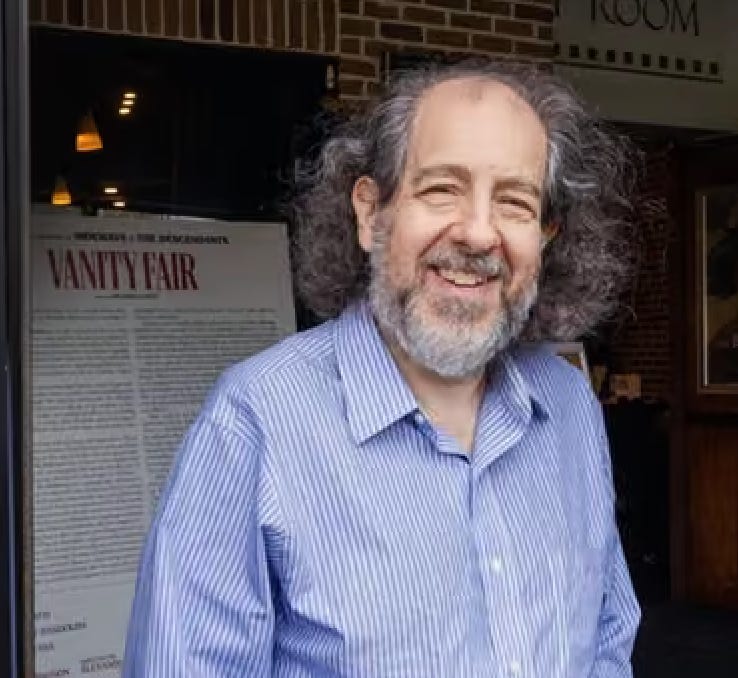
David Schwartz is an Independent film curator and writer; he’s the former Chief Curator at Museum of the Moving Image. Currently writing for publications including Filmmaker, Film Comment, Screen Slate, Reverse Shot, Criterion, and more.