

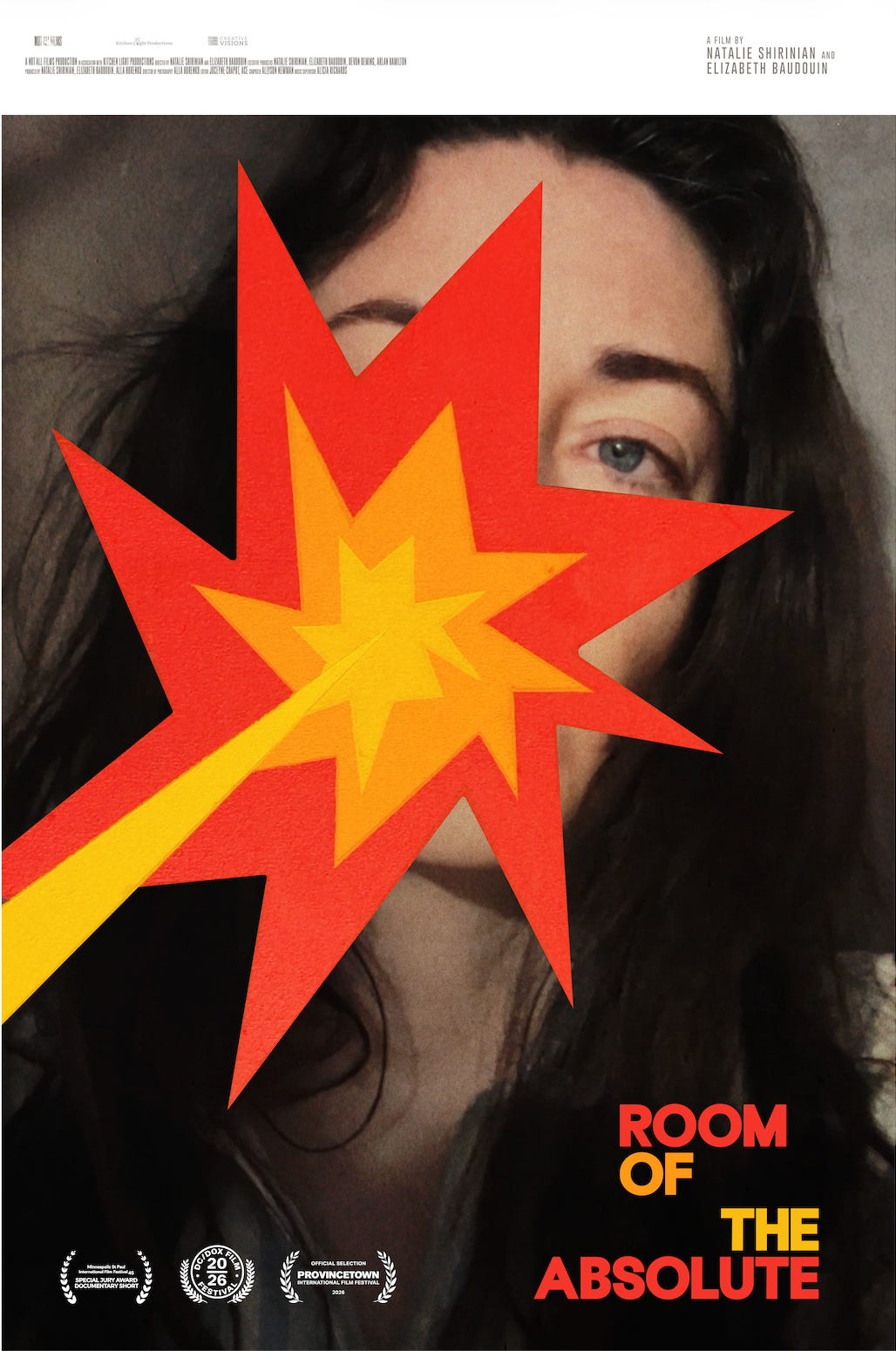
In this vHopeful Conversation, I talk with co-directors Natalie Shirinian and Elizabeth Baudouin about how a friendship that began on Instagram turns into Room of the Absolute. The film came out of a painting Pazza Pennello (Alla Hurenko) shipped to them from Ukraine just as the full-scale war began, and her messages about the bombs outside her window grew into the diary she films on her iPhone while they direct her from Brooklyn. We discuss why they never want the war to define her, and why they choose a soft, feminine point of view instead of the heavy-metal images of war we’re used to. We also talk about trust as their shared cinematic language, the unexpected levity of Alla’s grandmother, and how the trauma Alla holds in her body surfaces in Switzerland after the joy of her Paris opening. That becomes the internal and external war the film follows. Natalie and Elizabeth share how they condense three years into 18 minutes, the double meaning of the title as a metaphor for absolute resolve, and how everyone on the team carries Alla’s story to festivals. We end with Alla’s own words on what it means for Ukrainians to keep living, not just surviving and the bonus video she shared with us exclusively.
Transcript lightly edited. Podcast available on Apple, Spotify or wherever you listen on this Substack or Ted’s Hope for Film
Vanessa Hope: I am extremely excited to welcome filmmakers Natalie Shirinian and Elizabeth Baudouin. Their new documentary short, Room of the Absolute, brings us into the life of Ukrainian painter Alla Hurenko, known as Pazza Pennello, who filmed her own experiences over three years of the war in Ukraine while continuing to create.
Natalie’s directing work includes Interior Motives and Parev Mama. Elizabeth made her directorial debut with the short film Breakup Text. Partners in life and filmmaking, I love that. They co-founded Not All Films and both produced Alex Hedison’s excellent documentary short ALOK, which I was on the road with and got to screen with, and it’s amazing. It’s also worth checking out.
I’m really looking forward to talking about the friendship behind this collaboration, the need to make art when so much is threatened, and what it means to tell your own story. They have made a truly beautiful film, very moving, very important, and they’re winning tons of awards on the festival circuit. Natalie and Elizabeth, thank you so much for joining me.
Natalie Shirinian: Thank you for having us.
Elizabeth Baudouin: Thank you for having us. It’s so great to be here and talk with you today.
Vanessa: Yay. So you both knew Alla as an artist and a friend before you began documenting her life during the war. What about her as a painter, as a woman, brought you to this idea to make a short documentary with her?
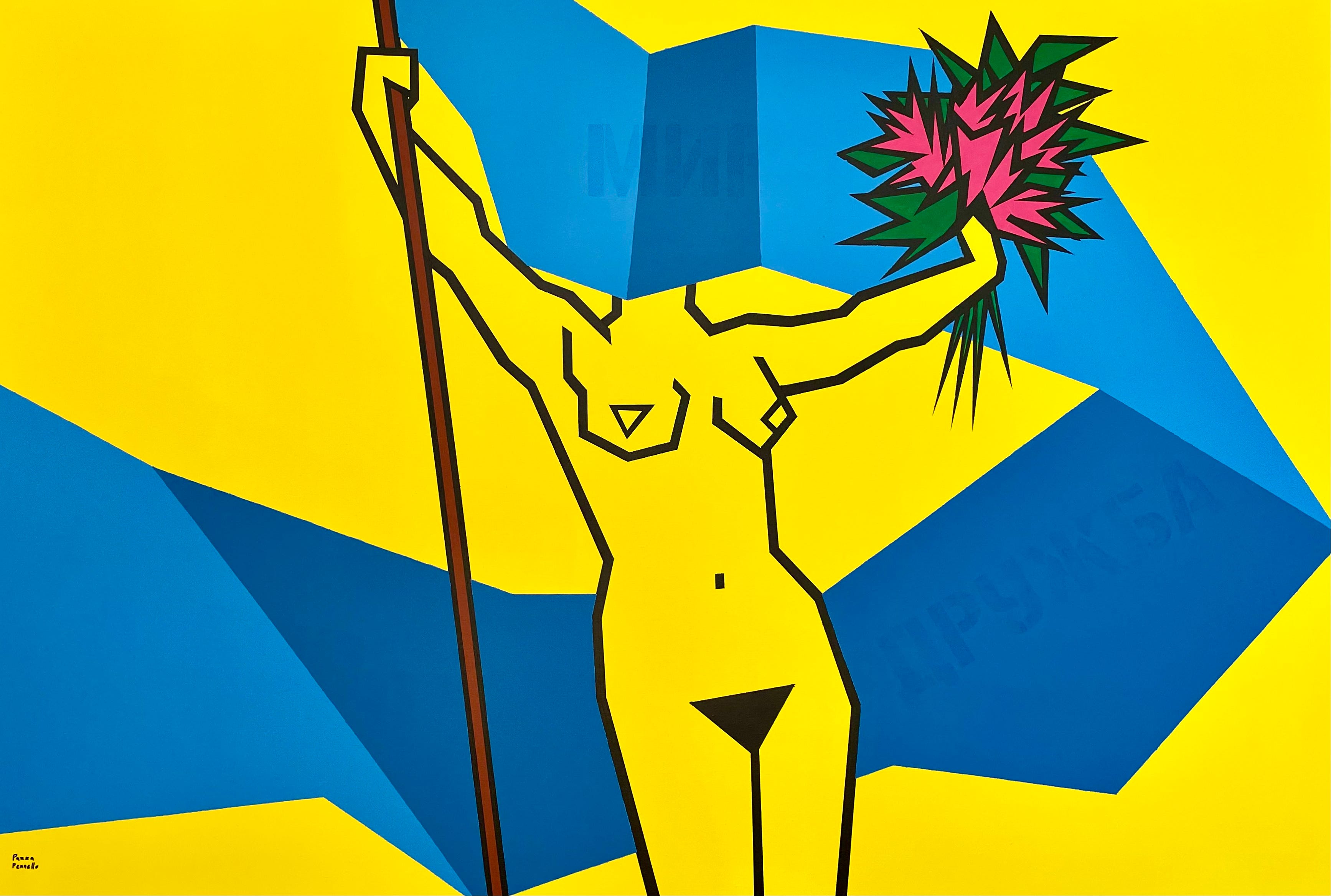
Natalie: Yeah, it’s interesting. It was around ten years ago that I discovered her artwork, and we needed something with a lot of color and poppy for our white walls that we couldn’t paint at the time. I discovered her and I showed Elizabeth, like, “What do you think?” And she immediately loved her work as well. And there was also something really interesting about the women that she has in her paintings. You don’t really know much about them, but they’re always in these positions of strength, and they look confident even though you don’t really see a face.
So there was something really interesting about her work. And after we got one of her pieces, we looked at her other work and we’re like, maybe we should get another piece for our home. And then through that, she reached out and we reached back out, and we developed this friendship. Over time, it just became something where we would check in on each other, how she was doing, if she had an upcoming show, and just kind of little bits of her life. And then the war broke out.
Elizabeth: It really was like we became these digital pen pals. And she was so cool, right? She was just someone that you would want to be friends with. So beyond the work, she was just great. When she reached out, I think it was over Instagram in, like, 2017, 2018. And we just started chatting that way and supporting each other’s work. She would support our films, and she actually wrote a really great script and shared it with us. So we were chatting about her great writing and how cinematic it was, and wouldn’t it be great if we could make that someday?
And we can get into the origin of the film when you want, because it is quite an incredible backstory of how we got to this point. But the friendship was very organic, digital pen pals, after Natalie discovered her.
Vanessa: And I love her art, and I love how she talks about it in your film. Yes, definitely tell me how that idea for the film came about.
Elizabeth: Yeah, sure. Okay. So the title of the film is Room of the Absolute. When we were filming Breakup Text, we knew that we wanted a piece of Alla’s in the film. There was no question. It was just about which piece. And Natalie and I both gravitated toward this one quite large painting called Room of the Absolute. We just felt the woman in that painting captured the soul of what that character was going through. It’s a very independent, solo journey, but strong, and it just had everything that we were looking for.
We were chatting, and she’s like, “I have it. I’ll send it to you.” This was, I think, the end of January 2022. So she went to send the painting out, and then two days before… the war broke out in a big way, and so everything changed.
Vanessa: Oh my goodness. Yeah. Everything changed.
Elizabeth: And she was saying, “I can’t get it to you.” And we’re like, “It’s okay, don’t worry about it.” I think we had a piece of hers, and we’re like, “We’ll try to make it work, whatever it might be.” And then two months later, we got a DM on Instagram, and she’s at some mailroom holding the tube, and she’s like, “Girls, I got it out.” And we were like, “Yes! We’re so happy.” It was incredible. It was such a great moment, and it really shows her spirit of, like, I’m going to find a way and get this out there.
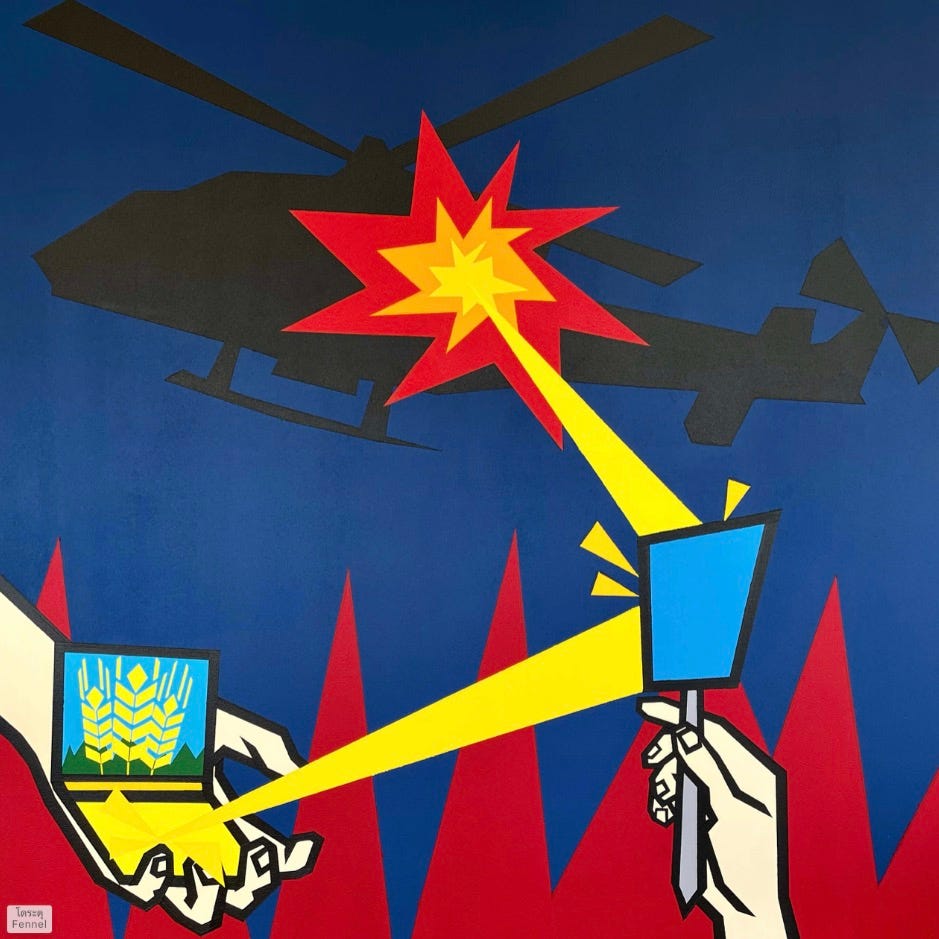
And then we tracked the piece, so we were following the painting through all the countries it was going through until it got to America. Then it finally arrived, and we were telling her that it arrived. And within all that mapping, she was also sharing images of bombs and things that were going off just outside her window. That was very intense, not only for her to take in, but for us to take in. It was just remarkable.
What started with “Are you okay? Are you all right?” became her explaining it to us detail by detail. And Natalie was saying, “She’s sharing this diary with us. Should she be filming this? Do we need to be documenting this? Because this is a really interesting personal perspective.” And for her, she was absolutely in. It was a very organic collaboration where we all said yes. We don’t know what we’re doing yet, but just start filming.
Vanessa: Yeah. And you both were directing her from afar. So you were her line to the outside world. You were her way to be engaged and to not feel isolated and alone in those terrible, terrible circumstances. But you were also finding a shared cinematic language.
Natalie: Yeah. And honestly, first and foremost, Alla is an artist. While this is a film that’s set against the backdrop of war, we never really wanted the war to define her. We wanted the audience to see who this woman was, and who our friend was, and is. So the way that we all collaborated, we wanted to show what was happening to her firsthand, but we also wanted to showcase her artwork and what her artwork means, and even just ordinary moments, like her mom crocheting and her grandmother in the film doing a puzzle. So kind of encapsulating all of the elements that go into something like this, because we’re so used to seeing images of war through our phones or through the news and things like that. And this was happening firsthand to somebody that we know.
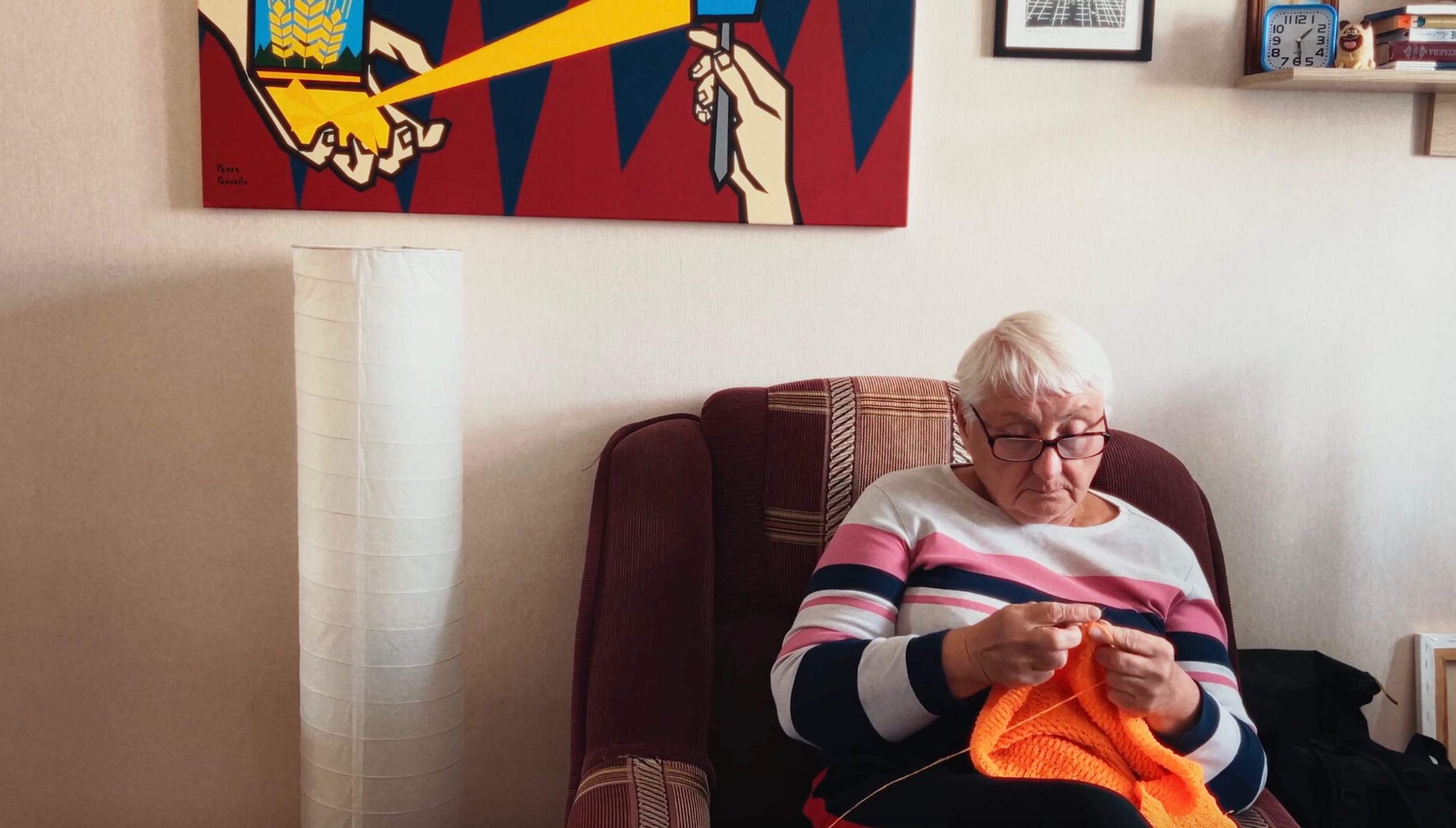
Elizabeth: And the films that are out there all have their own fingerprint, but some of them tend to be very, like, heavy metal, and you’re really in it. This is a very soft, feminine point of view. And the decision to have her film it… like you said, she’s an artist, so of course she’s going to be the cinematographer. And Natalie was adamant about no crew. Like, we just want her to film these moments and make it like a diary.
Natalie: Yeah. I mean, you don’t know when the next missile strike is going to be. You don’t know when certain things are going to happen. And I feel like it was really important that it stayed as present as it could, just by her showcasing her own experience, so she could be as honest as possible.
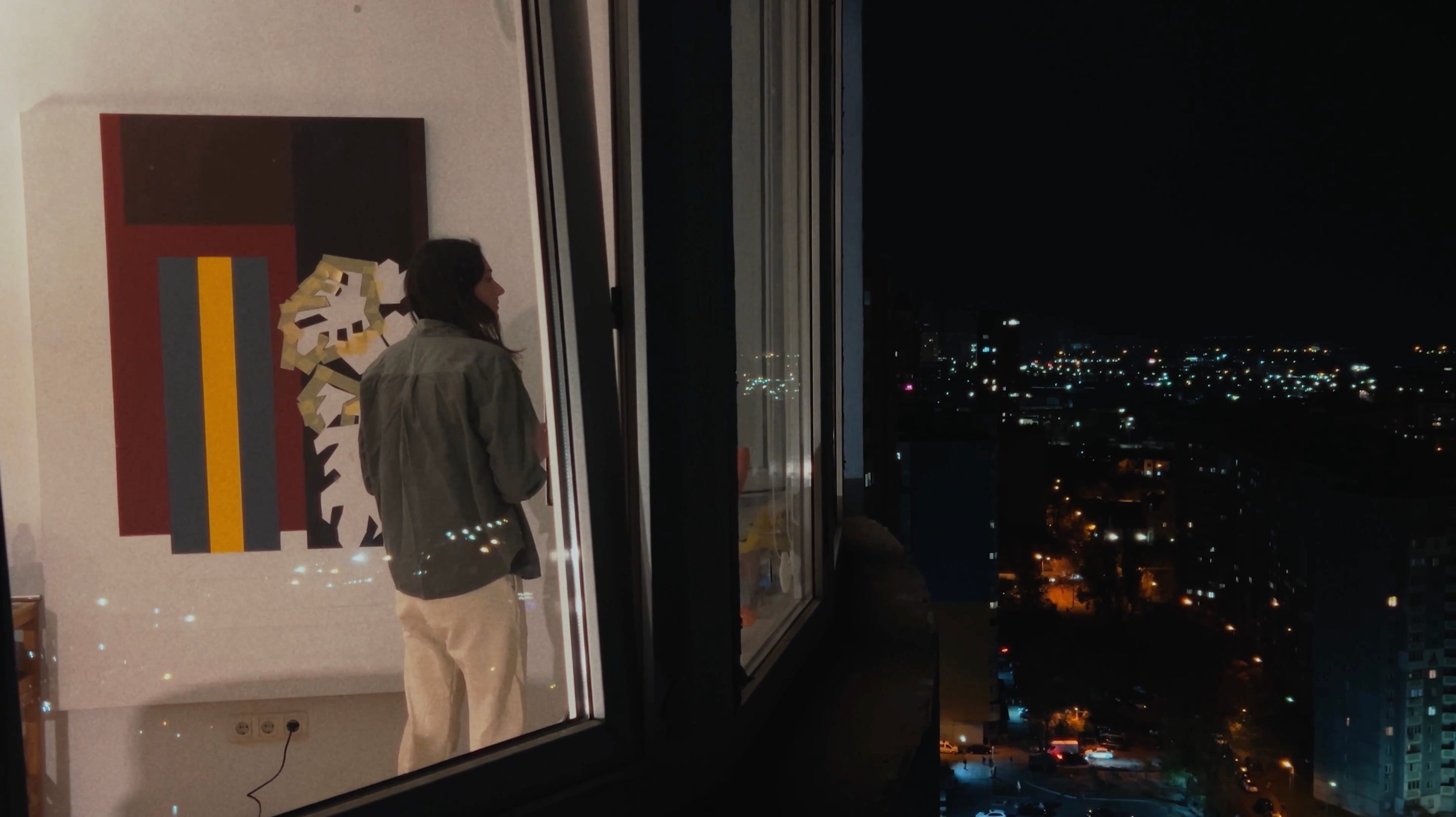
As we were talking about before, if she could be here today, she would, but she never knows if she’ll have power or internet or anything. So she sent us words that we can share with you. This is from Alla: “I think our shared cinematic language grew naturally out of trust. Natalie and Elizabeth trusted me to show my reality through my own eyes, and I trusted them to find meaning in what I filmed.” And I think that’s a really nice way of putting our collaboration.
Vanessa: It is. It’s a dual creative process going on. And it’s something we forget —that the impacts of war fall most heavily on women and families —even just considering the consequences. When we’re just shown the war, sometimes we get caught up in that macho, ridiculous, endless conflict and violence.
So it is a really important perspective to give us, and her art and the way she talks about it, it is her lifeline. And she is with her mother and grandmother. It’s so beautiful how you are sharing her story. Were there any moments that really surprised you? Maybe the moment where she has to go abroad and then finds out she’s really sick?
Natalie: I think for both of us… We knew about her mom and her grandma, obviously, but we never really saw them on camera. And when we saw the grandmother on camera, all of a sudden she’s very shy. The grandmother just reminded me so much of my mom’s mom, my grandmother. There was something in her, the levity that she brought to something so tragic and intense, that was great. And I remember when we screened the film in front of audiences, that part where she speaks, they were laughing. You know that part from seeing the film.
But I think what surprised us is when she got sick and she went to the hospital, and her incredibly long stay in Switzerland. We didn’t know all the details of the syndrome that she’s had since she was a child, and how it also manifested itself when she left for her show in Paris. That was surprising, yeah.
Elizabeth: And you posed a great question earlier about how that changed the shape of the film. When we started this project, we didn’t expect another journey of the film to be, okay, this is how the trauma of it can manifest in your body. You’re just trying to get through everyday life, and you’re just getting through it, so things tend to get suppressed and the stress gets stored. And now she’s in Paris. She’s having an opening. She’s feeling love and joy. She’s relaxing. And people who have suffered it understand: the second you can let your guard down, it rises.
We didn’t know she battled this as a child. We learned that through this, and it just added to the resilience even more. And even when it happened to her, she’s like, “Do you want me to film? Do you want me to film?” And we’re like, “No, just get better. Focus on your recovery.” But she filmed it.
Natalie: Yeah. I mean, she was in this hospital for a long time, and I feel like she wanted to document her experience, and she did. That was such a gift for everybody. And I think she was saying that even though she had these views of the Swiss Alps, she was dealing with this loneliness and also getting through a very serious situation.
She has such a fantastic eye. There wouldn’t be anybody else as the cinematographer, because by coincidence, even the room that she was staying in while she was recovering, the way the lines and the shadows were coming in, it’s like such a mirror and a replica of a lot of her artwork. We thought the mirroring of some of these experiences and her work were just kind of coming together, and we thought that was so wonderful to see.
Elizabeth: And we were chatting earlier today about when you were asking, well, how did it change the course of the film? It became, what can you say, like an internal and external…
Natalie: Yeah, she’s battling something internally. An internal war.
Elizabeth: Yeah, the internal war. And then the way that we also edited the film, which is what happened, she finally comes back home, and then there are the bombs going off. So there’s this internal and external war that you’re feeling.
Vanessa: Yeah. And you’re also reminding me again that she was fortunate to have you to be communicating with when she was so isolated in the hospital, because you feel the warmth when she’s with her mother and grandmother. I love the scene where she’s got a roll of tape. It’s part of her process with painting on a canvas. And then you see her mother and grandmother taping up windows because they’re preparing for the bombs. There’s this resilience through the generations, but also a warmth and a taking care of each other.
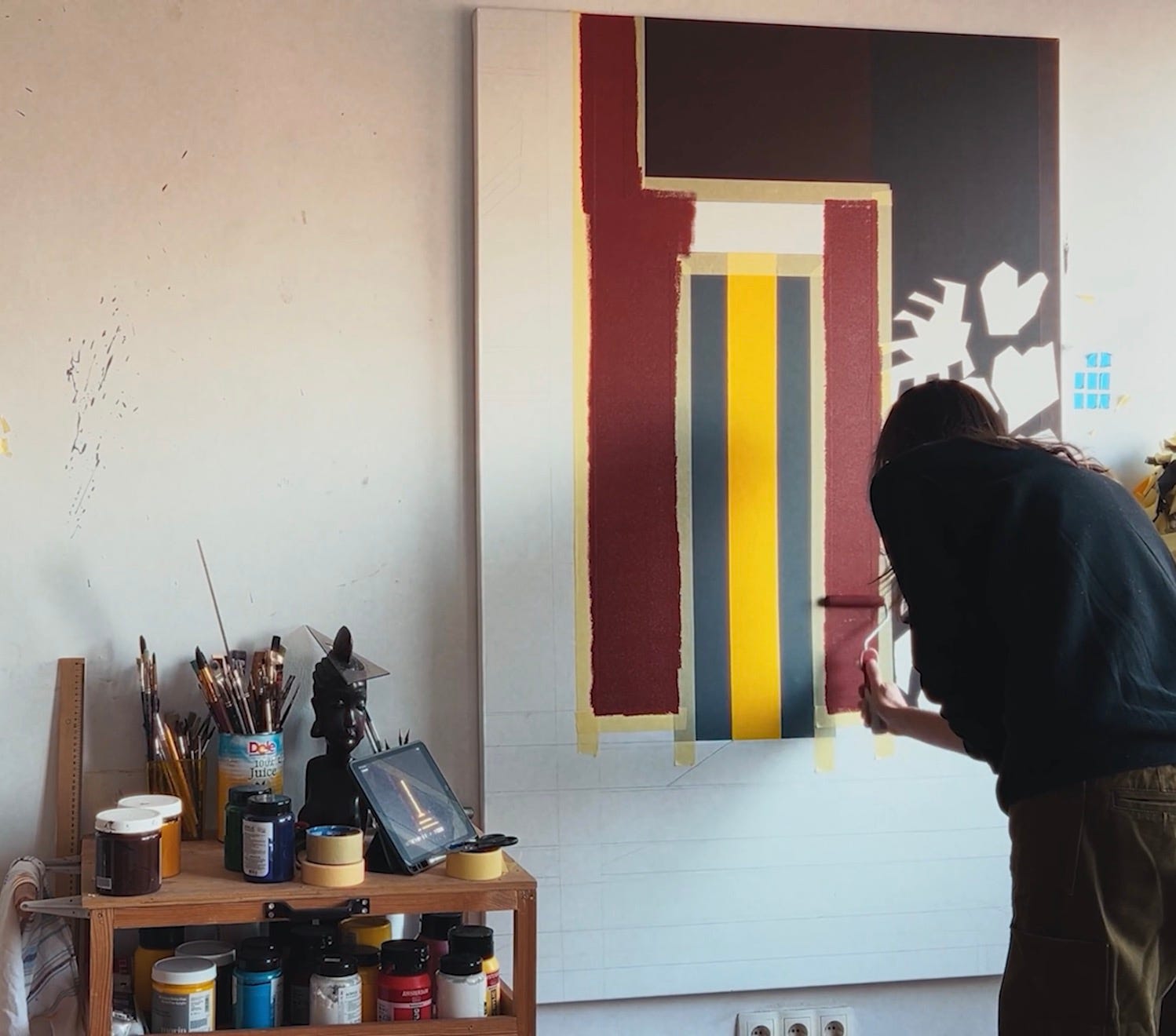
It’s also so cool to see her artwork in their home. It’s such a contrast. What is coming from her imagination and her work is so uplifting, in a way. I totally understand why you guys have some of her art. I’m going to look her up too.
Natalie: Yeah. You would love it.
Vanessa: I’m into pop colors and into what inspires her. Was it hard for you to condense three years of story into 18 minutes? And what made you decide it should be short?
Natalie: Yeah, I think we had a lot of footage that we were looking through, and we just wanted to make sure there was a really good balance of family life, personal life, struggle, and the war. We wanted to make sure that was showcased, because every day is different for them too. We didn’t want it to just be this relentless onslaught of the war and fear and all of that. We wanted to make sure we had a good balance.
And it’s hard when you keep editing and editing, which we did, obviously, with Jocelyne, and then toward the end you’re just kind of wondering, should we put that in? Should we take that out? Should we put this in? At some point you do have to stop.
And I think the decision to keep it as a short is that this is years of time, but it’s also a moment of time. Elizabeth and I were just kind of like, the war is still going on. We don’t know where the end of this is. So the way we leave it is just a little bit unknown, what might come.
Elizabeth: And there’s something that we also wanted to showcase, and this was really important to all of us, besides just resilience and commitment to your purpose. And we can get into the double meaning of the title, because there are two meanings to it.
Vanessa: Oh, yes, please.
Elizabeth: We also wanted to show her achieving her dreams, because it’s important to her for everyone to know that, yes, this is their reality every day, but they’re not putting their dreams aside, to the best that they can, given the circumstances. Having her have a show… She always dreamed of being an artist, and she was told it’s not art, but she’s like, “Whatever. I believe in myself. I have my mom carrying me on. People love me. They believe in me.” And then we have her at a show where she feels great joy. It’s important to show dreams in the midst of all of this.
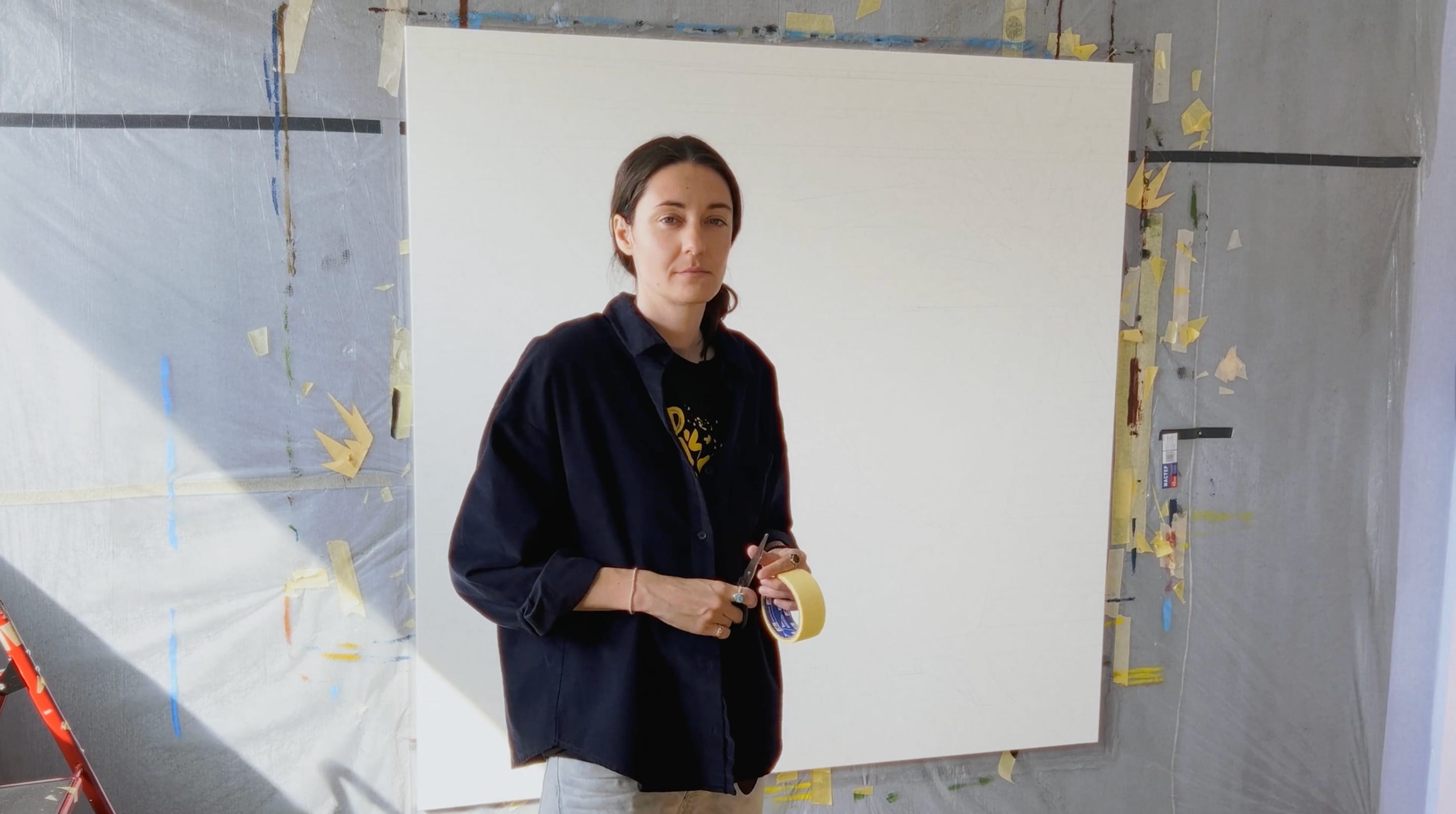
With shorts, you have parameters, and you really have to figure out, okay, we have a few things going on here. This is a layered film, but let’s make sure to showcase her achieving her dream, because she’s making it as an artist, and that’s what she always wanted. So that was really special. And that dovetails into the meaning of the title.
Yes, the origin of it came from that painting, but Room of the Absolute is a metaphor for her commitment and her resilience. No matter what, she is there painting. She will continue. Every day she wakes up, she doesn’t know, does she have electricity? She doesn’t know, right? So it’s all about staying committed and staying absolute in your resolve to go after what you’re put on earth for. And even when she’s in the hospital, she’s in a room, but she’s still fighting, whether it’s with the paintbrush or with her health and rehab. So it has a metaphorical meaning as well.
Vanessa: Yeah, I love it. I think you made the right choice with the length and the pace and the fullness of her story, and the larger story, and the layers. I hope everyone has a chance to see this film. You guys are on the road with it, and you’ve got impact plans because it’s such an important story to connect with audiences around the world. How is that side of it going? And how can we tell people to see it, and what are your dreams for it?
Elizabeth: Okay. So we’ve had a great festival journey so far. And what’s really amazing is that everyone on the team for this film is having an opportunity to be a speaker for the film. We all understand that Alla is living through this. As filmmakers, we’re the vessel, right? We’re not there living through this. So everything we can do to get her story out.
Jocelyne was just at Mill Valley, where we were nominated for Best Short Doc, for the first time, which was great. She was at all the screenings, doing the Q&As. And then Allyson Newman and one of our EPs, Devon Deming, were in Palm Springs, and they were in Los Angeles doing those screenings. So they were representing there.
Vanessa: Great festival. Great team.
Elizabeth: Yes, exactly. And so it’s been really wonderful, because everyone’s so moved. We just did the Hamptons, and we did DC/DOX, and now we are off to Woodstock this weekend. And we’re in competition at Woodstock, which is also great. There are a lot of surprises that keep popping up, and we’re kind of allowing the energy of this film to guide where it just wants to go. It’s really lovely in that way.
Natalie: And we communicate with Alla about everything that’s going on, where it got in, what it was nominated for, who talked about what. It also gives her this other sense of hope. She loves that audiences are seeing it. It’s a nice way to connect her work with people who obviously haven’t known her or are just discovering her. When she found out that we were Oscar qualified, her heart just leaped… and that is so great.
So I think when you’re asking what our dream is for this film, we just want as many people as possible to see it, as far as we can take it, because we all know with shorts, you really have to be strategic. We’ve done self-distribution with some of ours, and that’s been really successful. But we’re on the journey. As you said, this film will go where it wants to go, but we hope it can go as far as possible, so it can get somewhere that can get as many eyes on it as possible. You just need that engine behind you.
Vanessa: Yes. Well, we’re going to share in the post everywhere people can see the film next.
Natalie: Great.
Vanessa: And we talked in advance about how Alla is doing, and you two reached out to her. We should let people know, because you won’t hear Alla’s words if you’re listening to this as a podcast. If you go to our post, there’s a bonus video that you guys asked Alla to share. I don’t know if you want to speak about that.
Elizabeth: Yeah. We also have some of the transcript from it.
Vanessa: Okay, that’s great. So I was basically asking you how Alla is doing and what her dreams are for what is possible with the film.
Natalie: And so Alla also sent words firsthand that we can share with you. We would encourage you to watch the video or listen to it, because coming from her and connecting with her, it’s on her iPhone, it’s very intimate, and so it’s the most powerful. We don’t have it verbatim, but we can give you a sense of it. This isn’t exactly from the video. This is something she texted us, but the video, I think, is very, very powerful.
Vanessa: Yeah, the video’s beautiful.
Natalie: So for Alla right now, these are her words:
“It’s difficult to explain what everyday life in Ukraine feels like, because from the outside, war can look like something that happens in specific moments: an attack, an explosion, a destroyed building, a headline in the news. But when you live here, the war is not only these moments. It becomes part of your everyday routine. You learn to plan your day around things that used to be completely invisible to you: electricity, water, internet, heating, air raid alerts.
“You think about when you can charge your phone, when you can work, when you can cook, when you can take a shower. Sometimes you wake up and the first thing you check is not the time, but whether there’s electricity. You also become very good at continuing your life in between things. You can have a terrifying night of air raids and then in the morning just make coffee and answer your texts. You can hear explosions and then later think about what you need to buy at the supermarket.
“It sounds strange, but this is how normal life and war exist together. You learn to live with uncertainty. You learn not to take an ordinary quiet evening for granted. And maybe this is what I want people to understand the most: Ukrainians are not only surviving. We are still living.”
Vanessa: Beautiful. So powerful. She must be so grateful. I feel so grateful that you’ve made this short and shared it, and I really look forward to amplifying it and encouraging everyone I meet to look out for it and find it and see it.
Natalie: Thank you so much. We really appreciate it.
Elizabeth: Thank you. Thank you for your support.
Special video exclusive for this post from Alla Hurenko in Ukraine:
NATALIE SHIRINIAN is an award-winning writer, director, and producer, known for her intimate, visually driven storytelling across narrative, documentary, and conceptual work. Her films have screened internationally and earned multiple audience and jury awards, with standout projects including Interior Motives (2017), acquired into the permanent collection of Rhode Island School of Design, and Parev Mama (2020), which garnered top audience honors across the festival circuit.
She co-founded the production company Not All Films with her wife, Elizabeth Baudouin, where the duo develop auteur-led work that bridges art, fashion, and cinema. Their collaborations include Baudouin’s debut Breakup Text (2023), which won the Audience Award at HollyShorts Film Festival, with Shirinian starring and producing.
Most recently, Shirinian and Baudouin produced the Oscar-qualifying documentary short ALOK (2024), directed by Alex Hedison and executive produced by Jodie Foster, which premiered at the Sundance Film Festival and screened at the Telluride Film Festival.
Most recently, Shirinian co-directed Room of the Absolute (2026), a documentary on Ukrainian painter Alla Hurenko, created in collaboration with Baudouin. The film is currently on the international festival circuit. She continues to develop her next slate of directorial projects, including her debut feature Ponchik, which she wrote and will direct, continuing her focus on bold, underrepresented narratives.
Shirinian is also a member of the Screen Actors Guild. Shirinian is repped by Katie Rhodes at Untitled Entertainment
ELIZABETH BAUDOUIN is an award-winning writer, director, and producer whose work explores the human experience through emotional depth and cultural observation. She co-founded the production company Not All Films with filmmaker Natalie Shirinian, where they have produced award-winning narrative and documentary projects, including Shirinian’s Interior Motives and Parev Mama. Her directorial debut, Breakup Text, executive-produced by Academy Award winner David Dinerstein, premiered at the Provincetown International Film Festival and screened at multiple Academy Award–qualifying festivals, including the Woodstock Film Festival, and won the Audience Award at HollyShorts. She produced on the documentary ALOK, directed by Alex Hedison and executive produced by Jodie Foster, which premiered at Sundance and Telluride. Most recently, she co-directed Room of the Absolute (2026), a documentary on Ukrainian painter Alla Hurenko, created in collaboration with Shirinian, which won the Special Jury Award at the Minneapolis St. Paul International Film Festival and the Jury’s Special Mention at Provincetown Film Festival. Recently, the couple was named to the Wallpaper*400, the list of people shaping Creative America today. Elizabeth is an Emerson College graduate.
Baudouin is repped by Katie Rhodes at Untitled Entertainment.
Upcoming 2026 Screenings, check the film’s website for more:
VIRTUAL SCREENING
OCTOBER 23 – 27
HOSTED BY SKY SITNEY (Co-Founder DC/DOX)
RSVP
IDA SCREENING SERIES – VIRTUAL
OCTOBER 30 – November 6
HOSTED BY ACADEMY AWARD WINNER
DAVID DINERSTEIN
(SUMMER OF SOUL, WINTER ON FIRE: UKRAINE’S FIGHT FOR FREEDOM)
RSVP