

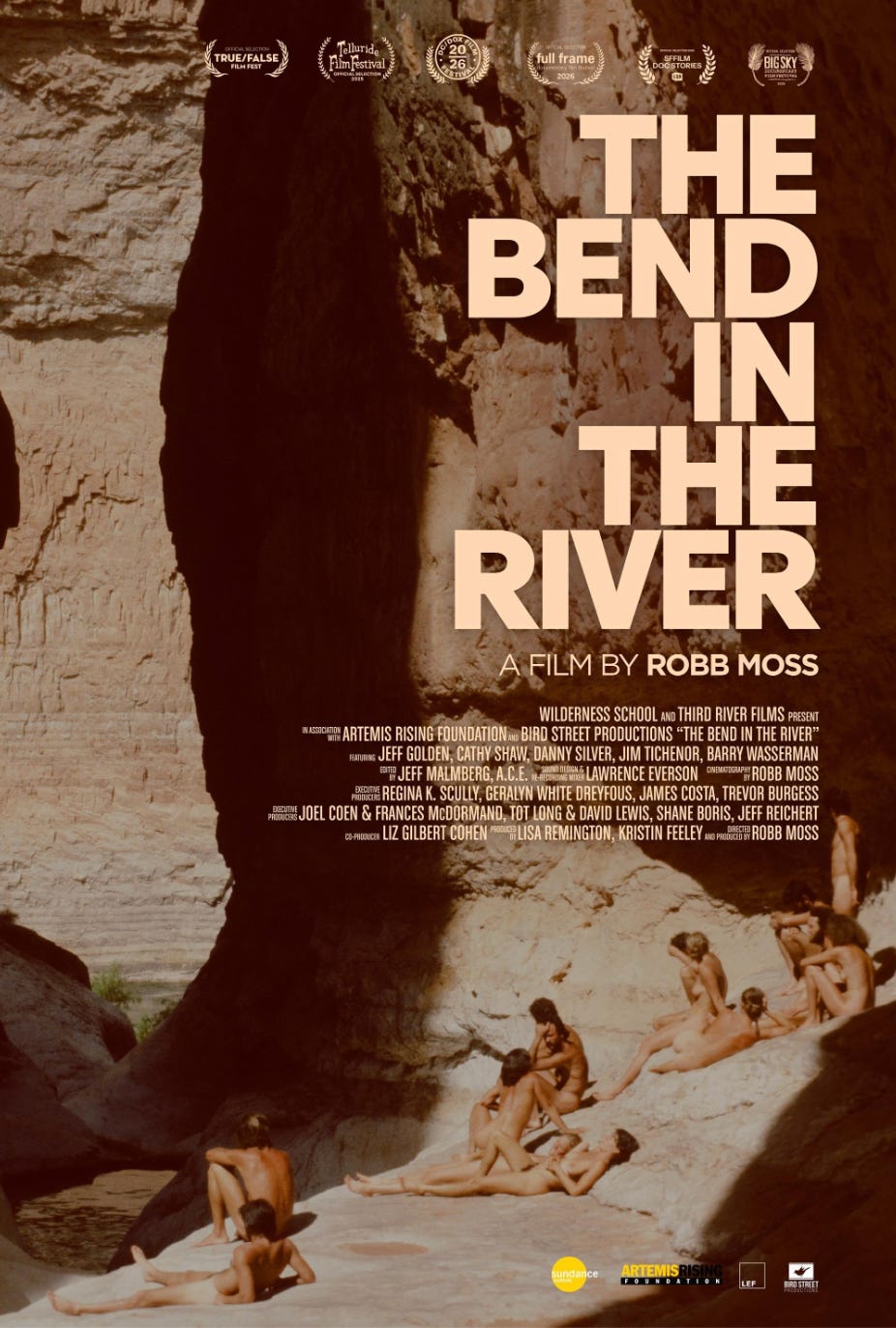
In this vHopeful Conversation, I talk with filmmaker and longtime Harvard professor Robb Moss about The Bend in the River, the final chapter of a trilogy almost 50 years in the making. It follows five friends he first filmed as young Colorado River guides: Barry, Cathy, Jeff, Danny and Jim. Robb remembers setting out to make his first film with only a few hours of footage to last a 35-day trip, and we talk about why the group spent so much of it without clothes. He explains how his friends first agreed to be filmed purely out of friendship, then had to come to terms with seeing themselves on a Sundance screen. We explore how he and editor Jeff Malmberg cut back and forth across five decades without narration, letting youth, middle age and old age speak to one another the way memory does. Robb describes the one scene he set up himself, a return trip down a shrinking Colorado River, and wrestles honestly with what his generation is leaving behind. He also shares his affection for Jim, who has lived off the grid on his own land for decades, as a kind of measure of how much the rest of the group has changed. We close with his simple advice to stay friends with your friends and spend time in their everyday lives.
Transcript lightly edited. Podcast available on Apple, Spotify or wherever you listen on this Substack or Ted’s Hope for Film
Vanessa Hope: I am very honored and excited to be joined by filmmaker, cinematographer, and longtime Harvard professor Robb Moss, whose deeply personal documentaries have spent nearly 50 years tracing the currents of friendship, family, memory, and social life. Beginning with Riverdogs in 1978 and continuing through The Same River Twice, Moss has returned across decades to five friends he first filmed as young river guides on the Colorado River, building an extraordinary cinematic record of lives unfolding in real time.
His new film, which we’re so excited to discuss, The Bend in the River, completes that trilogy as Barry, Cathy, Jeff, Danny, and Jim enter their 70s, looking back on love, ambition, parenthood, work, loss, illness, and the choices that shaped them. Moving fluidly between 16mm images of youth, footage of middle age, and the present tense of later life, it’s a tender, funny meditation on the passage of time, the sustaining force of friendship, and the unfinished work of living. Ted and I love this film. Robb, it is such a pleasure to welcome you. Thank you for being here.
Robb Moss: Thank you so much for having me.
Vanessa: Yes. And up front, I want to let people know the exciting news that your film is going to be available to watch on Netflix in December.
Robb: That’s right.
Vanessa: And through the fall, people should find it at film festivals and screenings and special events where you’ll be there for Q&As in person.
Robb: That’s right. Yeah.
Vanessa: Great. So The Bend in the River completes a trilogy that began nearly 50 years ago. And I wonder if, when you began that first film, you could have imagined that it would become such an archive, and you would be returning again and confronting aging and memory.
Robb: Completely not. I had no idea. I was just trying to make my first film, and it amounted to my first film. And I was just trying to keep the camera safe for the next day, let alone thinking about the future at all. And at that point, the future was opaque. The present loomed very large, being young, sort of trying to figure things out, not knowing what I wanted to do.
I’d spent five years between undergraduate school and graduate school doing all kinds of things that interested me. I craved experience. I didn’t want to pay rent, particularly, because it would tie me down to a place. I didn’t couch surf. I did thing to thing to thing to thing that I cared about and tried to do. And one of the things I did was run rivers and live outdoors.
And some people that I’d grown up with and I fell in love with rivers, you know, sporadically. And then a company grew up, the American River Touring Association, ARTA, and people went to a whitewater school that they were doing, which was training guides. And then I joined them on the river, and it was just like this beautiful thing, being on rivers with friends and taking people down rivers and showing them, being outdoors, to appreciate the out-of-doors and have that kind of ecstatic experience. And like busmen, when we weren’t working, we took river trips with each other.
Vanessa: You’ve shown the film to your friends. How have they reacted to seeing themselves over the years in your films?
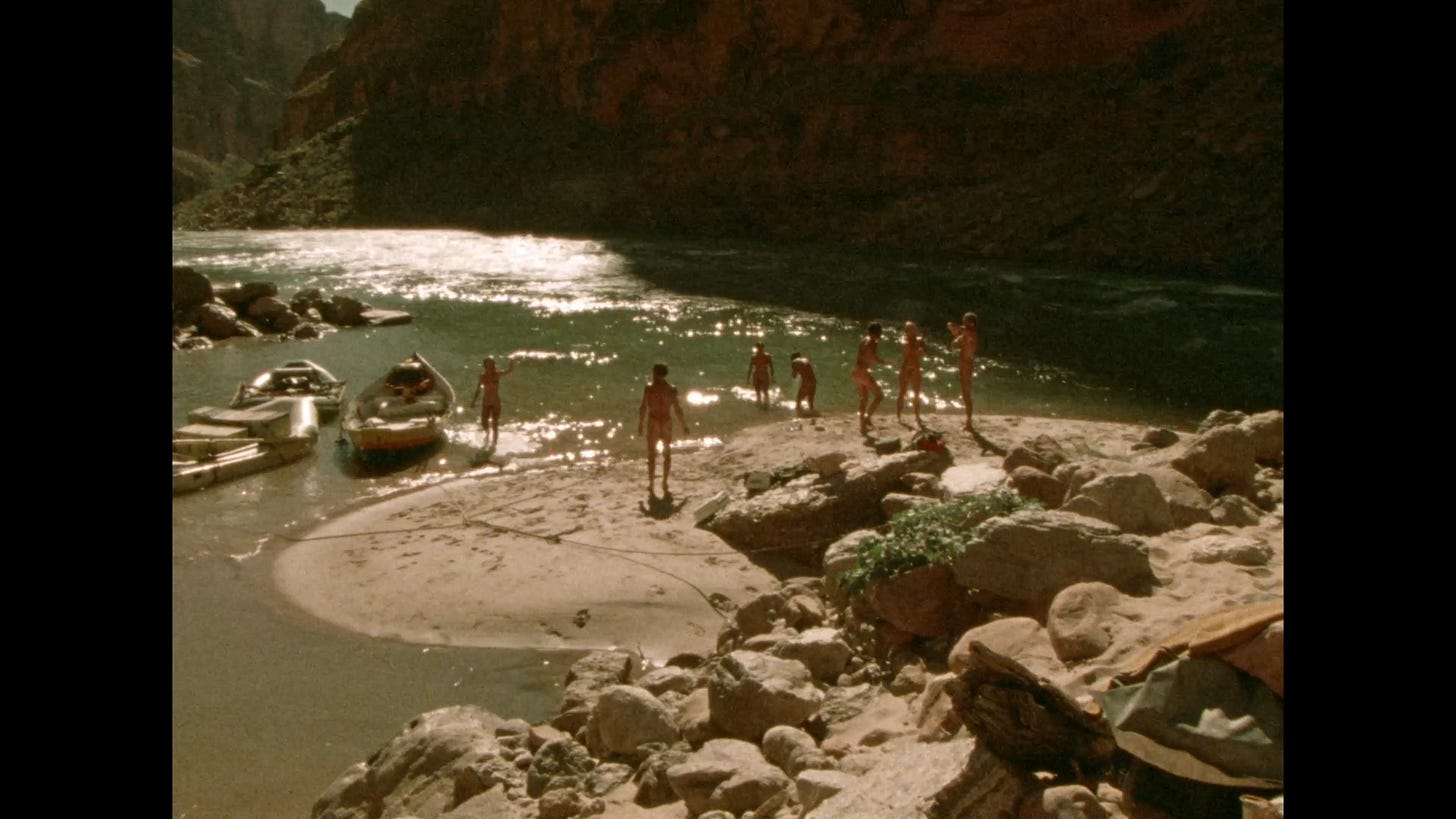
Robb: Well, there’s three distinct responses, because there are three films. And there’s also the making of the films. I mean, in the first film, we’re young, we’re out of doors, we’re often without clothes. It’s very personal.
Vanessa: Yes, let’s pause on the nudity. Let’s just pause on nudity for a second, because that is extraordinarily beautiful footage. And it’s unlike anything I think you could film today, regardless of the age of any of the people in the film. Filming nudity today feels like it means something totally different.
The internet recently fed me something bizarre, which was a man talking about how, if you Google search “there’s a naked man in my yard,” they say, “Call 911. This is a danger. You are on red alert.” And if you Google search “there’s a naked woman in my yard,” they give you pornographic options of, “Wow, that’s special. Lucky you.”
I mean, I think it’s a different time. And I’m so curious what possessed all of you to take your clothes off, as river guides, or friends, or on the film.
Robb: It is a different time. I mean, I was aware, I’ll come back to the question of why, but I was aware, filming people, even then, filming naked people, that it was fraught. I mean, naked people on screen has always meant something provocative, erotic, potentially sensational, potentially acquisitive, something to be worried about. And then, you know, you can’t control how people are going to watch something. So I was always aware of this. And that meant trying to film people, trying to put people in a landscape. Not avoid filming them naked, obviously. It’s so beautiful. It’s really extraordinary. But also, there’s ways to film it that would be bad, and ways to film it that might be better. I didn’t know.
Nobody was really noticing me on the trip, because I’m a speck in the landscape. You’re on the Colorado River in the Grand Canyon. It’s so huge. Mainly, they noticed that I was having a miserable time on a river trip, a really ecstatic time as a filmmaker, and learning how to make films, and falling in love with cinema, falling in love with image making, figuring out the camera. What do you shoot that means something?
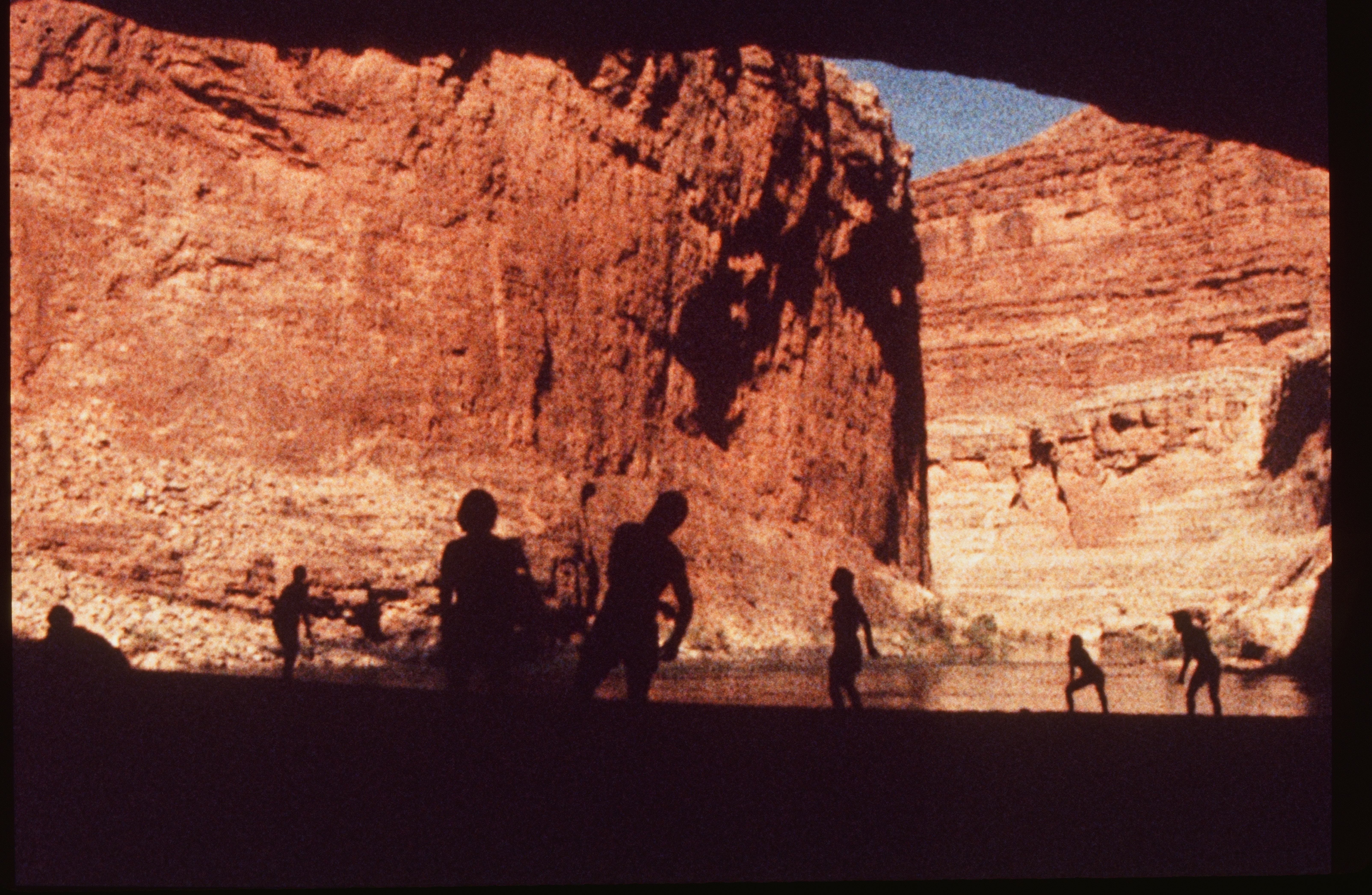
I brought five and a half hours of footage total for 35 days. And five and a half, that’s about, yeah, it’s like nothing. You shoot in video, you shoot the first five and a half hours.. It’s like, that had to last for 35 days. So this idea of committing yourself to an image, to wanting something in particular, and this kind of young person’s belief, at that time and still, that if you film something well enough and closely enough, the world will begin to reveal itself to you. And so it’s a film without voiceover. It’s a film without a musical score. It’s just believing in seeing something as closely as it can be. But I didn’t know. They didn’t really think it was going to be a film. They were nice, and they helped me. They would carry things you know.
Vanessa: But it’s extraordinarily beautiful, what you filmed of them nude along the river, that scenery, that landscape. It fits. It just feels maybe like it was liberating, or I don’t know if it was rebellious, or… it definitely feels like a different time. And the river changes in your film, too, which we can talk about. But it’s beautiful. I’m still curious why you all got naked.
Robb: Well, we did it. Yeah. I think there’s a couple of things. I think, as a community, we’d been running rivers together for years, so there was a kind of intimacy already in being outdoors together. There was a way in which it felt good. We sort of dressed ourselves like we’d later dress our toddlers, you know. Tops, no bottoms. Shoes, no tops. Whatever seemed to make sense for a given situation. If modesty’s not the question, or style is not the question, then what’s the question? And the question is, what do you need to wear to be comfortable? And on the river, being undressed seemed more comfortable.
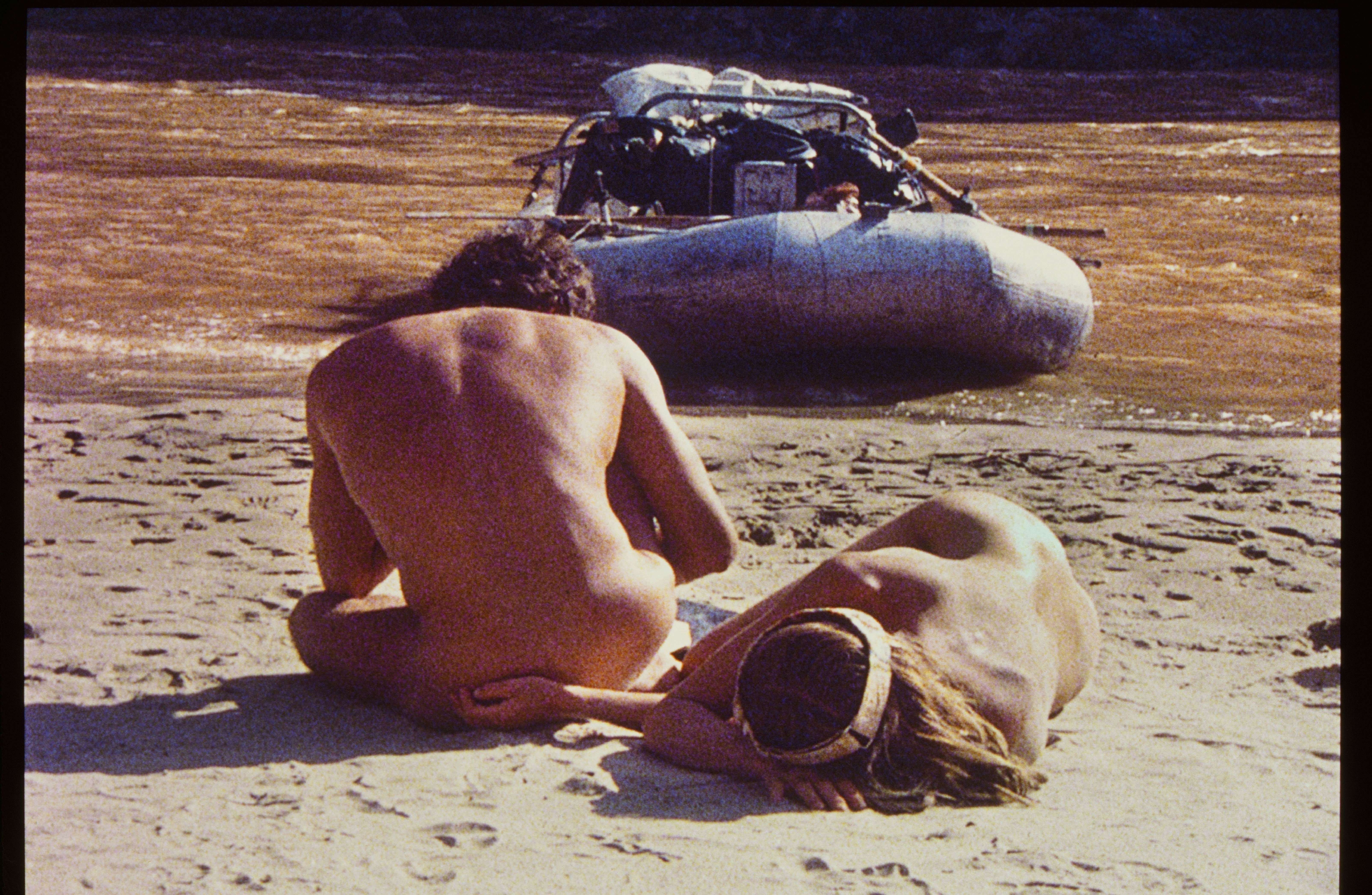
At that point, there’s no miracle fabrics. We don’t have quick-drying things. We’re wearing wet wool. So you’d get off the river and you’d sort of take that off, and then you’d put something on. And at some point, it’s like, the putting something on after you take something off started to feel like, why are we doing that?
In The Same River Twice, Barry says, at some point in the second film, Barry says, “You don’t have to decide to be naked. You have to decide to be dressed. You start naked.” In the same way, you don’t have to decide to have a beard. You have to decide not to have a beard. And we think of one as normal and the other as the choice. So, you know, being on the river, the choice became more apparent, I guess.
But also, it just felt great, you know, just to be outdoors, to be feeling that freedom, to feel the wind on your body. And the funny thing is, when other trips would go by, we would cover up. Because, you know, put on our life jackets or whatever.
Vanessa: Right. It’s a great show of trust, yeah.
Robb: Absolutely. And I think when people see that now, they’re glad to see that and to feel that. And it’s filmed… I mean, it’s so physical to be a river guide. And filming in that physicality, there was something so natural for me, that I fell in love with the camera after having fallen in love with rivers. So picking up the camera and making images and shooting, and having that kind of discipline, physical discipline, it just went together in this really… Who knew at the time? I just didn’t know.
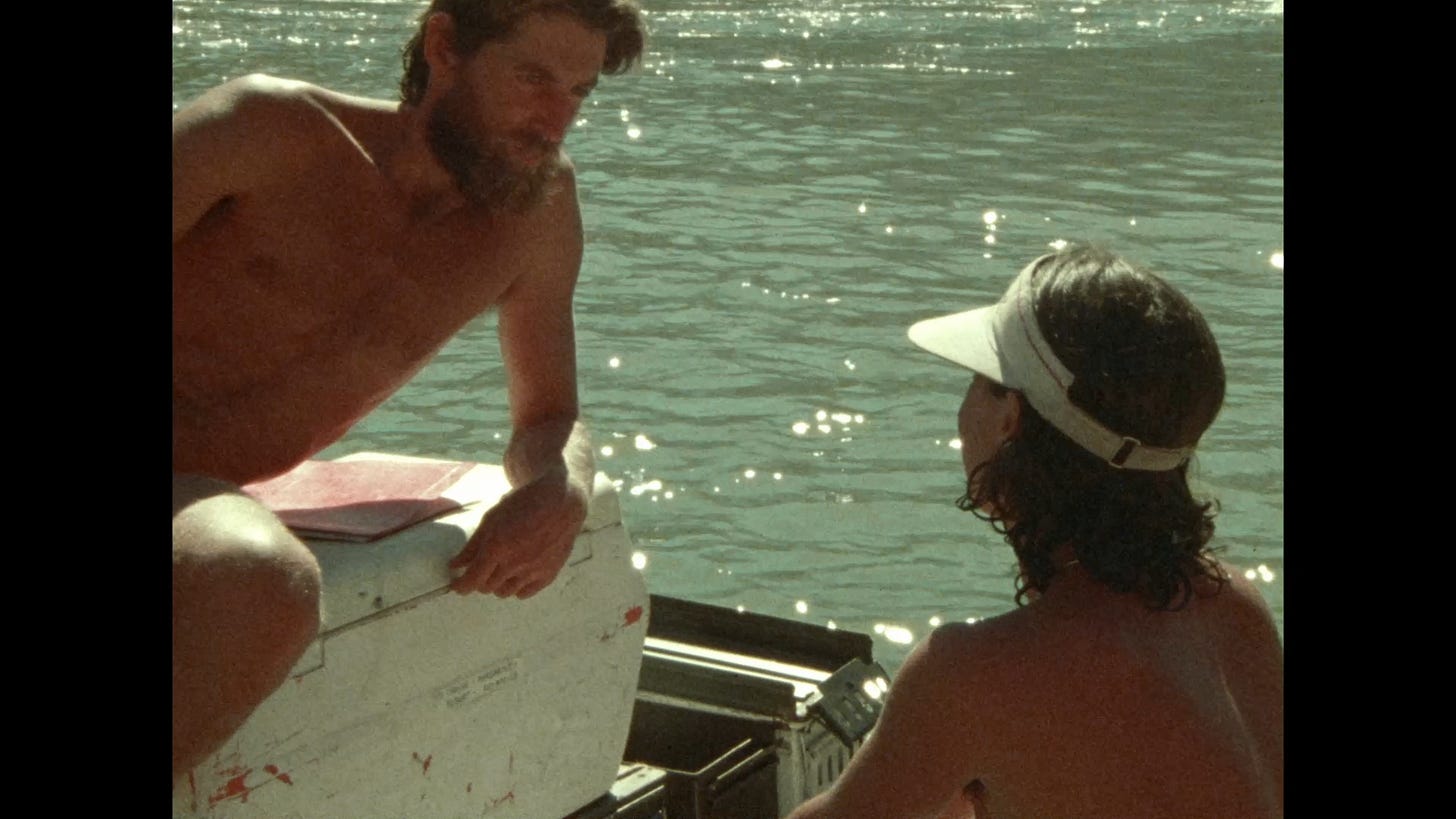
And 35 days, and keeping everything safe, and charging batteries, and oh my God, it was just a mess. And I rowed, because if I turned the boat over and everything went to the bottom of the river, that’s my fault. Couldn’t be somebody else’s fault. So I’m rowing and I’m trying to film, and it’s like, boy, it was very challenging.
And also, I had to learn, in a way, to give up something. That filmmaking means giving up something as well as getting something. And if you’re filming personal things, you’re sort of giving up being there. Being on the trip, being with your friends. I was in another world while I was doing it, watching them enjoy themselves while I tried to figure… you know, tried not to hurt myself.
Vanessa: Yeah. I think it’s Cathy climbing nude up the side of the wall of the river, the Grand Canyon.
Robb: Why is she doing that? It’s this tender body and these sharp rocks. But I think, first of all, she’s intrepid. She’s incredibly physical. She’s incredibly, you know, bold as a person. And also, she was kayaking. I mean, what I imagine, I don’t remember exactly, but she’s kayaking. A lot of the Grand Canyon is pulling over, being off the river and hiking and climbing things. And she took off her wet wool, and the rope ladder was there to climb. And instead of going back and spending another 20 minutes digging and unpacking things, putting on shoes, she just went up the rope ladder. So how great.
Vanessa: Yeah. And I think she’s the one who answers the question of why be naked, and she just says, “Because we can.”
Robb: That’s Danny.
Vanessa: That’s Danny. Okay. Somebody said it.
Robb: Danny said it. That’s right. Because I asked Danny, why did we do it? And she goes, it’s funny, she goes, “Because we could.” And she says it rather defiantly. And then she gets quiet, and she says it again: “Because we could.” And then she goes on to say, “I don’t know.” But we cut before the “I don’t know,” because the “because we could,” changing vocal ranges, seemed like enough.
Vanessa: Yeah. And actually, hers is a very interesting reaction in The Bend in the River to seeing herself again, because I think she’s the one who says, when the second film came out, The Same River Twice, that in Santa Fe, she couldn’t go anywhere, the grocery or for a massage, without someone recognizing her and talking to her about her being in the film. So it was a little bit of a mini-celebrity moment.
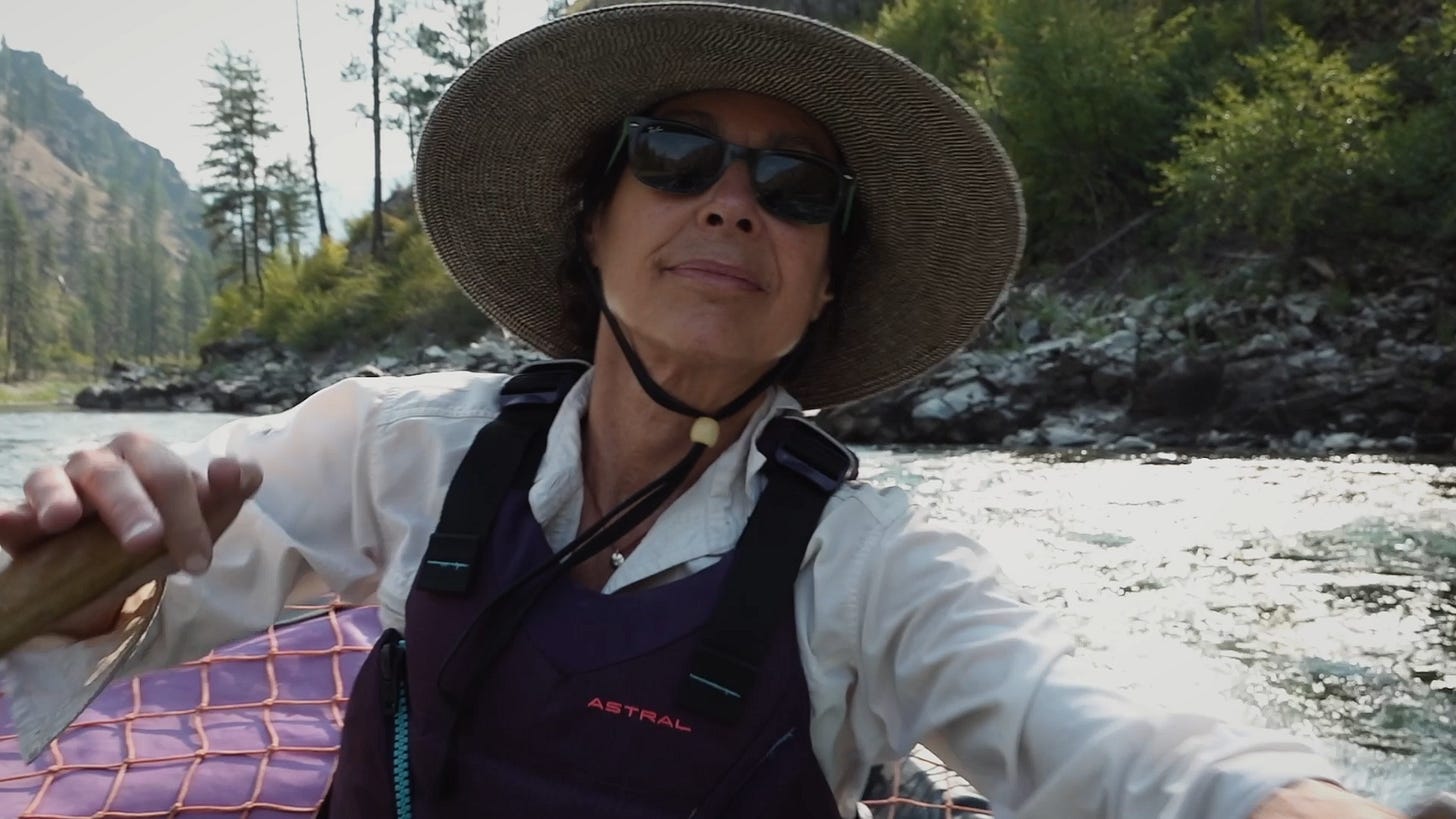
Robb: Mini-celebrity, and also the complexity of filming your friends and putting them in a movie. People agree to be in movies for all kinds of reasons, documentaries. Often it’s because they’re doing something important or interesting that they’d like to magnify, amplify, bring into the world in some kind of way. And here, people agreed to be in the movie because I was their friend and I asked them. And they said yes, because it’s like a generosity of spirit.
Also, in The Same River Twice, I showed up, you know, for years, over four years, with my little dinky standard-definition video camera. I’m taking sound myself. I’m shooting. I’m just by myself. And I’m filming them, you know, doing really consequential things, like, you know, making peanut butter and jelly sandwiches. And they would look at me and go, “Great scene. This is an award-winning scene.”
And I just kept showing up, and they kept having no idea that it would be a movie. And then it was at Sundance, and they saw themselves on the screen, you know, 20 feet tall, in front of large audiences, you know, multiple times over the course of the festival. And that was shocking to them, and a little bit to me as well. And then they had to come to terms with that. And I think it must have felt invasive, to start. Just getting over that hump.
It was one thing to say yes. It was one thing to be my friend and say yes. They never seemed to rescind the question. I didn’t get releases for The Same River Twice until months after it was at Sundance. Because what was I going to do? I was going to go to them and say, “No, no, you can’t get out of the film. I have a piece of paper here that you signed, and we’re going to go to court”? I wasn’t going to do that, and they knew I wasn’t going to do that. So I just waited until they’d seen it enough, and then they made an informed decision, and they signed it, and they wanted to sign it.
The third film was trickier, because they’d had the experience of the second film, and they didn’t start by thinking it was not going to be a film. They thought it might be a film. And I filmed over more time, because I just didn’t know when to start. When does aging begin? When are you out of middle age? Going forward in time, you don’t know the answer to that question. I still don’t quite know the answer to that question. So I started earlier. And also, I thought it was hubris to wait. Like, who knows what our health is going to be like? Who knows what the future is going to bring? I should start now. So I started about ten years ago and started nibbling at it.
So they were, inevitably, more self-censoring at the beginning. Like, okay, will this be in a film? This will be in front of other people. And it’s the third film of a trilogy, and now we’re approaching 70, and now in our 70s. So does it have some cumulative description of my life over almost 50 years? And what can possibly describe that? And I think for everybody, inevitably, it felt like what I did will describe it. Like biographical information. You know, a kind of résumé. You know, something like an obituary of the living.
And I think that when they saw the finished film, first of all, it’s very hard to see a film like this. As it was described to me by various people who saw it, they saw themselves, their minds went blank until they saw themselves again. They wondered how they were looking. They could not see the film at all.
Vanessa: Oh, yeah. Self-consciousness.
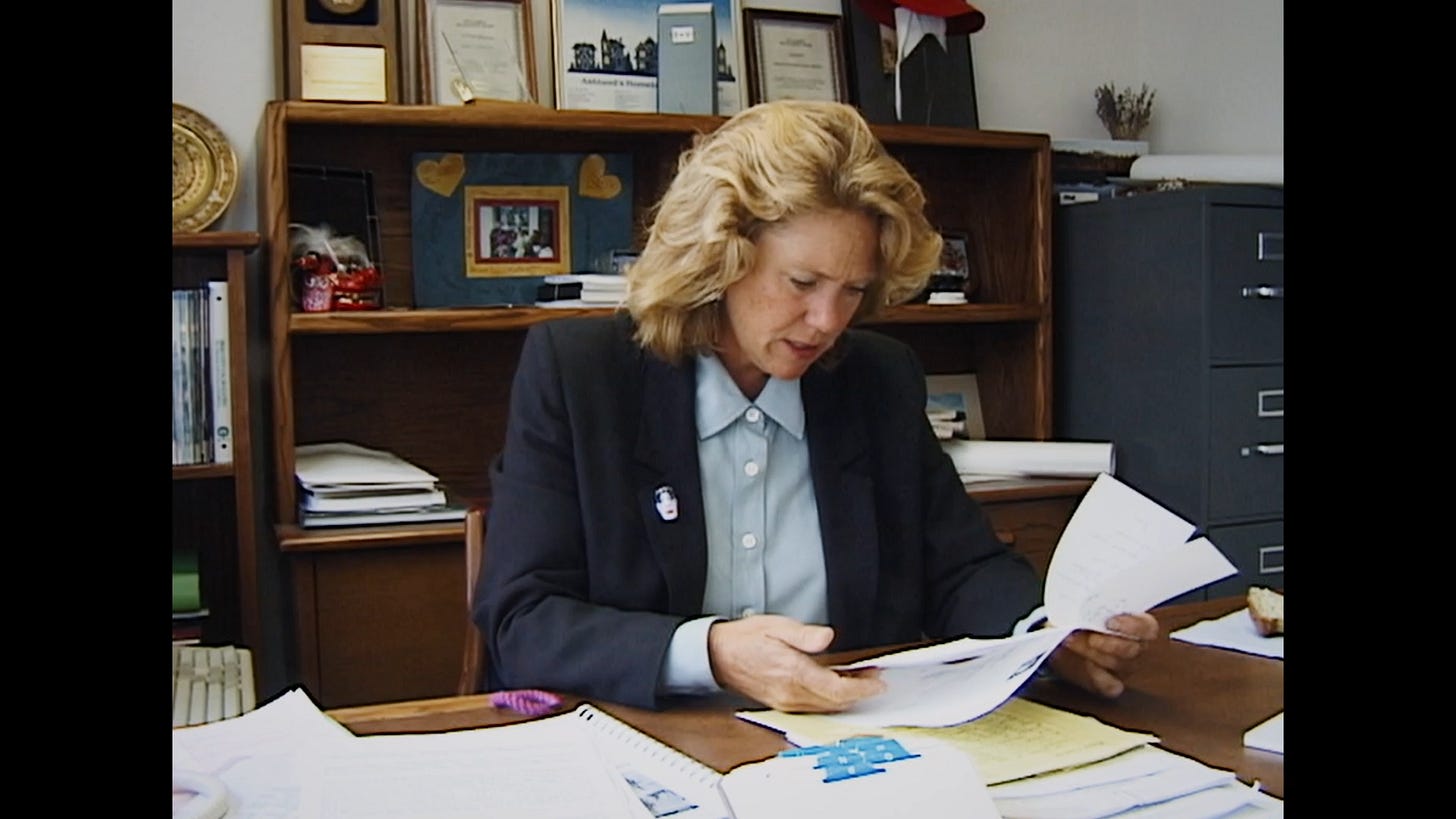
Robb: Utter self-consciousness, exactly. And then at some point, it settled in, like, why… “I was mayor of my town.” “Barry was mayor of his town.” It’s not in the new movie. You don’t see that. It’s like, what the hell? It’s like, I’ve done all this stuff in my life. And everybody has that. Cathy’s written these amazing books. Jeff’s done all this amazing stuff in his life.
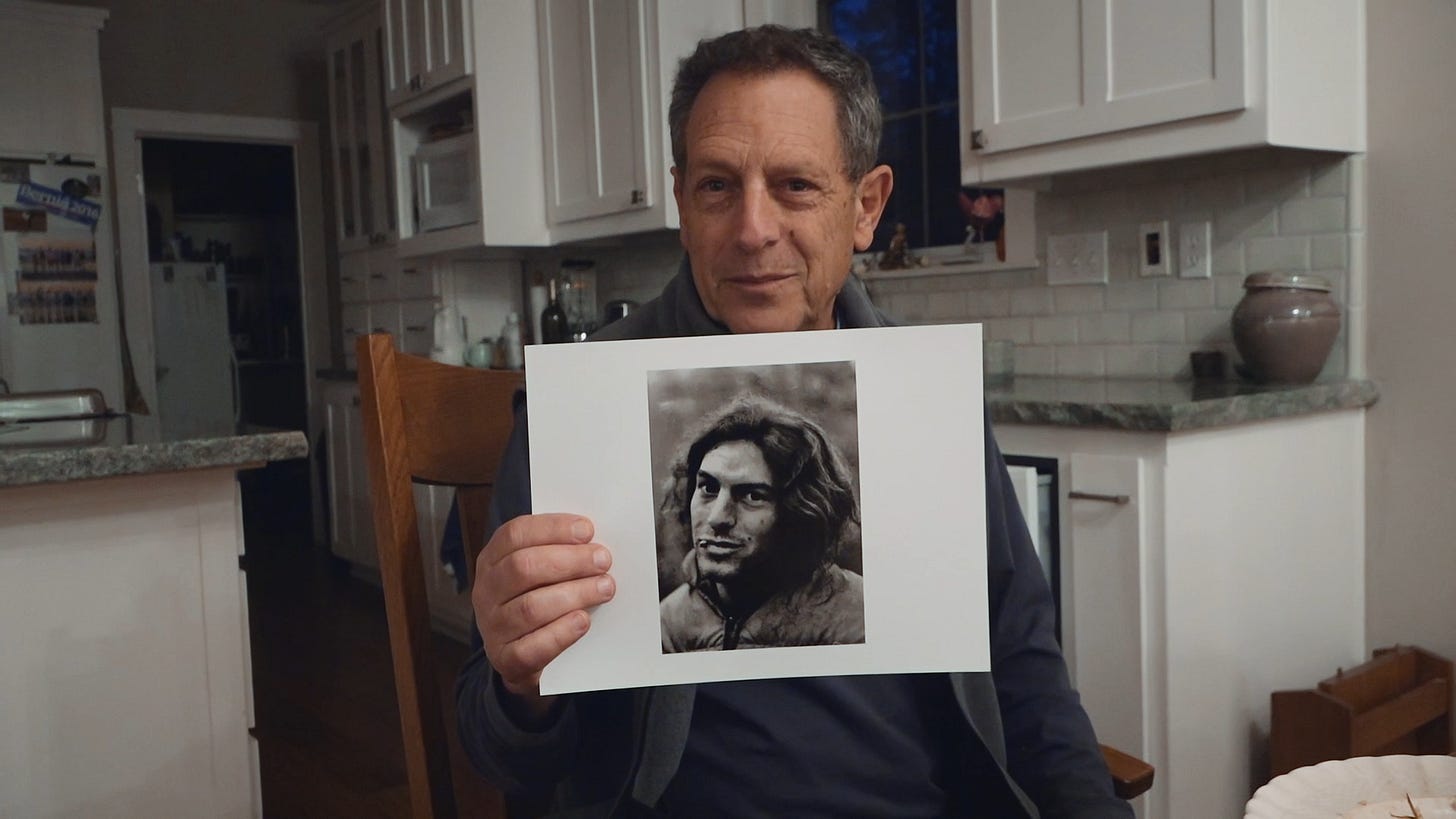
Danny and Jim don’t live their lives in that way. They never anticipated that. They didn’t have a story attached to the way that they live. In some ways, while they seem not very well matched, because Danny’s so social and Jim is so not, they were perfectly matched in a certain way, in that they live very much in the present. Their ambition is not the same… It’s ambitious, but in a more personal, private way. And other people had a more public life, and their lives were invested in the things that they did.
And I think the new movie doesn’t move through time biographically. It moves through time through these forgotten intimacies that sort of move back and forth in time and add up to something, but not adding up to what they did over the course of their life. And I think that’s been difficult.
Vanessa: But what’s beautiful is, you have a kind of novelistic sense of character and detail. It’s already come out in your descriptions. The fact that you saw Cathy as bold and intrepid, and there you see her climbing. And then this leads to a life of action and writing. And you talk, in this new film, The Bend in the River, when you’re speaking with Jim, you remind him, because I believe he likes to pick fruit from a tree that’s already been eaten by bugs, and you said he was the one who would eat the peanut butter that had all the ants in it. So you’re, in a way, the sensitive, thoughtful person there, doing this work, capturing who they are.
Robb: Yes, who they are. That’s exactly right. Who they are. And that’s a function of a lifetime friendship. And how beautiful is that? The story is told through the medium of friendship. That’s what comes through the lens.
And, you know, there’s ways in which observational filmmaking, which this is sort of an example of… the inference is that what you’re filming would have happened even if the camera weren’t there. Maybe it’s affected a bit by the camera, but it would be there anyway. And that “actualness” is part of the power of documentary. But in this case, and in other people’s cases too, Ross McElwee, for example, famously, what happens in front of the camera is a result of being there with a camera. It’s the exact opposite of that. The presence of the filmmaker generates a kind of cinematic force field around what’s being filmed, and you see it in this sort of intimate way, through a subjective lens rather than an objective lens, filming in the first person, not the third person. And that is just a different way of going about it. Not better or worse, but something else can happen there.
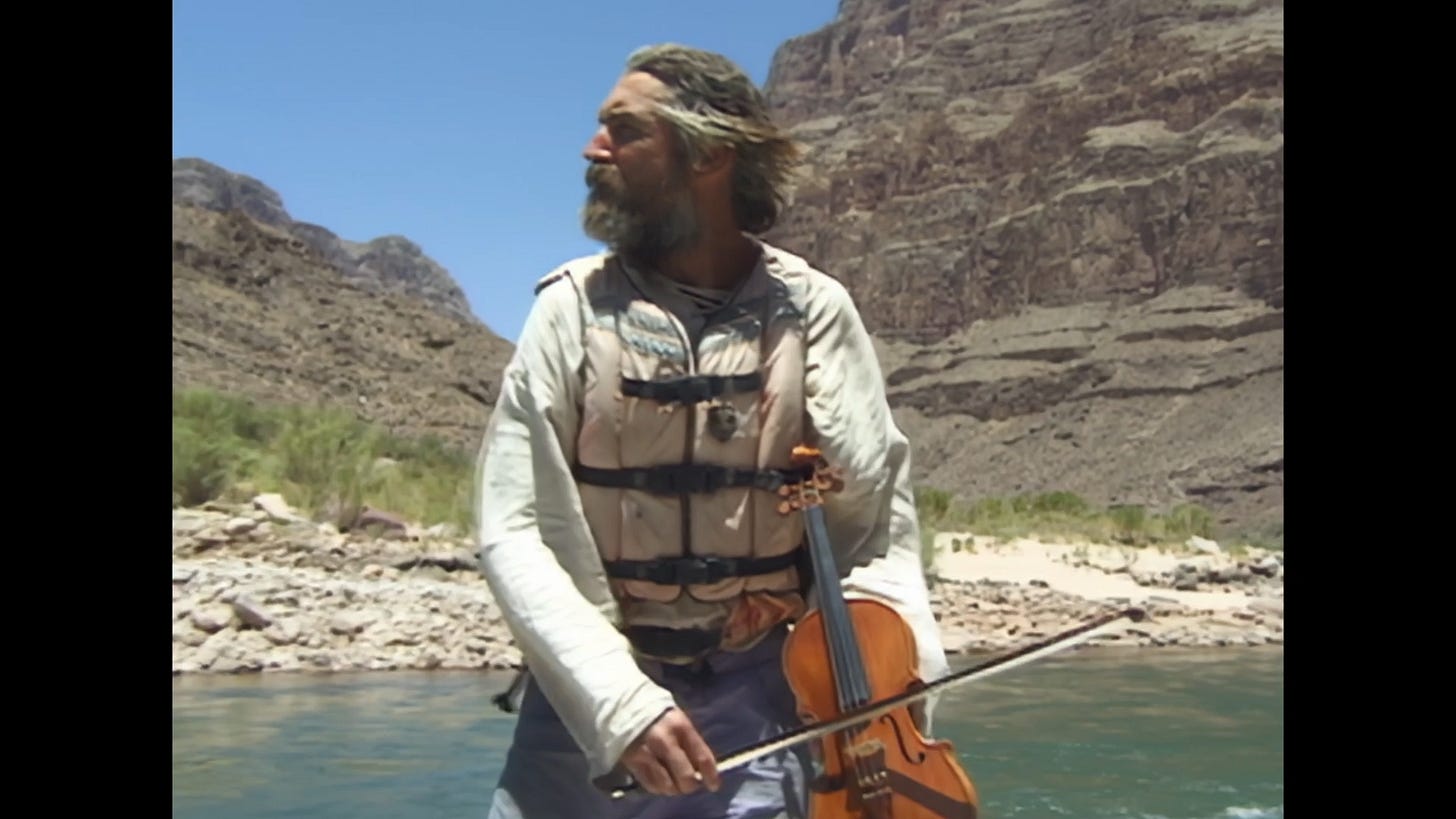
And in this case, through the sort of spectacle of almost 50 years of friendship. And more. I mean, I met Jeff Golden when I was 11 years old at a summer camp, Barry when I was 15, Danny when I was 13. And then the recent people coming were Jim and Cathy, when I was 25. That’s now 51 years ago, and they’re the newcomers. So it’s like, how great. I mean, just how special that is, to be in the presence of friends and to be filming them, and then have those things that happen spontaneously, that can happen in nonfiction. Just the beautiful coincidence of something. The things that you don’t remember at all, they just go by. But those things that go by really get us from this moment to that moment, from then until now. And those are the things that the film deals with mainly. Not entirely. There’s some biographical material as well.
But the nonlinear editing, moving back and forth in time in ways that you can’t predict, is possible because it’s not a chronological film. It’s not wedded to chronology to make sense of it. A lot of stories need to go from one moment to the next to the next, and you can violate that, but it’s not very common that the whole thing is cut in temporal pieces that interact in a way. You know, they’re long-haired, they’re short-haired, they’re blond, they’re dark. It’s like, they’re young, they’re old. They were married, they’re not married, they’re married to a different person. And then having that feel holistic rather than fragmented and confusing.
There’s also, like in Riverdogs, there’s no clues, like a voiceover. I think if I were in the film, it would be very hard not to serve that function. But I think it would crush all of the kinds of juxtapositions that you can experience with no voiceover, you know, using only the cinematic language to make sense of things, to work with that as a challenge.
And that, for Jeff Malmberg, this amazing editor, fantastic editor, great guy, great editor, really instrumental in the making of the film in some beautiful way… I’m so grateful. He’s so great. I can’t say it enough. You know, to make all of that work in some way that doesn’t confuse people, and adds up to something, even if adding up to something almost always means chronology, because it means adding. In this case, it’s adding. It goes from then until now, but any moment can be anywhere. And the juxtapositions make different meanings. If you go forward in time or backwards in time from something, it means something different. So, in a way, you have a temporal landscape to cut a film about people’s experience over 50 years, where it’s the juxtapositions that count. Which is more like how our inner lives function. It’s more like how we think about things. We don’t experience life chronologically.
Vanessa: No. I wonder how, having made these three films over 50 years, and all being essentially of the same generation, right? And I don’t know if you like the label Baby Boomer generation, or what you think of these kinds of generational cohort ways to understand society and the country, but you have a bigger-picture sense of the environment when you show us the river and how it’s receding and what that means. And I wonder how you think about your generation overall. Beneficiaries of women’s lib, in a way, of prosperity, a great trajectory where you could just be economically advancing, whereas generations after are kind of screwed. But that’s not your fault. It’s just…
Robb: It’s not obvious that it’s not our fault. I mean, I think… yeah. Certainly it’s chronicling the lives of these five people. It’s also chronicling the society’s life, you know, from the ‘60s till now. Even though the first one was ‘78, it’s, you know, in the shadow and echo of the ‘60s, a recapitulation of it in a certain kind of way. So all that’s happened in the world, today, it’s also tracking as part of people’s lives. In the background a bit. It foregrounds around the river, because we were so a part of the river.
And going back on a river trip in 2023, down the Colorado again, the last part of the river, going into Lake Mead… It’s the only thing in the film that I set up. Everything else I joined, but the only thing I set up was that river trip. And I set up that river trip because I was reading all of these articles about how the Colorado River was the most endangered river in the United States, and it was getting lower and lower. And it’s so consequential, because the river’s been used by all of these states in these more or less desert-like environments.
And, you know, the thought that kept popping up, every time, until I had to listen to it and then we made the river trip, is that the river’s running out of water as we’re running out of time. And human time and geologic time, for just the briefest of moments, cross in that idea. And just getting on the river at that moment to see it. And then having the footage of the vitality of the river and the vitality of the people on the river, and this moment of our aging and the river’s aging, and the ways in which we can look at that. And how stunning it was to watch, to see the riverbank getting higher and higher as the river got lower and lower. It was stunning to see.
It’s not a climate change movie, but it’s a climate change moment in the film that’s built into the trajectory of the film, as you describe. It tracks something particular to this generation, particular to this group of people who were river guides, and that was a big part of our identity. It is something that… and people can think different things about this, and I don’t have the truth about it, but it’s hard for me not to feel some abdication of responsibility in what’s happened in our current moment, and then what we’re leaving our children and grandchildren.
It’s not like we… I think we had good ideas. I think we tried good things. I think we did all kinds of stuff. I think, you know, environmentalism, and, as Danny says, salad bars and Bill Clinton, and other good things, perhaps. But here we are, and it’s not good. And, you know, so I don’t have the need to beat ourselves up about it, but I also don’t feel comfortable absolving us entirely.
Vanessa: Your group obviously are all interested in doing good, whatever you’re doing, whether it’s filmmaking, or whether it’s engaging in politics, or writing, or whether it’s actually disengaging. I mean, Jim is an interesting character, too. He remains a river guide for so long, the water gets in his ears, and he’s losing hearing and all of that. I mean, you have such affection and understanding for him, and he’s so unique. But I feel like there are just a lot of bigger, bad forces out there that have pushed for what they need.
Robb: No, I think, you know, Jeff has done politics his whole life. He’s written books. He’s been a radio talk show host, doing mainly political talk. He’s always wanted to try to make things better, very explicitly. Cathy, you know, became the mayor of her small town for 12 years, the youngest person and the first woman to be mayor of Ashland, Oregon. She inaugurated lots of good things in Ashland. Barry was the mayor of his small town, trying to think about the problems of growth in his small town, which is why he lost the election, because he took on the builders and the real estate lobby.
Vanessa: That’s a ton already in one group.
Robb: And then for me, it’s like teaching is some version of that, in some way. I mean, in a way, it’s not amazing. We came out of the ‘60s. There were two strands to come out of the ‘60s. One was a kind of back-to-the-land kind of strand, moving out of a political arena into some other way of having a life. And then there was a political way. And then we merged those two in a certain kind of way. Tried to take the best of both things. And, not surprisingly, river guides were running things, and connected to people, and doing our best to help out. And then it’s not surprising that people went to live in small towns and then became public officials in these small towns. How beautiful is that, that they could do that.
So I agree that we were maybe, you know, doing what we could. But it’s very hard for me not to feel, and this is just my own personal feeling, to look around and go, did we do enough? Were we mindful enough of where this was going? So I don’t know. It’s something that I think about, and that haunts me a bit.
Vanessa: Yeah. I mean, it’s in the film. It’s sort of heartbreaking. It’s Jim, right, who must be back-to-the-land more than anything? The one who is in the woods, and he’s got a copy of The Nation, and he still reads The Nation, and he cares about it. And, you know, his way is just peaceful. He’s not doing any harm.
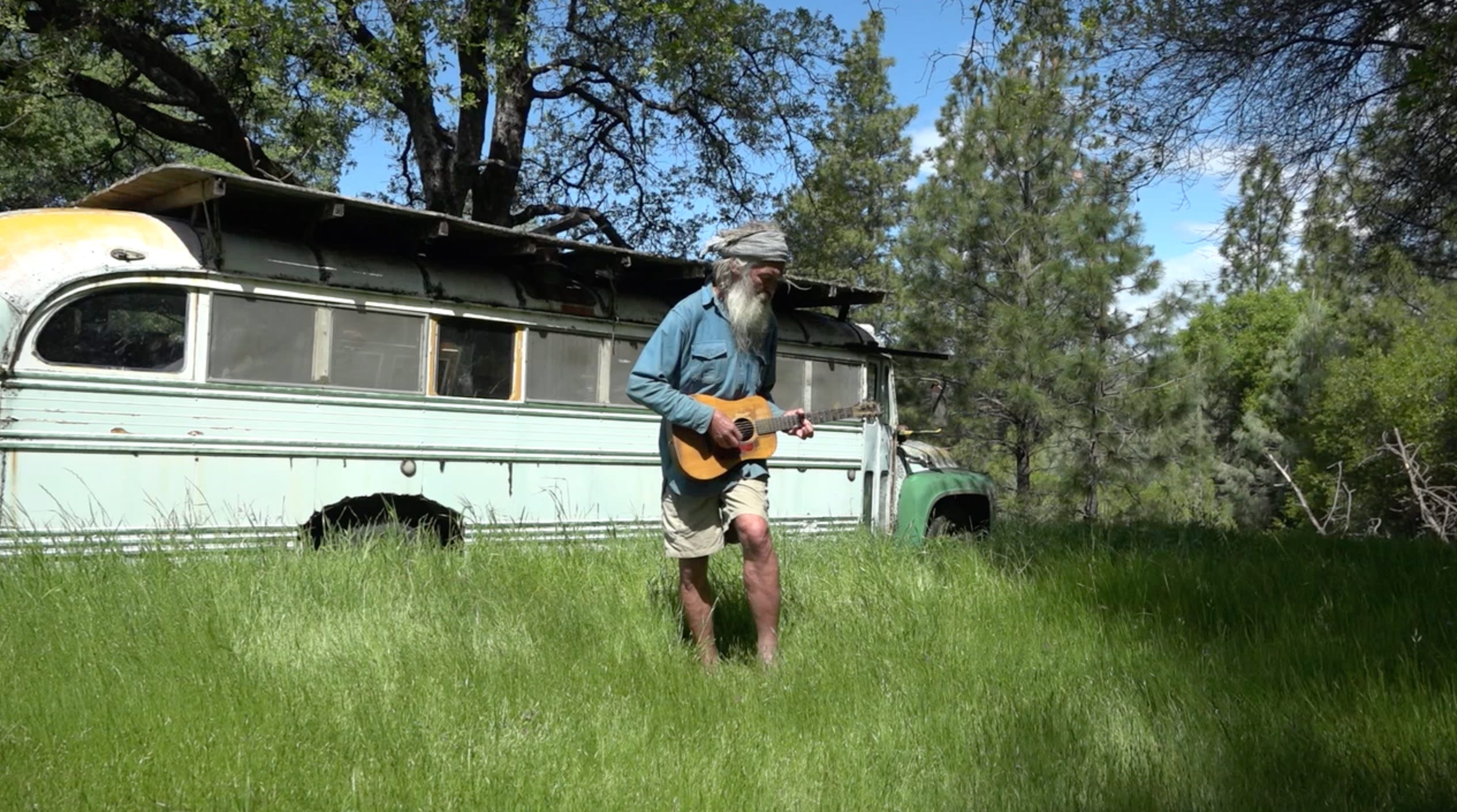
Robb: And nobody has a lower carbon footprint than Jim.
Vanessa: Right.
Robb: He doesn’t have electricity. He doesn’t have running water. He doesn’t have a computer. He doesn’t have a phone. There’s no rare earth materials on his land. What’s wonderful about Jim is he’s always been himself, and he’s, in a way, a kind of control group for all of us. Like, if we had stayed the same, would we have been something like Jim? Jim doesn’t go to the doctor. He hasn’t been to a doctor in 20 years. He’s 76. He wakes up with teeth in his mouth. “Where did that come from?” he says. So, you know, he’s a particular example. It’s hard to generalize from him. But he’s such a remarkable person, and he’s lived a remarkable life.
And one of the good things about filming was that it’s hard to go see Jim. And for the longest time, you didn’t even know if he was there. You just sort of had to show up, or call friends to go over and see if he’s going to be there, which is what I would end up doing, to, quote, unquote, film him. But to film him, I just got to see him, to do that, and to be in his presence.
It’s like, filming everybody else, like in The Same River Twice, everybody’s in their middle age, everybody’s working like crazy. Everybody’s like, poke the camera anywhere, and it’s kids, jobs, ambition, mortgages, everything. And then Jim is like, not that. So when you show up, you can’t film him doing middle-class things, like get up and go to work, you know, say goodbye to somebody and then leave and then return. He’s always there. So when you show up, you’re part of the always-there-ness, and you take up 100% of his attention. So for him, it’s a little exhausting, because he can’t just ignore me. He can’t go back to doing what he was doing and let me film. So we just interact. And I got to know him, his aging, in a way that I thought was very special and very particular.
And I had to negotiate all the things. Like, I didn’t know what his trailer looked like when I finally saw it. And I asked him if I could film it, and he said sure. But I asked him because I wasn’t sure he would want me to. But he thought it was fine. And it was shocking to see. But then, just the way he was relating to it, he was completely aware that this was something. And his pointing out the Noam Chomsky book is an acknowledgment. He’s very funny, and he can speak to what he looks like to somebody else, and as a joke. Like, you know, “My Noam Chomsky book is just where I left it, right there.” It’s like when he eats the peach, and he takes a bite, and he goes, “Perfect.” When he’s losing his teeth, and he looks into the lens, and he goes, “I know I look funny.”
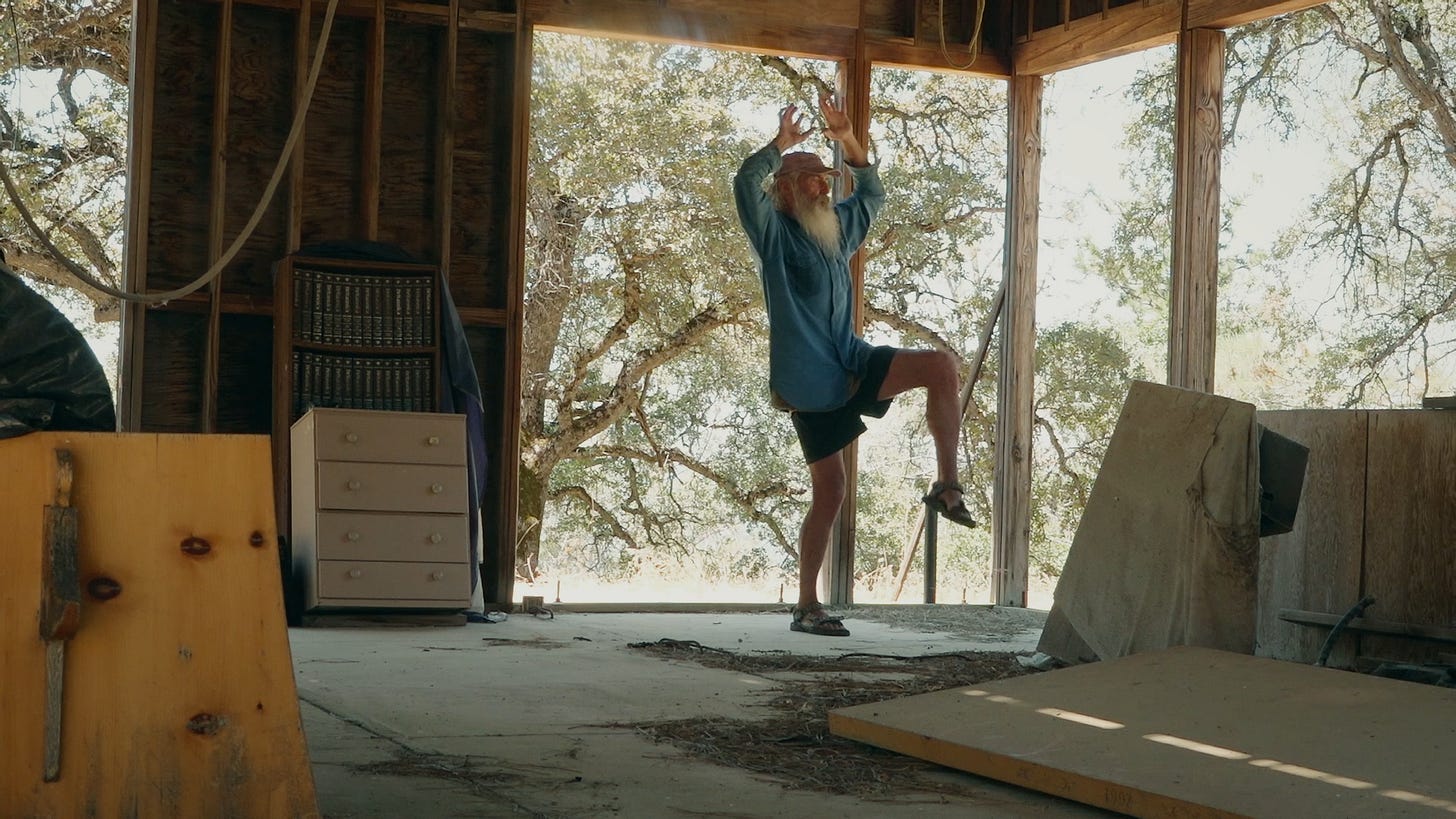
So he’s aware that he looks funny, and he says it to me. He never loses his self-awareness, even as he’s extremely different, but not that different. And seeing that juxtaposition of his awareness makes it possible to film him, rather than having him seem like, you know, some other creature. I mean, he does a little bit, and people have to find out for themselves what they feel about him when they see him. Which I think is like… that’s also life, that we have to confront such things. And he’s such a bearer of time, because he makes no effort to stay young. He makes no effort to be healthy. He’s not saving money for retirement. He’s just lived all of these years and stayed on his land. And that’s amazing.
Vanessa: Yeah. The story of the friendship among all of you, and the sense of maintaining these bonds over time, it’s so meaningful and, I think, inspiring. If only all of us could understand that this is a good way to move through the world, and see the world through friendships like this, maybe we wouldn’t have the kind of government that we have right now, et cetera.
Robb: If there’s any message at all, that at least I think about when I see the film, it’s, you know, if you have the chance, stay friends with your friends. Don’t let that go. It’s not always easy to keep. And making the film certainly helped me stay in touch in a much more intentional way. But what a pleasure that is, and to be able to go see people.
I also recommend that you go see your friends, and then ask them not to make time for you. Just be there while they live their lives, and just be around with them while that’s happening, and see what their lives look like when they haven’t made time for you. Whether you’re not, like, going out to dinner or going on a hike or whatever you would be doing. Just be there. And filming allows you to just be there, which is so weird, but it’s a very special vantage point with which to regard people that you love.
Vanessa: Yes, it is. That’s a beautiful last thought. It’s a beautiful film to watch, that you’ve brought 50 years of friendship to this extraordinary film. Thank you so much.
Robb: Thank you.
Robb Moss, Director
For nearly fifty years, Robb Moss’ films have toggled between the topical and the personal. Africa Revisited (1981), Secrecy (2008), and Containment (2017) explore racial complexity, government secrecy and nuclear waste, while Riverdogs (1978), The Tourist (1991), The Same River Twice (2003) and The Bend in the River (2025) explore youthful extravagance, infertility and adoption, and the move from youth to middle age and beyond. His films have premiered at Sundance and Telluride, been reviewed in the New York Times and Los Angeles Times, nominated for an Independent Spirit award, and shown theatrically in more than seventy Landmark Cinemas. Moss’ work has also been shown in festivals and museums in Lebanon, Germany, Turkey, Austria, England, Iran, Amsterdam, Brazil, Korea, Australia, France, and Israel. He has been a creative advisor at the Sundance Institute’s Doc Edit Labs since their inception in 2004, worked as a festival juror at Sundance, San Francisco, Denver, Camden, Seattle, Chicago, New England, and Ann Arbor, elected to the Academy of Motion Picture Arts and Sciences, served eight years as a Board Director for ITVS, and taught filmmaking at Harvard University for the past five decades where he is a Professor in the Department of Art, Film, and Visual Studies.
THE BEND IN THE RIVER will be streaming on Netflix starting December 4th
To find more in person screenings go to the film’s website:
https://www.thebendintheriver.com/