


Once again, I able to share with our financial supporters / premium members, one of my favorite newsletter writers. Hopefully you too will elect to become one of Cole’s supporters as well. (And sorry that I couldn’t wait another month so that the dates of Cole’s original post would better align!)
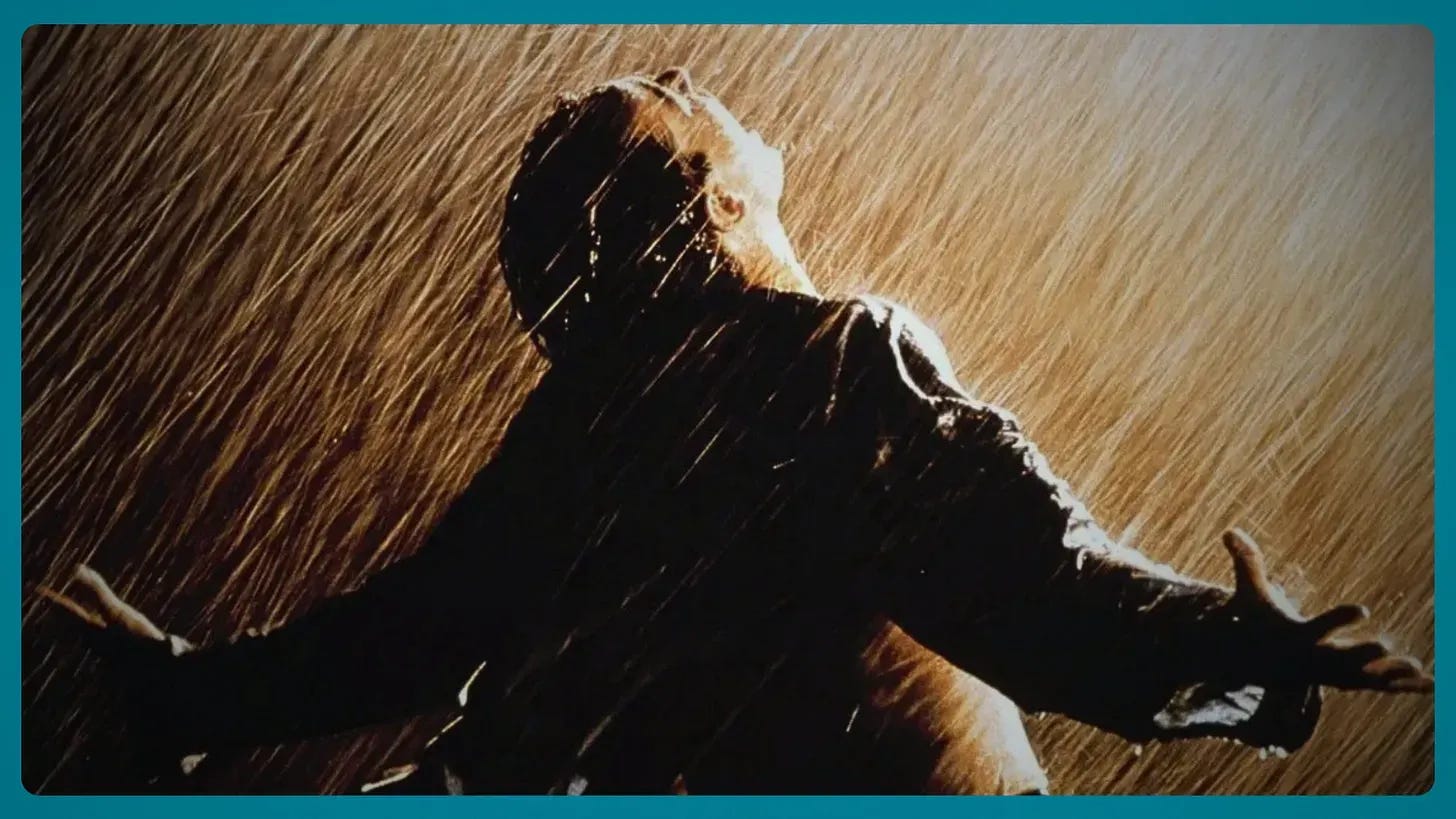
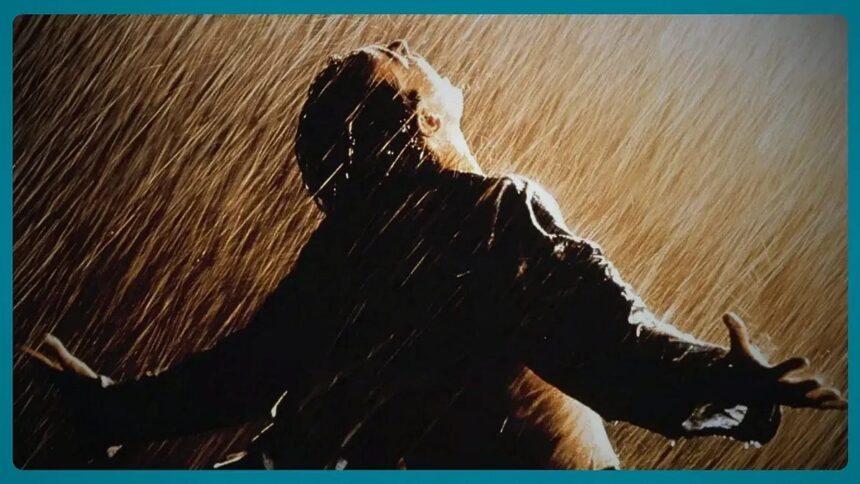
The Shawshank Redemption was released on September 24th, 1994 – thirty years ago this week. What you might not remember, though, is that this beloved adaptation of Stephen King’s novella Rita Hayworth and Shawshank Redemption (1982) was a box office bomb upon release. Instead, word-of-mouth turned it into a hit on home video. By the time Awards Season rolled around, it was nominated for a Best Picture Oscar and, more relevant to the point of this article, a Best Adapted Screenplay Oscar for writer-director Frank Darabont. The Shawshank Redemption was a passion project of Darabont’s – in fact, he personally purchased the rights to King’s novella back in ’87 – and I believe key decisions he made about how to adapt the author’s work help explain the film’s enduring popularity.
Such changes wouldn’t be especially significant to point out in most cases, as adaptations always change their source material much to purists’ chagrin, but The Shawshank Redemption is an astoundingly accurate adaptation – often lifting whole blocks of dialogue for scenes that are, for the most part, dramatizations of what King wrote. Understanding Darabont’s narrative decisions could transform how you decide to adapt literary and comic book works for screen yourself. Let’s take a look now at how he did it by focusing on six key points. These are headline changes, you might say (with one exception). Each headline involves several scenes that modify King’s original story or outright alter it to enhance their dramatic impact in extraordinary ways.
THE ANTAGONISTS
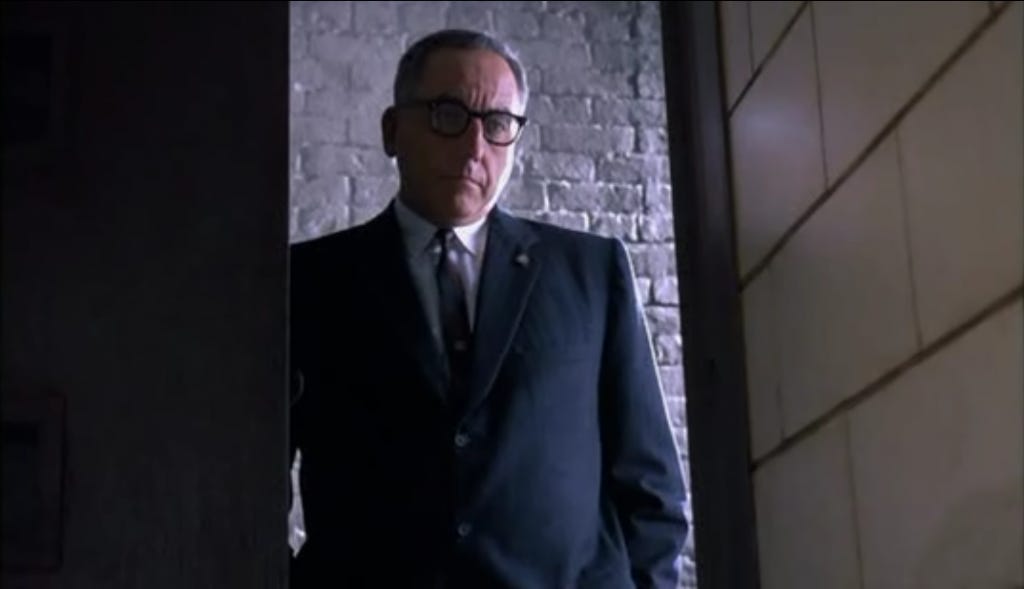
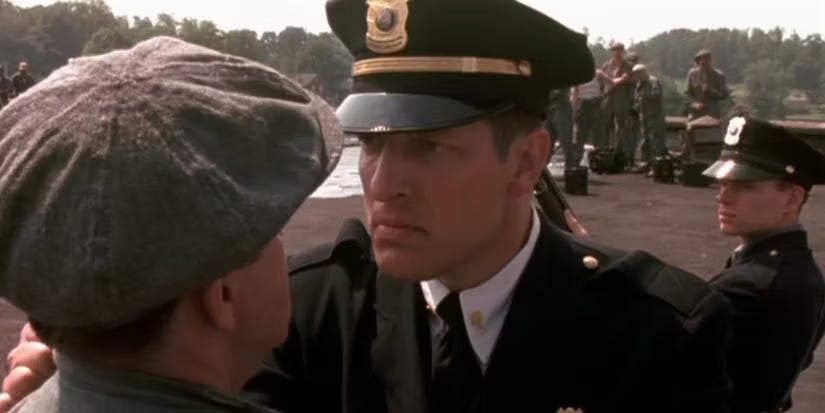
In Stephen King’s novella, Shawshank State Prison functions like prisons do in the real world. Meaning, guards and wardens come and go. Several, in fact. Frank Darabont solves this problem of rotating antagonists by establishing two permanent fixtures in the prison and protagonist Andy Dufresne’s life: the homicidal guard captain Byron Hadley and the pious, but Biblical cruel warden Samuel Norton.
Andy’s antagonist in the novella isn’t centralized in a single character or even characters. It’s the prison itself, or rather imprisonment and what it does to his soul. He must overcome “the walls” that constantly threaten to sap his will to hope. It’s a metaphor for how we all choose to live. This remains in the film, of course, but the metaphor provides the film’s theme instead. In terms of an obstacle onscreen, Andy requires a physical threat to overcome – one that audiences can learn to hate and, when they get their comeuppance, cheer for. Darabont rightly gives it to them, resulting in, I believe, a much more satisfying ending than the one offered up in King’s novella.
An extension of this change from the novella is the con Andy pulls on the warden and Hadley to give the audience the aforementioned comeuppance. King never delivers any punishment to the two men in his story, but Darabont fixes that in his adaptation.
For context, Andy was a banker in his former life and, in prison, has helped Norton launder hundreds of thousands of dollars. In the novella, Andy used this as an opportunity to simply steal all that money upon his escape – money he steals to start over in Mexico. In the film, Darabont still has Andy steal Norton’s money, but he also has him send evidence of Norton’s financial misdoings and Hadley’s violent crimes to the press. When the authorities come to arrest the two men, Norton shoves a pistol under his chin and splatters the window behind him with his brains. This, I hope you can see, is a much more satisfying ending for audiences who have just watched Andy survive more than two hours of gang rape, physical assault, and time “in the hole”.
THE MYSTERY
Read more