
For the children of Soviet immigrants living in Trondheim, Norway, mathematics served as more than an academic pursuit; it functioned as a primary mode of communication and a bridge to their cultural heritage. In a household where the walls were lined with floor-to-ceiling bookshelves of Russian literature and technical texts, the study of complex equations became a central pillar of family life.
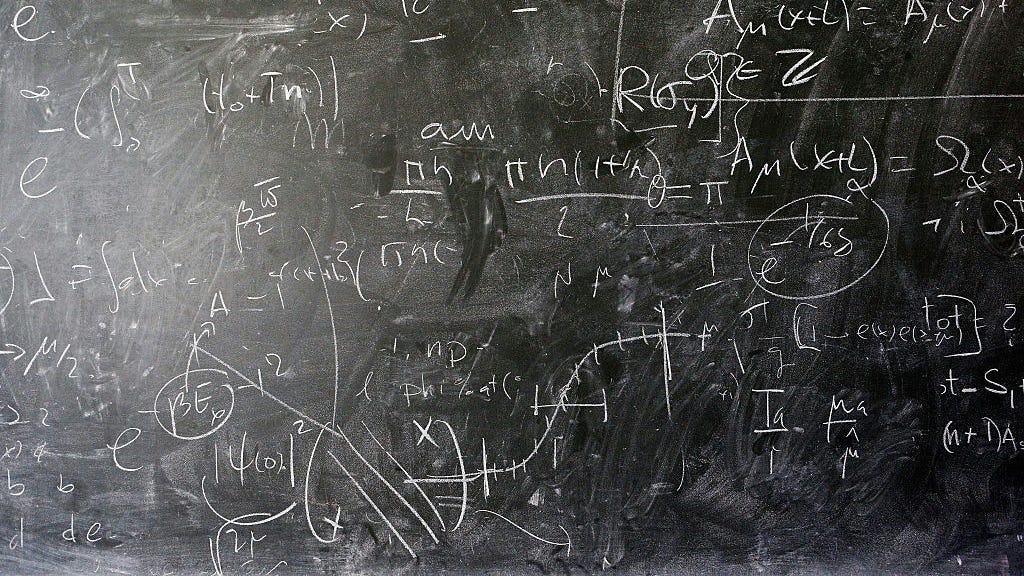
The family's home office featured a large whiteboard that acted as a visual record of ongoing research. Mathematical equations, written in Greek letters and complex curves, filled the board. The couple used a color-coded system to distinguish their individual contributions, with the father writing in red ink and the mother utilizing blue.
From the Soviet Union to Trondheim
The parents emigrated from the former Soviet Union to pursue careers in research and education. They eventually secured positions at one of the most prominent science and technical universities in Norway. This transition brought their deep-rooted appreciation for the Russian mathematical tradition to a new Scandinavian context, where they raised their children surrounded by the tools of their trade.
Mathematics was the foundational element of the parents' relationship, having been the catalyst for their initial meeting. This passion translated into a domestic environment where numerical concepts were integrated into daily routines and social interactions.
The Language of Theorems
Mealtimes in the household frequently revolved around mathematical inquiries rather than standard small talk. Discussions often began with theoretical questions regarding the behavior of variables, such as the rate at which alpha might approach zero compared to beta. While such topics occasionally prompted typical childhood reactions from the daughters, the environment fostered a unique appreciation for the subject matter.
The father's approach to mathematics often mirrored his appreciation for the humanities. He was known to recite theorems regarding Fourier analysis with the same cadence and passion one might use to deliver a classic Russian poem. This blend of rigid logic and artistic expression defined the family's perspective on the field.
A Childhood Defined by Inquiry
By the age of 13, the daughter began to recognize the aesthetic qualities of the work her parents performed. Watching her father work at a desk worn by hours of study, surrounded by the physical evidence of a lifetime spent in academia, she observed the intersection of hard science and personal history. The office, with its smell of old books and the visual complexity of the whiteboard, served as the backdrop for her introduction to the idea that math could be beautiful.
The legacy of these immigrant researchers highlights the cultural weight of the Soviet mathematical school and its persistence across borders. Through the lens of one family in Norway, the abstract world of Fourier analysis and Greek variables became a tangible connection to their past and a shared language for their future.