


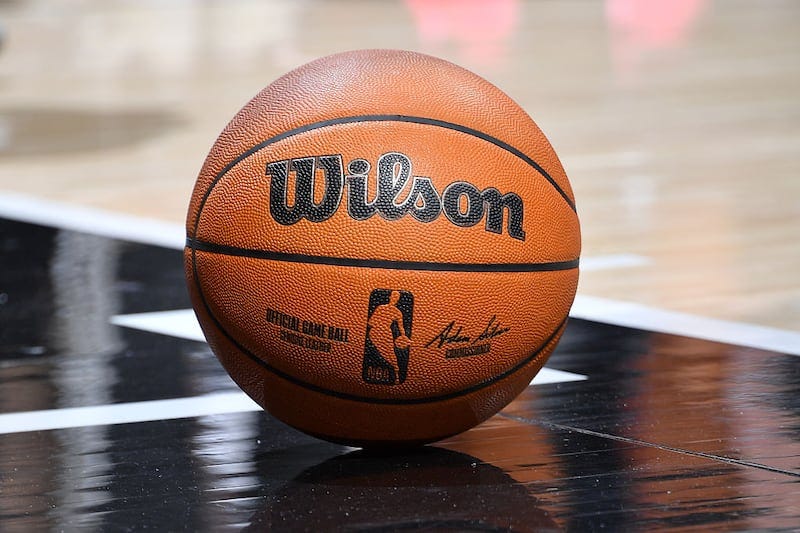
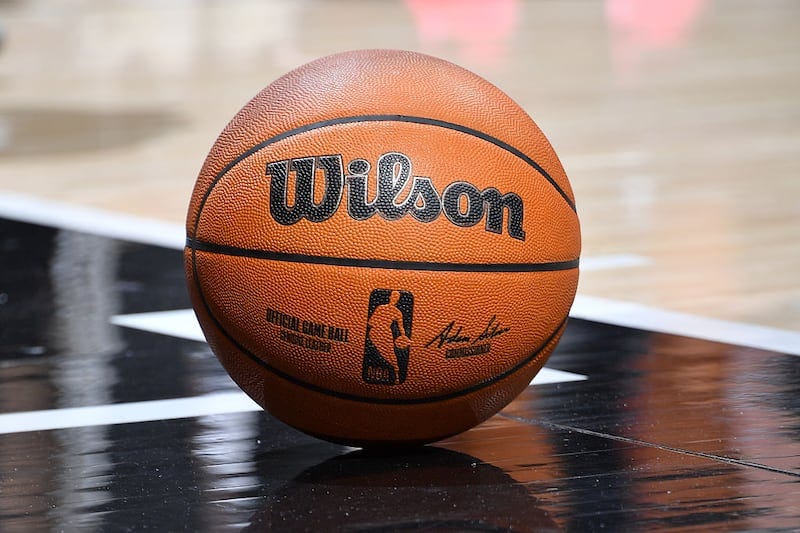
NBA Commissioner Adam Silver told CNBC this week that the league will be rolling out basketballs with built-in Bluetooth microchips as soon as 2027.
NFL fans are familiar with this technology. For years, an RFID tracking chip has been embedded in every NFL football used during games, practice, and training camp. Each player’s shoulder pads also have two RFID tracking chips, one on the left shoulder and one on the right. Combined with six Hawk-Eye optical tracking cameras located on the upper deck of each NFL stadium, this data powers Next Gen Stats. We’re talking about everything from a player’s location on the field to their top speed, acceleration, deceleration, separation, and distance traveled.
Teams use this data to scout players and track performance. TV networks use it to create visuals for their broadcasts. Fans dissect the data after every game, and the NFL packages it into fancy charts and dashboards to increase fan engagement.
The only reason the NBA hasn’t done the exact same thing as the NFL is because of its players’ association. Historically, the NBA Players Association has refused to include body-worn tracking devices in CBA negotiations. NBA teams can still use these devices, but players can decline to wear them. If they choose to wear them, the NBA team must provide the player access to his data. While teams can use data from these devices to support “health, performance, and basketball strategy,” they cannot use it in contract negotiations, trades, or waivers. In fact, if teams use the data to determine a player’s value, they can be fined up to $250,000.
The general idea is that NBA players have long feared this data will be used against them in contract negotiations. For instance, if a player is still putting up good scoring numbers but the data shows his explosiveness is declining with age, the team may offer him a lower contract or let him walk in free agency. In return, the player might argue that the data reflects his role on that team, a temporary injury he is managing, or energy conservation — not a permanent decline.
Maybe that gets worked out eventually, or maybe it doesn’t. In the end, it might not even matter. Since these rules don’t govern what the NBA can do with its ball, the league has been working with Wilson for several years to implement NFL-style tracking chips in every basketball used in the preseason and regular season.
Here’s how it will work:
Read more