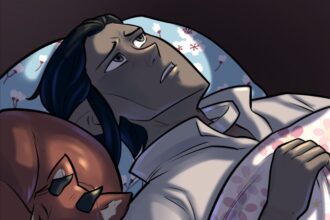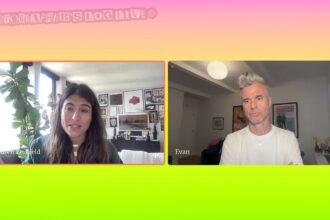



In this vHopeful Conversation, I was honored to speak with Academy Award-winning filmmaker Vanessa Roth about her moving new documentary short, The Righteous Road Trip. The film follows British Jewish humanitarian Jonny Daniels and his dog Tyson as they travel through Poland, Slovakia, and Hungary to visit some of the last surviving Righteous Among the Nations—non-Jews recognized by Yad Vashem for risking their lives to save Jews during the Holocaust. Vanessa and I discussed the remarkable moral courage of the ordinary people who made the choice to protect others amid unimaginable danger; the film’s unusually warm and life-affirming blend of road movie, holiday story, animation, testimony, and intergenerational memory; and why preserving these stories has such urgency as the remaining witnesses to that era grow fewer. We also talked about how The Righteous Road Trip invites audiences, particularly young people, to consider what it means to be an upstander today: to act with kindness, resist hatred, see one another’s humanity, and choose goodness even when it is quiet, difficult, or unseen.
Transcript lightly edited. Podcast available on Apple, Spotify or wherever you listen on this Substack or Ted’s Hope for Film
Vanessa Hope I am very excited and honored to be joined by Academy Award-winning documentary filmmaker Vanessa Roth. We often exchange emails and discover other people have mistaken us for each other, with Vanessa being our same first name. Her films include Freeheld, Daughters of Destiny, American Teacher, and Mary J. Blige’s My Life, and they have long joined cinematic storytelling with a deep commitment to social justice, education, and human connection.
Her new short documentary, The Righteous Road Trip, which I’m so excited to discuss with her today, follows humanitarian Jonny Daniels and his dog Tyson on a winter journey across Poland, Slovakia, and Hungary to meet some of the last surviving Righteous Among the Nations—non-Jews honored by Yad Vashem for risking their lives to save Jews during the Holocaust. Blending road movie, testimony, and historical memory, the film is a poignant, unexpectedly warm, and life-affirming meditation on moral courage, intergenerational remembrance, and the enduring human capacity for goodness. Vanessa, it’s so great to see you here.
Vanessa Roth Thank you. I’m so glad to see you. Yes, after many email exchanges that we don’t mean to make, but are so happy to do. And what a beautiful intro.
I love to talk about this film because —I’ve been doing docs for, like, thirty years, and the gravitas of many of them obviously live inside your bones forever. And this one, though it’s about a really difficult time—it’s about, like you just said, goodness, heartwarming lightness, and this poignancy that was just so refreshing to make.
Vanessa H. It is so refreshing to watch. It’s a beautiful story, and this person you found, Jonny Daniels, and his dog and his Christmas sweaters, and his choice to make this road trip regularly, is such an interesting tonal approach to a very heavy subject that lives in our bones. How did you figure this out?
Vanessa R. Yeah—I was so drawn to him when I heard of his story. So this guy, Jonny Daniels, for the last twelve years or so, he goes across Eastern Europe. He also has, in the past, gone to Albania—any place where there were Righteous Among the Nations, the people who saved Jewish people during the Holocaust to no gain of their own.
To be considered a Righteous Among the Nations, they had to risk their lives to save somebody. And what I had learned is that the people who are still alive today were kids and teenagers when they saved somebody. So that’s who’s still living.
And there were a little over 27,000 people who were given the title Righteous Among the Nations when they were found to have saved people. And when we filmed, there were a hundred, a little over a hundred, left living. And now there’s maybe around sixty still alive today.
And so when I knew that, and then I heard about this guy, Jonny, who’s like a—he’s a Jewish guy from London. He’s like Santa Claus, though. They call him Santa Claus. And he goes and meets these people in this van and travels around. At the time I went with him: Hungary, Slovakia, and, like you said, Poland.

And he goes in this Christmas van filled with Christmas trees and lights and gifts to give to these people because the holidays are important to them. And for him, he felt that it was really to give thanks for what they did eighty years ago.
I heard about it from one of my producers who became a producer, Stephen Smith and Justin Cohen. They had told me about it, like, a week and a half before I went. And they said, “Do you want to go follow this guy?” And just, again, in sort of the documentary spirit of, it was right between Thanksgiving and Christmas. And I’m like, “Yeah, just go join some random guy in a van for three weeks in the winter. Sure, sounds great.”
And I was so drawn to this opportunity to make a film that is about the Holocaust, but it’s about what people did with this moral courage, this choice that they had. In the midst of hatred and in the midst of evil, they chose good.

And it kind of made me think back to when I was thirteen and read The Diary of Anne Frank for the first time. I think one of the reasons I maybe got into doing documentaries even was her question in her diary, when she says, you know, “In spite of everything, I still think that people are good at heart.”
And I kind of feel like, in my whole career, it’s always been trying to prove that to myself and prove that we have more in common than we do different. And I feel like these people proved that by the acts that they did in the midst of what they were living in. I think it was some validation that I wanted to tell myself and to my kids at this time that we’re living in too. There are good people, and we don’t always know that they’re doing things because maybe they’re doing things quietly or secretly, or, they’re not making a big thing on social media about it.
And I think it was that, and Jonny is one of those people doing good. He’s not saving a life right now, but he’s telling the stories of those who did. And I just was so drawn to that balance. And then, like you said, to have a chance to do a documentary as a short that’s part road movie, part Christmas holiday movie, you know, and part something really important—it’s really special.
Vanessa H. Yes. What did it feel like to enter the homes of these amazing, good people who have also lived with their goodness for most of their lives? They were so young during the war, so many of them, and they’re so old now.
Vanessa R. Yeah. And many of them really didn’t talk about what they did. That was the big thing. Every single one of them—we went into probably thirty people’s homes—you ask, sort of, why they did what they did, and every single one of them would just say, “Because it was the right thing to do.”
And none of them really wanted—they don’t think of themselves as heroes or anything else. And I think, to me, it was like, you know, there were all kinds of people that were Righteous. There were royalty, there were people who were big in church and religion and everything else, and government leaders that did things that we didn’t know about at the time.
But the people we visited were, like, very average, everyday. A lot of them were farmers. You know, they could barely support their own family at the time, or their parents.

And so they still are, like, just very humble people that, you know, are elderly people now, living maybe on the top floor of some apartment building. And I think one of the feelings I actually had was a little bit sad because Jonny visits them and is sometimes the only person that visits them.
You know, they were given this title, Righteous Among the Nations, but they’re still just people who are living a life and growing older. Some have kids, some don’t. Some of them were alone. Some did have family around them.
But I was just thinking, it reminded me of, like, we see elderly people and you don’t realize the history they have or the stories they have to tell. And these people, of all, have this incredible story to tell. Understanding that preciousness of time when I was sitting there with them, and realizing that, you know, they’re the last to be able to tell this story of what happened.
And then I also was realizing: I have a fifteen-year-old, and I have two daughters that are in their twenties. It really hit me too that not only are these the last of the generation that lived through the Holocaust, whether they were survivors or Righteous, but, like, my son is the last generation that will be alive at the same time as the generation that went through that time.
And so that, to me, is where the bridges and the connections between generations are. I was also really clear, when I was filming and in people’s homes: how do I make a film that speaks to a fifteen-year-old, but from eighty-year-olds? You know, how do we bridge that? Because they were fifteen at the time.
Vanessa H. Absolutely, right. And I feel the documentary form and your choice to tell this story is so meaningful because you are allowing the stories to be inspiring, to inspire more goodness, to show what’s possible when you have that kind of courage and you can stand up and do the right thing against all odds.
I have a relative I got to know through documentary who sadly recently died at age one hundred. His name was Edgar Feuchtwanger. His uncle was Lion Feuchtwanger, who was one of the first Jewish German writers in Nazi Germany to speak up against Hitler and had to flee.
And Edgar had to flee on the Kindertransport, and he ended up in London and grew up in England. But he basically wrote his memoir at the age of ninety-two, and it was called I Was Hitler’s Neighbour (note: Edgar was ninety-three when the U.S. English-language edition of Hitler, My Neighbor: Memories of a Jewish Childhood, 1929–1939 was published in 2017). It came out first in French, and there’s a short documentary about it. But I got to interview Edgar and talk to him, and that was so meaningful, to bridge that gap. So I really understand what you’re talking about. It’s so important to preserve.
Vanessa R. Yeah. I think sort of the filmmaking part of it is why I also decided to put some animation and then kids’ voices in the film. We followed Jonny on this road trip for three weeks. And then what I wanted—I have these kids talk, because everyone also is speaking Hungarian and Polish and Czech in the film.
But then I have these kids that I actually found from the towns that those people were from when they saved the people they saved. So the voices of the kids in the film are kids that actually live where these people lived. So if it had been them, is what my sort of feeling was, that we sort of feel that.
It’s not something that we talk about in the film, that the kids are from that place, but just the voices of them—it was something that I knew was important to me.

But yeah, being with them, I could feel time. You know, just how important it was. Time is of the essence to get these stories. And again, to me as a filmmaker, it was really great to be able to get them through Jonny visiting them instead of just me going and doing an interview.
Vanessa H. And the Righteous Among the Nations kind of resisted an ideology, right? They’re just basically declaring all lives are as valuable as other lives. And so do you feel like, in this particular moment of rising antisemitism and social division and all the dehumanizing rhetoric coming from our government, that this can maybe help people feel connected and inspired to do good?
Vanessa R. Yeah, that’s really my hope, and what the theme of the film is to me. You know, there is the historical fact that more than eighty years ago they were faced with this unimaginable moral choice. They could look away, as so many did. They could join that force that was taking over. Or they could act. And they chose to act.
And they chose to act in a way, again, that they were not allowed to tell anyone about, ever. They would be killed if it ever was known. So what, to me, makes their story so important today is that it’s not just a story of the Holocaust, though it also is, and I never want to take that away because we need to preserve that history.
But also, it’s about individual responsibility, courage, and I think what human beings are capable of—and really the capacity for, I always say, the capacity for goodness. They exhibited much more than just goodness, but to me, it brings up bigger things of even just kindness to another human being and service. And what does that look like? What does resistance look like? What does it look like to stand up for another person?
And it doesn’t have to always be loud, and it doesn’t have to always be one certain way. But that’s the thing I always try to talk to my own kids about too, is that there are so many ways that we can be good, kind, of service, and of resistance to things that aren’t right. And you have to find your own way.
And I think that these people are a really good example of, again, the extreme of that. And obviously, hopefully you never have to face that, but it’s a good question of what would you do for another person.
Vanessa H. And it is important, I think, that you’ve managed to figure out the animations as a way to illustrate so many of those stories, which are so horrifying and so hard to imagine. I mean, having to keep entire families hidden under floorboards and take care of them with food and hiding people is not easy.
Vanessa R. Yeah, and often it was the kids and the teenagers that would have those jobs of kind of being on the lookout or going to get food because they wouldn’t maybe be expected to. So they would be working for the family in that way.
Or one of the women in the film talks about these daily things that I just hadn’t really thought of, like, how do you deal with the garbage, you know? Or even waste. Like, just how do you do that?
And so one of the women had her best friend, who was Jewish, and her sister’s best friend—siblings—living in their apartment. And, yeah, they had to figure out how to get rid of trash during the day without anyone seeing. Just those daily things of having a person secretly living in your house for years, and as a kid not being able to say anything—I just, yeah, it’s incredible.
And some of the kids, you know, I think it was their parents who had made the choice and they had to go with it. But then there were some in the film that were older and teenagers, and they were people who they were close to.
Vanessa H. Timothy Snyder has a new class he’s making available to the public, and one of his last classes was about Hitler and Stalin and how mass atrocities are possible.
So for people to just remember what can happen with that kind of extreme power and dictatorship, and how horrific it is, and how it can happen again if we don’t pay attention to our history and know what goodness is possible and believe that it’s out there and know that we can be inspired. I imagine you have a big educational-impact outreach plan with the movie.
Vanessa R. Yeah, that’s what we’re really hoping: to reach different ages, different communities. It’s really—to me, I find it to be really a Christmas story, a holiday story. It’s about giving, you know, and there’s a joy to the film too.
And Jonny wears a different sweater every day, a different ugly Christmas sweater, like, every day.
Vanessa H. Yeah. His sweaters—Jonny’s sweaters.
Vanessa R. And the sweet thing too is that when we would go to their houses, they would always greet us with these huge plates of donuts and cakes and cookies and teas and coffee. And it was this community feeling of, again, cross-religion, cross-race, cross-generations, of just enjoying each other. And I think that that’s also what it’s about.
And so for education, we’ve been doing some kind of trial things while I’m developing viewers’ guides and an education program that can go to museums and schools and communities.
We were at one high school that did a really great thing with it. They did sort of a little history of Holocaust education to give the kids, high schoolers, some context around the Holocaust and who the Righteous were, and deeper dives into some of the stories that are in the film.
And then they saw the film, and after the film we talked about some of the themes. And one of the questions we all talked about was: When was the last time you did something good for someone else? When was the last time someone did something good for you? You know, sort of, how did that feel?
And then: What if the best thing you did for someone else, you were never allowed to put it on social media or tell anybody about it? Would you still do it? That was an interesting conversation.
And then the school—the kids actually decided to do this—the day after the film, they didn’t go to classes, and the whole high school did a day of action, they called it. And the kids all volunteered somewhere in the community in Brooklyn.
And I just felt like that was a great model for schools being able to take the film. Part of it can be about Holocaust education, which is so important, and part of it can really be about what is our own sort of moral responsibility to each other.
How do you act as an upstander for another person? How do you push against hatred? And how do you just make sure you treat and see another person—again, whether it’s another culture, religion, age, gender, any of the things—as human? And having those conversations, and how that impacts a person today.
And then, like you said, we live in a time when it’s really easy to feel really dark and scared, and everything can be really difficult. And I think, again, the reminders to me, these reminders of these people, are that in spite of all of that, you can still have courage and still make a difference in another person’s life.
Vanessa H. For Jonny to have taken it on too, he’s such a fascinating character. I’ve never seen such a Santa Claus. Like, that is literally the definition, I think, of what it’s supposed to be, but we don’t do that. The generosity, the giving, the preparation of the gifts. I mean, you became Santa Claus’s helper as a filmmaker. You’re on that road with him, and you get stuck in the snow —
Vanessa R. An elf, yeah.
Yeah, no, it was a real journey. We got stuck in snow. He had to actually bring a sled up to one of the people’s houses that was way up in the mountain, because he packs these—and he mostly does it himself. He has some volunteers that help pack, but he goes on the drive by himself most years.

And this was the first time he let a camera crew come. He had, I guess, been approached before, but I think our dynamic was just really good because I think the kind of work I’ve also done—I am used to blending in and being sensitive to the situation and making sure I’m not, you know, asking people to come in the room a second time. You’re not going to ask them to redo something.
So we had a good dynamic. But it really was actually a funny—it was fun, it was a real adventure, because it really was these three weeks in the middle of the winter, in lots of different circumstances. But he just keeps going and puts another sweater on and brings a Christmas tree and gifts into these people’s houses.
Vanessa H. Exactly. Should we tell people anything more about the Righteous Among the Nations—how it was formed, how the history goes with that?
Vanessa R. Yeah. Thank you. Yad Vashem in Israel is the place that gave them this title, Righteous Among the Nations, for saving Jewish people’s lives. But I think, in order to become a Righteous, it’s a really difficult process.
Like, a survivor has to come forward and say, “This person saved my life.” You know, they didn’t get anything in return—completely selfless kind of thing. And you have to have a lot of proof.
So to have the fact that more than 27,000 people—I know some people will say that’s not that many, but I also like to think there were that many that we don’t know about. And I’m sure there are so many more we don’t know about that did all kinds of things to be considered that.
Vanessa H. Your film might bring some people out —
Vanessa R. Yeah. Well, we’ve also heard of people who, once their parent passed away, found out that they had saved someone. They never told the story.
We had somebody—he’s not in the film, but he may come and speak at some events. But his father—he’s in Spain—and his father was actually known as the Angel of Budapest. He worked for Spain; he was a diplomat for Spain, but he was in Budapest and he processed thousands of fake visas for people.
And he never told his kids, never told anyone, his whole life. They only found out after he passed away.
The other piece that the film and also Jonny’s work has done that’s been just so moving to me is because of now internet and connectivity and everything, he had been visiting this one woman, Wanda, who’s at the end of our film. She’s one hundred when she’s in the film.
And she was a teenager and she saved a young girl and took care of her for three years. And she was put in touch with that survivor. They’d lost touch years and years and years ago, but it was actually because of Jonny’s work that she was telling the story and he went online and said, “Does anyone know where Maria is?”
And the family of that survivor came forward and they connected. And so in the film, you actually do see the connection between the two families.
And another family, when we were looking for archive of one of the stories—there’s a story of some forty people being hidden under somebody’s barn. And the teenager tells the story about having to watch over these men who were in the barn.
And we were trying to find some archive of the town, and my archival researcher found actually the daughter of one of those survivors that had been in the barn and had written a diary in the barn. And they live in New Jersey.
And so they’re not in the film, but they’re just, again, like, these connections that have been so special. And so we’ve had some of these preview screenings—the film hasn’t come out yet—but at some of the preview screenings, we’ve had some of the families of both the Righteous and the survivors come.
And it’s just really moving, also just thinking about that generational impact as well. It’s just been really special to watch.
Vanessa H. And we want everyone to watch this movie, so we should share: it’s going to be having a big screening on September sixteenth at the Museum of Tolerance in Los Angeles, and then it comes out for a week run at the Laemmle Monica, and it’s going to have screenings in New York and London and beyond, and we’ll share all that in the post.
Vanessa R. Okay, yeah. The theatrical run in Santa Monica at the Monica Film Center, September seventeenth through twenty-third. And then we’re doing big premieres in New York, London. We’re actually going to go to Cape Town. We’re going all over—anywhere there were Righteous people, actually, we’re going to try to go. So we’re excited.
Vanessa H. Wow. I love it. So beautiful. Thank you so much, Vanessa. Thank you for sharing.
Vanessa R. Thank you, Vanessa.
For THE RIGHTEOUS ROAD TRIP TRAILER visit their website:
https://therighteousroadtripfilm.com/
Producer/Writer/Director Vanessa Roth
Vanessa Roth is an Academy Award® and Emmy®-winning filmmaker with more than 25 years of experience writing, directing, and producing documentary films and series focused on social justice, marginalized voices, and overlooked histories. Her work has earned more than 60 major honors, including an Oscar®, the Television Academy Emmy Award for Social Impact, the Alfred I. duPont– Columbia Award, and the Leonard Maltin Humanitarian Award. Her films and series have appeared internationally in festivals & theaters, on Netflix, Amazon, Disney, National Geographic, Hulu, HBO, PBS and as part of major storytelling initiatives around the world.
UPCOMING SCREENINGS
September 15 @ 7pm
La Paloma Theater
471 S Coast Hwy 101, Encinitas, CA 92024
A special fundraising screening for our educational program.
RSVP/Tickets
September 16 @ 7pm
Museum of Tolerance
9786 W. Pico Blvd., Los Angeles, CA 90035
The Los Angeles Museum of Tolerance & The Los Angeles Jewish International Film Festival Present an Exclusive Preview Outreach Screening of The Righteous Road Trip followed by a Q&A with Jonny Daniels and Vanessa Roth – Moderated by Stephen D. Smith. Tickets are free but you must RSVP.
RSVP FOR SEATS HERE
September 17 @ 7pm
Laemmle Monica Film Center
1332 2nd St Santa Monica, CA
This is Theatrical Premiere night for the film. Limited seats available. Screening followed by a Q&A with Jonny Daniels and Vanessa Roth. Tickets are free but you must RSVP.
RSVP FOR SEATS HERE.
September 18-23 @ 3:15pm
Laemmle Monica Film Center
1332 2nd St Santa Monica, CA
Tickets for our theatrical run can be purchased here and at the door.
TICKETS HERE.
September 19 @ 12:15pm
Breck Film Fest
Breckenridge, Colorado
TICKETS HERE.
September 24 @ 4:15pm
Richmond International Film Festival
Richmond, Virginia
TICKETS HERE.
Coming Soon
October 13
New York City Premiere Event
October 25
London Premiere Event