

What a distance we have come together, Contrarians. We launched this publication and this community into the bleak and cold days of January 2025. Now a year and a half into Donald Trump’s second occupation of the White House, the political climate is starting to enlighten and thaw. Yes, the path is still dark and slippery, with treacherous stretches ahead. But we Contrarians are helping change the weather. This week, that ranged from winning one First Amendment case for Karen Attiah to bringing a new one for fired Stars and Stripes journalists to forcing Trump to back off his threats over the Kennedy Center for the moment.
Those cases and our over 300 other legal matters at Democracy Defenders Fund and Action are helping light the way, thanks to you. That’s because your paid subscriptions help fund my and my pro-democracy colleagues’ fights in the courts of law. Those paid subscriptions also support our award-winning Contrarian journalism in the court of public opinion. If you are not a paid subscriber, we welcome you to become one at only $7 a month and power our fight in both those courts.
As I told Peter Baker for his top-of-the fold New York Times story pointing to our work, defiance is rising. There has been a decided thaw in the climate of fear of Trump over the past year and a half. To be sure, a minority of dissenters stood strong from the get go: independent media like The Contrarian, civil society groups such as Democracy Defenders and our numerous allies, the labor movement and other clients we have represented, state attorneys general who we have litigated with, the lower federal courts who answered the call, Never Trump conservative leaders, and others.
But in the first year of Trump’s return, that felt like the exception, not the rule. No longer. As we and our allies have won more and more and Trump has lost again and again, things have changed. Recent weeks have been an inflection point.
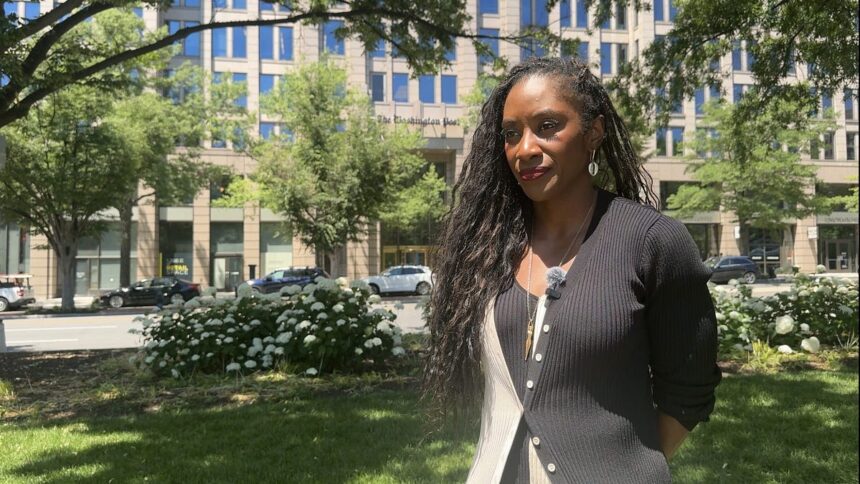
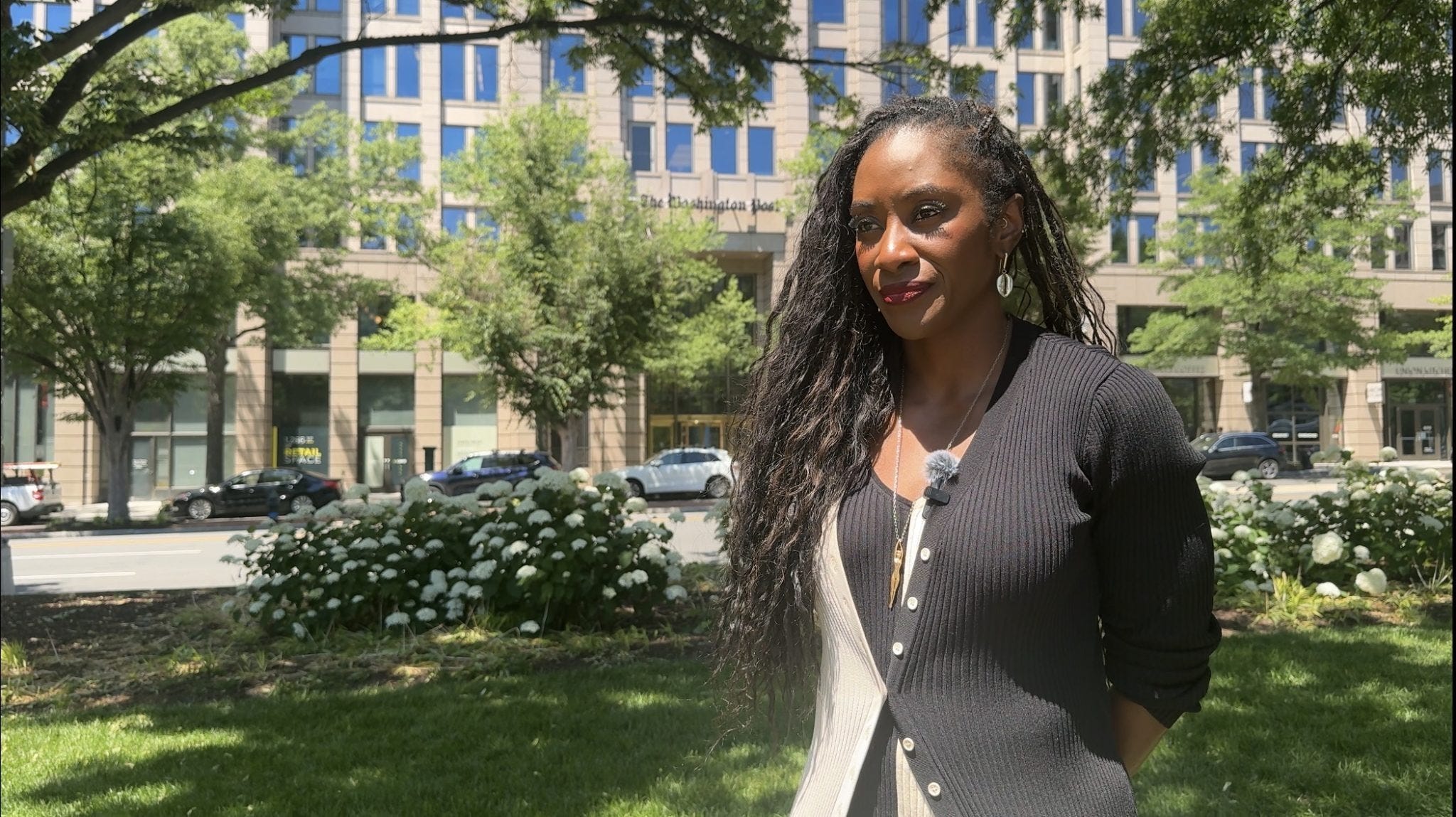
Just look at our docket this week alone. It kicked off on Monday with breaking news about one of the landmark First Amendment wins of the Trump era. Representing Attiah, a star journalist, we challenged the Washington Post’s attempt to characterize her commentary as a journalist and opinion editor as “gross misconduct.” An independent arbitrator ruled that Attiah was wrongly terminated and ordered that she be reinstated at the Post with full back pay.
You can’t have an authoritarian like Trump without enablers like Jeff Bezos’ Washington Post and the shameful act of anticipatory obedience represented by firing her in cowardice because she dared tackle the complexity surrounding the heinous killing of Charlie Kirk, daring to talk about how wrong that was but also who he was and the gun violence crisis in our country and who is responsible for it. To Baker’s point, Attiah was defiant, and so were we in representing her with her union, the Washington Post Newspaper Guild — and the arbitrator certainly called it as she saw it.
Building on that First Amendment win, this week we filed a lawsuit on behalf of Stars and Stripes journalists to stop the Department of Defense from unlawfully firing them. These journalists were simply defending the independence of this storied military newspaper and insisting that it remain free from political influence, particularly in the wake of Pentagon pressure to punish those responsible for reporting on conditions aboard the USS Abraham Lincoln. Hegseth is among Trump’s worst enablers in the Cabinet (which is really saying something), and our journalist clients are standing up to that. We are proud to represent them alongside our incredible partners at Lawyers for Good Government, the Government Accountability Project, and Yale Law School’s Media Freedom and Information Access Clinic.
Speaking of defiance in the face of Trump’s enablers, this was another big week in your and our fight to block the Paramount-Warner Bros. merger. When we started our incredible, over-5,000-strong Block the Merger coalition, the mega mashup was viewed as a done deal even though it could cost over 15,000 jobs and threatens the First Amendment, media pluralism, and democracy itself. Then coalition helped build the momentum for state attorney generals to sue. And now we are supporting them in holding firm in enforcing antitrust law, going to trial, and winning structural remedies.
We were grateful to the leader of the AG’s group, Rob Bonta of California, for standing up to what he described as Paramount’s “leaking and lying” about settlement discussions that were supposed to start this past Monday, shutting them down because of those shenanigans, and hanging tough. To back him up, our Block the Merger coalition launched a major new “No Concessions“ campaign to thank and support him and the other 11 AGs who are suing. No unenforceable settlements will do.

Another example of unequivocally rejecting illegality is our work in the Kennedy Center case on behalf of our heroic client, Rep. Joyce Beatty (D-OH), with our Democracy Defenders and Washington Litigation Group colleagues. As we explained last week, the Kennedy Center board jammed through a proposal to put Trump’s name back on the facade, adding “Restored and Renovated by Donald J. Trump” to the name of the building and renaming the grounds the Donald J. Trump Plaza — in defiance of the court’s order — and said it was going to start implementing this plan on September 8.
Then this week, Trump threatened to literally demolish the Kennedy Center if he can’t get his way. It’s more like a mob threat than a legitimate legal argument — and though it’s supremely childish, it’s also just the latest thuggish maneuver we’ve seen from Trump’s government.
We immediately raced to court, requesting an emergency hearing and an injunction to stop Trump before he could do more damage. That emergency hearing on Thursday was a doozy. Before the hearing, word traveled through the E. Barrett Prettyman United States Courthouse that Commerce Secretary Howard Lutnick — whose wife is on the board of the Kennedy Center — would attend the hearing and talk to the press. Though one would think the Commerce Secretary would be busy trying to salvage his collapsing trade talks with Canada, he apparently instead was more focused on boosting the president’s ego. And sure enough, Lutnick sat in the first row of the gallery behind the government.
But the real action began moments later, when the hearing began. The judge immediately indicated the first of many issues he had with the government: Why is the administration insisting on taking action on September 8? What’s the rush? The government had no answer. After our further prodding, the government finally conceded and filed notice right after the hearing ended that it would push back implementing its plan for at least another month — a crucial win to stop the government from wrecking the Kennedy Center before the court has a chance to rule.
The pummeling didn’t stop there. The judge continued hammering away, stopping the government lawyers in their tracks as they tried to pontificate about the dire straits of the Kennedy Center and the wonders of the president’s special powers. With a look of polite annoyance, Judge Christopher Cooper pointed out that this argument, which also took up pages of the government’s brief, had nothing to do with the question at hand: what Congress intended in the statutes governing the Kennedy Center.
When the government finally turned to the substance, Cooper appeared to find those arguments equally wanting. The Justice Department argued that it could name the plaza after Trump because that wasn’t technically part of the Kennedy Center (literally the building itself), so it didn’t violate the law expressly stating that the center is a memorial for President John F. Kennedy only. But Cooper asked if, under that theory, would it be legal for every sliver of the Kennedy Center complex to be named after other presidents or donors — a Barack Obama parking garage, a George W. Bush campus. As Cooper said, “The whole thing would be for sale, basically.” The government didn’t disagree.
That colloquy gave away the whole game. If a memorial center designed to commemorate one president is surrounded, on its own complex, by scores of parcels named after other people — including donors — that would necessarily dilute the tribute to Kennedy, contrary to Congress’s statutory mandate.
And on and on it went. One of Cooper’s sharp questions even drew laughs from the gallery, when he pointed out that if there is a fund named the “Trump Kennedy Center Fund” — another bone of contention, which we are challenging — that surely implies that there is something called the “Trump Kennedy Center,” which would seemingly be a direct violation of his earlier ruling. The government faltered yet again in providing a reasonable answer.
With the government’s concession that it will leave well enough alone in September, the judge will have time to digest our arguments and emerge with a carefully reasoned decision. We are confident that we will ultimately prevail, just as we did last time.
These victories, Contrarians, are yours — powered by your paid subscriptions. If you’re not a paid subscriber, we hope you will consider becoming one to support these legal matters and cases and the excellent journalism at the Contrarian, including the best from this week, as shown below.
March on Washington 2026
We Marched for Freedom in 1963. In 2026, the Job Still Isn’t Finished.
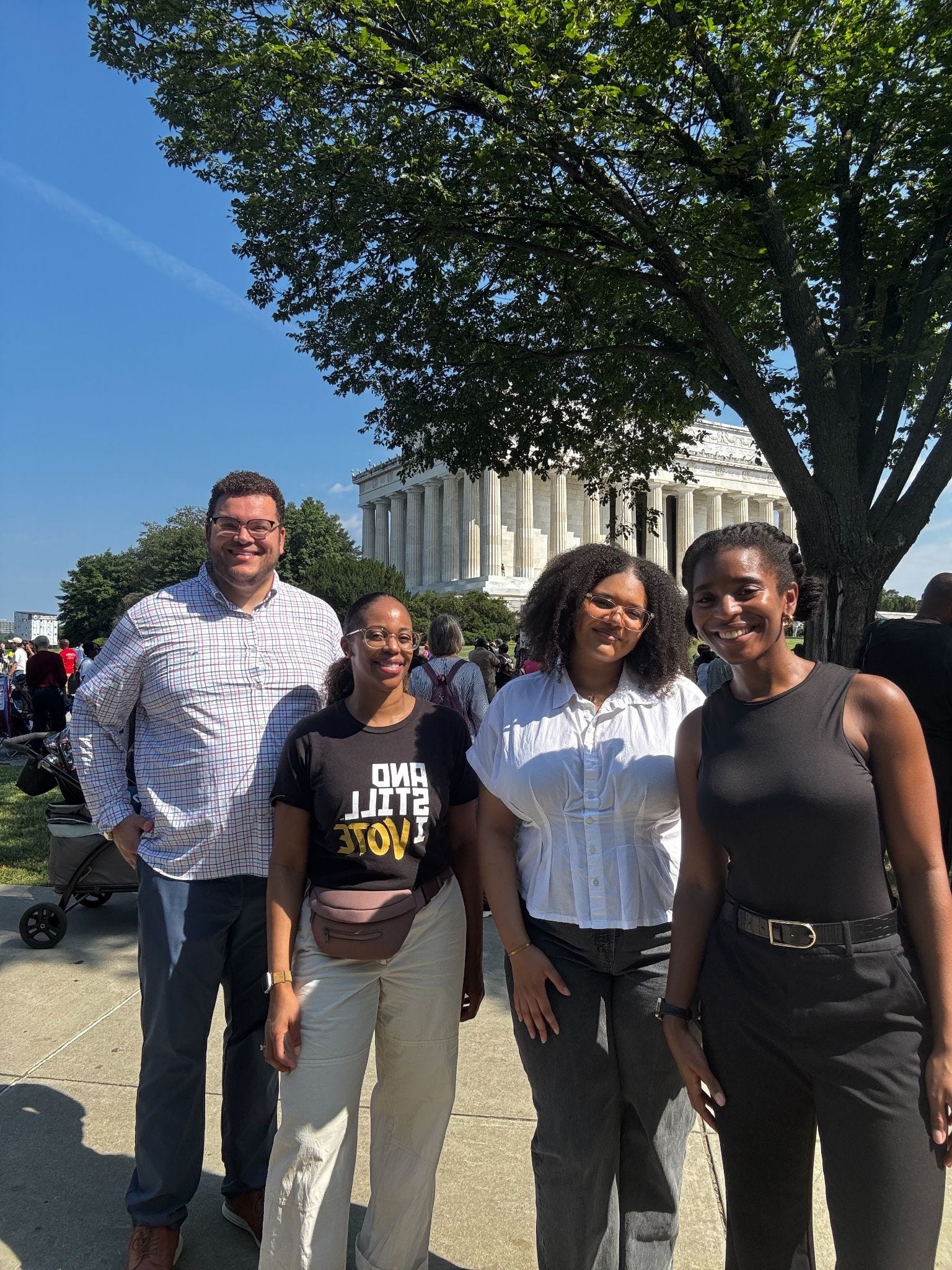
To mark Friday’s March on Washington, Tianna Mays and Diamond Brown wrote on how the inequities driving the 1963 March on Washington are all too present today. “Sixty-three years later, we know that progress can be reversed, rights can be stripped away, and democracy can be weakened.”
Defend the Vote. Sustain the People.
Michael Franklin considered what events like the March on Washington — past and present — say about what works in the fight for democracy and civil rights, and what (or who) is sometimes left out of the conversation. “Marches like this can create a standard we should bring to our organizing.”
The Tea ft. LaTosha Brown, Co-Founder of Black Voters Matter Fund
April Ryan spoke with Latosha Brown about what the 63rd March on Washington means, mobilizing Black voters going forward, and new reports on ICE facilities. “We have to get beyond this idea of believing that our communities are separate. Understand: we have a common enemy and we’re going to have to use our power. We have people power.”
The Contrarian Covers the Democracy Movement
This week, we have coverage of Friday’s March as well as protests in Texas, Oregon, Tennessee, and more. See marchonwashington2026.com for more on Friday’s action and what we can do next to protect voting rights, civil rights, and fight for economic justice. And see this week’s
Calls to Action for more ways to keep democracy from being a spectator sport.
Elections & Voting
Democrats Bounce Back in the Heartland
Jen Rubin gave us a report on how the Trump show is playing for MAGA candidates nationwide. “Trump can insult voters by claiming affordability is a hoax, but rural voters … know that diesel and fertilizer prices have soared, rural hospitals are closing, and tariffs have decimated farm sales.”
Annie Andrews Wants to Flip South Carolina
On the podcast this week, Tim Dickinson spoke with Annie Andrews, the Democratic nominee for Senate in South Carolina, about what’s driving her run to give voters a real choice against self-proclaimed policy non-expert Darline Graham. “This election, I believe, is going to come down to two issues: affordability and healthcare.”
Atlanta Was the Only Choice for the 2028 DNC. As Usual, Democrats Blew It
Carron J. Phillips wrote on the DNC’s missed opportunity to take the 2028 convention south as evidence of the party’s “organizational incompetence” — and worse. “The Democratic Party doesn’t deserve Abrams or Black voters in the South. The continued disregard for the backbone of its voting base shows how racism has hindered Democrats’ ceiling.”
Fear Tactics, Real Violence
The Federal Agent in the Pew Is the Point
Omar H. Noureldin wrote on the systematic surveillance-as-intimidation of Minnesotan immigration activists — which included, according to newly-unveiled court filings, undercover officers posing as protesters and monitoring meetings at churches, parks, libraries, and schools. “The agent in the pew does not have to arrest anyone if everyone becomes afraid to sit down.”
Strange Fruit, Still. Still.
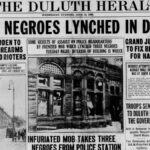
Shalise Manza Young gave us a searing investigation of the persistence and resurgence of a national horror. “Reportedly, at least seven Black people have been discovered hanged this calendar year; in almost all of them, local law enforcement quickly ruled them suicides before an autopsy had been performed and without any real investigation into the circumstances.”
Make America Unhealthy
Heidi Overton and the Overton Window
Jennifer Weiss-Wolf wrote on Trump’s newly-announced plan to nominate Heidi Overton as head of the Food and Drug Administration. She’s an anti-abortion, anti-gender affirming care, anti-vax anti-expert who “indicates the administration’s further normalization of gutting healthcare and drug safety.”
We’re Preparing to Send Measles Back to Kindergarten
Jeff Nesbit wrote on a back-to-school season in which classrooms nationwide will be less than immune to once-rare diseases. “Across the country, roughly 280,000 children are entering school without documentation of completing their two-dose measles, mumps, and rubella (MMR) series.”
Spoiled Systems
Child Labor Violations Are On The Rise. Some States Are Making It Worse.
Veronica Goodman wrote on the alarming, yet unsurprising, lax enforcement of child labor laws under the Trump administration — and how some states are responding better than others. “Between 2016 and 2025, the number of child labor violations spiked by 54 percent.”
Latinos Back Efforts to Block the Paramount-Warner Merger
Roman Palomares and Juan Proaño of LULAC wrote on how Latino and Hispanic communities — nearly 49 percent of Los Angeles — will disproportionately bear the consequences
of the proposed Paramount-Warner merger. “Every studio absorbed by a rival is one fewer buyer for a script, one fewer employer for a crew, and one fewer distributor willing to bet on a story its franchise slate does not need.”
The Trump Administration’s March to the Spoils System
Max Stier wrote on the White House’s efforts to dismantle the merit-based, nonpartisan system that has long managed the nation’s 2 million civil servants — subjecting us all to “diminished public services, weaker oversight, the likelihood of increased corruption, and a less effective and responsive government.”
Cartoons, Culture, & Fun Stuff
This week, our cartoonists took on what no one asked for (Ballroom Dancing, Michael de Adder; What Are You Getting in Trump’s America?, Nick Anderson), what anyone could have predicted (Economic D-Day, Nick Anderson; Aim, Misfire, Ready, Michael de Adder; Tom the Dancing Bug, Ruben Bolling), and what everyone mourned (A Life of Many Colors, Michael de Adder; ‘Light of a Clear Blue Morning’, RJ Matson).
Dolly Parton’s Greatest Legacy Was Her Giving
Meredith Blake remembered the country music icon through her lifelong dedication to using her wealth and status to make the world a better place, including donating over 300 million books to children, funding life-saving vaccines, uplifting LGBT activism, and much more. See also Meredith’s piece from October on the one American hero we can all agree on: We Will Always Love You, Dolly Parton.