

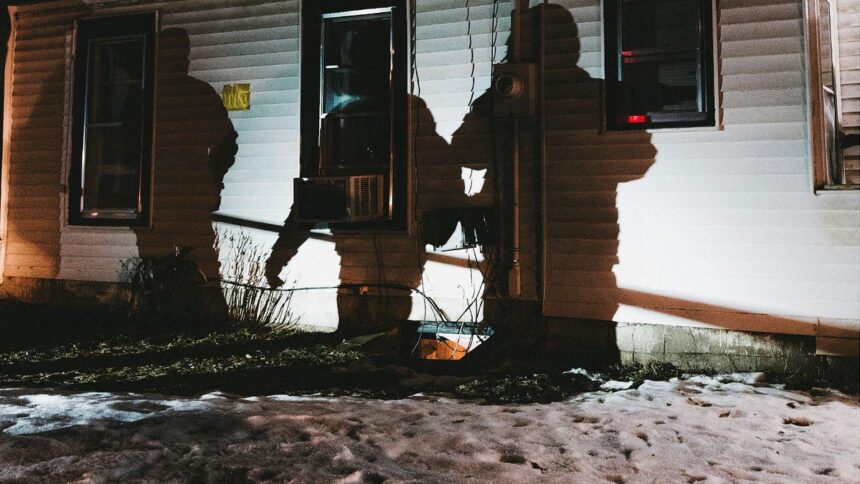
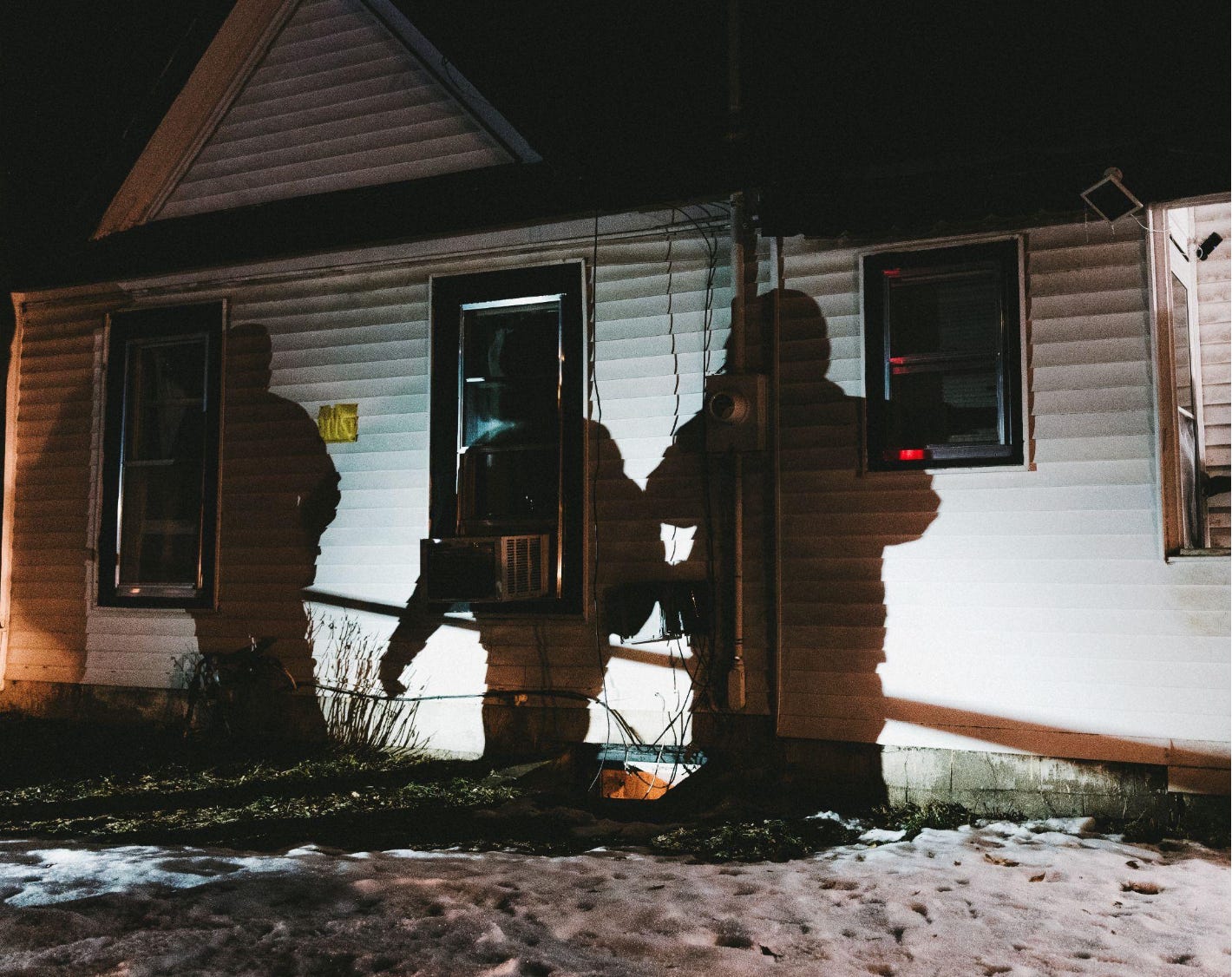
In this vHopeful Conversation, I speak with Academy Award-winning filmmaker and journalist Laura Poitras and filmmaker and investigative journalist Rachel Lauren Mueller about their extraordinary short documentary, They’re Here, which I first saw at its world premiere in Venice. We explore how they drew on the language of horror and dystopian cinema to convey the terror of immigration raids in Minneapolis, while revealing the care, courage, and ingenuity of neighbors determined to protect one another. From the claustrophobic perspective of an immigrant traveling to work in a car trunk to the community’s network of observers and mutual aid, we discuss the choices that make the film so intimate and unsettling. At the heart of our conversation is a question that reaches far beyond filmmaking: how do we resist the normalization of violence, and what can we learn from people turning solidarity into action?
Transcript lightly edited. Podcast available on Apple, Spotify or wherever you listen on this Substack or Ted’s Hope for Film
Vanessa Hope: I’m extremely excited to be joined by Academy Award–winning filmmaker Laura Poitras and Rachel Lauren Mueller, another incredible filmmaker. They worked together on this extraordinary new short documentary, They’re Here, which I was able to see at its world premiere in Venice.
It is set during ICE and CBP operations in Minneapolis. The film follows an anonymous immigrant worker and the neighbors who built an urgent, decentralized resistance network to track agents, warn families, and document what was happening around them. Laura is also the Pulitzer and Golden Lion–winning filmmaker behind CITIZENFOUR and All the Beauty and the Bloodshed, must-see films.
Rachel is a Minneapolis-based documentary filmmaker and investigative journalist whose local knowledge and on-the-ground cinematography are central to the film’s extraordinary immediacy. Laura and Rachel, thank you so much for joining.
Laura Poitras: It’s a pleasure.
Rachel Lauren Mueller: Thanks for having us.
Vanessa: So I was lucky to see the film in Venice, to be there in the middle of the standing ovation, and on the big screen, with the sound as it is, the visuals. You have really found an incredible way into one of the most important stories of our time. How did you find this language? It almost felt like a horror film, with the dead of winter, the cars moving through under surveillance, the feeling of masked figures, of a city under watch, of people trying to look out for each other. Where did it start?
Rachel: So the original origin point is a colleague and dear friend of mine and of Laura’s, Adam Mellion, who’s a co-producer on our film and a researcher. He’s been a researcher on many of Laura’s films. And he connected the two of us pretty immediately, in early January. And part of what inspired us initially was a 10-second Instagram video. It’s a tracking shot through the snowy streets. You just see trees, there’s no people, it’s very beautiful, and you hear the audio of “Stay inside, lock your doors, they’re here.”
And there was this real dissonance between what you’re hearing versus what you’re seeing. And that was a starting point for the cinematic inspiration for the film.
Laura: Yeah, we were really inspired by this sort of horror genre, as you mentioned, and also dystopian cinema. So films like Children of Men, we talked about often; films like Nickel Boys, which is a POV, putting the audience in a sort of immersive situation. So this kind of genre, and we were interested in it because we’re filmmakers, but it also got us closer to the reality that was happening.
And so we really wanted the audience and the viewer not to be detached, but to be sort of immersed in the situation, and then also to make it cinematic in a way that would denormalize the violence that we’ve all been seeing, right? I think Rachel and I feel a sense of despair about the mainstream coverage and the normalization of violence that is happening throughout the country, not just with ICE. And how can cinema uniquely contribute to documenting a historical moment in real time, as it’s unfolding? You know, so you have that sense of drama. But how can it also understand it in its brutality, right? The terror and the sense of menace.
And as Rachel’s describing this Instagram post, it’s like with horror, often the danger is what’s unseen, right? It’s the menace lurking off camera. And we wanted to capture that, which we did through the use of — I mean, Rachel did cinematography, she shot half the film — and we’re also collaborating with people who were documenting on the ground, so the dash cam footage and footage of other people who were on the streets documenting what ICE was doing, with a particular eye towards what would create that sense of menace, reign of terror, suspense that we wanted to build in the film.
Vanessa: And when you say denormalize violence, you’re talking about how outrageous it is that violence is being used by the state against citizens in this country, who have to band together to fight for the people who they don’t want disappeared and removed?
Laura: We’re interested, yeah, in the state violence and denormalizing that, saying that we should all be outraged and do something, anything that we have the power to do. But also the way in which images themselves, and how the media and news normalize the constant replay of images of violence, that then you stop feeling. And so how can we get back that sense of emotional consequences to the brutality that’s unfolding? So it’s both what the state is doing, but also how images are often used, particularly, I would say, in a news context.
Rachel: One thing to add to that is, I think part of it’s not just the state violence against people who are resisting the abduction of their neighbors. It’s the abduction of the neighbors that is the important thing to highlight too. I think the fact that they were taking people from gas stations, from bus stops, from outside of churches, from schools — that is also violence that has become very normalized in the media. And so it’s not just about the community members who are resisting. It’s about the immigrants who are being taken off of the streets without any recourse.
Vanessa: And there’s something very smart in the denormalizing violence idea that allows people to feel they can resist violence, period. Because the more scary the violence becomes, the harder it is to feel like we can resist it. And I think everyone is looking to Minneapolis and looking to this story to find hope and to feel like this can be replicated in other communities across the country. So I feel like you show this community so well from the inside, that they are not violent at all. Right.
Rachel: Yeah, I think part of what made this resistance effort really remarkable — you know, people would ask, like, how is it that these community members weren’t violent towards ICE? And the feeling was really, that’s not actually the point. The point is to keep our neighbors safe. The point is to keep people from being stolen off of the streets. And so it’s not about saying “Fuck ICE,” it’s about saying “Don’t take these people away from us.”
Which is why the resistance was really about this counter-surveillance that we see, and the ways of mutual aid, of taking care of our neighbors, because it was very much about: how do we keep each other safe?
Vanessa: Yeah. And how did you figure out the way to tell the story so effectively, with the footage that you were able to shoot, but also the footage that you collected?
Laura: Rachel lives in the neighborhood, like, blocks away from where Renee Good was murdered in cold blood, very close to where Alex Pretti was killed. So she was able to build relationships and go out and document, but it also was her — you know, this was her neighborhood.
Rachel: Right. And I think that the experience of being a neighbor in this moment was a part of what allowed — so, the film, you know, when we started working on the film together, we didn’t know exactly the shape that it would take. But a lot of the questions we were asking were: How do we get behind the scenes? What is the way that we can get to where the news cameras aren’t? Because the news cameras are often out on the street. And so I was embedded with some different neighborhood groups, really, you know, finding different immigrants, immigrant families, to film with.
And of course, as with any documentary, we recorded so much more footage than what ends up in the film.
Vanessa: How did you come up with the idea — maybe that was the starting point you were describing — with the anonymous immigrant in the car? And you are there with them. You put us there. How did that idea come about?
Rachel: So we don’t want to talk too much about Edén Villa — that’s his pseudonym. But, you know, when I heard his story, and Laura and I were talking about it, we really felt like what I had learned about him, traveling to work in the trunk of a car, really embodied so much of what we were trying to do with the film. And so we were able to interview him on multiple occasions, really extensively, to understand what that experience was like. But of course the actual footage itself, it’s me in the trunk that was filming.
Laura: Yeah, and we did it from a POV perspective. In the cutting — we edited with a dear, close friend of mine, Adriana Pacheco — I think the first scene where I really felt like we found the tone was when Rachel sent me this dash cam footage where we’re moving through the snow-covered streets. It’s all very beautiful, and there’s this mysterious sort of people on phones saying, “I’m seeing ICE here, I’m seeing them, you know, I’m following them.” And then this Liz Lemon, which is obviously another pseudonym, confronts ICE in a very, you know, powerful way.
And I was like, this is the beginning of the film. It had all these qualities we were interested in as cinema. It’s a bit of a cat and mouse. It’s doing a lot of exposition, but it’s really action. You know, I mean, cinema is drama, and most of the film is unfolding in real time. And cutting that with Alessandro Cortini, who’s this amazing electronic composer, and working with that, and creating a sort of vibe around this unseen menace, I think, locked us in.
And then, obviously, with the main protagonist, Edén, it’s also very much putting the audience in a very claustrophobic situation, inside the trunk of a car. And what does that do? And what does that say about what ICE is doing? And, you know, he talks about the terror that he experienced. I mean, he knew that his neighbors had been executed, murdered — you know, Renee Good, Alex Pretti — and yet he was still, you know, going to work, and had to go to work, you know. So that became obviously the central focus.
And then we wanted to represent this kind of chorus of anonymous people who were all, you know, volunteering to track ICE. And we were looking for particular types of shots. Like, there’s this amazing shot that was filmed by Sam and Ben Luhmann, two teenagers from Chicago, of a young man on a bicycle, carrying a bicycle, with no hat in, you know, subzero temperatures, following this, you know, this trail of ICE SUVs down the street and just staring them down. And it goes on and on and on. He will not back down. And there’s something that sort of symbolizes so much of the film in that encounter, right? This young person in the snow, and then you see all the neighbors coming out.
And so we were looking for footage that we could translate, that was very cinematic, and that also communicated this idea that this was an invasion, this was an occupation. This was not, you know, a normal situation. This was, you know, an occupying force that was overtaking the city.
Vanessa: Yeah. It goes to They’re Here, the title of the film, which I think, Rachel, you mentioned where that came from at the very beginning, but it is evocative of this idea of an invasion.
I have to say, I watched this wondering about how the neighborhood of Minneapolis might be unique, or actually more universal than I know. That experience — it’s beautiful to watch the neighbors alerting each other and standing up for each other and coming together and taking care of each other.
Can that happen around the rest of the country? Do you have thoughts on that?
Rachel: Yeah. You know, I would certainly hope so. I mean, I do think the specific flavor of how this happened in Minneapolis is built upon a series of resistances, a series of organizing. I mean, the American Indian Movement was born out of the Twin Cities. There’s a long history of labor organizing. And specifically, and much more recently, after the murder of George Floyd, the ways that neighborhoods came together to put together community patrols meant that we had block-by-block group chats that existed. So once ICE arrived, people already knew their neighbors, or at least were connected to them in some capacity. And that kind of infrastructure, in addition to, I think, the mindset of organizing and what it means to be resisting state violence, existed already. And so all of that created a really powerful way of resisting.
Now, I will also say, you know, there were tens of thousands, if not hundreds of thousands, of people involved in this in some capacity, whether that was doing the books for a mutual aid network or standing outside of an elementary school during recess time to make sure people weren’t abducted. Every single person was involved. And so there were a lot of people who hadn’t previously done any kind of activism or any kind of organizing work. Which, to me, really says any community can do this, can take care of each other. It just will look a little bit different.
Vanessa: I’m starting to think the group chat for blocks in the neighborhood is really important. That came up also for Everybody to Kenmure Street, that there were group chats established. The film also takes a wider view. You see a deportation flight. How did you make it more epic like that?
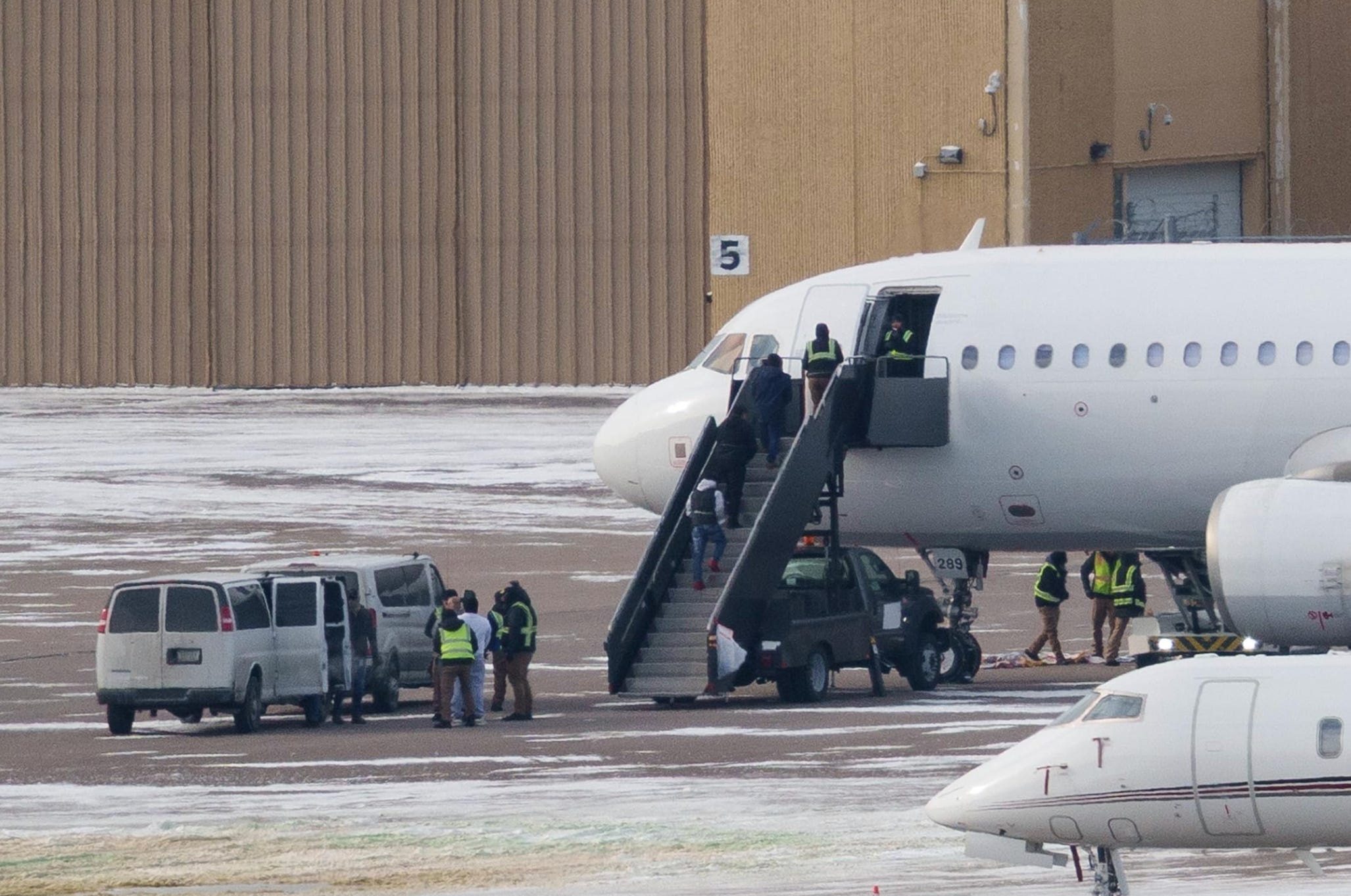
Laura: Yeah, I mean, we really wanted to have both the kind of very intimate psychological space of this terror — so that’s really represented with the main protagonist — and then we wanted to show the scale. You know, and that’s sometimes challenging with documentary filmmaking. So we knew — I mean, Rachel, you know, knew that she was getting notifications of deportation flights leaving the airport.
And so we worked with a local resident who’s a plane watcher. He watches planes, and he just started going to the airport every day to mark down the tail number and count how many people were being abducted, how many immigrants were being abducted and boarded onto these chartered flights. And then we took that database, along with a database of human rights organizations, and then did the data visualization with Josh Begley, who’s an amazing artist. And I’ve worked with him before, and he just has this incredible ability to translate large data sets into visual language. And so then you see the map.
And, you know, that map you see is correlated to time. So those are actual flights. And if we know the numbers of people, there’s a ticker that’s telling you how many people, human beings, are being abducted from their homes and where they’re being sent to. And so you see this map of the U.S. with these crisscrossing flights, and that is just one slice in time. I think it’s maybe 48 hours at the most, two nights. And so you multiply this over, you know, as long as Trump has been conducting this war against immigrants. You know, it’s truly a reign of terror.
And so — how do you, you know, as filmmakers, we’re always searching for ways to show both the scale and, you know, the emotional consequences of this kind of violence. So that was important. And we also used the sort of crowdsourcing element. There are two scenes with maps, and there’s a second one where all the data is being collected by residents who are reporting what they’re seeing.
So one person says that there are ICE agents posing as Amazon workers, taking photos of license plates. And it’s just so chilling. It’s like you can’t even believe what you’re reading. Others: abducting children at bus stops, you know; a person being abducted going to church. Like, they’re lurking at a church so that they can abduct someone. I mean, it’s, you know, it’s kind of unspeakable.
And that map has over eleven thousand incidents that are being documented, and they classify them by different things. There are abductions, stakeouts, spottings of drones, murders, you know. So, I mean, just the whole scale. And so through those two scenes, we’re trying to really give a sense of how vast, you know, this occupation, invasion is — you know, ongoing.
Vanessa: It is. It’s huge, and it feels like we want your film out, and everyone watching it as soon as possible, before the midterms, you know, for their own safety and solidarity, so they can learn from it. I feel everyone cares to know what to do when ICE comes for you, or your neighbors, your friends. How do you fight back? And the idea, again, of denormalizing violence is so smart. It’s such a hyper-violent time in this country, and it’s sick how we’ve normalized the violence.
What else can we do to help you get this film out and get people seeing it? Where can they see it? It’s on the road.
Rachel: It’s on the road right now.
Laura: Yeah, we’re working on the release plan now. We have partners in Europe. We have a partner in the U.S. that we can’t announce right now. And we’ll be working with local organizations to bring it to the communities that are most impacted. So we’re working on a sort of very ground-level, grassroots distribution campaign, and then also, you know, doing things like the Venice Film Festival, which brings international eyes on what’s happening. And that’s important, from a perspective of showing what’s happening in this country.
You know, and let’s just also be honest: we know this is happening, so the question is, how do you activate people to do something, whatever’s in their capacity? And citizens have been — not just citizens, but people in this country have been standing up. I mean, they’ve been stopping the building of immigration warehouses slash detention centers slash, you know, concentration camps, that the Trump administration is trying to build all over this country. And they’ve succeeded, you know, in many cases.
So there are, you know, efforts. And these things don’t just happen. There always has to be an infrastructure for something at this scale to happen. So the question is, where can what is happening be interrupted? You know, obviously our elected officials need to do it, but I think we can also, you know, look at the airports, where people are being abducted, and how to, you know, stand up and boycott all the chartered airplane companies that are taking money from ICE. You know — yeah. Boycott anyone who’s taking money from ICE. Abolish ICE, obviously.
Vanessa: Yeah. And Rachel, are you happy with the audience reception? Are you feeling the solidarity from the people who are watching and connecting with the film?
Rachel: Yeah, very much so. I think what has been really moving for me to see is that — you know, it’s not surprising that audiences are finding the film to be terrifying, to be shocking, to be horrifying. But the thing that has surprised me is how much people are finding hope in it, and finding inspiration. That certainly was a part of what Laura and I had talked about in making the film: that we wanted to show that resistance can be successful, while also showing that ICE still has a $70 billion budget.
But to me, it feels really amazing that what everyday people were doing — volunteering their time, and, you know, in between dropping their kids off at school and going and getting groceries, “I’m gonna track ICE for a little while” — that people find that so meaningful and inspiring has been pretty incredible.
Laura: And we’re screening it in Minneapolis, and have a sold-out house of six hundred people. So it’ll be really meaningful to take the film there. And we look forward to doing that in communities, because so many communities — I mean, we’ve seen communities organize, in Chicago, Los Angeles. I mean, communities have stood up and fought.
Vanessa: Yeah. I only wish we could replicate you two and have more of these films made throughout the country, because it’s absolutely not what we’re seeing on the news. What the news is covering is the violence of the state, and not actually capturing what’s going on on the ground for the people who are living with it, and who wanna protect each other and care for each other and not have ICE around at all.
So I am so grateful for you both and the work that you do, and I hope everyone has a chance to see this film across this country and around the world. We need solidarity from other countries. We are not our government. We are not. And we have a lot of people who care about each other and want to make this a safe place for everyone. Thank you.
Laura: Yeah, thank you so much. Yeah, and thank you for helping us reach people, reach audiences with the film.
Rachel: Thanks. Yep, thank you, Vanessa.
I filmed this at the Venice Film Festival world premiere of THEY’RE HERE
Laura Poitras (director, producer & editor)
Laura Poitras is an Academy Award®, Pulitzer Prize, and Golden Lion winning filmmaker and journalist. Her 2025 film, Cover-Up, premiered at the Venice Film Festival, and was nominated for BAFTA, DGA and Emmy awards. Her previous film, All the Beauty and the Bloodshed, won the Golden Lion for best film at the Venice Film Festival, and was nominated for an Academy Award®. Her film CITIZENFOUR won an Academy Award® for Best Documentary, along with awards from DGA, BAFTA, and Independent Spirit Award. Laura received the Pulitzer Prize for Public Service for her reporting on the National Security Agency’s global mass surveillance programs. Her film about the U.S. war and occupation of Iraq, My Country, My Country, was nominated for an Academy Award®. In 2006, she was placed on a terrorist watchlist because of her work documenting post-9/11 America. In 2015 she successfully sued the U.S. government to obtain her classified FBI files.
Rachel Lauren Mueller (director, producer & cinematographer)
Rachel Lauren Mueller is a documentary filmmaker and investigative journalist whose work examines power and identity. Her films and reporting have appeared in The New York Times, PBS, and Al Jazeera. Her short documentary 8 Days at Ware (Double Exposure, 2022), alongside her New York Times investigation into abuse cover-ups in a juvenile detention center, was recognized by the Dart Center for Excellence in Coverage of Trauma, shortlisted for a Livingston Award, and received multiple honors for investigative reporting and documentary. Her debut feature, The Quiet Part (post-production), will explore how extremism becomes normalized through the arrival of a pagan white supremacist group in a rural Midwestern town.
SEE THEY’RE HERE
AT THE WOODSTOCK FILM FESTIVAL ON OCTOBER 18TH
AND AT DOCNYC IN NOVEMBER