


Hello, Hope For Film readers:
I’m a Los Angeles–based documentary executive producer, philanthropic advisor, and nonprofit board member. Six months ago I added The Backlight to the mix, first and foremost as personal scaffolding to establish a regular writing practice. A long-harbored dream has become a reality, at least so far. I stick to writing what I know and what I’m curious about; so far that includes documentary film, philanthropic practice, and the nonprofit cinema ecosystem.
Because my orientation to the world is perhaps more literal than I’d like to admit, when Ted so generously offered a TakeOver, my mind immediately seized on the opportunity to explore the concept of hope. As someone whose nature can lean judgy and cynical, What a great excuse, I thought, to highlight the people, projects, and initiatives giving me hope during what feel like pretty hopeless times. But the Lit Major in me couldn’t just start there and run with it. No. The next thought she had was, Oh cool! This also means I get to reread some Rebecca Solnit! A writer I admire deeply, her essay collection Hope in the Dark: Untold Stories, Wild Possibilities remains as relevant today as it did when first published in 2004.
Solnit’s recounting of victories achieved by environmentalists and peace activists demonstrates that hope isn’t something that we get from others (see above: “giving me hope”); rather, it is a mindset we cultivate in ourselves and a practice we enact. She includes a passage by Czech writer and former president Václav Havel that beautifully fleshes out this version of hope:
The kind of hope I often think about (especially in situations that are particularly hopeless, such as prison) I understand above all as a state of mind, not a state of the world. Either we have hope within us or we don’t; it’s a dimension of the soul; it’s not essentially dependent on some particular observation of the world or estimate of the situation. Hope is not prognostication. It is an orientation of the spirit, an orientation of the heart; it transcends the world that is immediately experienced, and is anchored somewhere beyond its horizons. Hope, in this deep and powerful sense, is not the same as joy that things are going well, or willingness to invest in enterprises that are obviously headed for early success, but, rather, an ability to work for something because it is good, not just because it stands a chance to succeed.
This is, in and of itself, a hopeful statement. If Havel could maintain this attitude as a political prisoner, surely we can achieve it in our state of relative liberty, even when things out there are real, real bad. An orientation is something that can be cultivated through intention and with practice; so if you don’t feel hope now, you can do something about it. Community helps, too; the more we surround ourselves with hopeful people, the more hopeful we ourselves will feel.
A state of uncertainty can make a person feel especially hopeless. It is rampant these days, both in the film industry and the world beyond. Human beings don’t do so well with uncertainty and will go to great lengths to eliminate the sensation: we make rash decisions, become cynical, abuse substances, deliver an uninformed verdict (the Punditry Industrial Complex profits mightily from this). Solnit invites us to reframe this uncomfortable state into one of opportunity:
Hope locates itself in the premises that we don’t know what will happen and that in the spaciousness of uncertainty is room to act. When you recognize uncertainty, you recognize that you may be able to influence the outcomes – you alone or you in concert with a few dozen or several million others. Hope is an embrace of the unknown and the unknowable, an alternative to the certainty of both optimists and pessimists. Optimists think it will all be fine without our involvement; pessimists take the opposite position; both excuse themselves from acting. It’s the belief that what we do matters even though how and when they matter, who and what it may impact, are not things we can know beforehand. We may not, in fact, know them afterward either, but they matter all the same, and history is full of people whose influence was most powerful after they were gone.
There are tons of people out there acting in the space of uncertainty; we just have to know where to look. Project case studies are great (and there are now so many to learn from!), but infrastructure is where the enduring improvements will be. In that spirit, here are ten democratizing, grassroots innovations building new underlying systems and supports for artists and audiences. Most have received quite a bit of attention, and you can find plenty more about them online, so I won’t go into depth about each one here. Though you may have already heard of most, I think there’s a value in assembling a collection. Hopeful work gets lost in a world where an “if it bleeds, it leads” business model and under-resourced newsrooms result in an oversupply of bad news media, and, frankly, a reality distortion.
In no particular order:
-
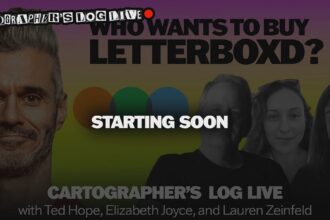
Intrinsic Entertainment’s bid for community ownership of Letterboxd. Choosing englorification over enshittification and demonstrating that there is a way forward that isn’t beholden to rapacious corporate overlords.
-
#blockthemerger Remarkable coalition-building and collective power that will have all been worth it, even if the merger does go forward.
-
Color Congress Member Fund A member-serving organization maintaining a $200,000 line item in the annual budget for the members to democratically direct is an act of radical grantmaking that is easily replicable.
-
Boston Ujima Arts Programs A project of the nation’s first democratically-governed investment fund that situates investment decisionmaking in community arts funding within the community itself.
-
Civic Media 2.0 Coalition-building initiative leading local stakeholders to re-imagine an enduring infrastructure for public-interest media.
-
The Nonfiction Hotlist “The Blacklist for Docs” brings attention and a range of resources to over twenty projects per year.
-
The Popcorn List connects festival favorites, both scripted and nonfiction, with indie arthouse audiences nationwide.
-
Local Public delivers local public station-branded and curated apps across all major platforms, addressing a longstanding gap in the public media digital landscape.
-
Kinema & Seed + Spark radical collaboration. I was in the room for Emily and Christie’s talk, and you’d have to be made of stone not to be inspired by their partnership that ripples outward.
-
A Corps. A whole new business category, just for artists. How cool is this? Let’s see what the rollout looks like for filmmakers.
We have no idea where any of these will end up; only with hindsight will we see the “success.” But they matter. And there are way more than ten underway right now. What are you working on or tracking? I want to know about it, and I bet others do, too. Who knows? We may just create a new FilmStack resource, the most hopeful of all.