

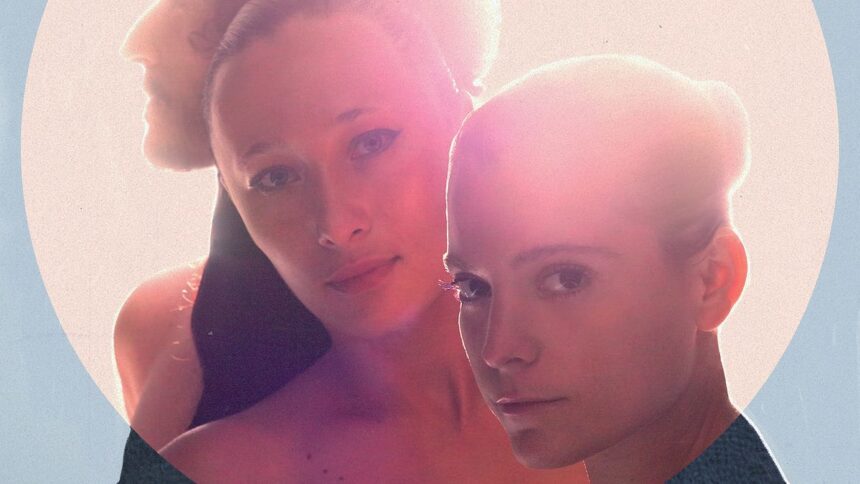
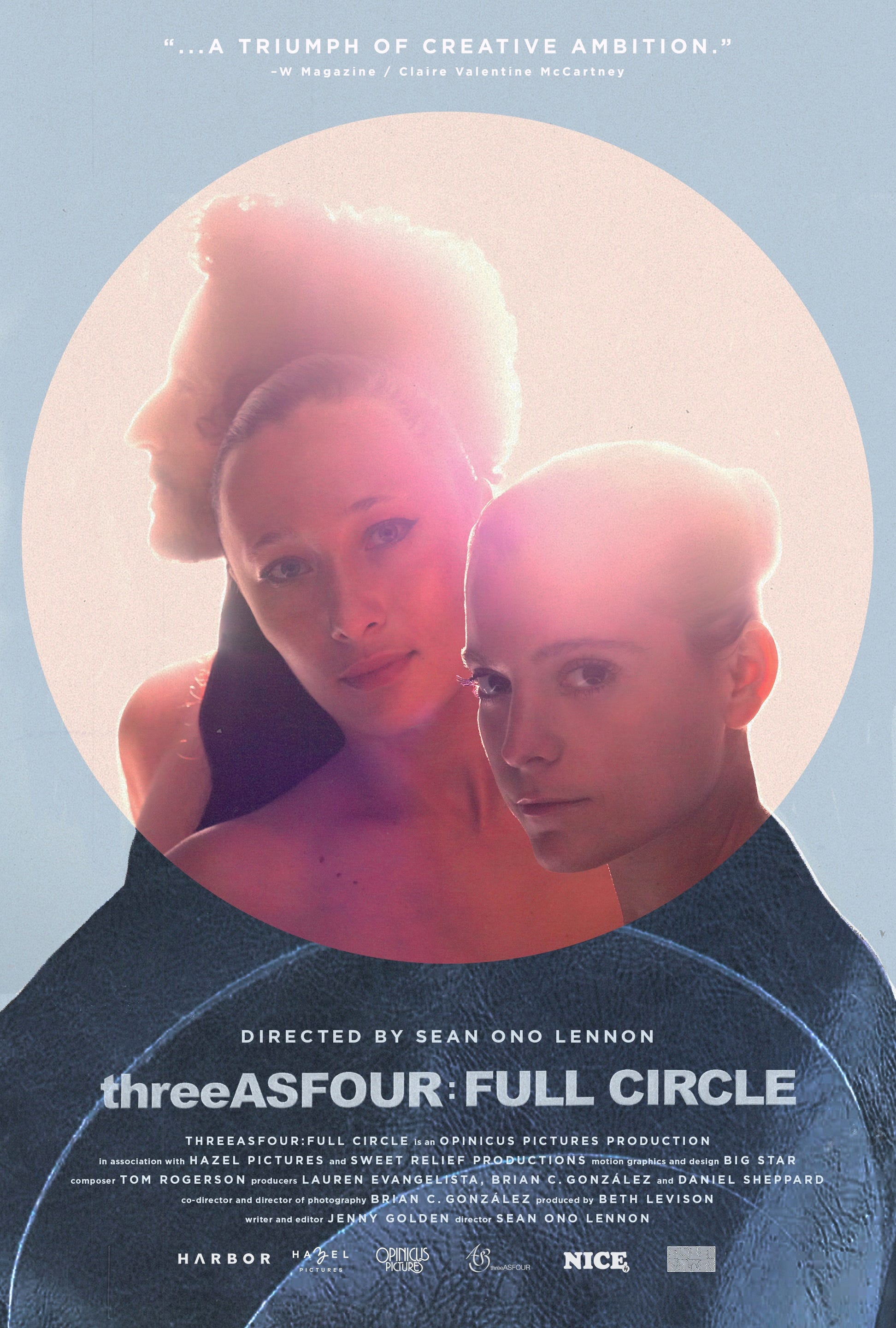
In this vHopeful Conversation, I speak with Academy Award– and Grammy-winning artist Sean Ono Lennon about threeASFOUR: Full Circle, his directorial debut about longtime friends Gabi Asfour, Angela Donhauser and Adi Gil, the visionary design trio who have never bent their art to the market. Sean explains how a lifetime of making art that didn’t fit a commercial structure made him want to show the world how brilliant these three designers are, even though he had to learn how to make a documentary along the way. He talks about learning from Albert Maysles, his childhood neighbor, that a “true documentary” watches with empathy and never tells the audience what to feel. He also credits the editors Jonathan Oppenheim and Jenny Golden for finding the story in years of vérité footage. Sean shares how he discovers that a film about art versus commerce is also about peace and love, with three artists from Lebanon, Israel and Tajikistan who have become family. We explore the math, nature and sacred geometry behind their spiraling, curvilinear designs, and how the animation makes those ideas easy to grasp. We end with Sean and his partner and bandmate, Charlotte Kemp Muhl, welcoming their first son just as his film reaches audiences, and the joy and chaos of it all arriving at once.
Transcript lightly edited. Podcast available on Apple, Spotify or wherever you listen on Dream of a Better World Substack or here on Ted’s Hope for Film
Vanessa Hope: I am extremely excited to speak with Academy Award– and Grammy-winning artist Sean Ono Lennon about his new documentary film, threeASFOUR: Full Circle, his directorial debut. It’s an intimate portrait of designers Gabi Asfour, Angela Donhauser, and Adi Gil, who have refused for more than 25 years to make art that fits a commercial mold, and of what that refusal cost them.
Sean co-wrote and produced War Is Over!, which won the 2024 Academy Award for Best Animated Short, and he won a 2025 Grammy for his design of John Lennon’s Mind Games box set. As a musician, he has recorded on more than 100 albums and scored six films, and it’s through his musical past that we actually go way back.
He’s also an illustrator and designer of album covers and books. In 2009, he started the record label Chimera Music in his New York City kitchen. He has produced two albums by the Yoko Ono Plastic Ono Band, and more recently, he has produced music by Temples, The Black Lips, and Lana Del Rey.
Sean, thank you for joining. It’s so great to see you.
Sean Ono Lennon: Great to see you, Vanessa, and thank you for that very thorough intro. I do want to say I was elected class president my first year of boarding school, so I think that was eighth grade, actually. I think that’s my biggest accomplishment, actually.
Vanessa: Okay. Really? Well, I was elected president of my fifth grade class.
Sean: You’ve always been ahead of me. I think I overpromised and underdelivered, to be honest.
Vanessa: Yeah, me too. Oh my goodness. Okay, so you’d known Gabi, Angela, and Adi for years before you decided someone needed to make a film about them. And let me just say, Ted and I were blown away by the beauty of this film, the way you shot it. It’s so in sync with their art. It’s an artist making a film about artists. But really, why did you want to tell their story?
Sean: Well, I’d known them for a long time, and I was a huge fan of their work. And there was sort of a big group of people in New York who were all friends and sort of orbiting threeASFOUR, and just were really big fans of theirs and sort of rooting for them. And, you know, after years of kind of seeing them do such incredible stuff while also sort of struggling with their position in the industry from a financial perspective, I thought the answer might be to make a film about them and show them to the world. I mean, it was really that simple.
There were a couple of things I had collaborated with them on. I’d done some music for their shows, and I actually got my mother to do a textile collaboration with them, where she gave them these beautiful drawings that they turned into textiles, and they did a show like that. So I guess I had different attempts to collaborate, help them out here and there. And I just felt ultimately that the best thing to do would be to put them on a global platform, potentially, and let the world kind of see how great they are.
It was a very naive idea in a way. I didn’t really know what making a film would entail. And you know very well, I mean, what making a film entails. It’s very difficult, and it’s a lot of work. But when I started, I just thought, you know, those guys are really brilliant, and I don’t think enough people know about them, so I’m going to make a documentary about them. And I thought, I’ll do it like that. You know, my friend Brian and I, and maybe a sound person, will film it for a while, and we’ll edit it, and then we’ll have a film. But ultimately, it wound up taking a lot longer, because once I got into it, I also had to learn how to make a documentary, which I didn’t realize was such an intricate process. A belabored process.
Vanessa: Yeah. Well, you’ve succeeded in making a beautiful documentary. And it’s fun seeing your mom at one of their shows. I noticed her at a runway show.
Sean: Yeah, she is a big fan of theirs as well. That’s the thing. Everyone I know who sees them, even if you’re not into fashion, anyone I know who’s an artist especially, immediately falls in love with their work. And so I just felt that, you know, they needed to be documented. And I’m really glad that we did.
Vanessa: And it’s impressive how much access they give you, that you get into their struggles with back rent piling up, their credit cards that are maxed out. They’re struggling to deal with the commercial aspect of fashion, which maybe is something you’ve dealt with in the music industry.
Sean: Yeah. Well, I mean, they really took a while getting used to being filmed, which is understandable, because I’m someone who actually grew up, you know, sort of around a lot of celebrities, my parents, for example. And so I know what it’s like to be filmed. And it’s something that you really never get fully used to, I think, if you’re a normal person. And so I think that was a little difficult for them at first.
But I think because it was such a small group and it was all close friends, we weren’t a production company coming in and doing a film about them. We were all people that were close with them already, especially myself and Brian, the DP and co-director. We knew each other, so there was an intimacy there. But it was some time, I think, before they started to feel relaxed. And arguably, they may never have been fully comfortable with it. And I understand that, because, I mean, even doing a podcast, you worry about which jacket you’re going to wear. I can’t imagine when someone’s living basically in your space for years on end. It’s not easy.
But anyway, I do think that ultimately we wound up with really strong, kind of fly-on-the-wall vérité footage, which I didn’t realize at the time, when we were shooting, would be strong enough to support a whole film. Because at the time, we were doing lots of interviews with their friends and coworkers and trying to do a more traditional narrative. At one point, I thought maybe I was going to narrate the film. I guess the real point is that I didn’t have a plan going into it. It was just sort of, let’s just film them and see what happens.
Vanessa: That’s true documentary style, that is.
Sean: And I didn’t know what I was getting into. But ultimately, during, I guess I would say, the second phase of the production, we were lucky enough to get Jonathan Oppenheim to edit. And when he started editing the footage together, he, first of all, said that there’s definitely a film here, because he loved the footage. There’s a kind of beauty to it. And that gave me the confidence. And I realized that maybe we could make a film that wasn’t sort of sculpted by a narration or a bunch of interviews. And that made it much harder to finish, actually.
But I remember when I was growing up, I got to hang out with Albert Maysles quite a bit, because he was my mom’s friend, and he lived at the Dakota, where I grew up. And I remember him saying that he doesn’t believe films or documentaries that have too much of an opinion from the filmmaker. He doesn’t really consider those to be documentaries. He considers them a kind of op-ed, or a journalism, opinion journalism. But he felt that true documentary filmmaking was to basically film the subject with empathy and not judge them at all, and don’t tell the audience how to feel.
So I always had that in the back of my mind as sort of the ultimate highbrow version of a documentary film. You know, if you watch Grey Gardens or something, or any of his films. You know, Gimme Shelter, there’s really dark, horrible things that happen during that film. But he never really tells you, as a filmmaker to the audience, you know, these people are bad and this is a bad thing happening. He just lets you see what’s happening. And so that always was in the back of my mind in terms of a guide of what the best version of this kind of film would be.
But I wasn’t sure we would be able to do that. In fact, I really didn’t plan on doing that. Brian and I did a lot of interviews. But ultimately, when Jonathan started editing, and then when Jenny Golden, who I have to say, I’m sure you know Jenny, is an incredibly talented editor. And she also has story credit on this film, because she didn’t just edit it. She really sculpted the shape of the entire narrative through the footage, which was hard, because we had hundreds of hours of footage that had been shot with no particular idea in mind. It was just years of footage. And she really had to sort of, you know, find needles in haystacks, and also then weave it into this sort of tapestry, which I think is probably the best part about the film, is how beautifully it’s woven together.
So there was that history of it, where I had grown up with Maysles’s films in mind. And frankly, when I woke up one morning thinking, you know, I really got to make a film about threeASFOUR, I had rewatched Grey Gardens recently. And I just remember thinking about Albert and thinking about his films. And I had this thought that, you know, threeASFOUR are more interesting to me than any of those people. Someone should just film them. And then I was like, well, maybe I can do it. And, you know, that was it. That’s literally how it started.
And then Brian, who was actually the DP on a GOASTT video, which is my band with Charlotte, he did such a good job on that video. We shot it on 16mm, and he was so cool. And already, I found out, a fan of threeASFOUR, and knew them. And I mentioned to him that I thought somebody should make a documentary about them, and he said, “Let’s do it.” And that was it. So we went and we started filming them. We had no real production crew. But the core crew at first was really Brian González, the DP and co-director, and Dan Sheppard, the sound guy, who was producing as well, and myself. And we all produced, I guess you could say. That was the initial gang. And we wound up filming for years. I guess five years we shot straight.
Then I didn’t really know how to put the film together. So there was a long period of trying different things. And I almost don’t want to admit how long that period was. It’s hard to say how long it took, but it took a long time, I’ll say. So there was a long period of having the footage, having the audio, and really not knowing exactly how to put it together.
And I will say that Jonathan was the first big progress, with me realizing that I wanted it to be vérité, because of him. And then Jenny came in, sadly, because Jonathan passed away. It was really, really tragic. Jenny was actually the one who’d recommended Jonathan to me. And then I think once she saw his footage, and I don’t want to speak for her, but I think that made her feel like she could come in and help. And she’s really the one who built this thing with me. It was her tenacity, because she’s the kind of person who can go through hundreds of hours of visuals and dialogue and just not stop till she finds the gems. And she has a very beautiful style of editing. It’s very romantic, I would say.
Vanessa: I think what you’re saying about being influenced by Maysles, and managing to shoot all of this vérité and finding it also in the edit, is impressive. But I also think you, with your empathy and your intimate access and your knowledge of these artists, as an artist yourself who cares about the value of art regardless of commercial viability, your empathy might have extended in particular to that idea.
Sean: For sure. And when I first started filming, the original core idea I had in the back of my mind, and when we were doing all the interviews, the subject that I was interested in was essentially the intersection, or the rub, between being an artist and commerce, and, you know, being successful commercially, and how those two ideas don’t often coincide, or when they do, you’re very lucky. And I really related to that struggle, simply because I’ve never had commercial success, really. At least I hadn’t at the time. I could relate to this feeling of making art that I thought was cool my whole life, and then it not really fitting into a commercial structure. And so that was actually my first concept when we were looking for a kind of thread or a backbone for the narrative.
And I wasn’t sure if that was going to be interesting to people or not. And actually, as the film developed, especially as we were editing it together and finding the story, I realized there was so much more in the film than that, actually. And what I find interesting about the film goes far beyond that. And I can say what those things are. I mean, namely, it has to do with their philosophy as artists. And they have this incredible vision of a kind of transcendent version of humanity, where biology and math and science kind of unite humanity universally in this kind of language of nature. And that sounds a little bit, you know… well, however it sounds to people, it’s actually a very beautiful thing.
Vanessa: It’s very beautiful.
Sean: And I didn’t realize until we were putting the film together how much that resonates with my family’s vision and work, my parents, you know, the whole peace and love thing. And I was very surprised to realize that this was a film about peace and love. Given that Gabi is Lebanese, or Palestinian via Lebanon, and Adi is Israeli and German, and Angela is German and Tajik, they kind of represent this United Colors of Benetton thing. They’re like the UN Council. And their lives are a living example of how humans can get along and make beauty together, not just be neighbors, but actually be family and work together, and work through very, very difficult projects, and remain together for decades, for the rest of their lives.
I mean, one of the most beautiful things about them, beyond their vision for art and their practice of working together, is just what good friends they are to each other. It’s actually incredible. And so that’s very inspiring. That was the second theme that I didn’t really understand at first. My first thought was just, these guys are brilliant, yet they struggle to have commercial success. Like, why is that true? What kind of world do we live in when you can make something so objectively beautiful that everyone I know is blown away by when they experience it, but still they don’t fit in with the structures of the industry? And that is also a big part of the film. But the part that I didn’t anticipate was that their message and their work and their philosophy was actually something that resonated and coincided so well with my family’s philosophy of, you know, peace and love. So those were the two main things that I felt the film was about.
Vanessa: And it’s beautiful how in-depth you go into each of their personal stories. We see their parents. We see them at home. We see them in their countries of origin. We see them hanging in New York. We get a big sense of who they are through the film. Did you go in that direction once you realized that there was this whole peace and love aspect to their creative work?
Sean: Yeah. I mean, that aspect of the film, the fact that they each had such incredible stories as individuals, was also something I hadn’t really understood fully going into it. And frankly, it made it very difficult, because I could make a documentary on each of them separately, and they would fill an entire film. I mean, just Angela’s story, from her experience coming from Tajikistan and going to Germany, was so traumatizing for her. Adi being a German who grew up in Israel but then lived in Germany, and her inner kind of identity conflict that she went through, was really intense and interesting. And then the kind of person she became is so beautiful. Her perspective on everything, in terms of her country and the struggle in the Middle East and the conflict, and how she’s taken that and turned it into something very positive and beautiful in her work.
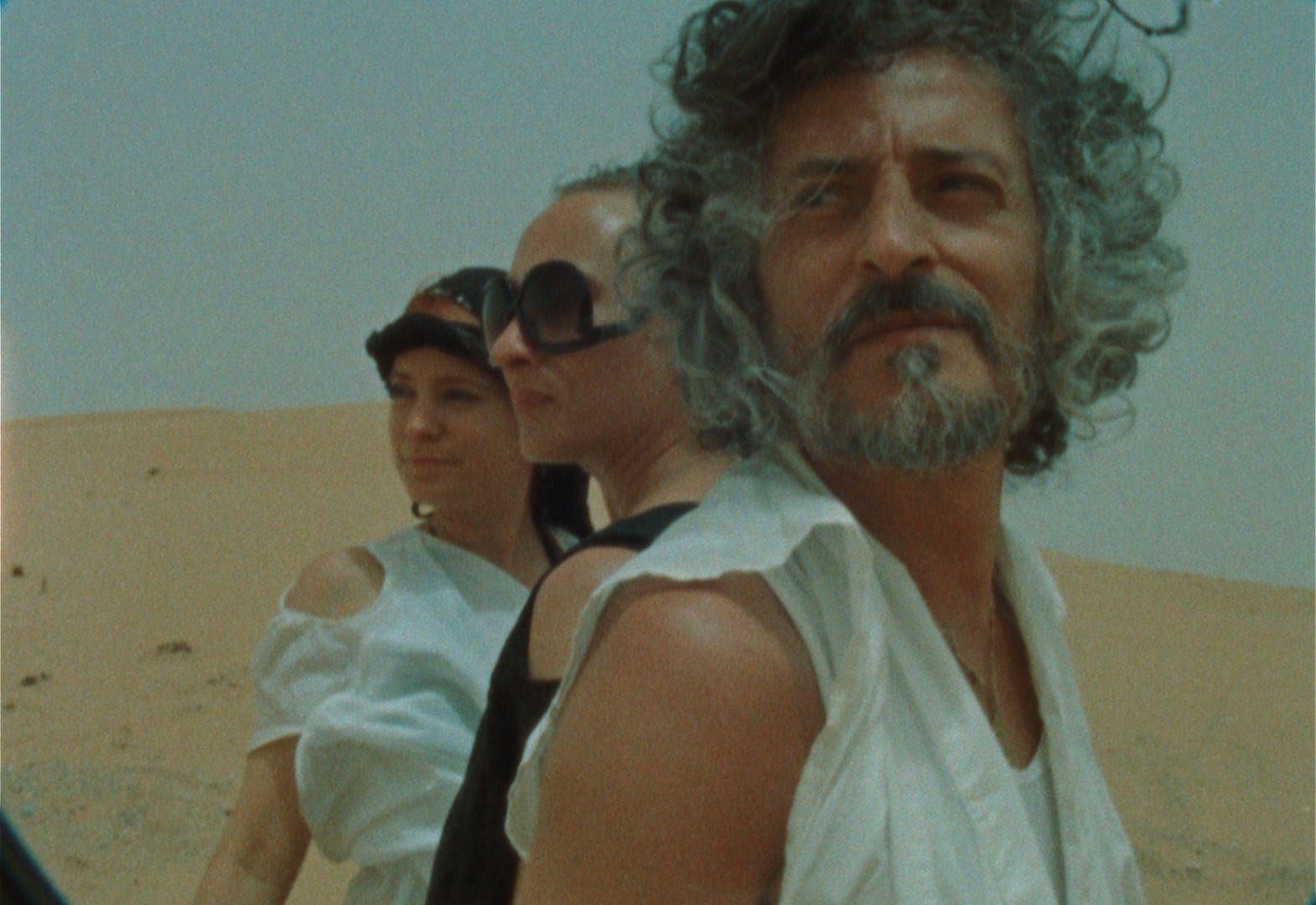
And then Gabi’s story is obviously like a movie. Coming from a Palestinian background, living through the revolution in Lebanon and almost being killed, his parents almost being killed for being Christians in a Muslim country during the revolution, and then escaping to America and creating a new life and becoming a radically brilliant artist. Anyway, all those stories would have been a lot to tell in a film as individual lives. And once I realized that every time we told one of their stories, we had to match it with the other two, it was a lot. It just meant there was a lot of story to tell, and it was really difficult to do. But yes, of course, getting into their backstories and their parents and where they came from was essential.
But, you know, I saw the beautiful Nan Goldin documentary (All the Beauty and the Bloodshed by Laura Poitras), and it’s such a brilliant film. But at times, I remember when I was watching it, I kept thinking, I wish we only had one protagonist, because it’s so hard to cover three stories, three lives, in a film. Not to mention the fact that they also used to be ASFOUR, when they were four people.
Vanessa: Exactly. I was going to raise that. And then how you came up with the title Full Circle, because they were four and now they’re three, and you have the ASFOUR name, threeASFOUR.
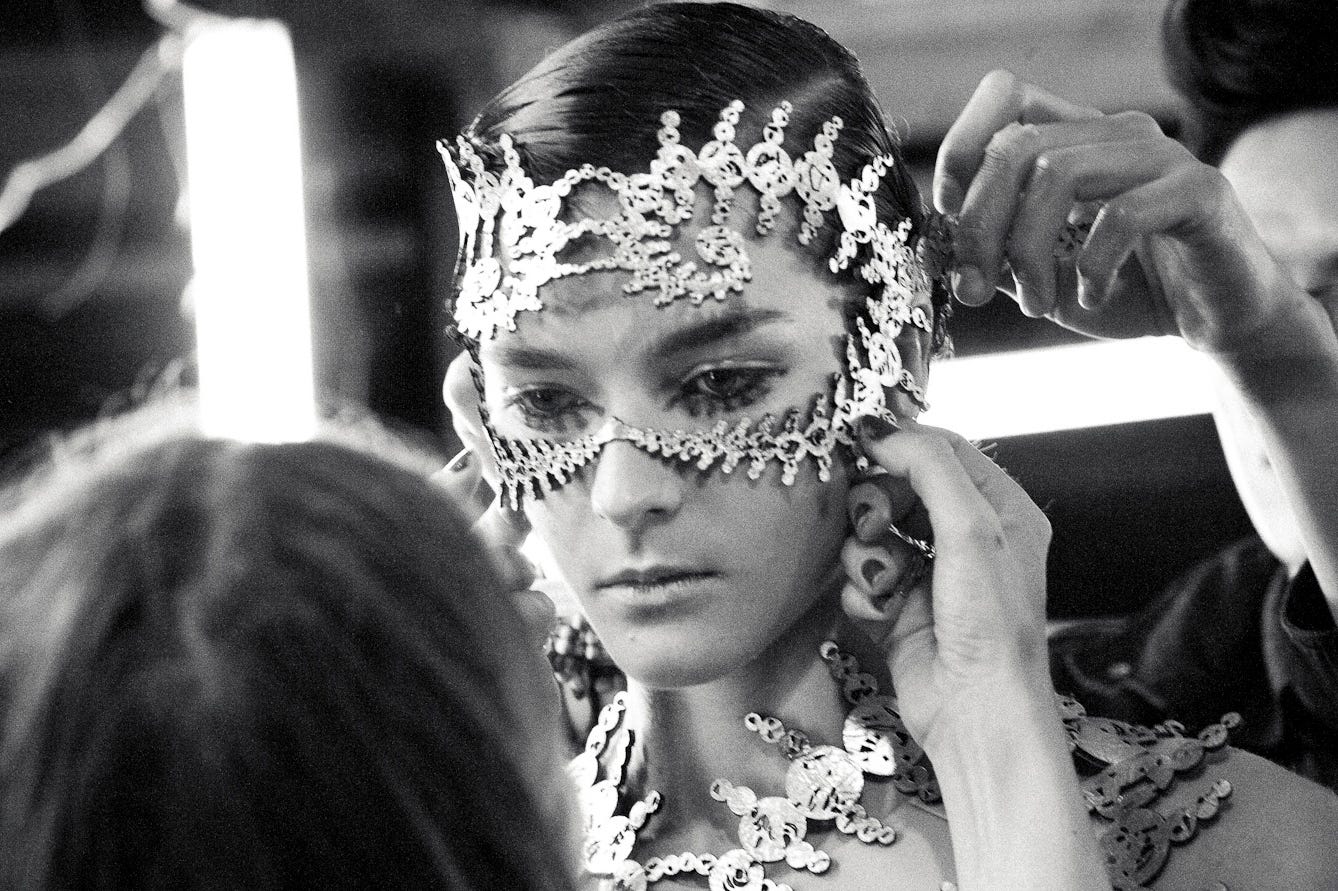
Sean: Yeah. And actually, they have a very beautiful show. They have incredible titles for their shows, like Biomimicry and Full Circle, which, Full Circle, you know, is sort of a reference to the crop circles. It’s like a pun on the term crop circle, because they made all these textiles out of crop circles. It’s the first show that we feature in the film. It’s the first show that we filmed for the film, and it’s probably my favorite. It’s incredible. It’s incredible work.
But I thought that show title was perfect for the title of the film, because there’s also a kind of Sisyphean theme to the film, where it feels like, at the worst of times, they feel like they’re pushing the same boulder up a mountain forever, and always running into the same problems again and again. But on another level, Angela actually says, kind of miraculously, during the shoot, she says, “I want to be full circle, but I want to be full circle where we come around to something different.” Or I don’t know exactly how she phrases it, but meaning that things can come around, but also things are different.
This may be too esoteric, but the way I think of it is, a circle actually is a spiral through time, you know, if you add the time function. And then the spiral, obviously, is a theme in their work. They’re really obsessed with the Fibonacci spirals and curvilinear stitching, and they don’t have any straight lines in their clothing, which makes it very technically difficult. But yes, so Full Circle, to me, seemed to be the perfect title, because it referenced this kind of Sisyphean thing. It also referenced the geometry. But then it also referenced what the film is. They kind of come around and realize, without giving too much away, but by the end of the film, they realize that they already were where they needed to be, in a way. That they were incredible artists, and that they just needed to find a new space and move to a new place.
Vanessa: And I think that the connection between their art and nature, and the way they think about it, is both on a cosmic level, which you illustrate, the geometry, the math, the spatial thinking, and on a personal level, in their relationships, which you illustrate. And I love the way… I think it’s really feminist. You know, Gloria Steinem always said, “We are linked, not ranked.” And we should think of ourselves as in a circle, in a community, and not hierarchy. And so there are so many levels where this fits beautifully in your storytelling. How did you come to use animation and find Big Star? That adds so much to the story.
Sean: Yes. Well, Big Star, I think they’re one of the most celebrated effects and graphics companies in New York, for sure. They’ve done many films that we would know, but they did the Andy Warhol series on Netflix. And, I mean, that was one of the things that made me a fan of theirs. And I think we knew that we needed illustrations, because a lot of the concepts that threeASFOUR talk about, especially that Gabi likes to articulate, are actually very sophisticated and have to do with math and geometry, and how math and geometry intersect with physics and biology. So I didn’t think there was any other way to explain some of these concepts.
I mean, I think a lot of people understand that there are mathematical principles that sort of unite all the religions of the earth in terms of sacred geometry. And there are also mathematical principles that kind of unite all of nature. For example, fractals and chaos theory kind of express the way that cells and leaves and trees are put together.
Vanessa: I love that. I love that you show that.
Sean: Yeah, or even clouds and things. And then the Fibonacci sequence, which is this very simple sequence where you add each number to get the next. So it’s like one and one is two, and two and one is three, and three and two is five, and you keep going up. That sequence is how you get a perfect spiral, which is really seen in nature, in DNA and seashells and all sorts of things, you know, the orbits of planets or whatever.
So these ideas, a lot of people know about, but we felt that in order to make it clear to anyone who watches the film, we had to do some illustrations. And I think that was actually one of the very hard things about the film. We didn’t want to become too pedantic and sidetracked into something super cerebral and esoteric. But at the same time, we really felt like we needed to show that what they were talking about and what they were doing in their work is backed up by real math and science. So we had to kind of find a sweet spot there.
And I think we really did, but, you know, in reality, that was a long process. And Big Star did an incredible job. But it was a long process, because it took us a long time to figure out exactly the right recipe and the right portions of how much of each concept we would go into. Because, honestly, that’s another thing I could do a whole film about, is just Gabi talking about math and science and physics, because he’s obsessed. There’s a whole nother, more nerdy version of their geometry and math obsession that we could do as a film on the Science Channel or something.
Vanessa: Right. I’m curious, this may be a question you do or don’t want to answer. I don’t know how personal you want to get, but you mentioned GOASTT, which is your band with Charlotte Kemp Muhl. The Ghost of a Saber Tooth Tiger, right, is the full band name?
Sean: Yeah. The Ghost of a Saber Tooth Tiger. Our band name, the GOASTT, is an acronym for that phrase.
Vanessa: The Ghost of a Saber Tooth Tiger.
Sean: Yeah, it was a play that Charlotte had written when she was a kid. And when we first started dating, I was just looking through her drawers. I don’t know why. I shouldn’t have been. But I found a play that she wrote when she was, I think, very young, and it was so cute. It was called The Ghost of a Saber Tooth Tiger, and it was about this ghost in a museum. And it was so cute. I thought, we’ve got to start a band called that. Anyway, another not very commercial title, but very cool and interesting.
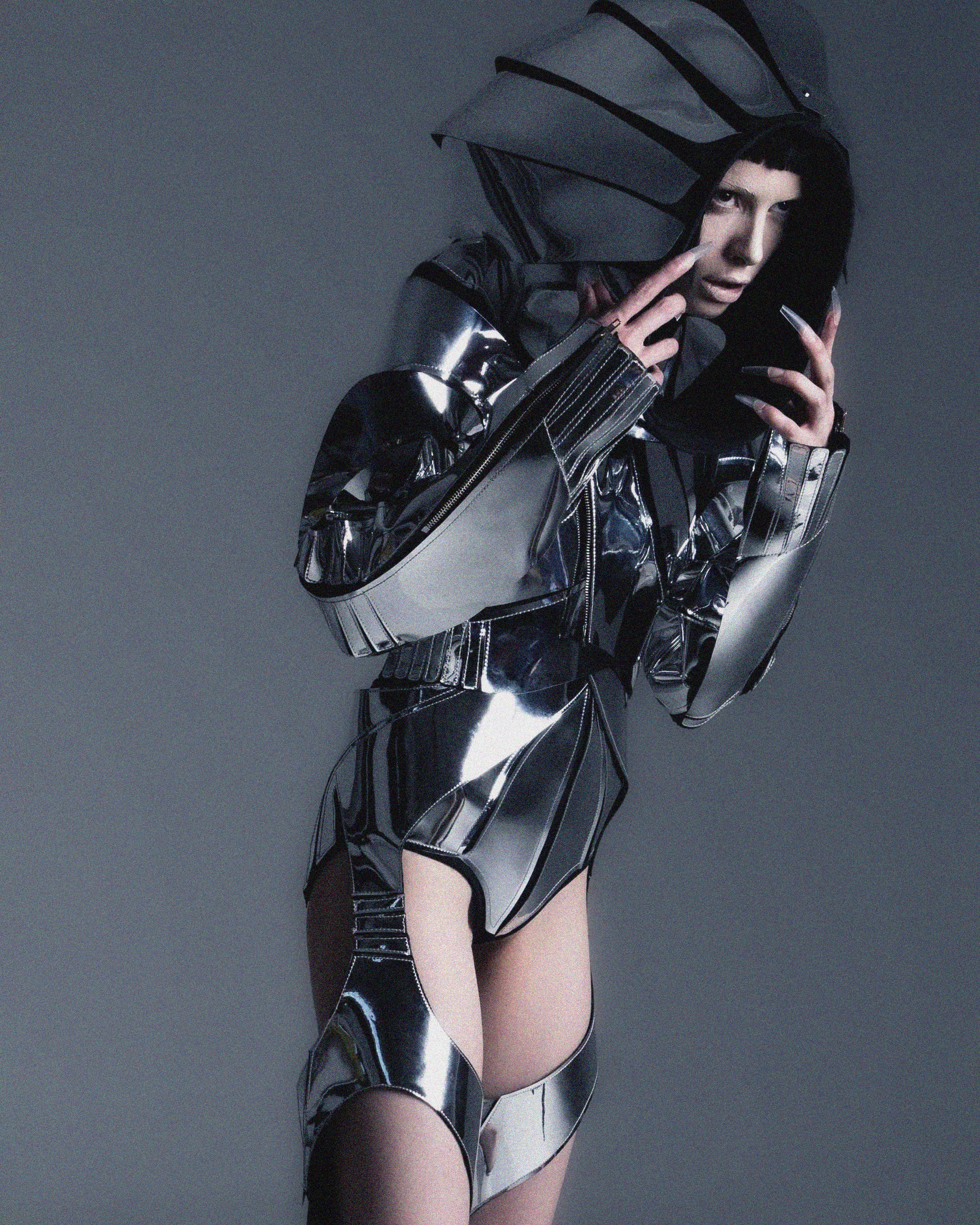
Vanessa: Exactly. And I know Charlotte’s a science nerd, and that she’s in the beginning of the film and the end, and stunning, and wears these clothes extremely well. And I love that part of the film, the beginning and the end, the way you film her. But she gave birth to a baby, you gave birth to a film. You’re all sharing in this together. Was that not planned? You don’t have to say if your birth was planned or not, but there’s something beautiful in the fact that there’s a lot of creativity happening at once.
Sean: Well, you know, what they say is, when it rains, it pours. And I wouldn’t say that we planned things, you know. I didn’t know when this film would be ready. I mean, for years, there were a few years where every year I thought it was done, and then we realized it wasn’t. And so I wish I could say I timed everything perfectly, but it just happens to be that a lot of things are happening in my life at once. And I’m sure that’s the case for most people. That’s just sort of how life tends to happen. But yeah, it feels like the beginning of a new era for us, for Charlotte and I anyway, because we have a son now. And it feels like everything’s different, to be honest, because of that.
And at the same time, our film is starting to play in theaters, and I need to go there and do Q&As and make sure that I encourage people to come to see the film and everything. And frankly, the timing is a little bit tough in that regard, because I don’t want to leave my son at all to go anywhere. But I’m going to have to, and that’s fine. But yeah, sometimes everything happens all at once, and there’s nothing we can do. But it does feel fun and exciting, and I know that I’m lucky to have all this stuff, you know, to be thankful for.
Vanessa: Out in the world. Yeah. Well, I want to say congratulations on a beautiful, meaningful film that is spreading peace and love and is in sync with everything you’re about and your family’s about. And congratulations on having a son. And so, where can we tell people to see this movie?
Sean: Well, we have Film Forum, I think, starting on Friday the 13th, which is very auspicious, I would say. And we’re going to have three Q&As, the 13th, the 14th, and the 15th, if you want to come and actually, you know, chat about the film.
And what I will say is, you know, one thing that we’re working on now is the fact that the film, on its surface, seems like a fashion film, but it actually really isn’t, to me. It’s much more than that. And I wouldn’t have made the film if it was just about fashion, because I’m not in the fashion industry, so I don’t even really know a lot about it. What I do know is that these people are incredibly unique.
Vanessa: I completely agree with you, and I think you put that really beautifully. And it is a message that comes across in your film, not in an easy, simplistic way. It’s lived through the experience of these artists, and you as a filmmaker sharing their story with the world. It is a meaningful message that everyone needs to hear right now, for sure. I’m so grateful that you did pick up a camera and make this film. You’re a super talented filmmaker, in addition to musician and everything else you do. And congratulations, and let’s get everyone to Film Forum and everywhere else the film is playing.
Sean: Thanks so much, Vanessa!
Vanessa: Yeah. Thanks, Sean.
Sean Ono Lennon, Director
threeASFOUR: FULL CIRCLE marks Sean Ono Lennon’s documentary directorial debut. Lennon co-wrote and produced War Is Over! which was awarded the 2024 Academy Awards for Best Animated Short. He also recently received a 2025 Grammy Awards for his design of the John Lennon Mind Games boxed set. As a musician, Lennon has recorded on over 100 albums and scored six films. He’s also illustrated and designed album covers and books. In 2009, he started the record label Chimera Music in his New York City kitchen, releasing his own music and dozens of others, including two albums by Yoko Ono Plastic Ono Band, which he produced. Lennon has also recently produced music by Temples, The Black Lips, and Lana Del Rey.
threeASFOUR: FULL CIRCLE premieres at
Film Forum NYC followed by a nationwide release
Go to threeASFOURfilm.com for more
—
FRIDAY, NOVEMBER 13
7:00pm threeASFOUR: FULL CIRCLE Film Forum screening – Night 1
8:35pm Location: Film Forum, 209 West Houston Street, New York, NY 10014, between 6th Avenue and Varick (7th Avenue)
Participants: Filmmaker Sean Ono Lennon and subjects Gabi Asfour, Angela Donhauser, & Adi Gil
Moderator: Rosanna Arquette
—
SATURDAY, NOVEMBER 14
7:00pm threeASFOUR: FULL CIRCLE Film Forum screening – Night 2
8:35pm Location: Film Forum, 209 West Houston Street, New York, NY 10014, between 6th Avenue and Varick (7th Avenue)
Participants: Filmmaker Sean Ono Lennon and subjects Gabi Asfour, Angela Donhauser, & Adi Gil
Moderator: Marisa Tomei
—
SUNDAY, NOVEMBER 15
2:30pm threeASFOUR: FULL CIRCLE Film Forum screening – Day 3
4:05pm Location: Film Forum, 209 West Houston Street, New York, NY 10014, between 6th Avenue and Varick (7th Avenue)
Participants: Filmmaker Sean Ono Lennon and subjects Gabi Asfour, Angela Donhauser, & Adi Gil
Moderator: Mike Maggiore