

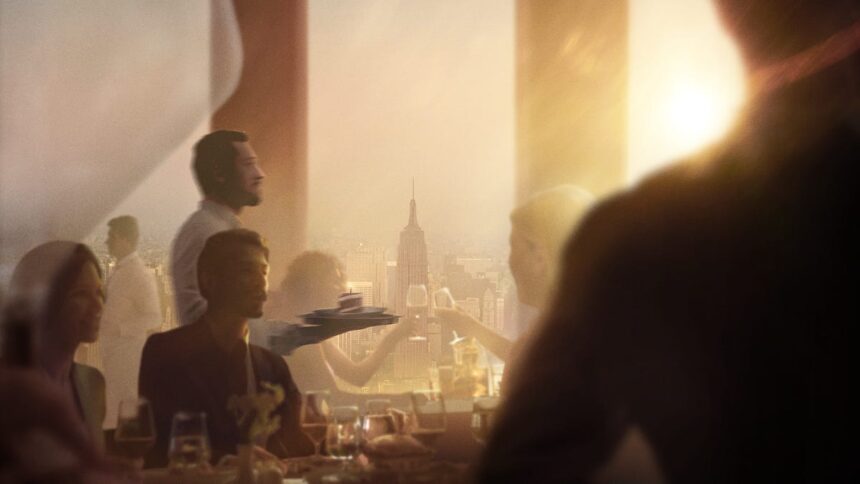
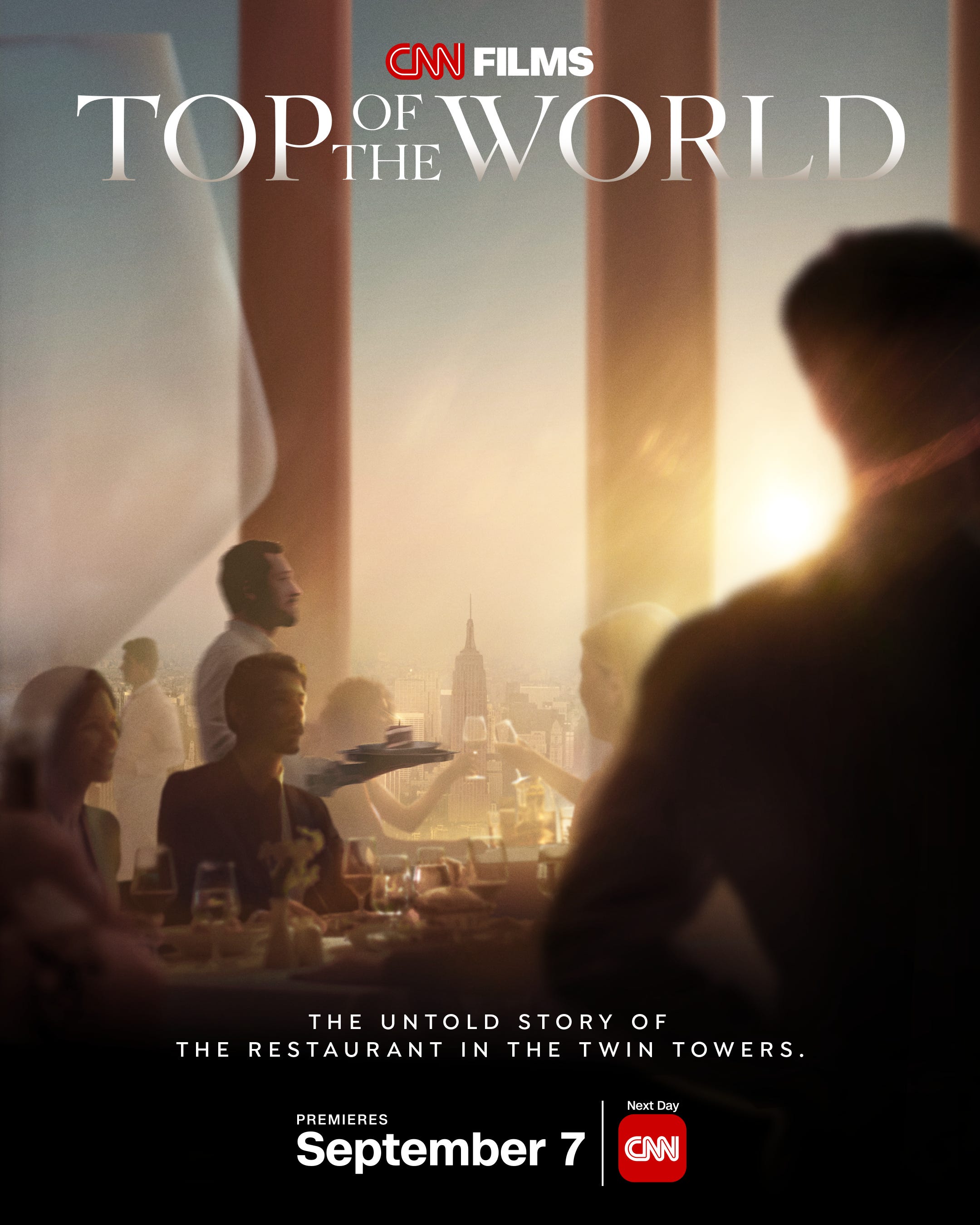
In this vHopeful Conversation, I speak with Oscar-nominated, Emmy-winning filmmakers Betsy West and Julie Cohen about Top of the World, their documentary short on Windows on the World, the restaurant at the top of the North Tower of the Twin Towers, and the immigrants who made it what it was. They tell me they were wary at first of making a film for the 25th anniversary of 9/11, until they met the people who worked there. Among them are Sekou Siby, a former teacher from the Ivory Coast who survived because he swapped shifts, and Nathalie Tolentino, who escaped terrorism in Peru. We talk about how this staff from every corner of the globe helped the restaurant mirror New York’s comeback from near-bankruptcy in the 1970s. Betsy and Julie explain why they let the glamour and the friendships unfold before September 11 arrives, and why they tell that morning through a few people rather than from a distance. Our conversation then turns to immigrants keeping America’s kitchens running today, and how ICE detentions are hitting restaurant workers in Julie’s own New Jersey community and across the country. We end where every good restaurant conversation should, with where to eat in New York now.
Transcript lightly edited. Podcast available on Apple, Spotify or wherever you listen on this Substack or Ted’s Hope for Film
Vanessa Hope: I am extremely excited and honored to be joined by Oscar-nominated, Emmy-winning filmmakers Betsy West and Julie Cohen to talk about their new documentary short, Top of the World. As a New Yorker, this was especially moving and meaningful. The film brings back Windows on the World, which, watching your movie, I realized I’d actually never been to. Ted and I debated the whole time. Had we been? We thought we went to a film party. It wasn’t Windows on the World. It is a totally unique experience.
In this film, you will experience the legendary restaurant at the top of the World Trade Center through the immigrants who were its heart and soul, who worked there. By the way, my mom was also in the restaurant business in New York, so I very much understand what a big deal it is to operate a restaurant, and people are probably fascinated by that because of shows like The Bear on television right now.
Betsy West: Yeah, absolutely.
Vanessa: Together, Betsy and Julie have directed some of the best documentaries out there: Gabby Giffords Won’t Back Down, which was nominated for Critics Choice Awards, and Julia, about Julia Child, which was shortlisted for an Oscar. They also made My Name Is Pauli Murray, which won the Peabody and duPont-Columbia Awards. And their first film together, RBG, (about Ruth Bader Ginsburg) was nominated for two Oscars, won an Emmy, and is one of the highest-grossing documentaries of all time.
On her own, Julie directed the Emmy-nominated Every Body and The Sturgeon Queens after nine years as a producer at NBC News. Betsy won 21 Emmys at ABC News, then oversaw 60 Minutes and 48 Hours as a senior vice president at CBS News. She was also executive in charge of the Emmy-winning CBS documentary 9/11, and she is a professor emerita at the Columbia Journalism School. Welcome.
Betsy: There you go. Thank you.
Julie Cohen: Thank you. Nice to meet you.
Vanessa: I was trying to remember your bio, Betsy, and thinking we met at Columbia. I know we did.
Betsy: We did meet at Columbia. That was a while ago.
Vanessa: We met at Columbia. Yes. So together, your films have been portraits of extraordinary people: Ruth Bader Ginsburg, Pauli Murray, Julia Child, Gabby Giffords. This time, your subject is a restaurant and the people who worked there. I wonder how that came about, and what it was that drew you in through your first conversations with Sekou Siby and Nathalie Tolentino.
Betsy: So go ahead, Jules.
Julie: Well, you know, we were drawn in by the kind of amazingness of this iconic story. We got brought to the table on this project. People actually bring us projects a lot. It’s really rare for us to go for it with an idea that someone else has brought to us. And in this case, let’s just be totally honest, initially we were pretty wary of doing a September 11th 25th anniversary story. There’s a lot of trauma around 9/11 for anyone who was living and working in New York at that time, as both of us were. (Vanessa: Me three!) And also, like, if you’ve seen our films, we don’t like to do things that are… you know, we like telling beautiful, loving, funny, musical, amazing stories.
But in this case, there were people that we were just so drawn to in this story. You know, Sekou and Nathalie, who you mentioned, just each one with an incredible life story. Sekou from the Ivory Coast, Nathalie from Peru, Michael Lomonaco, a native New Yorker, Italian American, who was a chef at Windows. Each one just had this incredible life story that just felt like the kind of loving, beautiful story that we love diving into.
Vanessa: And Betsy, you were executive in charge of the CBS documentary 9/11, which won an Emmy in 2002. So what was it like for you to come back to that day 25 years later?
Betsy: Yeah, I mean, hard to believe, 25 years, really. And as Julie said, we were both working in the network news business, and it was a traumatic time, and we covered a lot of stories. The 9/11 story really focused on the sacrifice of the workers, you know, who were there at Ground Zero, and the firefighters.
Vanessa: Ground Zero. Ground Zero, you’re bringing back memories. I haven’t heard that term in a while.
Betsy: Yeah, I know. Well, it was, as Julie said, at first we were thinking, oh no, do we want to go there? But, you know, 25 years later, we realized that the story of Windows on the World, and of, as you said, the immigrants who worked there, really hadn’t been told. We heard so much at the time about what happened to the financial district, to Cantor Fitzgerald. This is not to diminish the tragedy of all the people who died down there, but the Windows story was pretty extraordinary. And then the other thing was, we learned from the book The Most Spectacular Restaurant in the World what an amazing place Windows was.
And, you know, we actually, neither of us ever went to Windows. So it’s not as if we had firsthand knowledge of this. Luckily, there was an extraordinary amount of archive for us to draw upon, because Windows really was a turning point for New York City. The city was really a mess, almost went bankrupt. Crime and, you know, real desperation, I think, in the mid-’70s. And they’re building the World Trade towers, and they decided to put this really snazzy restaurant, a brand-new idea, on the top of this thing, on the 106th floor. And a lot of people were very skeptical, but it was really an instant success. And suddenly it was the go-to place, you know, on the cover of New York magazine. And so for us, it was really fun as New Yorkers to go back and take a look at that story, and what a turning point it was for New York, and how Windows helped drive the resurgence of the city.
Vanessa: Yes. And it is a city of immigrants. And you capture that story along with, as you said, the glitzy, glamorous side of this Windows on the World, where some interesting details emerge in your film, like that a building that tall sways at the very top. The hostess, Nathalie, would have to close drawers in her station because they slowly creep open. But how did you find that balance between these two different sides of the story?
Julie: There was actually a lot to pack into 40 minutes for this film, which was the challenge of it, but also maybe some of what made it a pretty enjoyable process. You know, we did want to tell the whole 25-year history of Windows, which in many ways echoed New York City history, which changed a lot between 1976 and 2001. A lot happened in this city. And a lot of that story, of course, was quite joyful. But also, you’re telling September 11th, which obviously is a horror story and a nightmare for so many people, but most of all the people who are in our film, who lost their colleagues and loved ones on that day.
Vanessa: One of the story achievements is that you show the history of each of the characters in your film, but also there isn’t really a difference between the glitz and glamour and their lives, because in many different ways, they enjoyed that aspect of the restaurant. They enjoyed being a part of this larger-than-life, top-of-the-world place that had a very international feeling to it.
Julie: Yeah, I think everyone that is in our film both got a lot out of and put a lot into what Windows on the World became, and took a huge amount of pride in being part of this iconic institution. And I feel like we could really feel that when we interviewed six people together who had worked at Windows, including Sekou and Nathalie, just how people from so many different cultural backgrounds and life experiences came together and enjoyed being part of something huge and magical. And we felt like you could really feel that when you saw them reacting to seeing the old footage of some of the just beautiful glory days of this institution that was still so evidently in all of their souls.
Vanessa: Yes. And you do get to spend so much time building up the story before September 11th. I appreciated that it didn’t really happen till the very end. How conscious were you of doing that?
Betsy: Yeah, very conscious. I think, obviously, 9/11 is there. And, you know, we began the film with some footage, that home movie footage that Nathalie had taken of her grandmother, who had come from Peru. Nathalie’s an immigrant from Lima, Peru. And she was showing off her workplace to her grandmother in August of 2001, which is just amazing. So when we started the film with that, we just put up the little super that told you, and pretty much everybody gets it. That’s just a month before. So it’s there.
But we wanted to really create the story of the restaurant, and also to tell the stories of the people that we interviewed. Both Sekou, who was looking for opportunity in America, a better life. He’d been a teacher in the Ivory Coast. Nathalie was actually fleeing terrorism in Peru and came with her family to New York City. We wanted to establish the glitz of the restaurant, which we were able to do with Kevin Zraly, who was someone who was there from the very beginning. He was the very young, brash wine steward. He was there and could really set the stage. And then to show what the restaurant meant to these people, and to really get to know them, before, obviously, we had to tell the story of what happened on September 11th.
We tried to do it from the point of view of the people you had met. So that we, you know, we didn’t want to really focus in on the horror of it all, because we know the horror of it all. But what people don’t know is how Michael Lomonaco managed to not be on the top when they’re having a big breakfast that morning. It’s kind of an amazing story of how it happened, that he just made a little detour in the morning to get his glasses checked. So he was downstairs when it happened. And where everybody was when the planes hit.
Julie: We call ourselves character-driven filmmakers, and we mean it really seriously. Even in this film, which, unlike some of our other biographical films, isn’t just one person’s story, we really try to dive pretty deeply into individual people’s lives. And it actually ended up feeling to us like a special and different way of telling the September 11th story. Not bird’s-eye view, not everything that happened. We didn’t mention the Pentagon. This was really about these individuals’ experiences. And in that segment of the film, which is about seven minutes long, we just went through the four people who you’ve really gotten to know and heard what their experience was, from their perspective, on that day.
And even though it’s smaller, to us it just felt you could feel the pain more deeply when Sekou is talking about the wife of his best friend, who had been his first roommate in New York and the person who really showed him the ropes and got him his job at Windows. And the wife calling him and saying, like, “Oh my God, you know, this terrible thing is happening at your workplace. Can you please help me reach my husband?” And Sekou calling his close friend, someone who he called his brother, and just listening to the phone ring, and still trying to hold out hope that maybe, you know, that maybe his friend Karim is okay. Sometimes going micro can feel quite big.
Vanessa: Yeah. And you’re also honoring the victims through the characters who you do get close to, like Sekou, who happened to have switched places with someone that morning, and therefore is alive, and Moises is not, right? That was powerful.
Betsy: Yeah. I mean, how these people have continued to live their lives, so painful for all of them. As Sekou says, it’s just not normal to lose so many people, so many friends, the people, you know, his morning shift, the guys he played soccer with. They’re all gone. And just through a fluke, because one of them asked him to switch shifts. Through that fluke, he was spared.
And obviously, you know, he had to work through that. For him, part of it was the birth of his first child, which happened three weeks after 9/11. And as he said, it was sort of like he had no choice. You know, he was alive and able to take care of this baby, and he had to keep going. He also ultimately went into helping restaurant workers, working for a union and in an NGO supporting restaurant workers. So he found, I think, purpose in that.
And everybody there has had to deal with this trauma and to move on. But it’s kind of, as you said, Julie, it really is a parallel to how New York came back. I mean, I remember, you know, that fall. You remember this, Vanessa. I mean, we were just… we were freaked out. We’re like, what is happening to our city? What is going to happen? It was just so traumatic, everywhere.
Vanessa: Everywhere. Everyone was talking about it.
Betsy: You couldn’t escape it. And New York did come back from that.
Vanessa: It really made New York suddenly feel like a small town, which it is not. But when an event that enormous happens, that impacts everybody, it unifies you in this way. And I just remember people were glued to the television, glued to their phones, glued to the radio, and they were talking about it nonstop everywhere you went. And it did build a strange sense of community.
But I think what your film also captures is there’s a community among all of the restaurant workers, who are still friends and still come together. It’s not just your film. I mean, they were a lifeline to people who were in that moment losing loved ones, but then also they still are, to this day, for each other, right?
Betsy: Yeah, absolutely. The thing that I didn’t quite realize was the extent to which the restaurants in New York City, and the restaurants all over America, rely on immigrant workers. I mean, it was true at Windows, where, you know, it’s described as the UN of the restaurant world. I mean, that just had dozens and dozens of languages spoken. But, I looked it up, and something like 20% of the people who work in restaurants in America are foreign-born. And telling that story, which is a positive story about how people find a foothold in America and help bring us great experiences, wonderful food, you know, that felt like a really good story to be telling at this particular moment in our country, when that’s not how we’re talking about immigrants. So that’s something else I learned.
Julie: If you follow news accounts of people who are taken by ICE, you will be shocked and disheartened to see how frequent it is for people to be restaurant workers. Just in Essex County, New Jersey, where I live, from recent cases that I’ve been following because they’re happening in my neighborhood, we had a local pastry chef who was detained by ICE. We’ve had a couple restaurant workers, in a restaurant I go to all the time, who were detained on their way to work, actually taken to Delaney Hall ICE detention, and have already been deported.
Unlike the worst-of-the-worst, you know, mythology, people who are in the sort of complexity of our immigration policy, people who may have initially come here unlawfully and are now working legally in restaurants, are a very large number. I mean, we’ve had a couple of cases where restaurant owners have been detained, then the community has gathered around in support of them, and ultimately, with enough public pressure, people have been released. But this is a population who is really vulnerable, and it often includes restaurant workers.
As Sekou himself has pointed out, in different circumstances, there’s a there-but-for-the-grace-of-God element to this. And of course, as he mentions, both he and another colleague who he talks about, who died on September 11th, got their citizenship through their work at Windows.
Betsy: Plus, I think restaurants are having a hard time finding workers because people are afraid to go to work.
Vanessa: Yes. It’s terrible! And how can people see the film? It’s available now?
Betsy: Yes. It had a theatrical run at the wonderful Firehouse Cinema downtown in New York, and then it ran on CNN. You can stream it on CNN.com, on their platform, and I think you can get it through Amazon Prime and Hulu. If you put in Top of the World, search for it.
Julie: But HBO Max is the way to see it for free, or you can sign up for the CNN app. If you subscribe to the CNN app, you can see the film for free that way, with your subscription. And it has been getting a lot of views among people that are familiar with Windows or not.
Vanessa: Yes. I think there’s a lot of overlap between people who have been in the film business and who are in the restaurant business.
Julie: Let’s just be frank and say they’re both businesses that no sane person should enter into.
Betsy: Ha! Yes, you know, it’s like the thing that you kind of can’t help doing.
Vanessa: Yes. But as your film shows, there’s tremendous creativity and artistry to every aspect of a restaurant, too, from the interior design to the menu and the food, the craftsmanship, the wine. It’s an art.
Julie: We should mention, we held off till towards the end of the film to give really good food cinematography, because that’s when the food got really great, when Michael Lomonaco became the chef.
This is a bad conversation to have around dinnertime, but…
Vanessa: Last question: where do you like to eat in New York City?
Betsy: Well, we have a similar favorite restaurant.
Julie: Well, first of all, we should say Cognac, which is Michael Lomonaco’s new restaurant.
Betsy: And Michael, by the way, belies the stereotype of the mean, horrible chef. Incredible, wonderful guy. He was just so much fun to work with, and you could see that the people who worked for him loved him. This was genuine. We both also have a favorite restaurant in the Village, Via Carota.
Vanessa: That’s a great one.
Julie: Via Carota’s great. You mentioned that I made a film called The Sturgeon Queens, about Russ & Daughters, the Lower East Side fish emporium, which I made a doc short about about 14 years ago, which was also primarily a story about immigration. Both the Russ family’s immigration to the United States from Eastern Europe around the turn of the last century, and the Dominican immigrant workforce who came and helped them run and manage the restaurant, starting in the 1970s.
Vanessa: Great. So a bonus film to watch, restaurant recommendations included. Plus, you can travel back in time to Windows on the World and meet the beautiful people who were a part of it.
Thank you so much for coming and talking about this film. It was so exciting to hear your creative process.
Betsy: Thank you so much, Vanessa, really. And, you know, congrats on doing this podcast. What a great resource for us. Everybody’s films, and you’re talking to so many people. It’s so fantastic. So thank you.
Vanessa: Thank you.
BETSY WEST & JULIE COHEN – DIRECTORS
Julie Cohen and Betsy West are Academy Award® nominated, Emmy® Award-winning filmmakers who directed and produced the theatrical documentaries RBG , which was nominated for an Oscar®; My Name is Pauli Murray, winner of the Peabody and duPont Columbia Awards; JULIA , shortlisted for an Oscar®, and the forthcoming AMELIA . They were creative executive producers of last year’s Oscar® shortlisted film FRIDA. Recently, Julie directed the documentaries Everybody and The Path Forward , and Betsy directed Once Upon a T ime in Ukraine, also shortlisted for an Oscar® and produced Oren Jacoby’s This Is Not a Drill , which premiered in 2025 at Telluride. 4Before they began their filmmaking partnership in 2015, Betsy and Julie both had careers in broadcast journalism and independent documentaries. Julie was a producer at Court TV and Dateline NBC and directed The Sturgeon Queens (Berlinale 2015) and I Live to Sing (PBS; New York Emmy® for Best Arts Program) among others. Betsy was a network television news producer and executive, first at ABC where she won 21 Emmy® Awards, and then at CBS where she was the executive in charge of 60 Minutes.
Watch TOP OF THE WORLD
on HBO Max or CNN for free with subscription