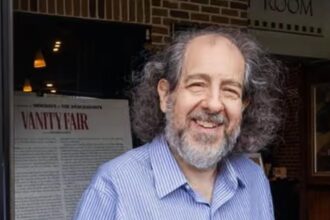


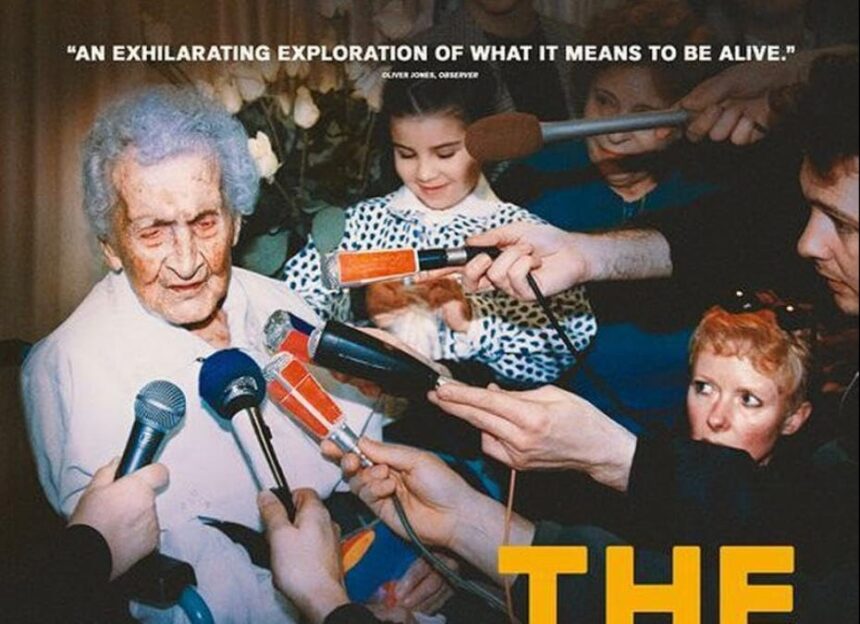
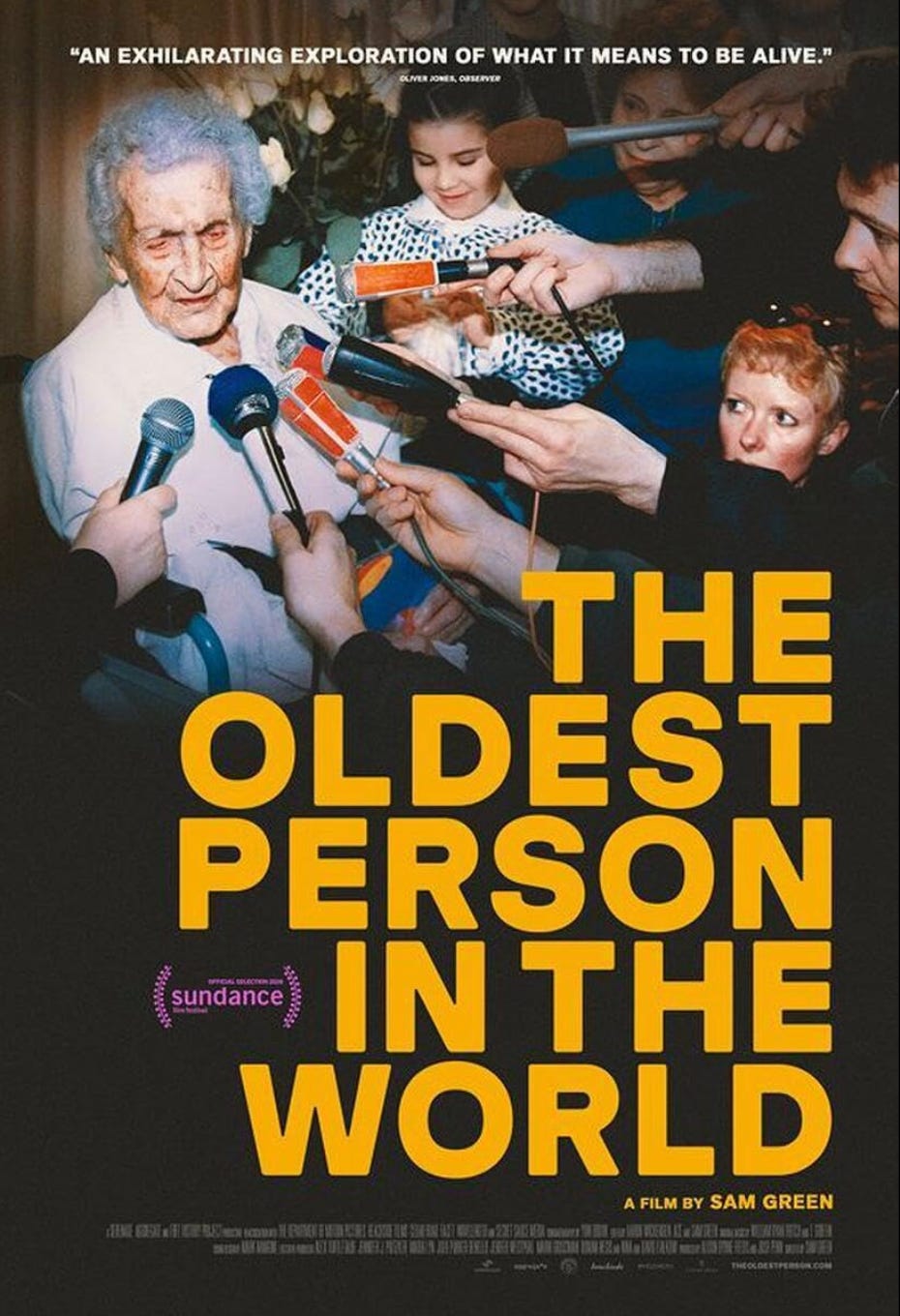
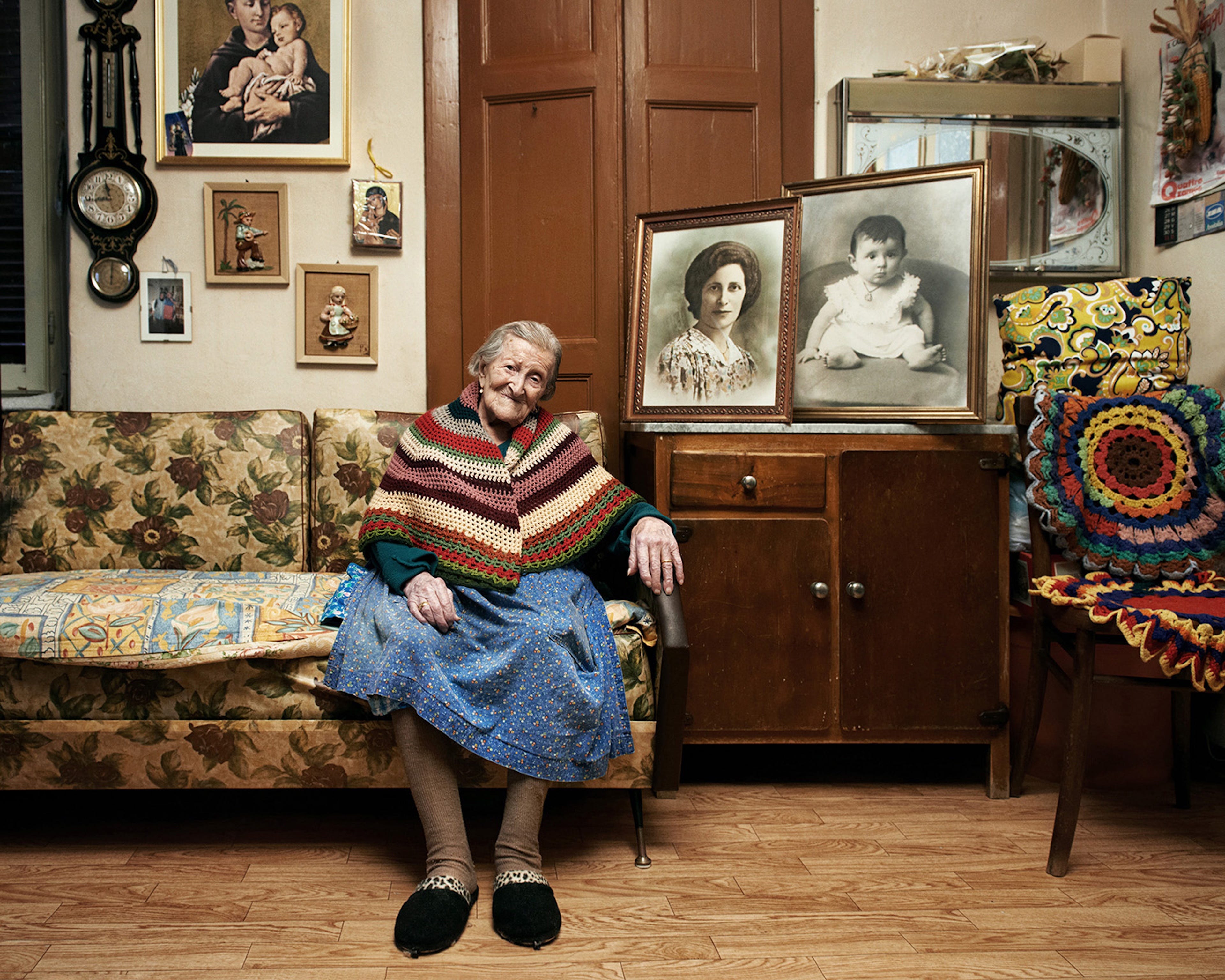
In this vHopeful Conversation, I was delighted to speak with Oscar-nominated filmmaker Sam Green about his tender, funny, and profoundly moving new documentary, The Oldest Person in the World. Over the course of a decade, Sam traveled from Brooklyn to Italy, Jamaica, Japan, France, and beyond in pursuit of the ever-changing title, only to discover that the film was less about a secret to longevity than about time, chance, love, family, grief, memory, mortality, and the remarkable strangeness of being alive. We discussed the women who have held the record, the vital role of supportive community and humor, Sam’s deeply personal decision to bring his son Atlas, his mother, and the loss of his brother into the film, and his fascinating plan to continue documenting the world’s oldest person across generations. We also talked about documentary as a form of conversation, the importance of art in difficult political times, and why seeing this expansive meditation on our shared humanity in a theater, among other people, can be such a powerful experience.
Transcript lightly edited. Podcast available on Apple, Spotify or wherever you listen on this Substack or Ted’s Hope for Film
Vanessa Hope I am very excited to be joined by Oscar-nominated documentary filmmaker Sam Green, whose films Ted and I have long admired. In fact, we were in the audience at the Ace Theater for his live performance of 32 Sounds. He’s made films including The Weather Underground, A Thousand Thoughts, and Utopia in Four Movements.
Sam always kind of combines historical inquiry, formal play, personal reflection, and a deep curiosity about how we make meaning from the world around us. His new film, which we’re so excited to discuss, is called The Oldest Person in the World and follows a decade-long journey—this I understand, I’ve been there—to meet the shifting holders of an extraordinary title: people who have outlived everyone else on Earth.
And actually, I’m just going to throw this in here. While we’re talking about record holders, Sam Green has had more documentaries at the Sundance Film Festival than any other filmmaker on Earth. For this film, he’s traveled across continents as the record passes from one super-old person to the next. There’s an official word, supercentenarian, but extra old.
Sam Green Super-old people is good. Yeah.
Vanessa Over one hundred years old, and discovers not some simple secret to longevity, but a very tender, funny, unexpectedly personal meditation on chance, grief, family, mortality, and the profound strangeness of being alive. Sam, thank you for being here.
Sam Wow, thank you. And that was such a nice intro.
Vanessa So, okay, you put this in the film, so I can’t pretend I don’t know how you started this film. You tell us you’re in the subway—wait, you’re in the subway in New York, and someone is like, “Did you know that the oldest person in the world just died?” Or wait, somehow it came to you. Remind me: how did this project come about?
Sam Yeah. I had been paying attention to the oldest person in the world. I’d made a film about the Guinness Book of Records, so I was curious about it and always kind of puzzled that people made such a big deal out of it. And then suddenly the oldest person died and the new person was in Brooklyn. And she was just several stops on the subway from me.
So I was like, wow, I don’t believe the universe is telling me to do stuff, but it kind of feels like I should do something about this. So I went and filmed her birthday party. She was having a big birthday party. So I went and filmed just on a lark, and that’s really how the film started. Because it was so weird. It really—it’s, like, strange.
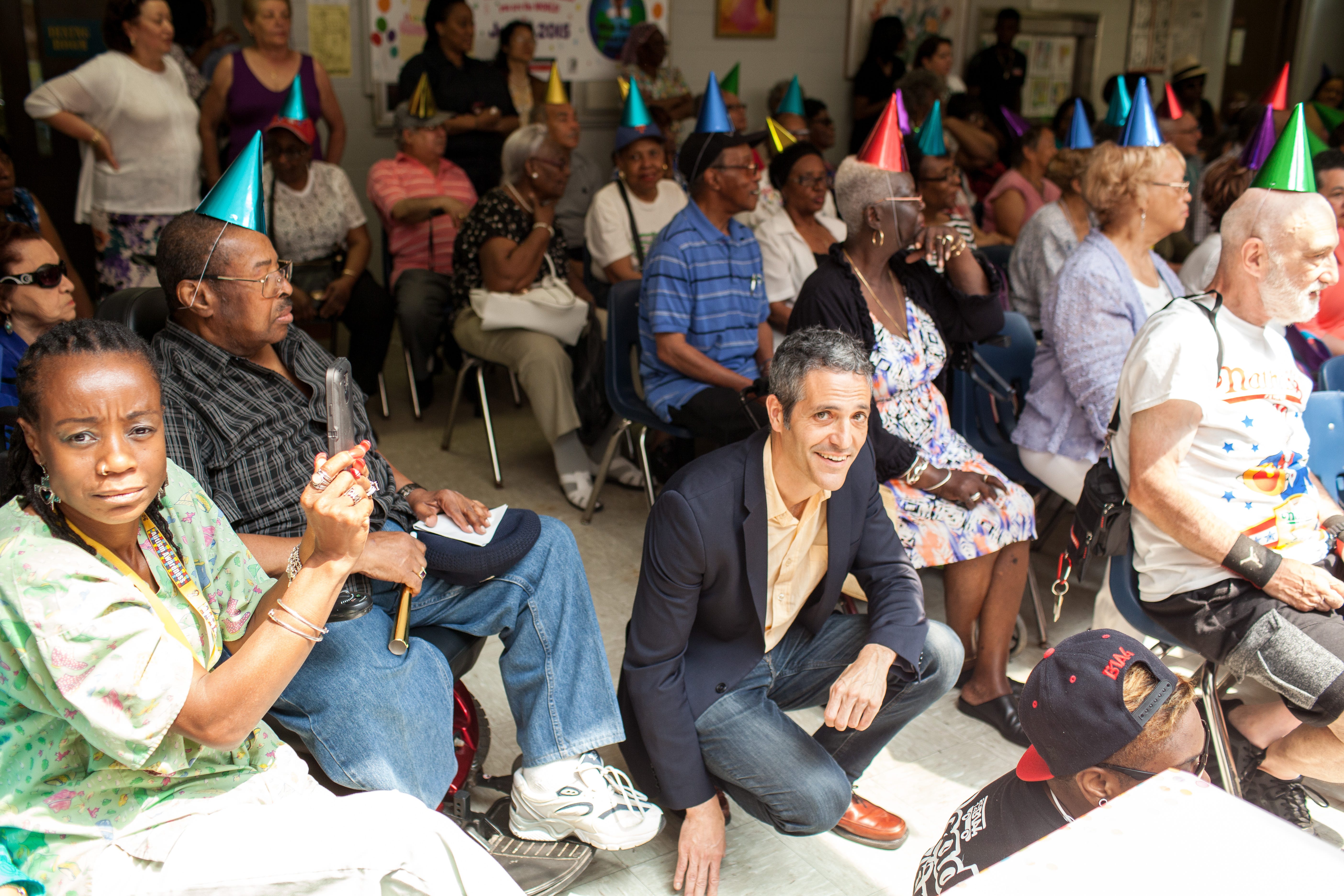
Vanessa Mm-hmm. You were like, “I can’t ignore this,” and then you’re there at the party and this wonderful old woman is basically, like, falling asleep in her cake.
Sam She was asleep the whole time. And people were making speeches, the mayor was there, you know, youth groups, all this stuff, and nobody acknowledged the fact that she was asleep the whole time. It was just really weird, I thought. But in that sense, also really intriguing. Like, what is going on here? If you were an alien who dropped in, you’d really be puzzled, as I was. So that’s kind of where it started.
Vanessa Yeah. That’s where it started. And then you just decided, let me keep going. I’m curious about the next person who’s going to hold—
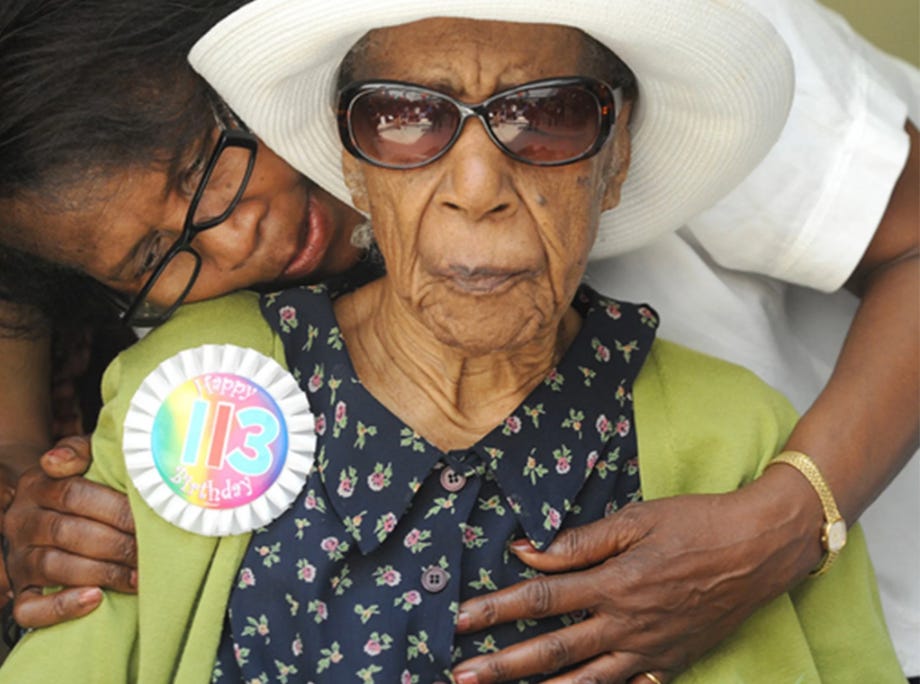
Sam Well, I had this weird experience at the birthday party. She was asleep the whole time. And then I asked her niece, “Could Yoni, who was filming with me, and I come by her apartment and just film a little with her?” So we went to her apartment a week later. Her name was Susannah Mushatt Jones, and she was this wonderful woman. She was 116, she was very tired, and again, she was asleep the whole time.
Which was kind of a disappointment, but we did an interview with her niece. Her niece was eighty-two years old. And her niece was so wonderful and lovely, and the way she cared for Miss Susie, as she was called, the way she kind of stroked her hair and talked about her, was so moving. I’ve done a million shoots in my life, but that one was one of the most powerful ones I’ve ever done. And it planted a seed somehow.
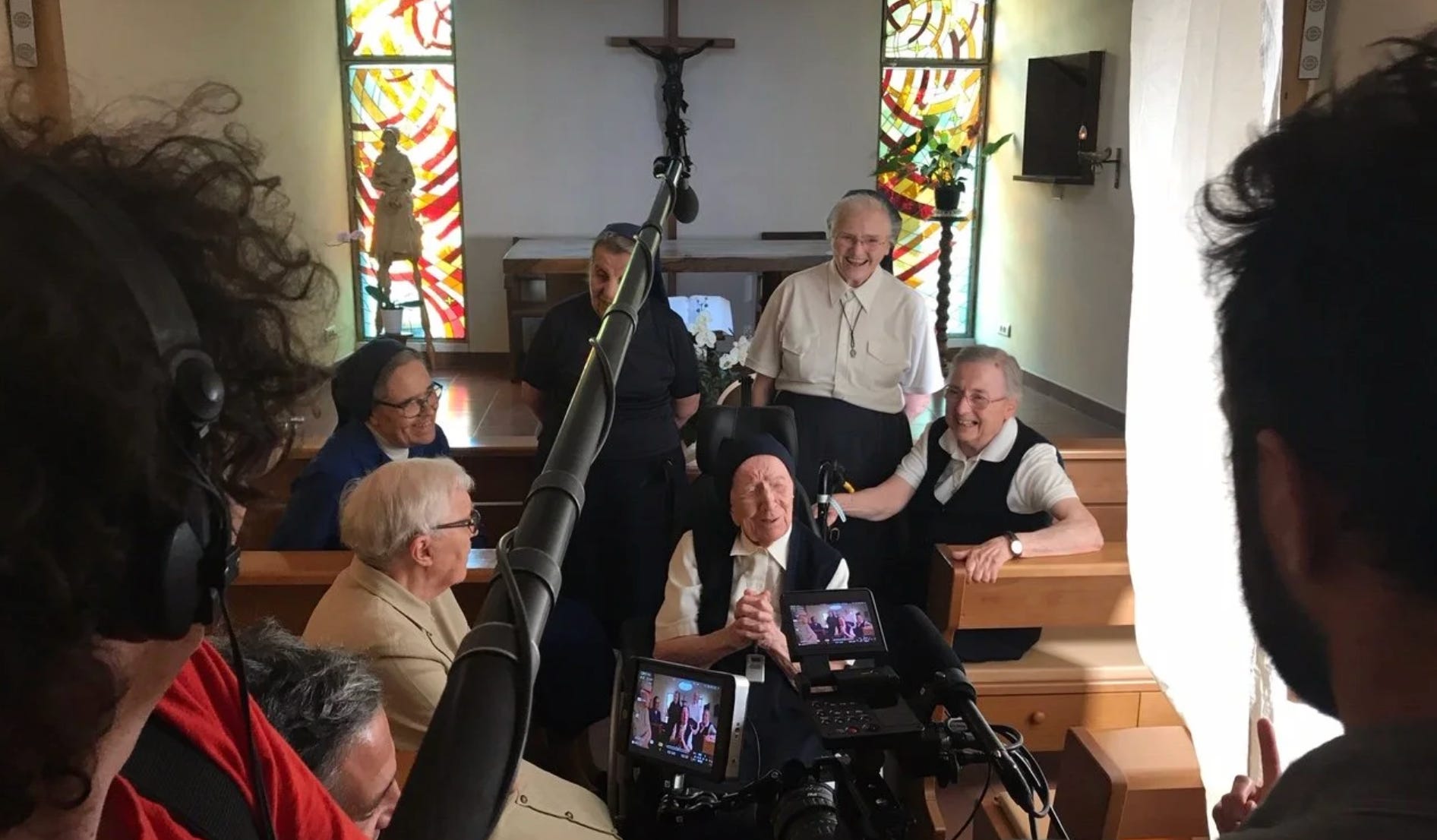
So then I saw that Miss Susie died eventually and the new person was in Italy, and I was in Italy, and I said, “Maybe I’ll shoot this person.” It was still kind of a lark. And there too, I had this really profound, weird experience. And at that point I was kind of like, you know, the film got its hooks in me, really.
Vanessa Yeah. And it is something, as you’re watching the film, you’re thinking about: is it that her niece touches her, that she has so much love, that she’s lasted so long beyond one hundred? Or, you know, I mean, not some kind of simple secret, but did there start to be an accumulation on your part, an understanding of what it is that keeps someone alive so long, or—
Sam Well, yeah, yeah. It’s funny. Two things. One, this is not a spoiler, but it’s all women. Like, men don’t even compete, you know? And many of them are women without kids. So I said to Miss Susie’s niece early on, I was like, “Why do you think she’s lived so long?” And Lavilla, the woman, said, “She doesn’t have the two things that’ll kill you: a husband and kids.”
I thought that’s great, but if you think about it, those are very stressful parts of your life, you know, for better or for worse. There’s a lot you gain. But so that’s one thing. One of the secrets, you know, is be a woman and often don’t have children.
But the other thing was, I filmed an interview with one of the leading gerontologists studying supercentenarians, people over one hundred and ten. So I said to him, of course, “What’s the secret?” And he said, “The secret is, choose your parents and your grandparents wisely.” It’s genetic. You know, a lot of it is genetic. If your grandparents and parents died at seventy, you’re not going to live to be a hundred.
Vanessa Mm. Okay. Right. And when it becomes a bigger project, you’re basically—it’s fascinating. You’re traveling the world now. So you’re seeing these patterns among these women, who also seem to have a pretty good sense of humor. Like, a few of them crack jokes about—
Sam Yeah. Yes. And the other part of that, though, is it’s not people who live alone and don’t have anybody around them. If you live alone and don’t have anybody around you, you’re not going to live a long time. These are people with loving families. Or two of the people I filmed with have been nuns, which it turns out is perfect because you don’t have a husband and kids, you’re married to God, but you have all these sisters around taking care of you. So it’s kind of like the perfect environment to live a long time.
Vanessa This is good to understand what we need in our communities and for a happy, long life.
Sam Yeah. No, but I mean, it’s all stuff that kind of is really common sense. Stress is bad for you. A loving, supportive environment is good for you. But they are all people who, in general, are kind of funny, don’t take life too seriously. You know, there is clearly that.
Vanessa Yeah. Right, right. I was so blown away by the woman you meet in Jamaica, I think, who’s basically reciting an entire song—poem. What was that?
Sam Yeah. We asked, does she have any advice? And she said, “Catch and hold,” which, meaning, I think, if you take something in, hang on to it. And she said, “When I was a schoolchild, the teacher came in and told me to memorize this poem and I was crying. Do you want me to recite it to you?” We were like, “Yeah, of course.”
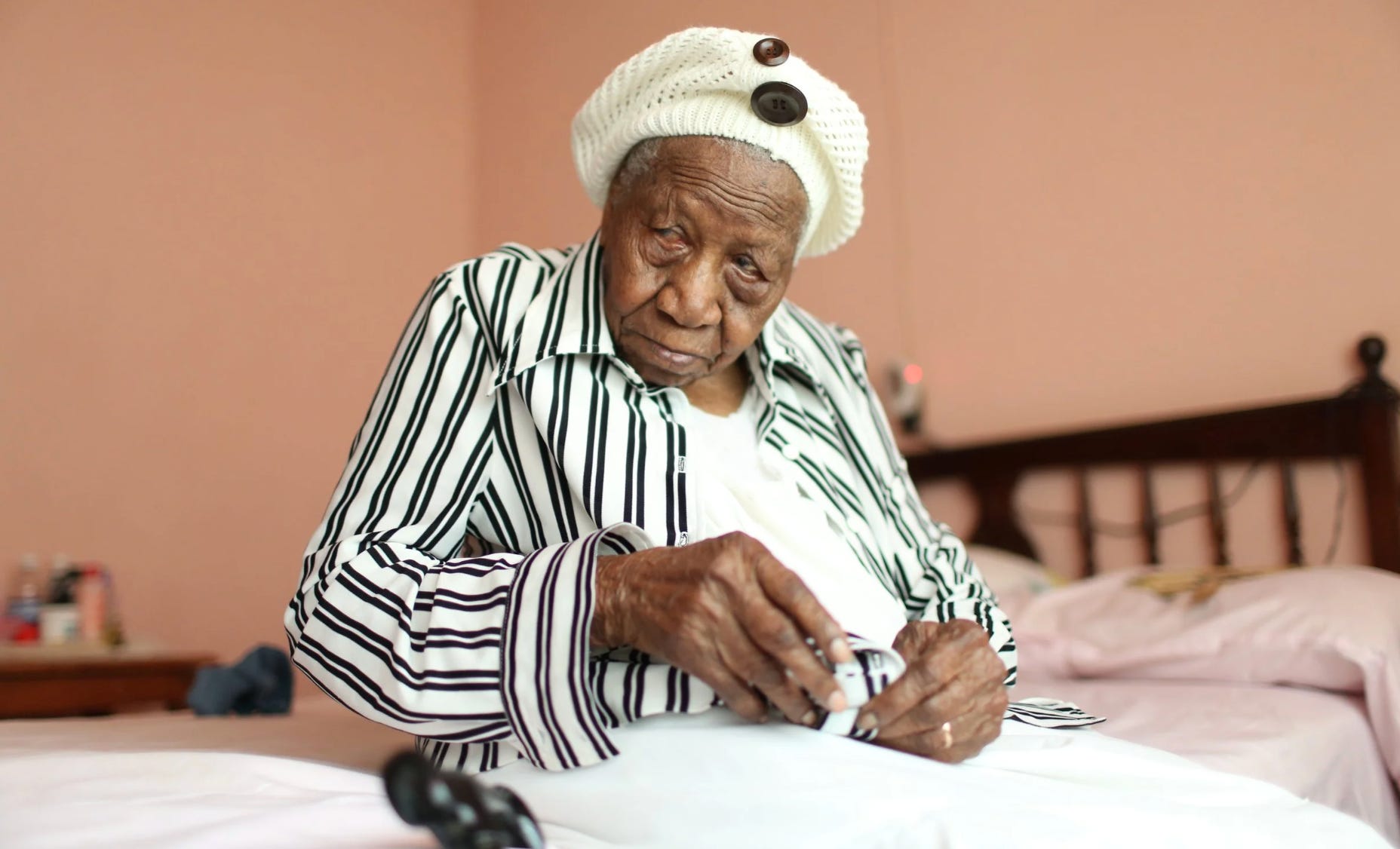
And she recites about a five-minute poem. It’s “The Vision of Belshazzar” by the guy who swam a lot and was a rival of Casanova. Anyway, she just recites this long, very kind of arcane poem she memorized 110 years earlier. And it’s like, I can barely remember a phone number now. Like, how does this stay in her head? But she did it, and it was really completely remarkable. I’ve never seen anything like it.
Vanessa It was. No, yeah, me neither. And what is also moving in your film is the way that you start to bring your own life into it. You’re a master at kind of figuring this out. It’s not easy to share your own vulnerable experiences, and you do it in a really moving way. Your son, Atlas, is born when you’re making this film. Maybe just let’s start there. How did that idea to include maybe the youngest person in the world at that moment and the oldest—how did that come about?
Sam Well, I was filming these 116-year-olds, and I knew from the beginning I wanted to make a movie about time. It’s about time in many ways. And I was filming these 116-year-olds, and they all were 116-year-olds. I couldn’t show time passing at all. It was almost like Groundhog Day, where it’s just the same thing over and over again.
And this was right around the time my son was born, and so I thought, if I film him growing, it can be a kind of counterpoint and a yardstick that shows time passing. Also, it’s funny, because before he was born, I did this funny—I feel like an idiot—but I was like, “Maybe I should film the youngest person in the world. How can I figure out who is the youngest person in the world?” I really thought about it, and then I was like, wait a minute. Every single one of us was the youngest person in the world for one tiny fraction of a second. Like, that’s amazing.
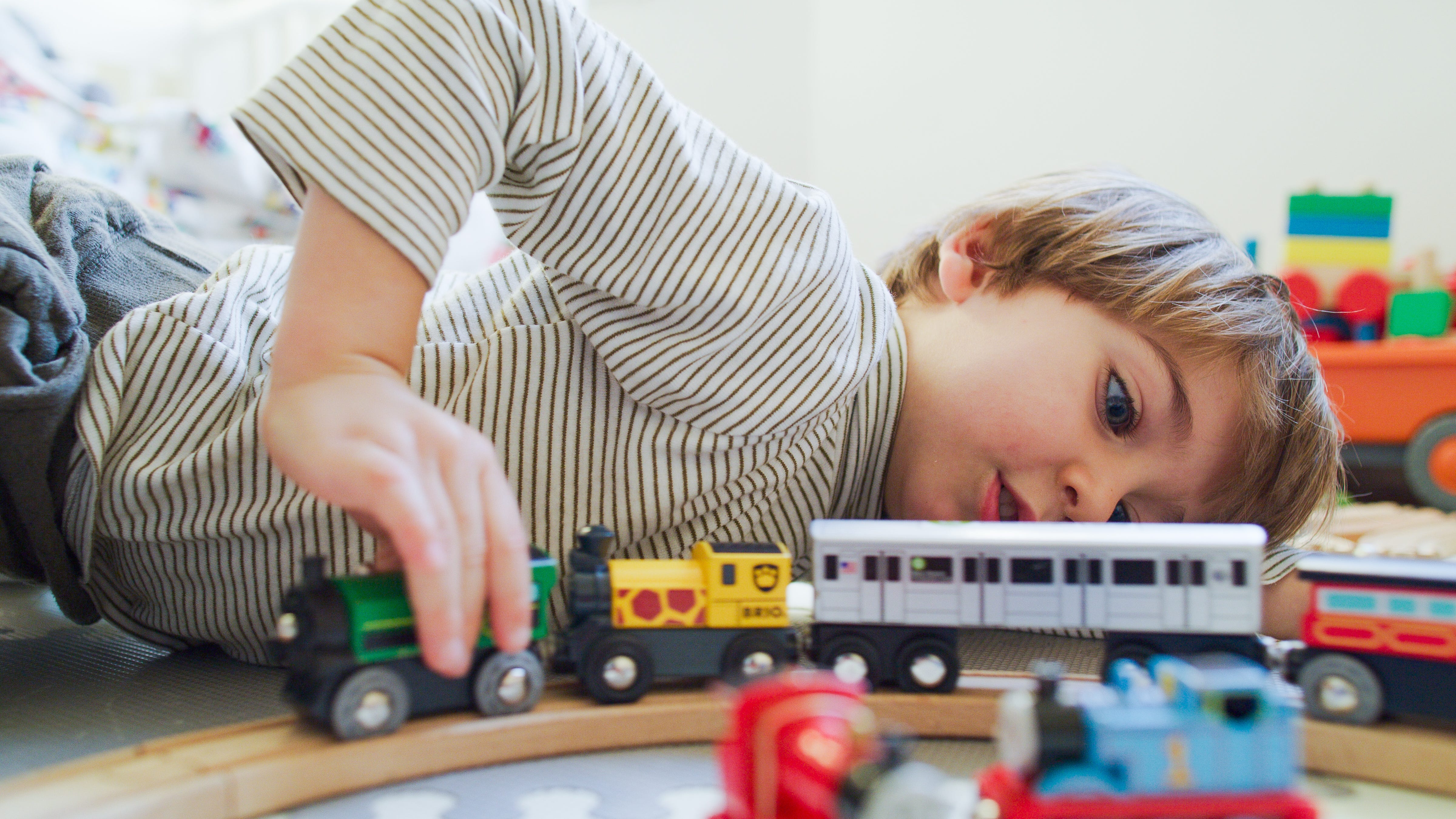
And so I thought, I’ll get a picture of him as the youngest person in the world. You know, it sort of made sense. But the other—it’s the most personal film I’ve made. I haven’t made super-personal films before, and this one is. And it definitely wasn’t what I set out to do.
You know, one of the things I love about documentary is you set out to make a film, you go forth with your idea, and the world says, “Wait a minute, it’s not that, it’s this.” And you have to shift, and that’s great, because in my mind, the world is much more interesting than anything I could think of.
So, you know, I thought I was just going to do these portraits of old people and they’d be super wise and it’d be fun and interesting and about deep things, but it didn’t add up to that. And also there’s the thing where, you know, at least me, I set out to make a movie, or it gets its hooks in me, I’m working on it, I have no idea why I’m doing it. It’s just kind of a compulsion. There’s a reason why, but I don’t know it.
And over time you start to see, this is not an intellectual fascination with the sociological phenomenon of the oldest person in the world, even though it seemed to be that. It was, you know, I’m asking questions about life myself because I want answers, like many people. And that’s what it is, and you start to realize that and that starts to come into the movie. So that’s how I came in, and my brother and mother and, you know, it—yeah.
Vanessa Yeah. Right. It’s emotional. And I’m so sorry about your loss—your brother. That is something—
Sam Thank you for saying that. I mean, it’s one of the things—we all, you live long enough and you lose people, and it’s a natural part of life.
Vanessa Yeah. But you’ve honored him in this way with your film and your memories and your footage, and it’s really beautiful. And your mom too. I thought your scenes with her were beautiful. And your son—so cute.
Sam Thank you. I showed my mom, it’s funny, and she said, “I love it, but I don’t understand why I’m in it.” You know, and I just laughed.
Vanessa Yeah. There’s no way I could ever get my mom in a film. She’s way too shy. But ninety-two is pretty good for a mom. You might have some pretty good genes.
Sam Yeah, yeah. She’s doing good.
Vanessa And you know, it’s beautiful at the end of your film. We can keep going in the middle, but just when we’re talking about Atlas, I like how you two are running on a track at the end, he’s in front of you. And by the way, watching him grow up, we just see he’s incredibly comfortable in his body. Like, he’s really a good dancer and then he’s a good runner, and then he kind of gains confidence in himself.
Sam Yeah. But all kids—one of the things about that is all kids are very, you know, flopping around. And I like that just as a counterpoint to the oldest people in the world, who are not that. You know, they’re the opposite of that. And so to see life and vigor and growth, you know, hopefully, cut against the aging and the decay and the—you know, a little bit.
Vanessa Definitely. That’s a huge contrast. You’re right, because so many of the older people, right, they can barely keep their head up or they’re asleep in their chair. Yeah. No, but you’re running on this track with your son and fantasizing, in a way, that this—well, you tell us you’re going to keep this going. So you are probably already making the next one, or two. I want to hear about this. And then also hoping to pass this on like a baton to your son, and that he will continue making films about the oldest person in the world.
Sam Yeah. I mean, in a way, one of the challenges of this film is that you’re making a film about the oldest person in the world and you finish, and then pretty soon after that it’s out of date. Because it’s a record that changes all the time, you know, literally every six months or a year, maybe a year and a half.
So in a way, this is one of the things that intrigued me about it: it’s impossible to fix. You can’t wrap your arms around it and have it the way many documentary subjects you can. This one, you’re always going to be out of date.
So I’m always a big fan—I’ve made many forms of films, and I really like making a form that comes out of the subject matter. You know, 32 Sounds was about sound, and the only way to make a good sound-movie experience was for everybody to wear headphones. You know, it kind of made sense.
And so with this, I was like, how can I make a movie about a subject that never ends? And it’s also about time. And so I thought, I’ll just keep working on it forever. You know, I’ll always do The Oldest Person in the World.
And so that was the kind of conceit. And I still like that idea. We’ll put out a version every ten years and it’ll just keep going as long as I can. And in the end of the film I sort of muse about how wonderful it’d be if Atlas took over, and then his kid, and his kid, and in 250 years people were saying, like, “The Greens have been documenting the oldest person in the world.” And there’s just something about that that tickled me. I mean, I don’t know.
No, but it was entirely serious. He can be whatever he wants and do whatever he wants. But I love the idea of a—because in some ways, to me, The Oldest Person in the World is this celebration of our humanity and what we can do as a human race. It’s epic, it’s huge. And I feel like making something that’s as grand and ambitious and spans time and is just, like, epic is fitting.
It doesn’t make sense if it’s just, like, a film I worked on for a couple of years. You know, it needs to be a life work. So that’s what really excited me.
Vanessa Yeah. I get it. That makes so much sense. And you also share in the film that you faced your own mortality. You had a—
Sam Yeah. And not to give too much away, but in the film, while I was making the film, I got very sick. You know, a serious, serious sickness. And I’m okay now, and modern medicine is miraculous, but it did make me feel a huge appreciation that I still carry around with me for just being alive.
You know, it is one of the themes of the movie, and one of the things that I think I took from the process, from my own life and from just getting older, is that I do wake up every day thankful to be alive and feeling very, very lucky, which is a great, I think, a great kind of worldview to have.
Vanessa I think so. It could get you into this supercentenarian category. You never know.
Sam Well, I’m a man, so, yeah. You maybe, me, no.
Vanessa Maybe. No, I don’t know. So I’m very curious how you first got into documentary film. Could you ever have imagined this is where you’d be now?
Sam Wow. Well, it’s funny because how I got into documentary film, I was always very curious about the world. As a kid, I was super into Bigfoot, and I just, like, loved the world, and it continued into my adulthood.
And in my twenties, I thought, I’m going to be a newspaper reporter, because that’s a way to be interested in the world, talk to people, and make something. So I went to the UC Berkeley Graduate School of Journalism to be a newspaper reporter.
And I did all the classes my first semester, and I was signing up for classes the second semester. It’s a little embarrassing to say this. And my friend who was signing up too said, “Hey, I hear the documentary film class is really easy. You want to take it with me?” And I said, “Yeah.”
And it’s funny because I knew nothing about film. My parents didn’t even have a TV when I was growing up. I’d never seen any documentaries other than, like, really boring PBS documentaries. But this class was taught by a filmmaker named Marlon Riggs, who I’d never heard of, but is a great, important person in documentary history.
And through his class, we saw films that just made my head explode, like Salesman by the Maysles Brothers and Titicut Follies, Sans Soleil. These were movies—I’d never seen anything like that. And just, like, how is this movie making me feel things and doing things to me? So it really opened my eyes to the experimental-documentary tradition and kind of lane, and Marlon’s work also was in that.
And I just—I was like, I love these films. This is what I want to do. And I feel like, you know, I tried to stay in that lane. So that’s how I got started making documentary film.
But in a way, I’m remembering there’s a great Walter Murch quote where—I hope I’ll get this right—he said something like, “As I’ve gone through life, it’s occurred to me that your chances of happiness are greater if you wind up doing something that reflects what you loved most when you were between nine and eleven years old.”
And, like I mentioned, I was reading the Guinness Book of Records when I was between nine and eleven. I was fascinated. So I do feel like, well, you know, I have landed where I probably should have landed.
Vanessa That’s so good. And you know, what’s beautiful about the documentary, and in general with documentary film, is you are going beyond the headlines. You’re going beyond what the broadcast news tells us about the oldest person in the world. The paparazzi might all be in that room and might all be saying, “Tell us the secret. What can we do?” But yours is so much deeper and has all these layers.
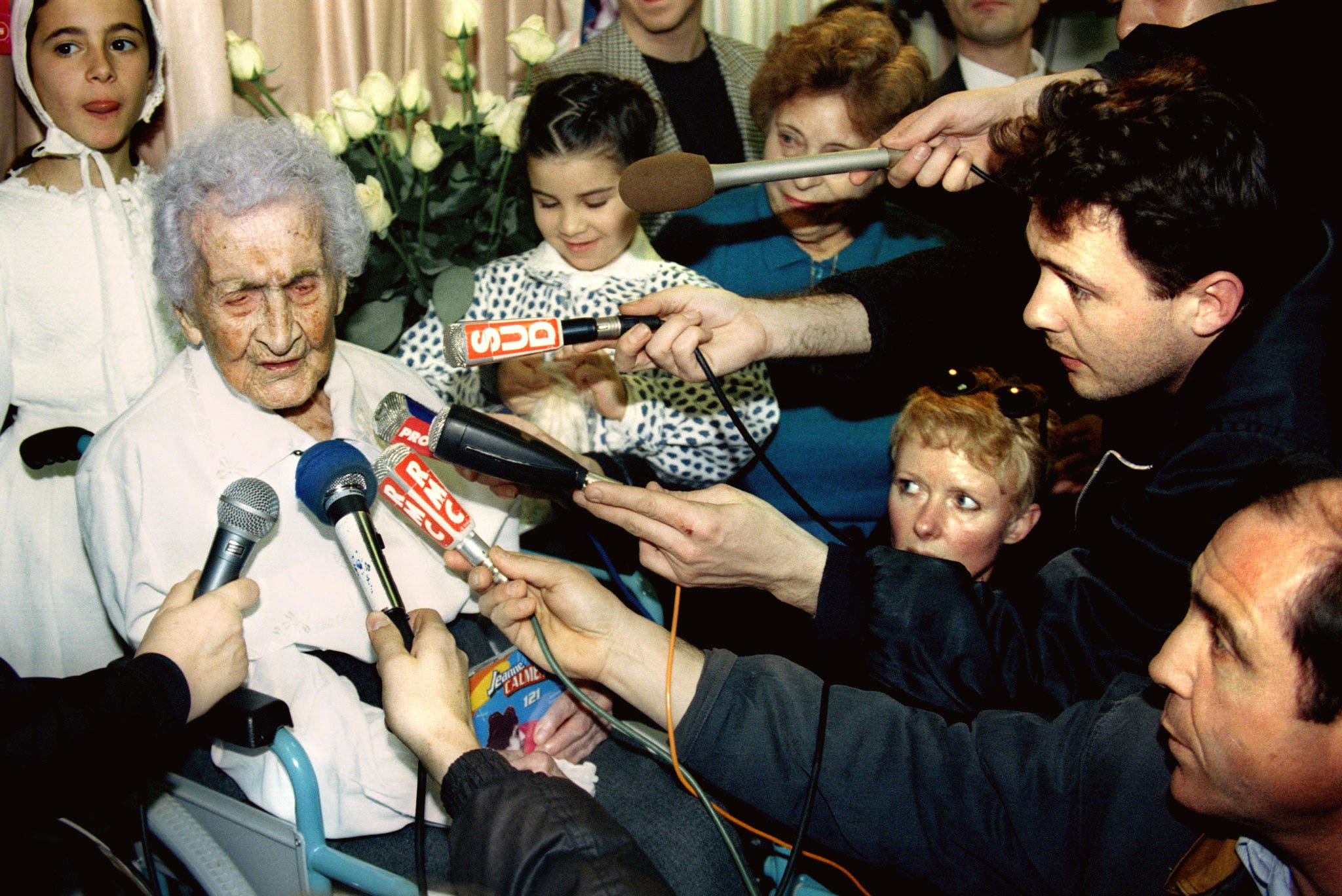
And then great cinematography and a personal narrative people can relate to. So it’s a more profound experience, I think, than what we can get with the news. So I’m glad you went into documentary.
Sam I hope so. Thank you. Yeah, yeah. Also, being a newspaper reporter isn’t—you know, I’m sort of glad I dodged that bullet.
Vanessa Yeah, painful experience, those deadlines. And the media environment today is a disaster. So glad for documentary. And tell me what you’re doing, because you’re continuing this story.
Sam Yeah. I’m going to keep going. It’s funny because when we were finishing, you know, around Sundance, this movie, Josh Penn, my producer, said, “Are you really serious about keeping going?” And without thinking, I said, “Hell yes.” You know, it really excites me to keep going because I think, in some ways, a movie—it’s sort of like Boyhood, which is a movie I loved.
Vanessa Mm-hmm. Richard Linklater. Yeah.
Sam Yeah, the scale of time is what makes it so great. And so I feel like this project will only get better as the amount of time is longer. There was a great movie maybe two or three years ago, Apolonia, Apolonia.
Vanessa I loved that movie. That was so good.
Sam I love that movie. And she followed that woman for eighteen years. And at some point, I remember either reading or somehow I heard she was going to try to finish it after ten. And I thought, wow, it would have been so much lesser of a film, because so much happens. And so I kind of feel like the longer this goes, the better it will be. You know, so I’m really excited.
And also, in a way, this will sound strange, Vanessa, but it’s a project that’s—and almost all the films I make are very circumscribed, you know, like The Weather Underground. It’s all stuff I’ve figured out beforehand. I’m an uptight and controlling person. And this is a movie that is only about the open future and the unknown—what’s going to happen? We don’t know. So in that sense, I love it. It’s like, Jesus, ten years, what is going to happen? I can’t wait.
Vanessa Exactly. I love that. And it just so happens—and you’re much younger—but you’ve got The Bend in the River by Robb Moss and you’ve got Remake by Ross McElwee. And so those two guys, they’re, professors of documentary at Harvard. They both started at MIT, and they’ve both remade or reexamined their lives, footage from previous films in their current films. Ted and I saw all three of your films around the same time and we were like, my gosh.
But what I love in your film, what I really felt is unique, I felt like you’re having a conversation. Like, the film is a conversation. It feels more like an invitation to a conversation. And I felt I could immediately have a conversation about the ideas in the film. There are so many deep ideas that you’re exploring, and I love how you describe why you want to continue it. It makes total sense.
Also, I think if you describe yourself as controlling, then you’re not.
Sam Yeah. That’s great. I like that. Okay, I’m not. I’m not.
Vanessa So, yeah, what else can we understand? Because I love how the film travels. Were you surprised by the countries that you got to travel to or ended up traveling to, or—
Sam Yes and no. One of the funny things about the oldest person in the world, though—and this is interesting—is that you have to show an original birth certificate. Which means there are certain countries that have records from that time and lots that don’t.
So the oldest person in the world, it’s not a coincidence, they’re always from Japan, you know, Spain, France, Jamaica, which was a British colony. You know, there are places where there were records back then, which is starting to change. There was recently an oldest person in the world, first time in the Southern Hemisphere, somebody from Brazil. So the world is catching up.
So in some sense, I loved going to the different places. I went to Japan, you know, south of France, all that.
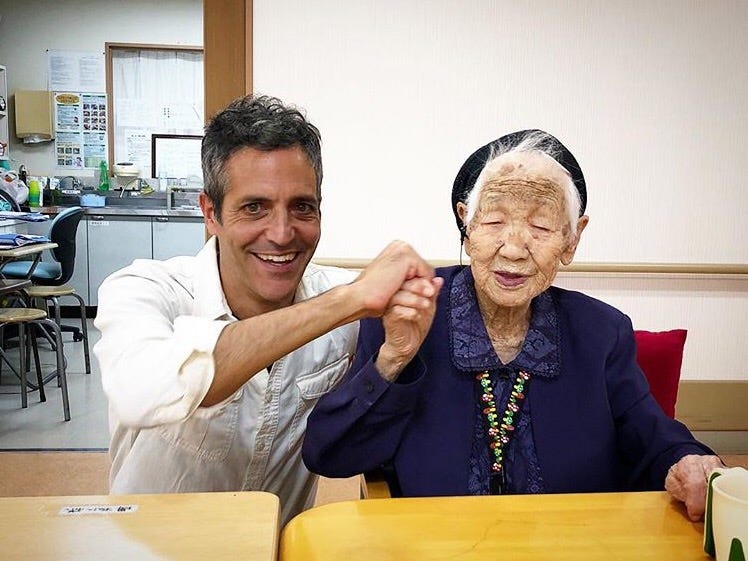
But it was interesting, and I noted I wasn’t going to Africa or I wasn’t going to, you know, South America. And it will change, you know, and it is changing. So I like that. That’s kind of cool.
Vanessa That could be in the future. Yeah, that’s really interesting. It’s giving a global sense of how we’re changing, how humanity is changing and surviving. Although, does it not feel like—not to go dark all of a sudden, because this has been fun and light—but don’t you feel like the world is trending in the wrong direction and maybe we’re going to—I don’t know, just our country is quickly being destroyed, and others too. And I—the question of progress, I guess, is what I’m thinking.
Sam Yeah. I mean, I don’t know if that’s even progress. It’s just that in the early 1900s they started keeping records more in different places. But you’re right, in terms of the direction of the world, I agree.
And in some ways that’s also a motivation for me, because I do think there’s a line in the film, at the end of the film, that maybe this project is as close to the answers to the big questions as I’m going to get: to build a monument to the, I think it says, mystery, heartbreak, and beauty of it all.
And in the face of the world and all the difficult things that are happening, and how everything seems to be going in worrisome directions, I personally feel like making art that means something to people and connects with people is one of the most valuable and powerful things one can do. And also the thing I can do best.
So the more the world is going to hell, the more I’m committed to making my work, connecting with people and moving people in profound ways, the way the best art can do.
Vanessa I completely agree. And actually, I read Robert Reich regularly, speaking of Berkeley, California. And he just did a poll that was like—you know, he does those one, two, three, four possible answers—and it was, is our country and democracy being destroyed at a rate that’s just impossible for us ever to recover from for generations? Is there going to be some hope? Basically, I’m really simplifying this, but, you know, is there a new generation that’s coming up because of this who can change everything, like the New Deal or in the 1960s?
And so we have to have some kind of optimism. I think Ted and I just both chose the hope answer, because not just the name, but I think that movies like yours are profoundly inspiring to remind us of the importance of living life and enjoying it and finding that community and the beauty in being alive.
Sam Amen, Miss Hope.
It’s funny because I am not a religious person, but somebody said to me—and I didn’t disagree with it—they said, “That’s a very religious movie, The Oldest Person in the World.” And I was like, huh?
And there are many people in it that express religious sentiment. And in a way, I love religious sentiment. I don’t feel it. But when Miss Susie’s niece says—you know, I’m interviewing her and she says, “I need to tell you, I do believe in God, and I believe that God has had Miss Susie live for a reason, you know, and we all love her”—there was something so beautiful about it. It really touched me.
I feel like, in looking at the mysteries of life, which in a way the film is looking at—you know, why do certain things happen? Why do other things happen? Why do certain people live long and other people don’t? All these great mysteries that there’s no answer to—religion is one of the ways in which people try to answer that. And if you can feel it, if you can believe it, more power to you, I think.
Vanessa Exactly. I totally agree.
So let’s tell everybody where they can see this. This is a must-see movie in the theater.
Sam Thank you for saying that. And I do—I’ve had this funny thing where, slight digression, you know, every filmmaker says, “My movie should be seen in theaters.” Like, every single filmmaker alive has always said that. “Much better in theaters.”
And I think that about this movie, not because it’s important to see the oldest people in the world close up, huge on the screen, which in a way I think is like, you shouldn’t see that—you know, these enormous wrinkles.
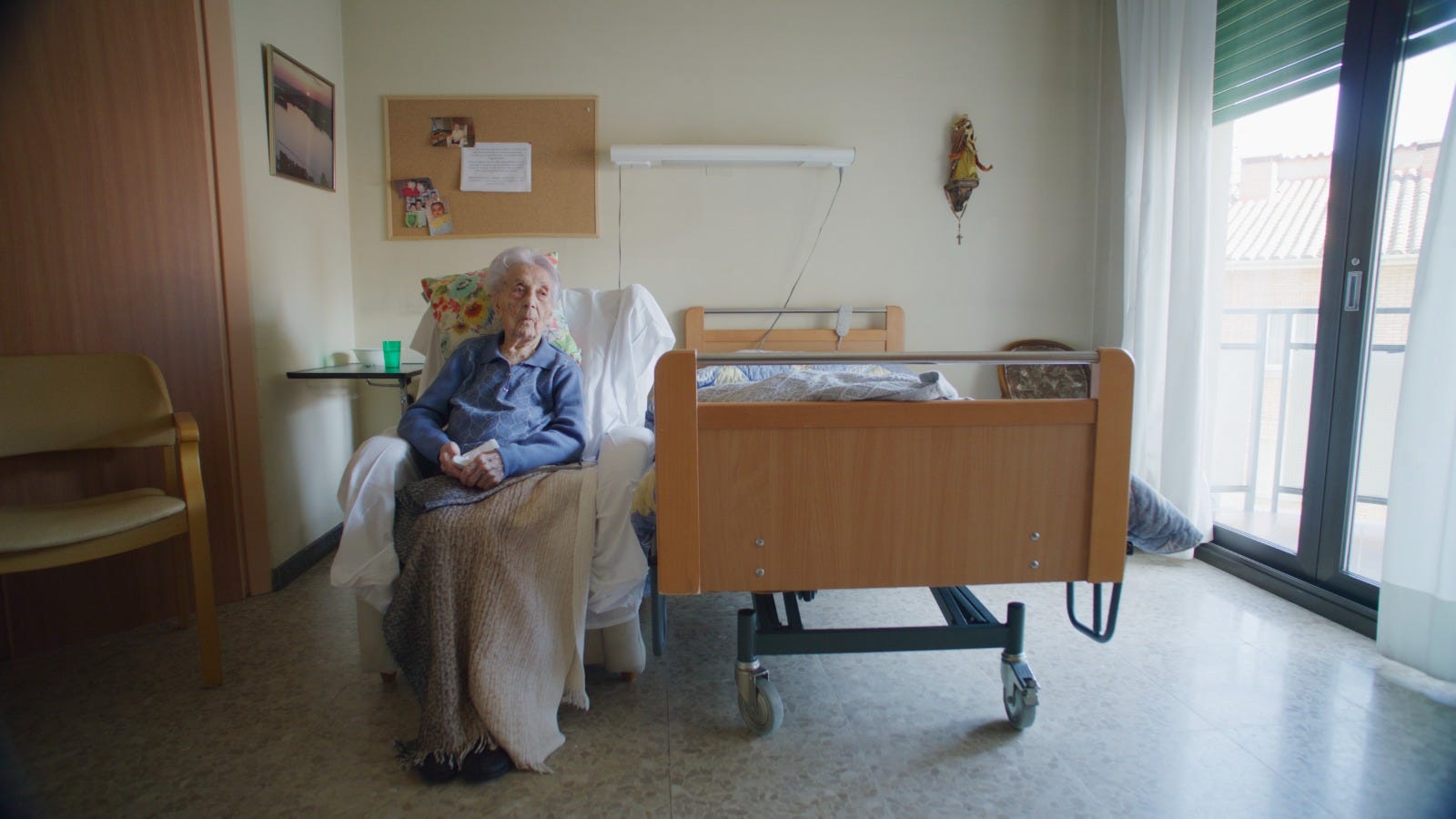
But I feel like it’s very nice to see the movie in a theater with people because it’s about humanity and it’s about people and all of the mysteries and questions we all navigate in being alive.
And seeing it with other people, who you look over and realize they’re the same as me, is a powerful thing, I think. So I do hope people see it in theaters. It will be opening in L.A. at the Laemmle theaters around town on September eighteenth, and San Francisco at the Roxie and Elmwood on September eighteenth too. And then it’s going to open in lots of other cities too. So hopefully your town.
Vanessa Fantastic. So if you’re not in those three cities, New York, L.A. S.F —it’s a huge theatrical rollout. That is so exciting. And we’ll put all this information in the post. And is there a website people can go to?
Sam Yeah, oldestperson.com/SCREENINGS, I believe.
Vanessa Okay, oldestperson.com.
So nice to talk to you, Sam. Thank you so much for this conversation. I guess you’ll be at some of your screenings. You’ll be there for Q&As, and we’ll let people know that too—
Sam Yeah, yeah. Yep. And maybe the former youngest person in the world might show up at a Q&A too.
Vanessa Great. Atlas. That’s so nice. What a cute kid. Well, yeah, he’s got to learn how to take this on. Have you given him a camera yet? Is he going to start?
Sam No pressure, though. Yeah, at the very end, in the credits, he’s running around with the camera. So that’s sort of his filmmaking debut.
Vanessa Okay, great. Nine, ten years old—you know, that defining time period. He’s into the camera—it’s going to happen.
Sam Nine. Yeah. Yeah, that’s right. He’s much more into soccer, though, so maybe, you know, he’s got a different destiny. All right. Thank you, Vanessa.
Vanessa He’ll find the balance. That’s cool. All right, yeah, thank you again. Thanks, Sam.
Sam Green – Director
Sam Green is a New York-based documentary filmmaker. THE OLDEST PERSON IN THE WORLD marked his seventh feature documentary at the Sundance Film Festival. His previous film, 32 SOUNDS (2025 Oscar Shortlist; Best Documentary, Cinema Eye Honors), played opening night of both the 2022 Sundance and SXSW festivals. Along with 32 SOUNDS (with JD Samson), Sam’s other recent “live documentaries” include A THOUSAND THOUGHTS (with the Kronos Quartet, 2018), THE MEASURE OF ALL THINGS (2014), THE LOVE SONG OF R. BUCKMINSTER FULLER (with Yo La Tengo, 2012), and UTOPIA IN FOUR MOVEMENTS (2010). With all of these works, he narrates the film in-person while musicians perform a live soundtrack. Sam’s 2004 feature-length film, THE WEATHER UNDERGROUND, premiered at the Sundance Film Festival, was nominated for an Academy Award and was included in the Whitney Biennial. He is a member of the Academy of Motion Picture Arts and Sciences.
UPCOMING SCREENINGS
CHECK THE WEBSITE: OLDESTPERSON.COM/SCREENINGS
angelika film center (NY)
Held Over! Now running through September 24!
get tickets
—
LAEMMLE GLENDALE
OPENS september 16, 2026
GET TICKETS
—
LAEMMLE ROYAL
OPENS september 18, 2026
Director sam green in person for select screenings
GET tickets
—
LAEMMLE TOWN CENTER
OPENS september 18, 2026
get tickets
—
RIALTO CINEMAS sebastopol
OPENS SEPTEMBER 18, 2026
get tickets
RIALTO CINEMAS ELMWOOD
OPENS SEPTEMBER 18, 2026
Director sam green in person for select screenings
GET TICKETS
—
GLENWOOD ARTS (Overland, KS)
OPENS SEPTEMBER 18, 2026
get tickets
SMITH RAFAEL FILM CENTER
SEPTEMBER 20, 2026 (one screening)
get tickets
ROXIE (SAN FRANCISCO)
OPENS SEPTEMBER 20, 2026
Director sam green in person for select screenings
GET TICKETS
AVALON THEATRE (DC)
SEPTEMBER 23, 2026 (one screening)
Director sam green in person
—
GENE siskel film center
OPENS SEPTEMBER 25, 2026
Director sam green in person
—
SKY MIDTOWN (SANTA FE)
OPENS SEPTEMBER 25, 2026
—