

It’s Tuesday, September 15. This is The Front Page, your daily window into the world of The Free Press—and our take on the world at large. Today: Amanda Knox and Jed Rubenfeld on Lindsay Clancy’s husband and the court of public opinion. Shyam Sankar on the ideology behind the AI warnings. And much more.
But first: The widening war in the Middle East.
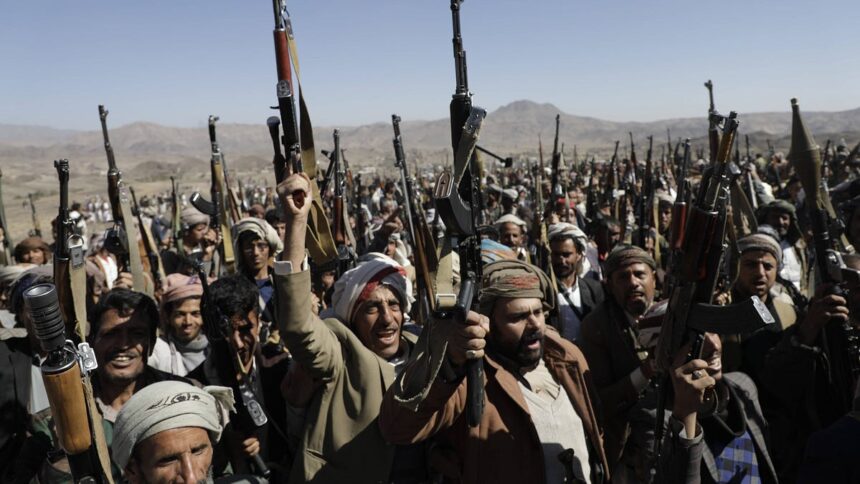
Yemen’s Iran-aligned Houthis have launched a major offensive in the Middle East—obstructing trade routes, disrupting Saudi Arabia’s most vital crude pipeline, and sending oil prices skyward. Meanwhile, the yield on 10-year Treasury bonds briefly rose above 5 percent on Monday, its highest since the pandemic, with interest rates expected to rise in the coming days.
It’s the latest reminder of the enduring influence of the Houthis in the region. The question, writes Zineb Riboua, is simple: How do they do it? “Why is this seemingly ragtag militia group so hard to beat?” she writes. And “what does the Houthis’ continued activity mean for the broader regional order?”
Today, Zineb outlines four reasons that explain why the U.S. has failed to contain the Houthis despite Washington’s relative military might—and how a weakened Iran could finally threaten their ability to keep fighting.
—The Editors

Book Now: Simon Sebag Montefiore and Bari Weiss Live in New York
For decades, the Middle East has shaped American foreign policy and loomed large in the public consciousness. Few understand its influence on our politics better than Simon Sebag Montefiore, who argues that America’s quagmires in the Middle East stem from a deep misunderstanding of the region—on both the left and the right. Join him on October 1 as he sits down with Bari Weiss live in New York City to kick off his U.S. book tour for The Cauldron: The Making of the Modern Middle East.

Patrick Clancy: Husband of a Killer
Last week, a Massachusetts judge declared a mistrial in the case of Lindsay Clancy, who killed her three children in 2023, allegedly during a bout of postpartum psychosis. But that hasn’t stopped the court of public opinion from relentlessly declaring her ex-husband Patrick Clancy guilty.
For Amanda Knox, this horror of trial-by-media is hauntingly familiar—in 2007, she was arrested and tried in Italy for her roommate’s murder and, despite her eventual acquittal, smeared as a killer in one of the first highly publicized trials of the social media age.
Today, she writes in defense of Patrick. Read her column on why he can’t win.
According to the deranged conspiracy theories, Patrick killed his children because he was having an affair. The lie persists even though Lindsay Clancy has confessed to killing her three children. Patrick’s lawyer has threatened to sue the online crackpots pointing the finger at him. Would he have a case? That’s the question Jed Rubenfeld addresses in his latest column.

Should We Trust the AI Warnings?
In a world with little agreement, there is one thing that unites almost everyone: AI is the most transformative technology of our time. What we don’t agree on is what to do about it. Over the past few days we’ve aired a range of perspectives, from Niall Ferguson and Daniel Kokotajlo on the rising risk of AI catastrophe to Tyler Cowen on why efforts to slow AI won’t necessarily impede progress. But there’s another view of this issue—and especially the developments of the past week—that argues that the warnings from AI researchers and leaders should not be taken at face value. Shyam Sankar, chief technology officer and executive vice president at Palantir, is an influential member of this camp. He lays out what he sees as the destructive ideology that lies behind calls for safety regulation:
MORE FROM THE FREE PRESS
THE NEWS
-
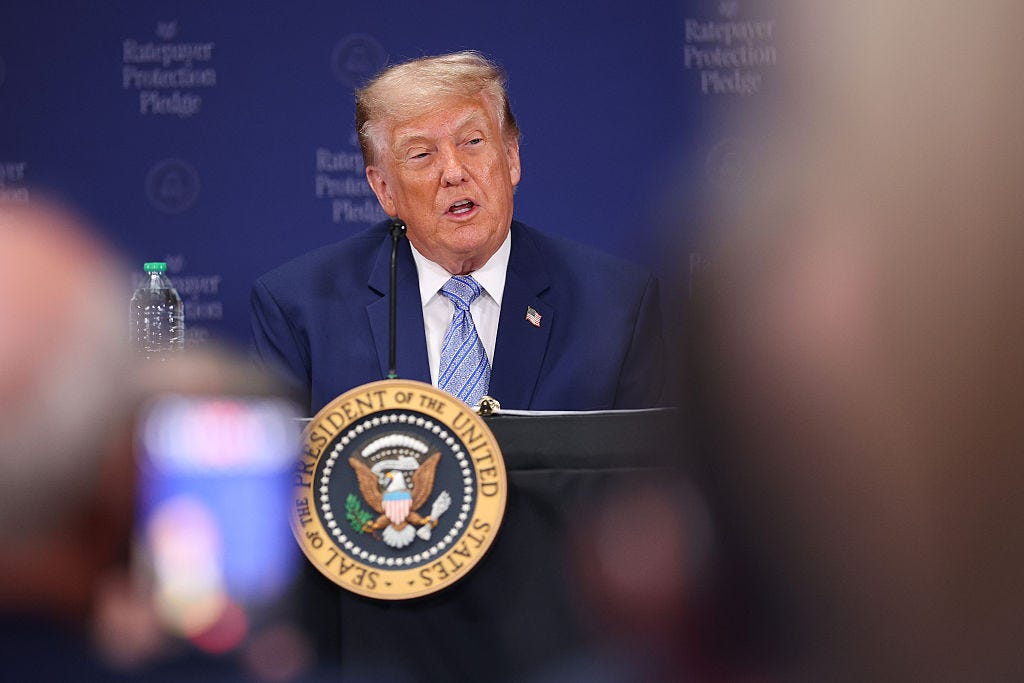
President Trump is not feeling the AI doomerism. On Monday, he rejected calls for new guardrails on the technology, writing in a TruthSocial post, “The only control or ‘guardrails’ that AI needs is a STRONG AND SMART (High IQ!) PRESIDENT.” He told reporters on Air Force One over the weekend that he uses AI “for a lot of things” but declined to specify how.
-
The Trump administration announced Monday that the Environmental Protection Agency will scrap pollution limits on power plants that burn coal and gas. The rollback marks a pivotal moment in the undoing of climate policy enacted by former presidents Joe Biden and Barack Obama, and could potentially bar future administrations from regulating power plant emissions.
-
One of China’s top intelligence officials is warning that AI could threaten the rule of the Chinese Communist Party by contributing to a potential “propaganda war.” In Beijing’s most exhaustive statement on AI risks yet, Ministry of State Security leader Chen Yixin articulated concerns about leaks of sensitive information, attacks on critical infrastructure, and competition with increasingly robust American military technology.
-
Bernie Sanders and Steve Bannon will gather in Washington, D.C., to host an event advocating more human control over AI, Axios reported Monday. Jacob Coxon, an AI safety whistleblower whose resignation from Anthropic went viral last week, was initially expected to co-host the event, though he eventually declined to attend because he said his “public profile was completely blowing up.”
-
A coalition of American cities is suing the Trump administration over a rule that discourages immigrants from using public assistance programs, New York City mayor Zohran Mamdani said Monday. The federal policy, which Trump announced this summer, would allow the government to deny visa applications based on an applicant’s present or possible future reliance on public benefits.
-
Rapper Macklemore of “Thrift Shop” fame has been axed from Ed Sheeran’s tour after he said “Free Palestine” and performed an anti-Israel protest song onstage at two concerts this month. Robert Kraft, who owns Gillette Stadium outside Boston, where the tour is set to play, was central to the rapper’s ousting and cited concerns of antisemitism in a Monday statement justifying his decision.