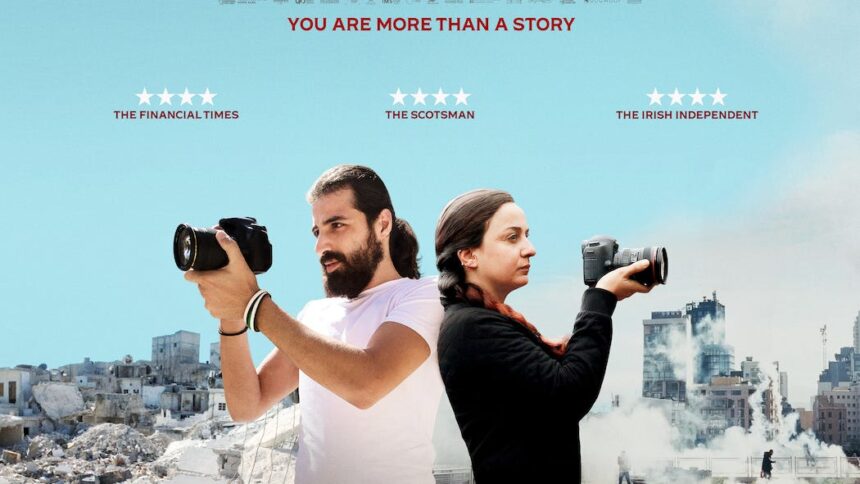
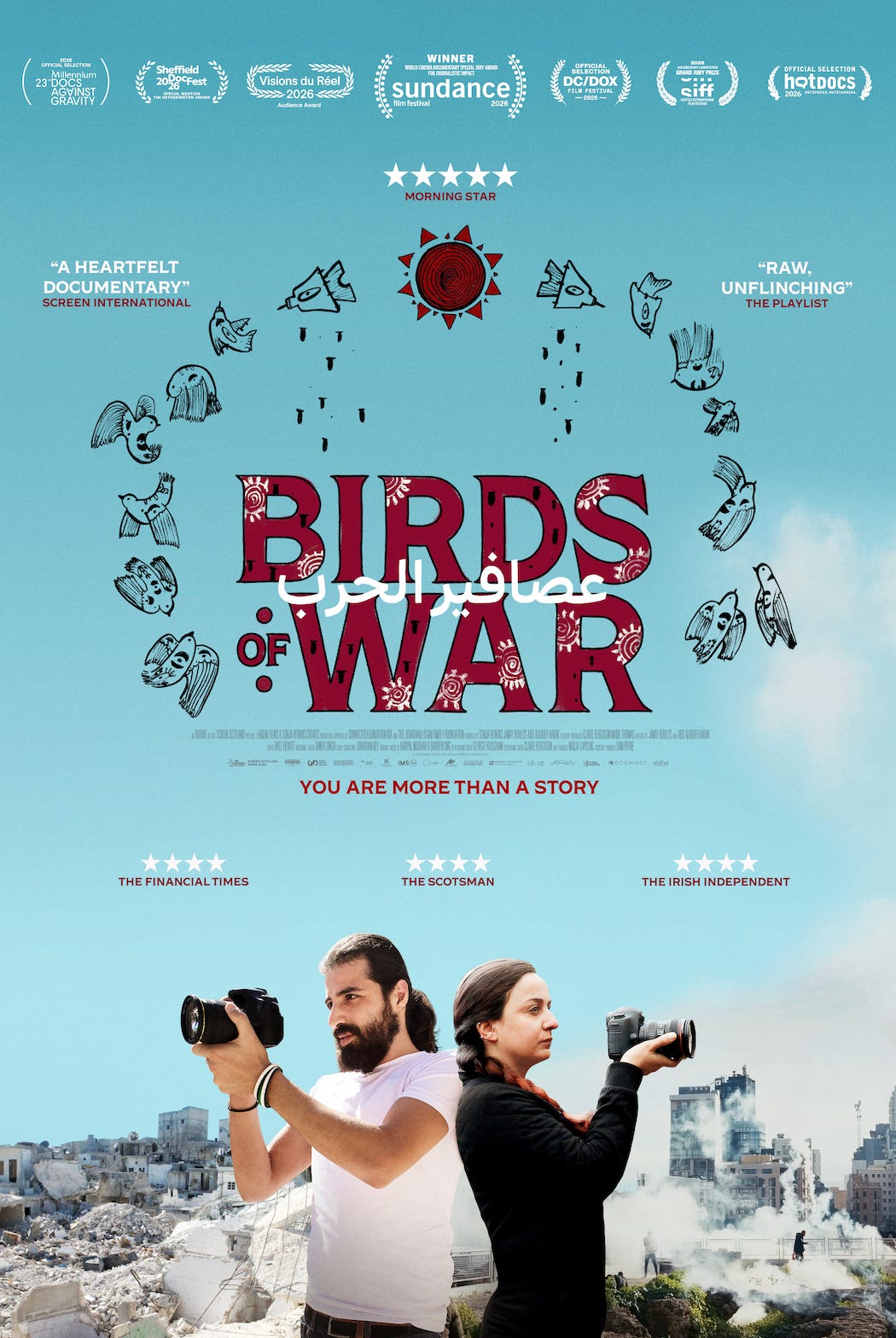
In this vHopeful Conversation, I speak with award-winning filmmakers Janay Boulos and Abd Alkader Habak about Birds of War, their remarkable documentary about their own love story which against every odd, took root while they were reporting on Syria’s war together and turned their cameras on themselves. Janay was a Lebanese BBC journalist in London and Habak a Syrian cameraman inside besieged Aleppo. Over 13 years of bombardment, uprisings and displacement, their messages grew into a romance that crossed borders, faiths and political divides. Janay recalls first contacting Habak as just another source in a competitive newsroom. Habak describes the instinct that made him put down his camera to carry a wounded child, and his anger when the world’s media turned the story toward him instead of the hundreds killed and injured. Together they talk about the uncredited, untrained and unprotected local journalists who risk everything to report from war zones. They explain how their impact campaign aims to help those journalists own their stories. They also share how a therapist-designed traffic light system helped Habak return to an archive he had avoided for years. Habak reflects on weeping in Damascus after finally coming home, and Janay reveals for the first time that the film’s title comes from a novel she quietly wrote about the two of them.
Transcript lightly edited. Podcast available on Apple, Spotify or wherever you listen on this Substack or Ted’s Hope for Film
Vanessa Hope: I am truly excited to speak with award-winning filmmakers Janay Boulos and Abd Alkader Habak about their new film, Birds of War, which is a stunning, must-see film. Ted and I have been raving about it since its premiere at Sundance, where it won awards, but it draws on 13 years of their own footage, voice notes, and text messages to tell their love story that began when Janay, a BBC reporter in London, reached Habak, a cameraman inside besieged Aleppo, Syria. Their feature won the Special Jury Award for Journalistic Impact at Sundance. They are true journalists who go above and beyond.
Together, Janay and Habak founded Habak Films in London, which makes documentaries for many outlets, including Al Jazeera and The New York Times. Janay grew up in post-civil war Lebanon and spent nearly a decade at BBC News, where she covered Lebanon’s 2019 revolution and economic collapse. Habak grew up under the Assad dictatorship, and he documented six years of the Syrian revolution and war for outlets, including the BBC and CNN, until he was forced to flee in 2017.
I really cannot emphasize enough how excited I am to meet you both in person. I truly feel your film is outstanding, like top three documentaries of all time. It’s moving in the most honest and heartfelt way. You have told the most profound, profound story. So thank you for being here.
Janay Boulos and Abd Alkader Habak: Thank you, Vanessa.
Vanessa: Yeah. So your story began in 2016 with a message, a BBC journalist in London looking for someone who could film inside Aleppo during the final moments of the siege. Take us to this first exchange, what you remember. When did you realize your work together was becoming something more?
Janay: In 2016, it was five years after the Syrian revolution had started with the Arab Spring in 2011. And in the past five years, as an Arabic speaker inside BBC News, I was pretty much covering Syria all the time. And because the Syrian regime, you know, cut all access to the country for journalists, and the mainstream media was giving us regime news, we were relying on citizen journalists, on activists on the ground, to get the other side of the story. And we were looking for them on YouTube, on Facebook, on social media, where they were posting their videos.
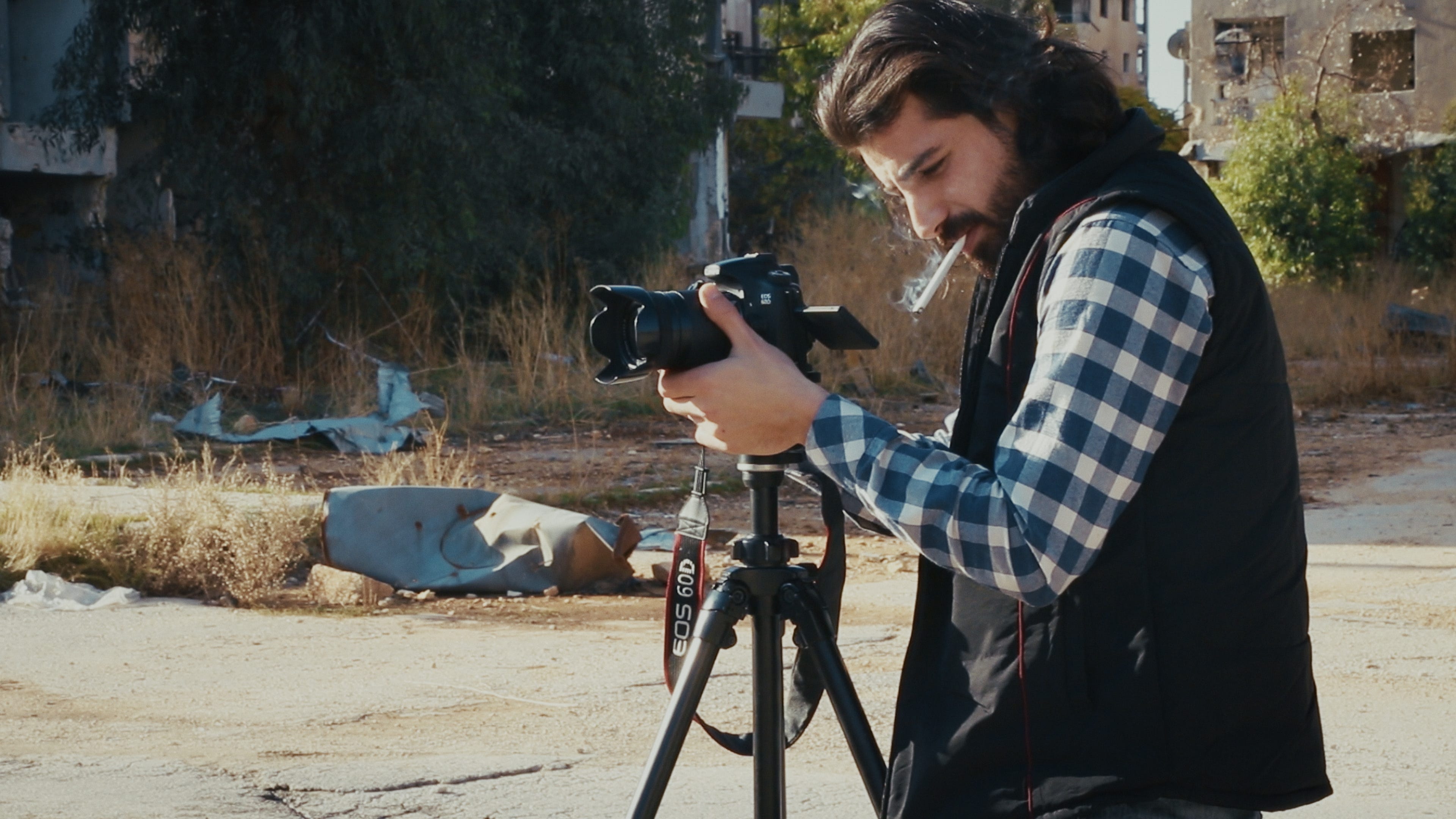
And in 2016, during the siege of Aleppo, I found Habak online, and he was already working with some of my colleagues. And I messaged him purely to get some material in a very competitive newsroom where everybody’s after news from Aleppo at that time. So I was in that race of trying to get a story out of Syria. I was one of those, you know, people who wasn’t really much empathetic to what they were living through, because as a journalist for five years covering war, you start to become desensitized. So, you know, my point wasn’t to fall in love with Habak. It was just to get the story. But then things changed.
Vanessa: Yeah. And you tell that story so well. It’s obvious that you were doing this professionally, and the way that your story, your love story, unfolds is absolutely brilliant, the way you share it and how you share it. So with international journalists largely shut out of Syria, local reporters like Habak, as you’ve said, become the world’s eyes, and their work is often labeled activist footage. They’re rarely credited, rarely protected. Habak, what was it like to see your footage suddenly carried by the BBC and CNN? And Janay, from inside the newsroom, what did you see about how that footage was sourced, credited, and used?
Habak: For us, as a citizen journalist who’s working on the ground, we never ever thought about credits. We never thought about how much money we’re going to get for this footage. Our main goal was, actually, we are carrying a cause, and we are the eye of the world on that spot, that small spot of war, let’s say. And our main cause was, we need to get this footage out as much as we can.
That’s why during the film you see a lot of footage not stable, because when the siege started in Aleppo, me and a group of my friends, we decided we have to document every second of our life, because we never know what’s going to happen in a second. And that’s why our cameras were recording, rolling all the time, actually.
So I never thought about having credits on my footage. It was more after I left, I’d been introduced to this kind of thing. Like, you have to be credited, you have to be getting paid. I mean, I get paid, but credit-wise, I never thought, we never thought about it. Our main goal was, actually, we need this footage to be out.
Janay: Yeah, and I think from my point of view, it was definitely activist footage. It wasn’t something that we… we needed it, definitely, to tell the story and use it, but it was a report by Janay Boulos at the end. It wasn’t mentioning Habak in any sort of way. And this is why we are now trying, with the impact campaign of this film, to try and develop a new framework on how do we work with citizen journalists, and how do we include them, and what are their rights in owning their stories. And we have actually already started training local journalists in Lebanon who are covering South Lebanon on what do you need in terms of credit, in terms of safety training, in terms of payments.
And I didn’t actually start to feel that this is necessary until 2017, when Syria slowly started to drop off the headlines. And it was a time when everything I did was about Syria. Now it was like, “Oh no, we don’t want to do Syria anymore.” I think in 2017, there was a war on Ukraine. So the headlines moved, and the news machine continued to move to other topics. And that’s when I started to question, so what happens now to these locals who were filming for me for the past five years?
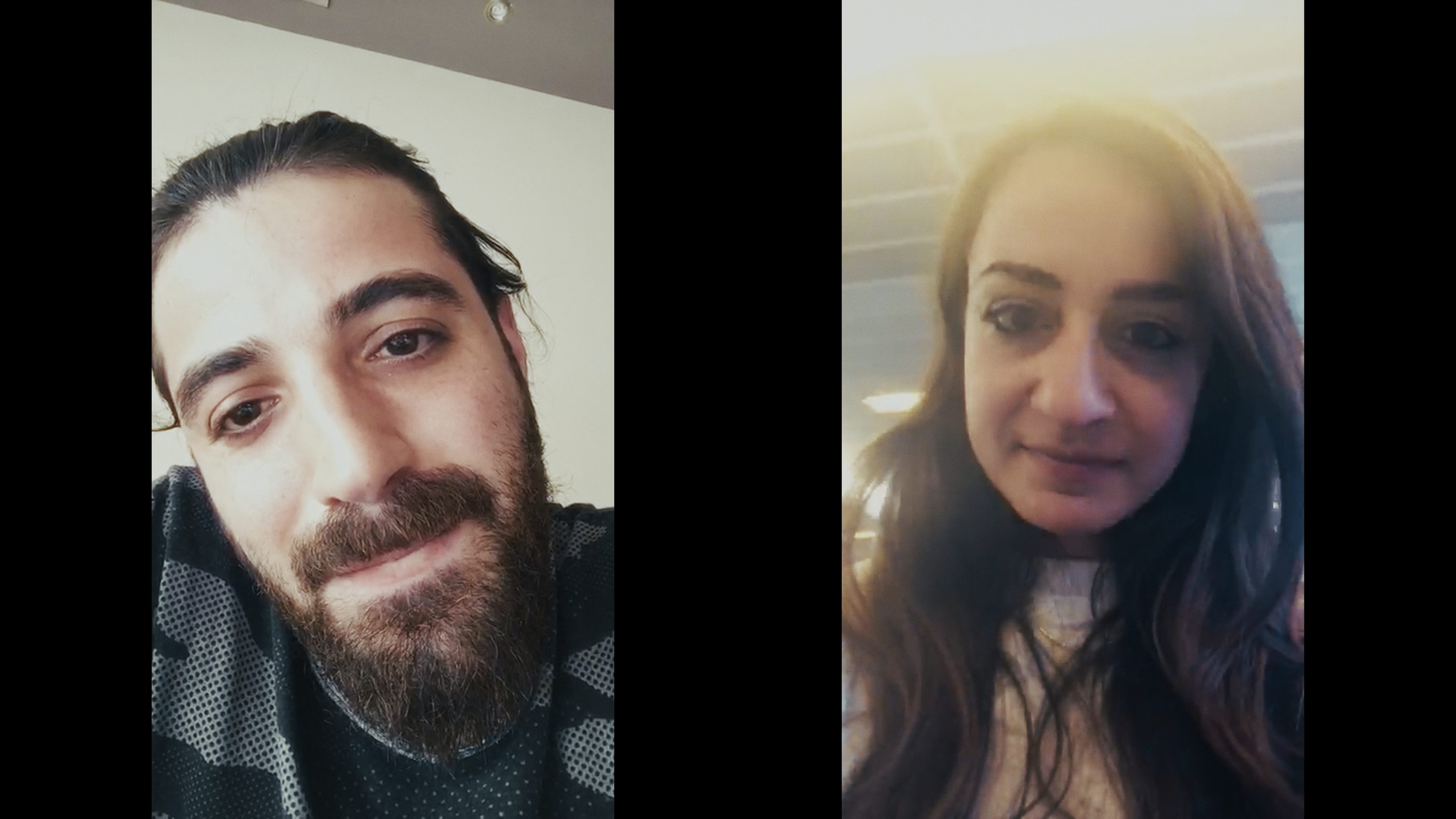
Vanessa: Yeah. And there’s a moment in the film when Habak puts down his camera to carry a badly injured child to help, and a photo of it was seen around the world. Habak, what happened inside you in that moment? And Janay, what was it like to watch that image spread from London, knowing what it might mean for Habak’s safety and for the story being told about him?
Habak: What was happening inside me during that event, it was… I was near, really nearby, the explosion, the car explosion. And we get trained by nature, us as citizen journalists who are working on the ground. And it’s also, I think it’s more because we are from the same community and we are fighting the same cause. Usually what we do, first we arrive to the scene, we go and help. We do not film anything. And when the professionals arrive, for example, the White Helmets or any ambulance aid arrive to the scene, we leave the scene. We start filming. And for us, we get trained naturally on this. And for me, because I also spent five years of my life inside a hospital, I know how I can give at least first aid to anyone.
And I remember, I really remember this second when the explosion happened, I literally pressed record. I don’t know if I was recording or not at that moment. And after the dust went out, I started seeing people on the ground. And in the first moment, I think my camera continued recording, but it wasn’t in my hand. So I started helping people, started running around. And I think because of the need at that moment, because it was more than our capacity at that second.
And I remember when I arrived to a scene, I saw a child, half of him covered by a mattress or something like that. So when I lifted the mattress, I saw him. And so my first instinct… he was having a metal coming in his chest. So at this point, I cannot give him anything. I cannot do anything. The only thing I can do is carry him and run.
And my problem was after that. I really hate what happened after this. It’s because I think after my photo went viral, I stole the story of the people, actually, because everything that happened afterward, all the media outlets were focusing on me, rescuing one child, and what’s happening with me. And most of the media outlets, they forget about 200 people that had been killed in this massacre, more than 500 people injured. So with the media outlets, I got super angry at the end. I remember the last interview I did, I was super angry, and I told them, “I’m not going to continue.” It’s because of that feeling of, you ask me about my feelings, but you forget about the feelings of 200 people who died, and 500 people, actually, who are in the hospital, sitting in the bed or in the ICU. So yeah, it was a heavy day. One of the heavy days.
Vanessa: Yeah. You’re so selfless. It’s so clear in the film, both of you put the situation above your own safety, that you’re very, very concerned, very engaged, very genuine, and very much wanting to make a difference. And you show us that scene. It’s completely heartbreaking to know that these people have come for food, for aid, and then, of course, then bombs and then explosions, and you see it all. And then somehow the outside media only focuses in on this one photo of a hero, you, who have done this many, many times, under many, many situations in war zones, carrying a child to safety. Yeah. Janay, you were concerned for Habak’s safety too?
Janay: So, I was always concerned for Habak’s safety. That was just the norm of our relationship, because also when he was in Idlib, there wasn’t always any good internet. So sometimes he would disappear for a day or two, and I wouldn’t hear from him, and then he would come back. So there was always this looming danger around him, and my concern.
But I think what hurt me the most is the actual picture. And I told Habak then that I don’t like that picture of him. I don’t like seeing him like that. And I remember he told me that there are only two people in this world who don’t like this picture: “It’s you and my mom.” Which was very striking. And when that happened, we had already been chatting for a while, and we got to know each other. So I already had a lot of care for him.
And he just didn’t stop after it, until he was forced to, really. And I think if he wasn’t wanted after, and he wasn’t forced to leave, then he probably would have stayed in Syria and continued doing what he was doing. So I genuinely believe… I had so much respect for him, for his cause, and seeing how he was working really made me question myself and what I was doing in London in this newsroom, and what I wanted to do as a journalist, and what my role is in life. So I learned so much from Habak.
Vanessa: Yeah. And it is so incredible, frankly, to see the contrast between you, Janay, in the BBC newsroom, and you, Habak, when you’re out in the field, just communicating the best way that you can and trying to share and get these stories out into the world. And yet you both end up in real danger, Habak on the ground in Syria. Janay, you end up reporting on Lebanon as it’s living through revolution, collapse, and war. You go there. What protection did you have, if any? And with PEN America and the Committee to Protect Journalists on board, what do you want to change in how we protect freelancers, local reporters, and citizen journalists who take great risks?
Habak: I can talk about Syrian, let’s say Syrian citizen journalists. We never got any HEFAT training. For me personally, I never ever wore the vest at all, because most of the time no one could afford a vest. Our friends… at some point, if I’m wearing a vest and I have five of my friends around me and they don’t have a vest, I will not wear it at all. It is really hard, because it turned out the vest is not that expensive, but to get it to Syria at this point, it was so expensive.
We never got training on HEFAT, how we deal with a situation, how we deal with first aid if someone gets injured around us. Everything came to us by nature, and we learn as we go. You learn what’s happening around you. You assess the situation, what’s happening, and you just act. It’s not that you have a protocol of training, you have to do this, one, two, three, four. You just act as you know.
And that was pretty hard. And I know a lot of people get killed or get injured because they don’t have this training. We didn’t have training about mines, for example, and there were a lot of mines around us. And it turned out, after I left Syria, that on the other side, in the safe world, for example, the UK, the USA, where there is no war, this training is really accessible. When this training needs to be accessible in the war zone, for the people there, for the people who are working there, not for the people who are living in safety, for journalists who are doing a desk job, for example, at the BBC. It was really hard. And literally now, with what we do with our training, we are not creating something new. This is something that exists. We’re just showing the other journalists, or the citizen journalists on the ground, how you can do it, actually.
Janay: Yeah. So we started a series of workshops that we are running in Lebanon, and next year in Syria as well. And we are talking about a few things that these local journalists need. So when we had the training in Lebanon with citizen journalists and reporters who are covering the war in South Lebanon, their experience is still the same as Habak’s was ten years ago. They are still told, “Well, we can’t tell you to go and film, but if you do film, then we’ll take the footage.” They’re still being haggled over price. They’re still not given essential training, first aid training, HEFAT training, which is lifesaving. Some broadcasters, actually, some news outlets, provide PPE and helmets and things like that, but there’s no real psychological support for the traumatic events that they go through, for seeing death or smelling death. And there’s no real crediting.
And these are the things that we are at the moment trying to change: one, to raise the awareness of these local journalists that they are more than the story that they are giving. They are not just people providing footage. They have the right editorially to share the story, to tell their own story the way they want. And we’re trying to point them to where they can get this training, whether that’s through, for example, the Rory Peck Trust. They give psychological training as well, and trauma-informed training. And there are resources out there, but we just need to make them aware of where they could get it.
At the same time, when we are doing our theatrical release, we are inviting journalism organizations and people who work in the industry to actually talk about how can we start to step away from the extractive model of journalism, where we go, we take a story, and we leave. And how can we start to make stories with the people on the ground rather than about the people on the ground? So this is what we are trying to advocate for now with the CPJ and with a lot of different partners in the UK and in the US.
Vanessa: I love that.
Habak: Another thing about the HEFAT training. I remember when I did my HEFAT two, three years ago, I went there for three days, and I was laughing at all the people around me. I remember the guy came to me and said, “Why are you laughing?” I said, “I lived this experience, truly. You give me a training of this, and it’s fake.” At the beginning, I felt it’s not necessary, because I know this, I have this experience. But after I finished, I really thought about it, thought about the key things you get to learn. You get to know about mines, for example. I never knew what kind of mines were around me, for example. So I felt it’s really a need for everyone.
Vanessa: So together you have years of footage. Much of it is painful to revisit, including evidence of war crimes. How did you each face that archive in a way that protected you and your team? And as co-directors who are also the subjects of the film, how did you decide together what to share of your private life?
Janay: It was a difficult process, because this film didn’t start initially as our love story. It started as a film that I was developing about Lebanon and my family and my work as a journalist there. And because Habak was my partner, he was going to be part of this film. So I have my archive from 2019 until pretty much now, I’m still filming every time I go, that I wanted to do something with. And then when slowly we started to bring Habak into the story, we needed to know more about him, because he’s had a similar journey. And when he came to the UK in 2017, he had his archive under the bed, and he didn’t want to touch it. So I think it was a process for you also, right, to open the hard drives?
Habak: Yeah, I mean, it was a process for me. I was escaping this moment, actually, since I arrived in the UK. In my mind, I knew I was not going to open this hard drive until I knew that I could deal with it. And even when I agreed I’m going to be on board as a character, that I’m going to open the hard drive, we started the editing process, and we started with Janay’s footage. And every time we had a meeting with Sonja (Henrici, producer), it was, “We have to open the hard drive.” And I was like, “I’m going to open it later.” So I kept escaping this moment until I felt like, yes, I need it, we need it.
But before that, I had a meeting with Janay and Sonja, a very serious meeting about how I can protect you guys from this footage. I know I cannot protect myself, because the footage is there, but it’s also in my head, actually. And at that moment, Sonja suggested Rebecca Day. She’s a therapist specialized for filmmakers, from Film In Mind. I worked with her for two months to develop what we call a traffic light system, when I go back to my footage and I mark all my footage between amber, red, and green.
And at this point, I felt, yes, this is the process, how we’re going to work with that footage, because I cannot give a Scottish editor, for example, a guy who’s been living in England all his life, who knows nothing about war, 20 terabytes of footage, almost 2,000 hours, just to watch for this process. So it was a process for me and a process for the team, and also to protect each other at some point. It was really important.
Janay: Yeah. And then with Claire Ferguson, our executive producer and consultant editor, when we decided this story is the love story, that gave us a timeline from when it starts until pretty much real life. And knowing it starts in 2016, we chose the key moments that lead to the life with us in London.
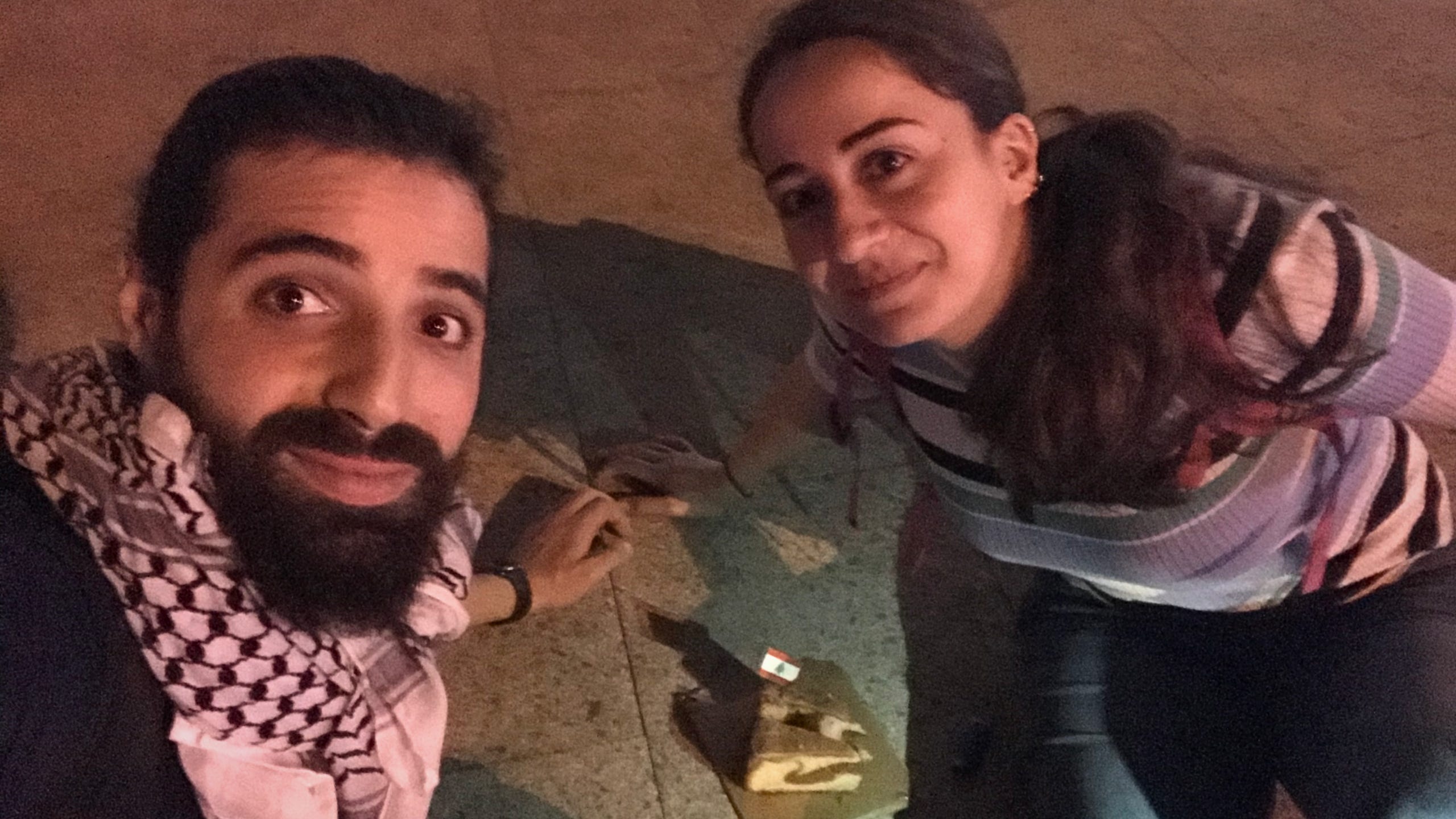
And then, because when we were making the film, when we were in the edit, life continued. So the Israeli war on Lebanon started, and then the Assad regime fell pretty much straight on the back of that. So we had to film while we were editing, while we were living all of these things. So we had the camera with us again all the time at home. And then when Habak went to Syria as well, his brother was filming him on his return.
Vanessa: It’s truly beyond words. I can’t even begin to tell you. Obviously, you two are wonderful people. It draws you in, your story, but you’ve told your love story so delicately, so thoughtfully. I mean, it is your love story. It’s true. It’s one of the best love stories on film of all time. And I come from a film family that goes back to the beginning of film, and I’ve watched tens of thousands of films in my lifetime. My husband and I keep a list of all the films we watch every year. It’s almost a film or multiple films a day. I am telling you, it’s truly one of the most moving love stories on film ever.
Janay, you grew up in Lebanon under Syrian occupation, and Habak, you grew up under the Assad regime, as we’ve said. You come from different faiths, opposing sides of your region’s politics. How did you handle these differences and your families’ judgments? And what do you hope audiences take from seeing your love cross these lines? Which, again, is powerful. It’s extraordinary how you’ve done it. It’s bringing tears to my eyes.
Janay: I think that what really brought Habak and me together, and that’s from my perspective, is the fact that from the beginning, I had so much admiration for who he is. I believed in what he was doing, what he was after, in the genuineness of his work, and doing something for a purpose. And that created a lot of empathy for him. And I feel that this is what we hope people get out of the film: that you see people as individuals with lives, with causes, see them in the human light that they are, instead of being blinded by what politics tells you. And we live in a world where it’s become very obvious that we are being separated by race, by gender, by religion. And at the end, we’re all humans. We want to love and be loved and be happy.
And I think this is what kept Habak and me going. The second day the Assad regime fell, he was like, “I want to go to Syria.” I was like, “Go.” I was so scared. I was so worried. It was very traumatizing also for me, but I couldn’t stop him, because he needed to go for himself. And I think it’s the same for him. When the revolution in Lebanon started, he was like, “Let’s just go. We don’t wait for anybody. Let’s get on a plane and go.”
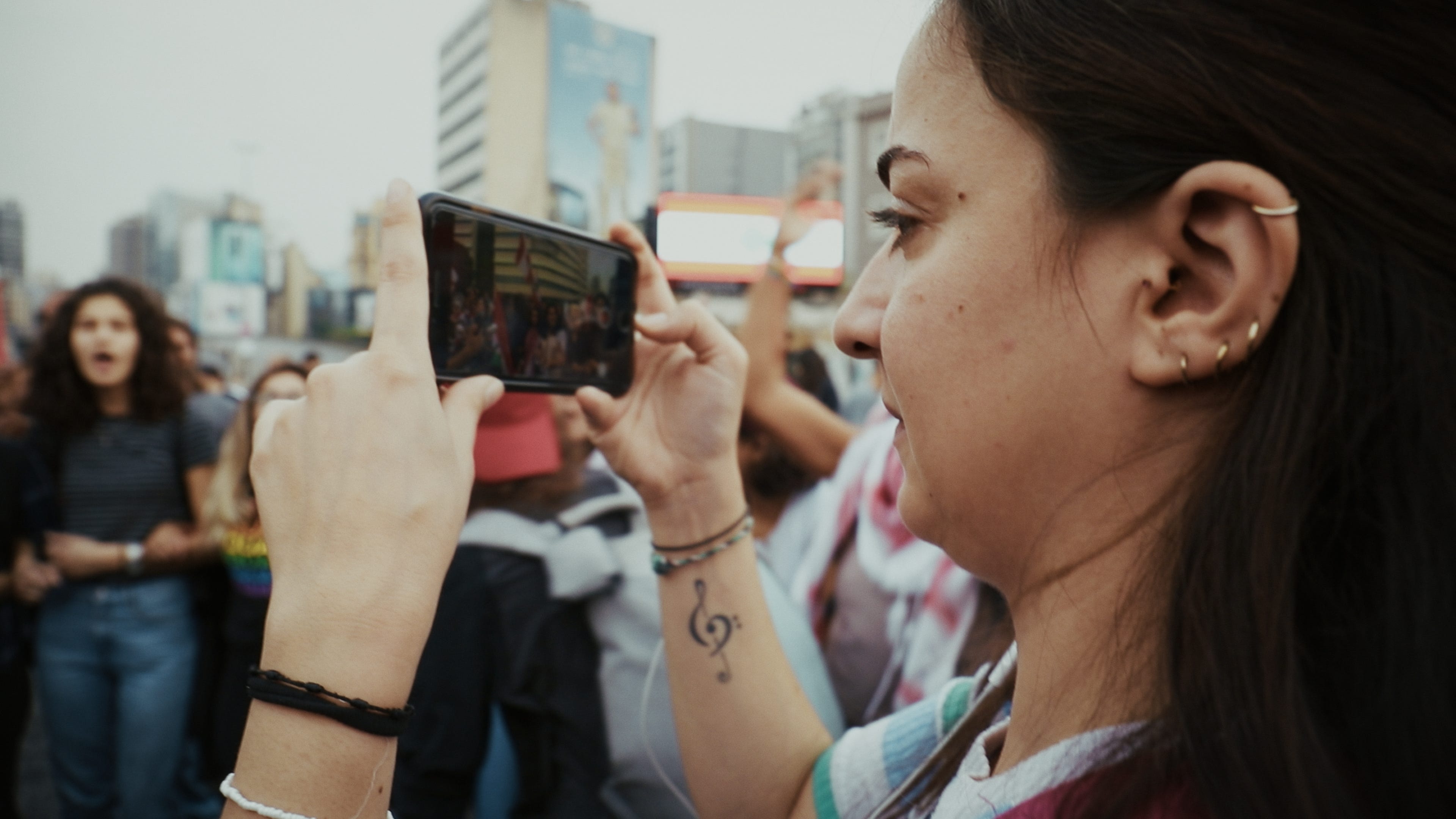
And I think that understanding that, yeah, we are different in so many things, but we can communicate, and we can understand people’s perspectives and where they come from because of their lived experience. And I think when we tell stories from lived experience, that adds a lot of genuineness. When we try to impose our own view on another person’s life, that creates a different kind of emotional journey than when we actually allow the people who live this experience to tell it. And this is, again, what’s driving us in our impact.
Vanessa: Yeah, yes. Habak, do you want to speak about your love story at all?
Habak: For me, it was more in my mind, when we were talking. When you are in a war zone, you don’t know when you’re going to die. You don’t have a future at all. And in your mind, who’s this person, who’s living in the UK, having a different life, a safe life, nothing dangerous around them, who is going to fall in love with you? And actually, it was until we met each other in Turkey. I think the second meeting was more into, “Yeah, we are in love now, so what are we going to do?” You know?
And for me, when I was forced to leave Syria, I think even at that point, I told Janay that I’m going for a holiday, I’m going to have a break in Turkey and come back to Syria. But then I couldn’t go back, and I fell in love. So it was, okay, this is the moment. So what are we going to do? And actually, it was also a process for us, because we met each other six, seven times in Turkey, and we never talked about getting married at all. And I was applying to get refugee status in France through the embassy there. And Janay was asking, and I was like, “Yeah, I’m going to go to France.” And then Janay called me and was like, “I’m going to call a lawyer.” I was like, “Okay, call a lawyer, see what is going to happen.” After half an hour, she called me, and she says, “We have to get married.” It was like, okay.
Janay: I wasn’t going to allow him to go to live in France when it’s just a channel between us.
Vanessa: Also, you may not have talked about marriage directly, but you have a great scene, Janay, when you’re sharing a video from London crossing a bridge, and your finger points to this couple getting married on the bridge. It’s like there were signs.
Janay: Yeah. There were signs everywhere.
Vanessa: There were signs. Yeah, it’s so complex and multilayered and so delicate and exquisite, really, how you share your love story. The moments, the beats, they’re so honest and true, feel so real, because they are real. It’s real. It’s really your love story. It’s strange to be so privy to it, but it’s deep, and it’s extraordinary that you’ve shared it. It’s a gift that you’ve given the world.
So as you were saying, in 2024, Habak, you spent weeks trying to reach your family in Syria and couldn’t cross the border. And Janay, you flew to Lebanon to be with your parents when Israel attacked. And within weeks, Assad fell, and Habak, you were finally able to go home. What was it like to live through all of that with the cameras rolling? And since your Sundance premiere in January, Lebanon has been pulled into war again while Syria rebuilds. How has all of that changed the way you think about home and your responsibility as storytellers?
Habak: I mean, for me, when the Assad regime… you know, when you have a dream in your life, and you think that it is never, ever going to come true, at least not in your lifetime…
Vanessa: We have some dreams in America that may never come true in our lifetime, but yes…
Habak: Actually, as Syrians who are living abroad, we reached the point that we have to rebuild our life now, because we thought it’s going to be a few months, then a few years, then another few years. And now we reached the point that, actually, we have to start to settle at some point, because we never know what’s going to happen. And at this point, we just started to settle, me and Janay, actually. We bought our first home, and we’re going to move into it, and we are waiting for this moment. And everything happened in two, three months. Everything has fallen down around us while we are building. For me, it was unbelievable.
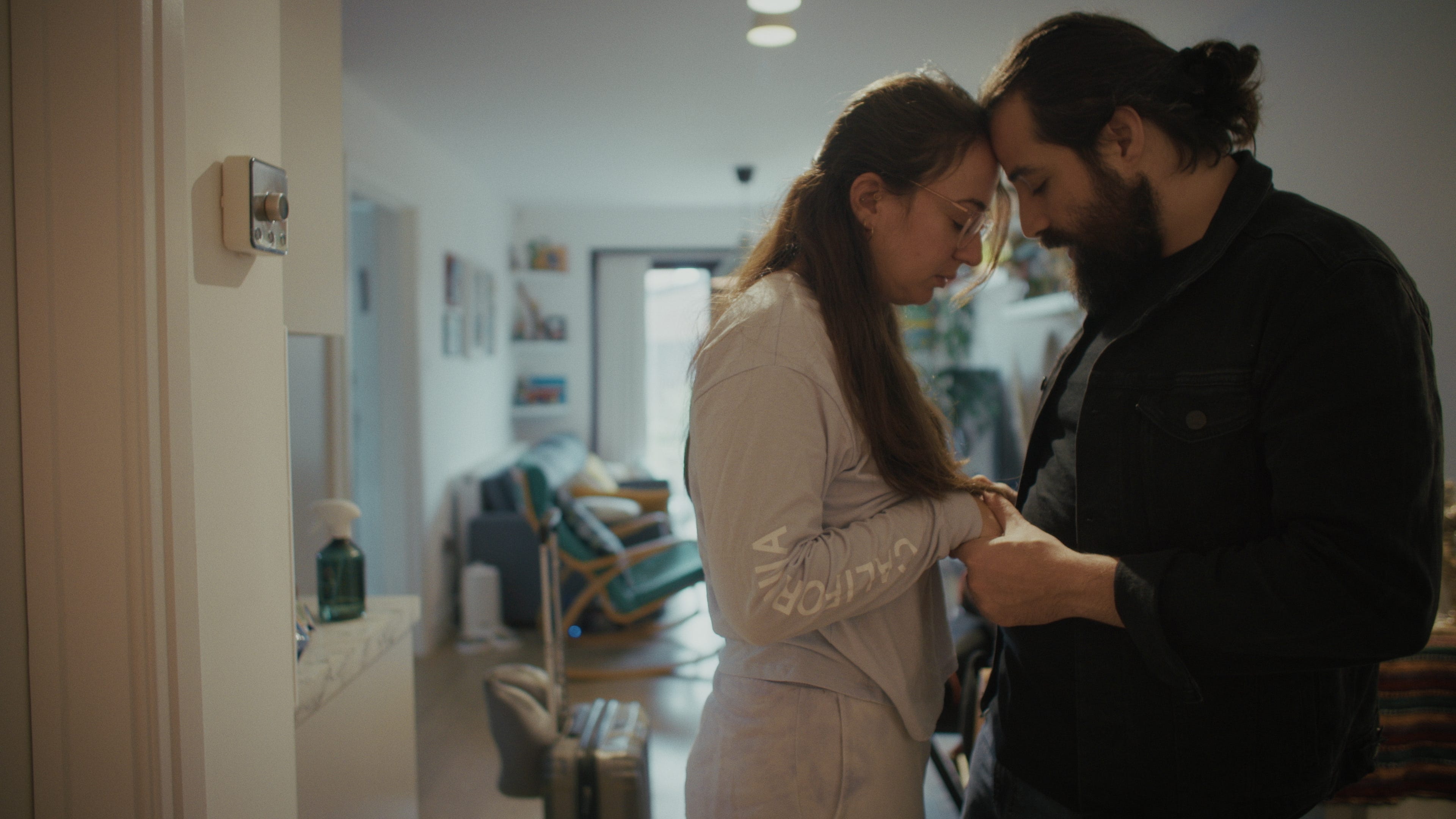
And until now, I think when I go back to Syria, I don’t believe it the first two days. I don’t believe that I am in Syria, you know, that the Assad regime has fallen, or that I can drive from Damascus to Aleppo or to Idlib. And yeah, the first day when I went, I just wanted to cry. And literally, I arrived at Umayyad Square in Damascus, I looked around me, and I didn’t see anyone I know. I didn’t see my friends. I didn’t see my people. And I had a friend who went with me from the UK there. I left him in the square, and I just went to the hotel. I sat in the hotel, and I cried for around two, three hours, nonstop, actually.
And every time, you know, I see Syria as a rebuild. I don’t think Syria needs to rebuild the buildings, actually. It needs to rebuild the community again, rebuild the bridges between the communities, the bridges within the society, the bridges between the minorities, actually. Because I think the only thing the Assad regime succeeded in is not just killing us, actually, for sure, but also in breaking the communities and the society, actually creating a huge gap between the communities and society. And that is the most important thing we need to rebuild at the moment. Not the buildings, not the roads, not what has been destroyed already. We need to rebuild Syria. We need to rebuild these bridges again.
Janay: Yeah, the whole area is very volatile. In Lebanon, you know, we have pretty much… I think the Israeli occupation is now about 20 kilometers into Lebanese territory. They’re also bombing parts of Syria. And, you know, with everything happening in Palestine and in Gaza, we believe now that our role is to continue to tell stories from there, because we see stories, films, really, as a capsule in time. Because when we die, and generations come, and all of these things, we’re leaving behind a part of history, of how life was, or how life looked, or how things changed over time. And so when somebody comes and says, “Oh, this is how it was,” you’re like, “No, this is how it was.” And I think this is what gives us purpose as well, is that we know we can’t stop the wars, but what we can do is continue to make films. And this is what we’re trying to do at the moment.
Vanessa: Yeah. I just want to note on your love story again that you’re showing a different way to live and exist in the world, where I think true love comes when you can fully see each other and treat each other as equals, which is something that comes across as you’re telling your story.
And politically, I so agree that especially when power is consolidated at the top, in a dictatorship, in an authoritarian country, in a country that’s a democracy, ostensibly, but is moving authoritarian and controlling all of the levers of power, from the courts to the media to the government to justice, it’s all about domination and hierarchy and dividing the people. And it’s brutal. And we can talk about it in countries like the U.S. and the U.K., places where we’re not immediately under threat and our lives are not at stake, though many people within our countries are, depending on who the powers are going after. But it’s not the same. To understand how truly transformative love can be, and that society’s rebuilding can build through that, and also that governments should be caring for the people, and the media should be laser-focused on the people who are going through what is happening on the ground in a country, to get the stories out. This is something we’ve known a long time. We are not achieving enough on a global scale. And you two are at the forefront of doing it in the most profound way. I’m just so in awe of you both and your work, and so grateful that you’ve shared it.
And, you know, you’ve mentioned this campaign, “You’re More Than a Story.” What do you hope will change about how we get stories out from the region? And also, let’s end on something a little bit lighter. I love the title of your film, Birds of War, and it comes across in your story and your film. Can you tell us about that, too?
Janay: Sure. Yeah. So I believe that change doesn’t really happen overnight. Change is a very, very long process. And we are now living in a world where media, instead of creating empathy and creating bridges, is creating more polarity, and it’s supporting the politicians. And what they’re trying to do is to continue to move more towards the right wing and start to create this division, because when people have the power, I feel that politicians get scared.
What we’re trying to do with our impact campaign is to allow local journalists in Lebanon, in Syria, who are living every single day under very harsh circumstances, whether that’s war, whether that’s poverty, whether that’s struggling to find jobs, to give them a space and train them to be able to actually own the stories that they are working on. And by using our base here in London, we’re allowing them this bridge into the international media.
So our impact campaign culminates with a fellowship that we just got funding for, and we’re going to roll it out next year. And this fellowship is going to choose four or five local journalists from Lebanon and Syria. And we’re going to work with them on stories that they’re developing and then present them to the international outlets, through our connections and the connections that we’re making on our tour in the UK and the US. So eventually this will lead to a commission, setting a way forward for these broadcasters we work with: how do you work with people on the ground, and allowing people on the ground to know their rights, their editorial rights, their rights for payment, their rights for crediting, and for safety. And Birds of War, you know, is just the first start, I hope, for something that people are going to take and move into, and then change is going to happen later down the line, I hope.
Well, yeah, the name Birds of War came…
Habak: Actually, Birds of War is actually… I was…
Janay: You want to say it?
Habak: I’m going to say it. So, actually, this is the first time we say it for the media. Birds of War, it’s a book, actually. Janay wrote it. When?
Janay: In 2016, 2017.
Habak: 2016, 2017.
Janay: It’s fictionalized. So when Habak and I were talking and everything, I processed through writing. And I wrote a book called Birds of War, which is a fictionalized novel based on Habak and me. And then I closed it, and I left it on the shelf. And many years later, when we wanted to make the documentary, I told Habak, “How about we call it Birds of War?” And he agreed. So Birds of War is now a manuscript sitting on my laptop, but it’s also a feature documentary.
Vanessa: Oh my goodness, because I felt two things at once. One was, old Hollywood, if they saw this film, would immediately say, “Let’s remake it. Let’s cast Brad Pitt.” No, I’m kidding, though. Let’s cast actors and retell it. Then at the same time, I think it’s impossible. You can’t tell this story better than you two tell this story yourselves. But it has the quality, the level, the depth of a novel.
And as I was saying before we started talking about your incredible film, I think one of the best films out there this year is called Possible Love. It’s a fiction film by Lee Chang-dong, and it is like a novel. And he’s a novelist. He was Minister of Culture and a novelist in Korea. So he’s thinking like you both think. There’s something there, but you definitely want to publish this novel. Your book must get out there.
Thank you so much, both of you. Again, I’m just beyond words here with you two. Thank you for being here and sharing your story and your film.
Janay and Habak: Thank you so much for having us. Thank you.
Janay Boulos, Director and Producer
Janay Boulos is a Lebanese journalist and filmmaker with extensive experience documenting the Middle East. From 2012-2021, she worked for BBC News across television, radio and digital platforms. In 2021, she founded Habak Films with Syrian filmmaker Abd Alkader Habak. Janay has produced documentaries for BBC News and Al Jazeera Arabic, bringing Middle Eastern stories to global audiences. Her professional development includes IDFA Project Space, Documentary Campus Masterschool and Sheffield DocFest’s Future Producer School. In 2023, she received the IDA Logan Elevate grant.
Abd Alkader Habak “Habak”, Director and Producer
Abd Alkader Habak “Habak” brings first-hand experience as a Syrian cinematographer who documented the Syrian conflict over six years, 2011- 2017. Working in dangerous environments, he collaborated with BBC and CNN as cameraman and field producer. His work during the siege of Aleppo—before fleeing in 2017—resulted in extraordinary archive footage documenting the Syrian revolution and war. Now London-based, Habak continues in documentary. His recent short Syria’s Last Chapter was commissioned by Al Jazeera Witness in December 2024. He is also in production with a feature documentary called Until the Buzzing Stops.
BIRDS OF WAR
UPCOMING SCREENINGS
In theaters now
-
New York, IFC Center: runs through Tuesday, November 10. Janay and Habak do a Q&A tonight, November 7, after the 6:30 PM show, with Lucy Westcott of the Committee to Protect Journalists.
Coming up
-
Santa Monica, Laemmle Monica Film Center: opens Thursday, November 19.
-
Glendale, Laemmle Glendale: opens Friday, November 20.
-
San Francisco, Roxie Theater: Sunday, November 22 at 3:00 PM.
-
San Rafael, Christopher B. Smith Rafael Film Center: Monday, November 23 at 7:00 PM, with a conversation with Janay and Habak.
-
Amsterdam, IDFA at Eye Filmmuseum: Friday, November 13 at 12:00.
Watch at Home (UK)
-
In the UK and Ireland it can be rented or bought on Amazon Prime Video and Sky Store, Apple TV and YouTube.
Screening info and updates
-
Official U.S. website: birdsofwar.film
-
US distributor: Jon Reiss of 8 Above posts release and Q&A news on his Substack.