

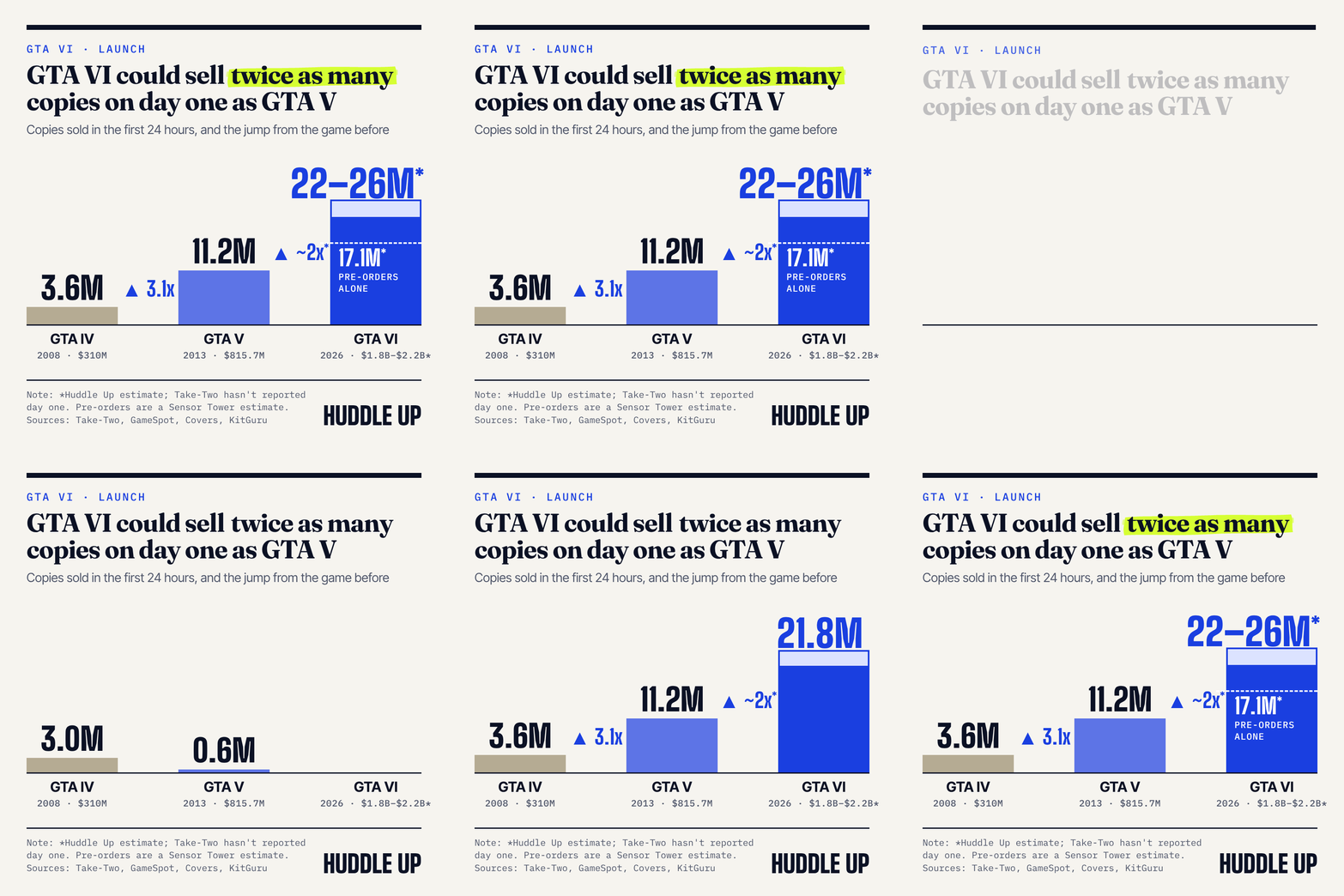
Millions of American workers will call in sick today to stay home and play the new Grand Theft Auto VI. No, I’m not kidding. People have waited 13 years for this game, and it will easily be the best-selling console video game of all time, with more than $1.5 billion in preorder revenue, according to Sensor Tower.
But Rockstar Games, which makes and publishes the Grand Theft Auto series, isn’t the only one making a lot of money. The Miami Heat and city government officials have also leveraged the publisher’s marketing spend to make millions.
The Heat debuted its “Vice” campaign during the 2017-18 NBA season. The team doesn’t have to pay a license fee to the Miami Vice TV show because it never uses its name, logo, or music, but the branding has been a major revenue generator.
For example, the Miami Heat’s alternate Vice jersey is the best-selling City Edition program in NBA history. The team has sold more than 280,000 units since 2018, generating approximately $30 million in revenue. Vice jerseys also account for more than half of all Heat jerseys sold in that span, and, in year one, the Heat said Vice outsold the City Edition jersey of the other 29 NBA teams combined.
So when Jennifer Alvarez, the Heat’s SVP of brand and chief growth officer, saw the team’s arena in the first GTA VI trailer in December 2023 and realized that it would be set in Vice City, a fictionalized version of Miami, she called Rockstar. They then spent the next two and a half years planning a marketing campaign.
That campaign officially launched last night, and it couldn’t have gone better. For starters, the game’s launch timed up with Giannis Antetokounmpo’s first home game against his former team as a member of the Heat. ESPN put it on national television, and the Heat even renamed themselves as “Vice City” for the night.
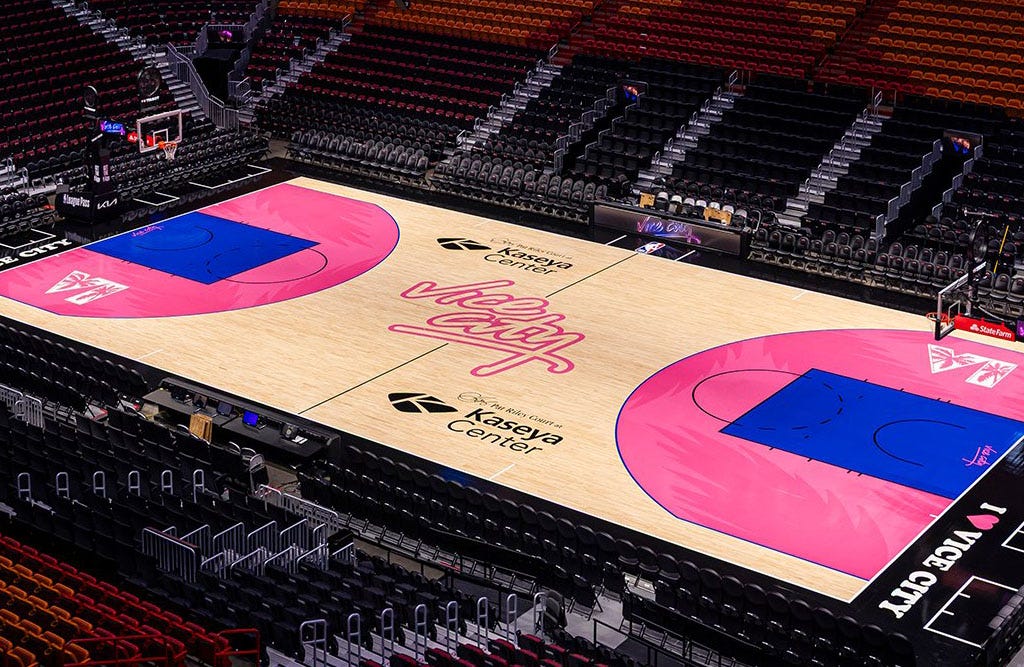
The Heat did the obvious stuff, like creating a one-time court with “Vice City” at the center and a VI palm logo in both lanes. The PA announcer, scoreboard, and game notes all used “Vice City.” Every Heat player received a custom console and controller, and Ticketmaster also listed the game as “Milwaukee vs. Vice City.”
But the Heat didn’t stop there. Instead of relying only on marketing buzz, the Heat generated additional revenue by wearing a custom uniform designed by Nike and Travis Scott’s Cactus Jack. Because the jersey could only be bought in person at the arena, thousands of people lined up in the rain hours before tipoff (think: more concession sales), and the venue was completely sold out (20,000+).
In fact, that might actually be underselling the impact. That’s because the Heat say more than 80% of the ticket buyers for last night’s game had never purchased a Heat ticket before. More than 20% of those buyers live over 250 miles away, and the face value for standing-room-only tickets was $120 to $135, a huge premium over the $41 price for standing-room tickets to the same game later this season.
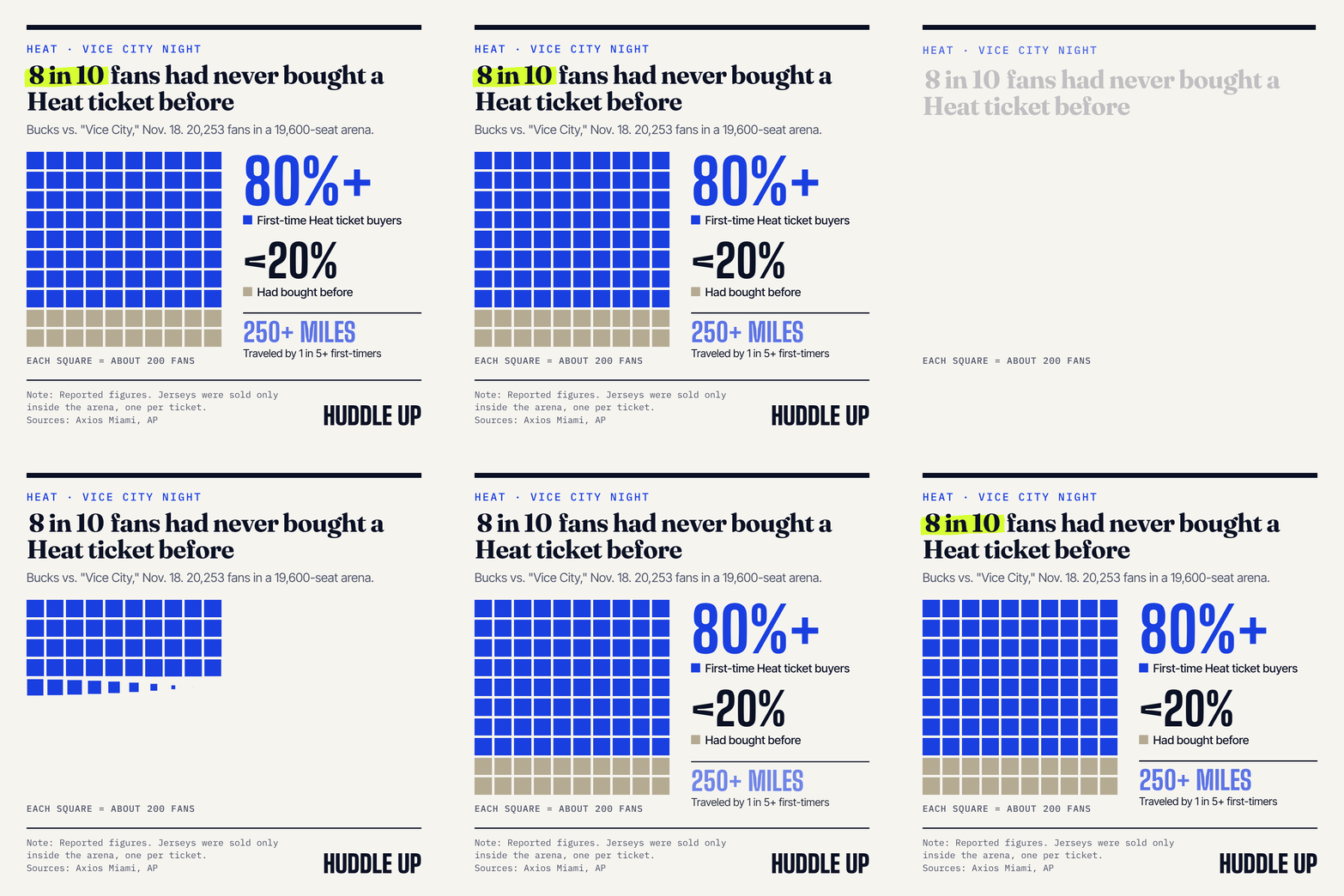
We don’t know how many jerseys the Heat sold last night, but they sold out of all inventory within 90 minutes of the merchandise stores opening. If we assume the Heat had around 10,000 jerseys on hand at $120 per jersey, that’s $1.2 million in revenue. The Heat have to share this revenue with Nike and the league’s other 29 teams, but U.S. sports teams generally have better margins on purchases made inside their arena stores than those made online. So, in other words, once you add merchandise sales for Vice-branded products beyond just jerseys, the Heat almost certainly set a new record last night for gross merchandise sales at an NBA game.
The Heat also probably set a concession record because 1) fans entered the arena much earlier than they typically do and 2) the team transformed several of the arena’s normal concession stands into the fake fast-food chains seen in the game.
However, the Heat weren’t the only party to benefit financially. In fact, the Heat really just leveraged Grand Theft Auto’s popularity to monetize a marketing moment, while the city of Miami (and its residents) were paid millions directly.
In the lead-up to Grand Theft Auto’s release, Miami-Dade County put together a 19-page pitch deck for Rockstar. Some ideas, like rebranding Miami’s airport as “Vice City Airport,” weren’t executed. But according to public records, Rockstar paid Miami-Dade County $3.9 million for advertising signage across the county.
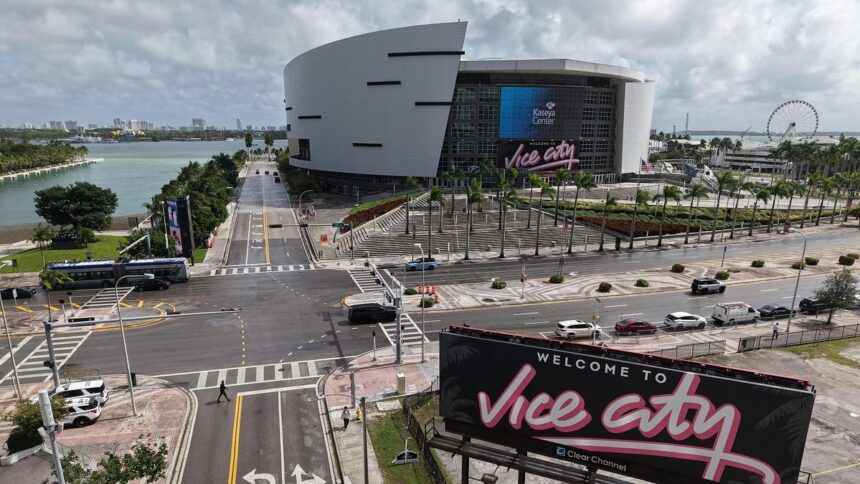
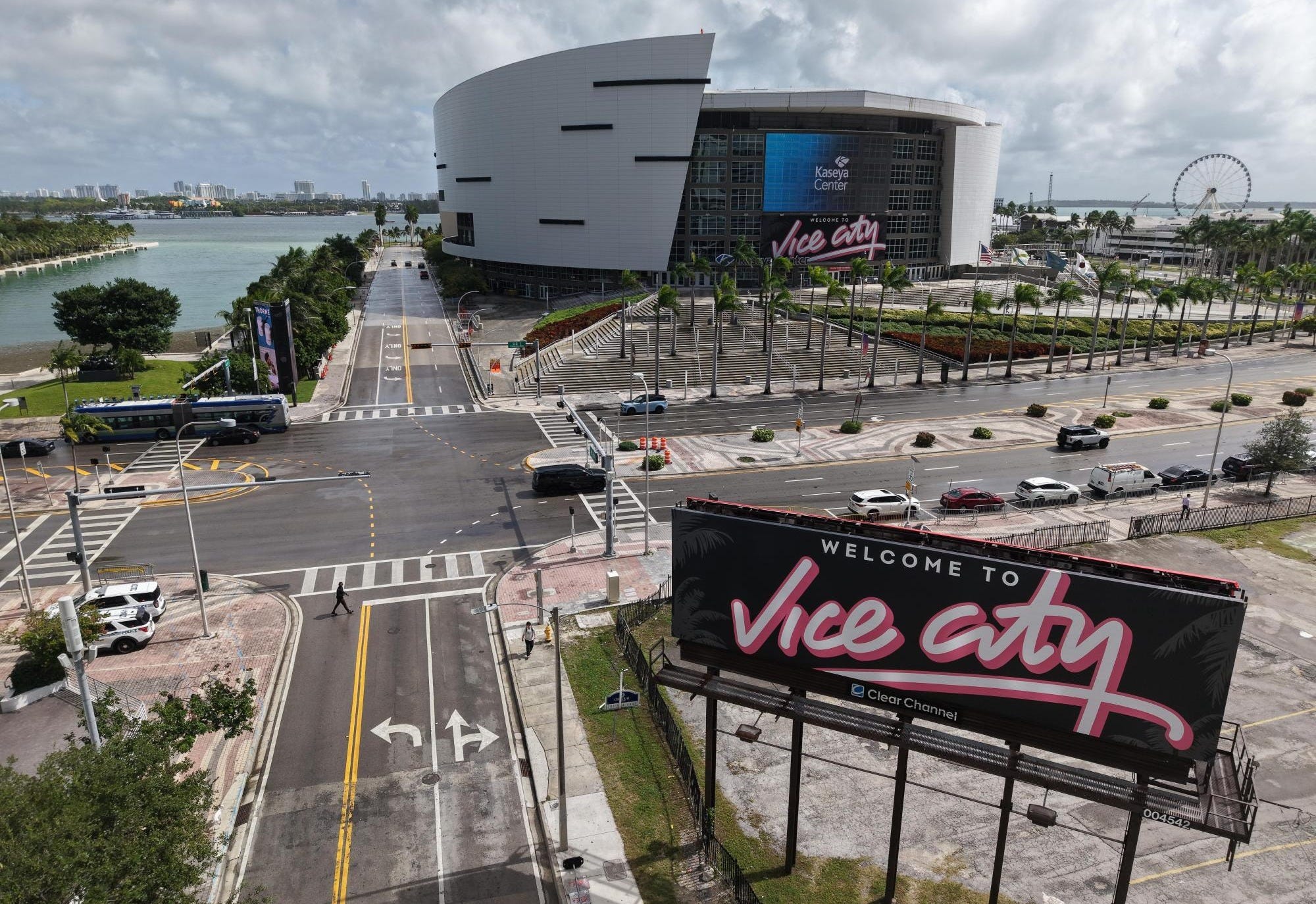
That $3.9 million also included a $975,000 payment for a rooftop sign at the Heat’s home arena, the Kaseya Center. Miami-Dade intentionally kept the payment $25,000 below $1 million to avoid triggering a commission vote, but the county gets to keep all of the money because it owns the arena naming rights, and taxpayers benefit because 100% of it will go toward a nearby park renovation.
The agreement states that the sign cannot say “Grand Theft Auto,” and that only “Vice City” and the VI logo are allowed. The letter segment had to be lifted up by a helicopter because it weighs nearly 5,000 pounds. Rockstar also paid to have the sign installed, and since it will remain on the arena until the Heat’s last regular-season home game, millions will see it from above as they approach the airport.
Outside of that, Rockstar also paid Boucher Brothers $4 million to put Grand Theft Auto branding on its lounge chairs and umbrellas throughout Miami Beach.
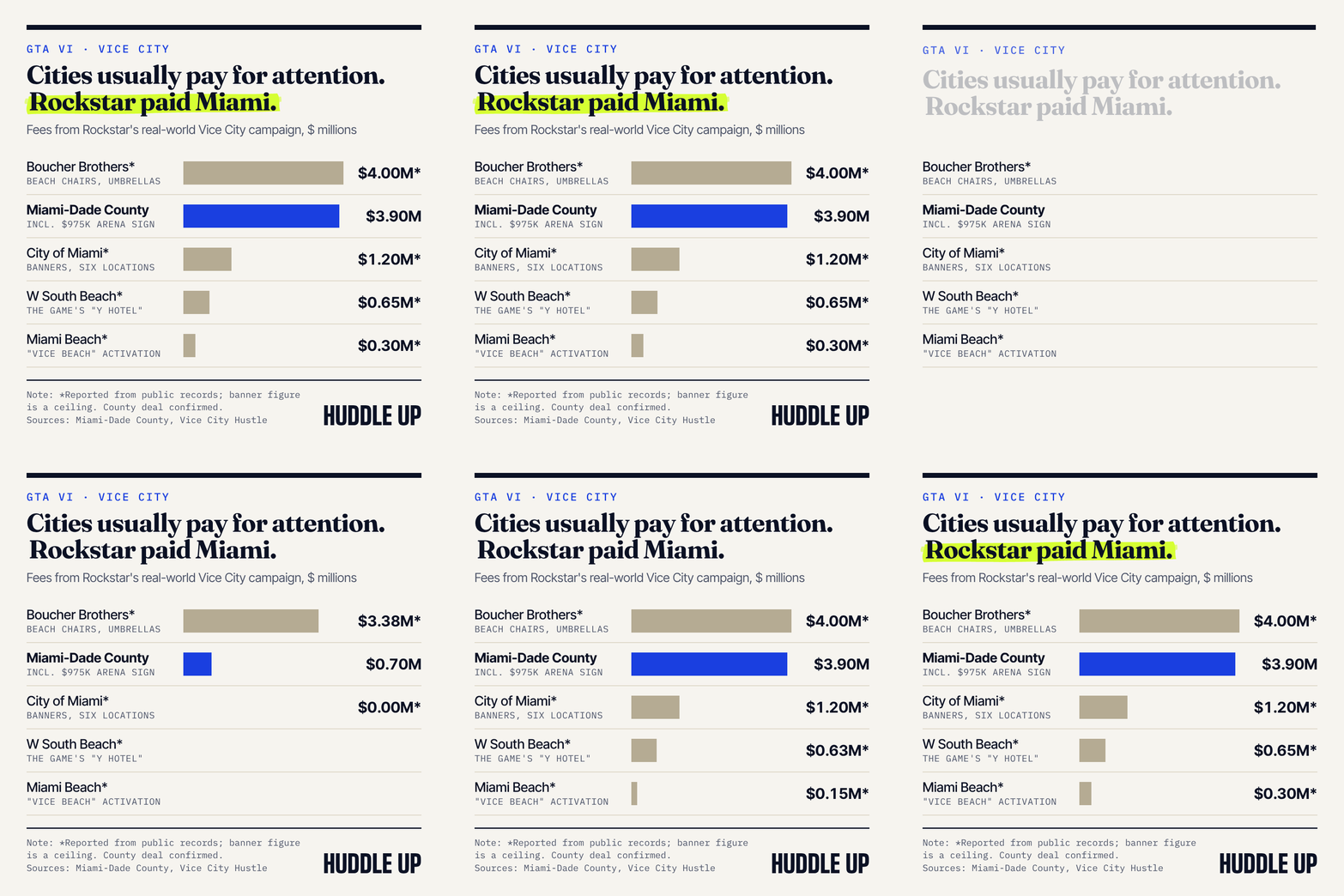
These numbers are obviously impressive. Miami’s local government made millions off the launch of a video game based on a fictional version of its city, while the Heat leveraged a design it created years earlier to generate tens of millions in additional revenue from a cultural moment they didn’t pay to create.
But there’s another angle no one is talking about. What you may not know is that Take-Two owns both Grand Theft Auto and the NBA 2K video game. That’s an important caveat because Take-Two reported softer-than-expected earnings earlier this month, partly because NBA 2K27 missed its internal sales forecast.
Why does that matter? Well, think of it as a chess move. Many people will say that the collaboration between Grand Theft Auto and the Miami Heat was a win-win. It was. Grand Theft Auto received marketing help to boost sales; the Miami Heat turned that attention into additional game-day revenue. But beyond that, Take-Two can now leverage that same “Vice City” branding in its NBA 2K video game.
Take-Two has added in-game rewards, including the same Vice City jersey the Heat sold last night, and is even releasing an entirely new “Vice City” edition of NBA 2K27 later this month, with Heat player Bam Adebayo on the front cover.
This is a first-of-its-kind collaboration between 2K and Rockstar Games. It is only possible because Grand Theft Auto worked with the Miami Heat on last night’s promotion, and Take-Two now hopes to leverage some of Grand Theft Auto’s momentum to support one of its existing but underperforming franchises.
If you enjoyed today’s newsletter, share it with a friend.