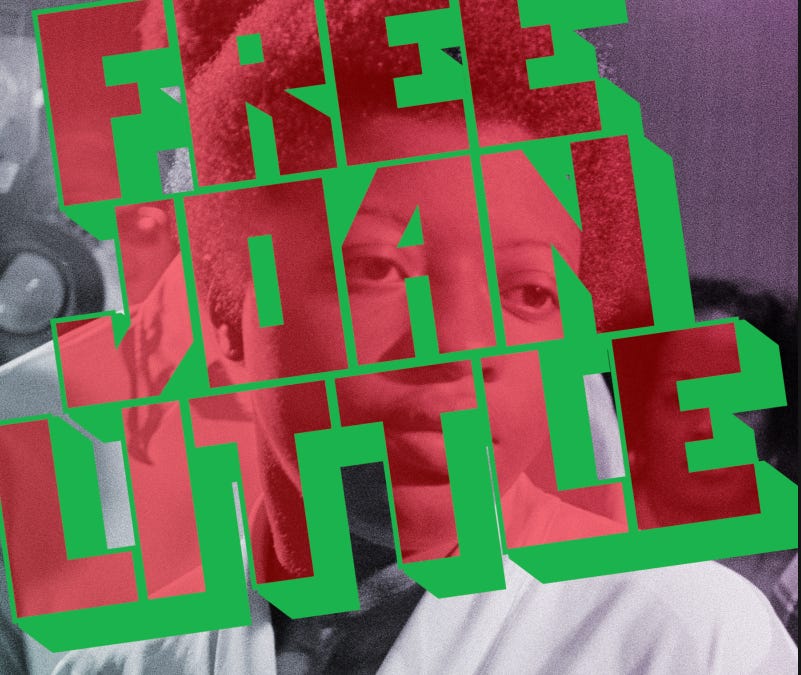
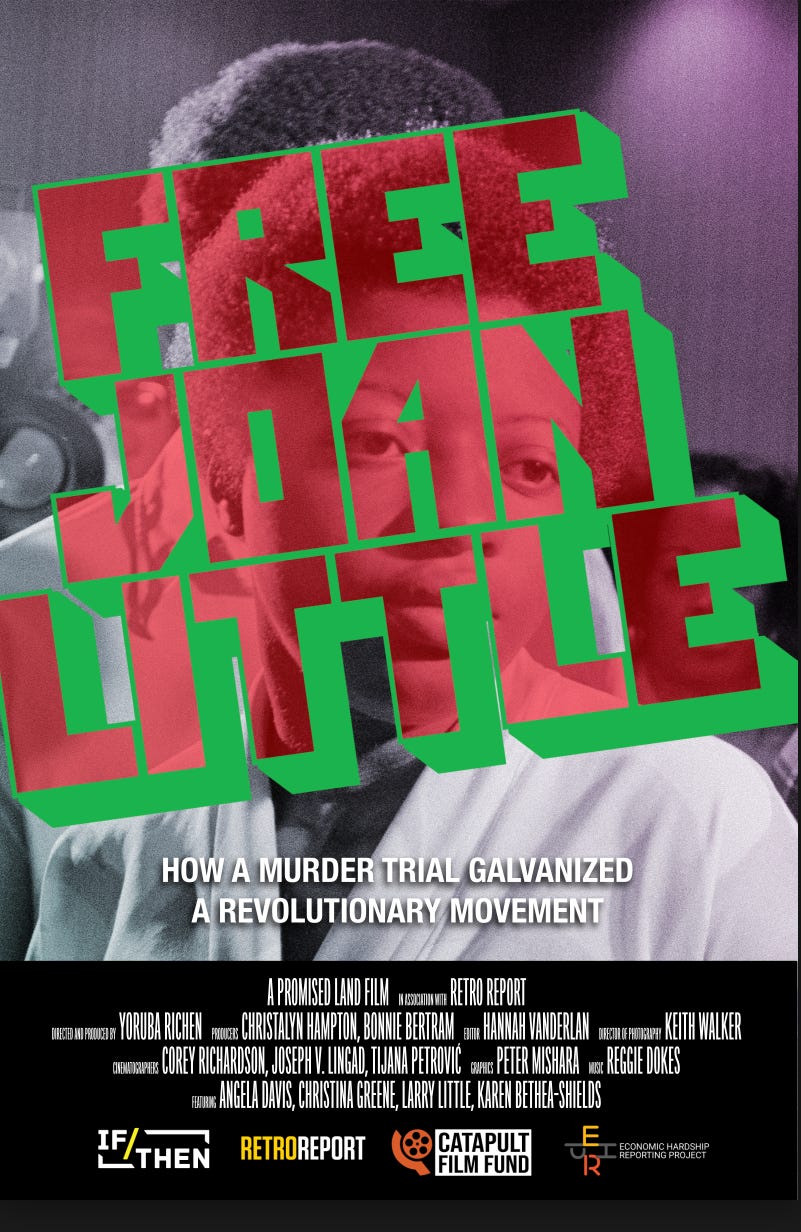
In this vHopeful Conversation, I speak with Peabody Award-winning filmmaker Yoruba Richen about her powerful documentary short, Free Joan Little, and the extraordinary movement that rallied around a young Black woman’s right to defend herself against sexual violence. We explore how Yoruba’s work on Rosa Parks led her to Joan’s story, the archival discoveries that helped her center Joan’s voice while respecting her privacy, and the coalition-building that brought very different communities together to fight for her freedom. Our conversation also touches on William Kunstler, the power of music in movements for change, and the ongoing struggles of incarcerated women. At its heart is a question that feels urgent today: what can this history teach us about turning solidarity into action?
Transcript lightly edited. Podcast available on Apple, Spotify or wherever you listen on this Substack or Ted’s Hope for Film
Vanessa: I am extremely excited to be joined by Yoruba Richen, the Peabody Award-winning documentary filmmaker whose work includes The Rebellious Life of Mrs. Rosa Parks and American Coup: Wilmington 1898. Her new documentary short, Free Joan Little, takes us inside a landmark trial and the movement that grew around a young Black woman’s fight for her life.
In 1975, Joan Little was acquitted of murder after arguing that she had killed a white jailer in self-defense against sexual assault. The film brings us into a history where racial justice, women’s rights, and the rights of incarcerated people meet, with one woman’s voice at its center. Yoruba, thank you so much for joining me.
Yoruba: Thank you so much for having me, Vanessa.
Vanessa: Yes, and since we’re gonna not share my long-winded take on how to pronounce your name, should we just talk about your name for a second? Because it’s a wonderful name. And as a Mandarin Chinese speaker, I looked at your last name and thought, “Ooh, wow, it’s Mandarin Chinese,” but it’s not.
Yoruba: Absolutely. Yeah, it’s not. So Yoruba, my first name, was given to me by my parents. And some of your audience might know; many don’t, and that’s fine. But Yoruba is the name of a people, a religion, a language in Nigeria. And they’re kind of known here in the West for their visual artistic practice. So you’ll find a lot of Yoruba sculptures in museums. But yeah, that’s who I’m named after.
Vanessa: And your last name, Richen, is not pronounced like it’s Mandarin.
Yoruba: Exactly. My dad’s name is Neville Richen, and he’s from Trinidad.
Vanessa: Yeah, very cool. Okay, let’s focus on this amazing documentary short that I feel so privileged to have watched, and I look forward to everyone watching and discussing. You came to Joan’s story through your work on Rosa Parks and her activism against sexual violence. What did following that connection reveal to you that you hadn’t understood about the history of the civil rights movement?
Yoruba: Yeah, really great question. When I started making the Rosa Parks film, called The Rebellious Life of Mrs. Rosa Parks, based on the book of the same name, my co-director Johanna Hamilton and I really worked, as the book does, to reveal, really for the first time, at least in media, Rosa’s radical activism all through her life.
So to really take her off the bus and look at, you know, her work pre-Montgomery bus boycott and to the end of her life, which she, you know, spent most of her life actually in Detroit. And we discovered, and I knew a little bit about this but really not the extent, that Rosa had a lifelong history of exposing sexual violence against Black women. The first time we, you know, see her doing this work is in the 1940s in Alabama, investigating the case of Recy Taylor, a young Black woman who was raped by white men, threatened with death if she spoke out.
And that also brought a coalition of groups to fight for justice for Recy, for these men to go to trial. And it was, you know, white communists, Black activists, NAACP folks. And justice for Recy never came. She died, you know, without ever getting justice.
Thirty years later, in the case of Joan Little, Rosa heard about the Joan Little case, and she started the Free Joan Little campaign in Detroit. And that’s how I found out about the case. And I remember sitting in the office, and I remember because it was during COVID, so it was one of the few times we were in the office, looking through this footage of this case and being like… That wasn’t even that long ago. 1975 is when the trial happened.
And being amazed that I did not know this story, that there was so much footage, that it was really internationally covered, and that, again, it brought together these diverse groups to fight for justice for Joan and to fight for her life.
And so I think it reveals a lot about the civil rights movement, to your question. First off, how civil rights leaders get boxed in and made less… I call it the Disneyfying of our leaders, get made less radical than they really were. You know, Rosa also was a lifelong believer in self-defense. So she, you know, was a total admirer of King, and they were friends. But she also aligned herself with Malcolm X, with other more “radical,” and I say that in quotes, members of our Black freedom struggle, which I call it because it’s not just, you know, the civil rights movement. So I think it reveals how much more expansive our movement was and is, and that it requires lots of different tactics. And I think with Joan Little’s case, you see that embodiment of the different tactics: legally, coalition-wise, movement-building, you know, well-known people speaking out and bringing attention to the case. So I think it actually shows all those different strands.
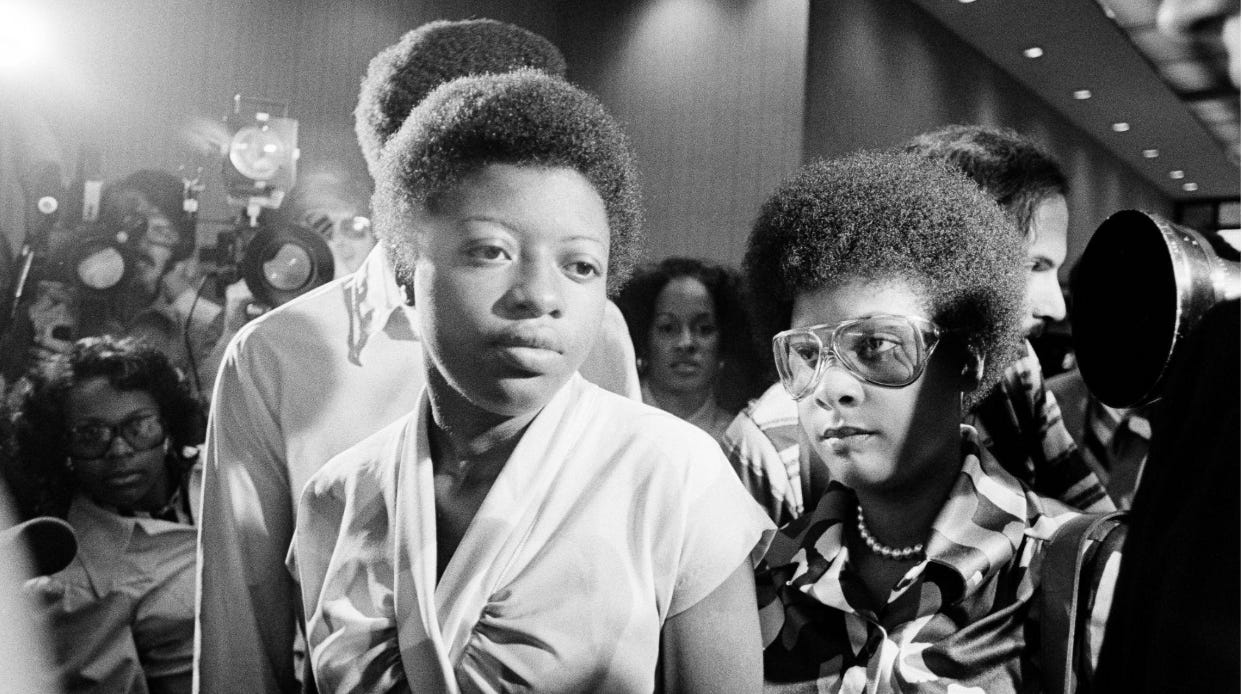
Vanessa: Yes. And you’ve spoken about respecting Joan’s wish not to revisit the most traumatic period of her life. And I wonder how you shaped your story in honoring her privacy but also centering her voice.
Yoruba: Yeah. So Joan hasn’t spoken publicly for 30 years. We did, you know, reach out to her to see if she wanted to be a part of the film, continually throughout the process. And the participants in the film also reached out to her as well: Larry Little and Christina Greene, who wrote the book, and Karen Bethea-Shields, her lawyer. And, you know, she’s chosen not to, which, as you said, I totally respect and understand.
But I did know that my vision was always to have Joan’s voice tell her story as much as possible. And when we discovered the archive that was there, and archive that hadn’t really been seen before. One vital piece of the archive was actually sitting in the basement of a Black Panther volunteer in North Carolina for many years. And he filmed, really filmed the movement on the ground. Incredible footage, and just really beautiful. And so we were able to use that.
We also discovered that there were tapes that were recorded in the early ’80s because a man named James Reston Jr. wrote a book about the case. So he interviewed, you know, all the players, and so we had that audio.
And then we had to figure out how we were gonna tell the courtroom scenes. We had the transcripts. Now, obviously, it wasn’t recorded, and there was no video. But using all these different elements so that Joan’s voice and her words were the heart of the story was really something that was top of mind, and what I tried to do in making the film.
Vanessa: Side note, I noticed in your film there was a photo of one of the defense lawyers and William Kunstler. And I don’t know if you know, but I produced the films by his daughters, Emily and Sarah, one about…
Yoruba: I love Emily and Sarah, and I love that film. I remember seeing that film. You know, my mom was a writer. I grew up here in New York. She was a playwright and always very political in her work. I really feel like I… She’s no longer with us, but I feel like I’m carrying on her work. And I remember she was the first one to tell me about William Kunstler. We would see him on TV, you know.
Yeah. And so I always, from a very young age, had admiration for him and his work and what he did. And I don’t think I met Emily and Sarah [until] after seeing the movie, but loved the film. So congratulations. What an important film. Important, you know, hero for so many of us.
Vanessa: Thank you. Yeah. He defended Martin Luther King and the Black Panthers and the Chicago Seven, and he was part of the American Indian Movement [as a lawyer and ally]. Full-on…
Yoruba: Yeah. Yeah. Full-on. Yes.
Vanessa: But he didn’t end up defending Joan Little [in the 1975 murder trial]. He was interested in supporting, yeah.
Yoruba: Right. Exactly. And so you saw the picture with him there. And there were other lawyers, too, who came in early on the case. But it was really her, you know, Karen Bethea-Shields and Jerry Paul, an unsung hero, actually, because he did so much work in the South with the Black community. And he was really… He’s from there, you know. He was a good old boy from that area, and he got a lot of pushback.
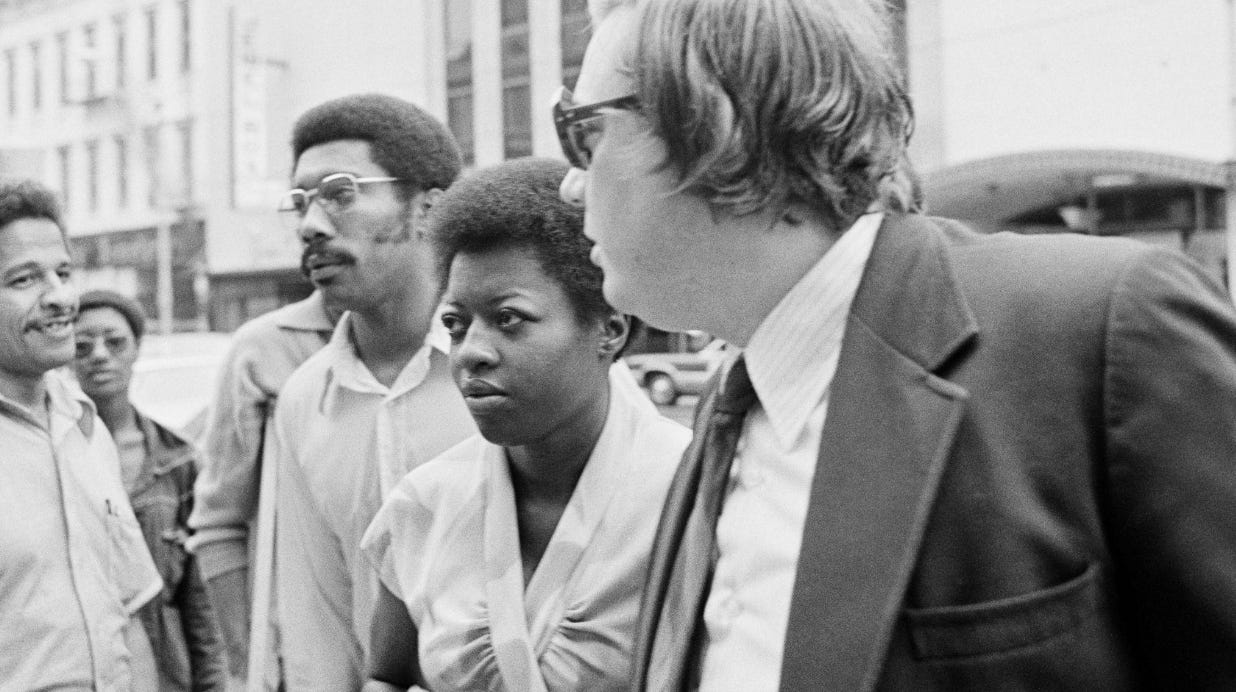
And my understanding, I don’t know all the details, is that he really, you know, was ostracized by his family, by the people around him, and it really affected him personally. So he’s a pretty amazing, you know, was a pretty amazing person. And he was the one who brought Karen Bethea-Shields onto the case. And she was one of the first Black law students to graduate from Duke Law. And Karen’s amazing. She still practices in Durham, North Carolina.
Vanessa: Yes. She’s amazing, and she’s wonderful to have in your film, an important presence. So this campaign, as you’ve said, brought together different movements that didn’t necessarily agree with one another: Black Power organizers, feminists, LGBTQ activists, labor. What did you discover about the actual work of building that coalition, beyond just everyone coming together?
Yoruba: Yeah, well, one of the things, and I knew this, but it was definitely sort of emphasized in talking to the people and reading about the movement, is, you know, it takes a lot of money to create a freedom movement. And having these different groups come together, and different factions be able to organize and raise money was really key to what happened and to being able to do the work that they did in the trial.
And the other part, too, is that Larry, who was the co-creator, of the Free Joan Little movement in Winston-Salem, which is where he’s still based, that he went to these different groups. He went to NOW, the white feminists. He tells this funny story, we couldn’t use it in the film, where he literally went down to Mississippi, and I guess it was, I think it was a union group. And he was like, you know, “They brought me to the backwoods in Mississippi.” He’s like, “I’m gonna get killed. This is, like, crazy.” And he met with this white organization and got them on board to fight, to come out in support of Joan Little.
So it was really on-the-ground work, which I think is very interesting. And, you know, maybe we can learn some lessons from that today. Going into spaces where you think you might not be welcomed. You may not agree on everything, but this unites and brings you together. Going down and being on the ground. I think those are things that we could learn and take from today.
Vanessa: Yes. You have an incredible song in the film, Bernice Johnson Reagon’s song, that became part of the movement. And what did you feel that could convey that just a speech or a news report can’t?
Yoruba: Yeah, well, I mean, first of all, I just have to say that this is now the third Sweet Honey [in the Rock]/Bernice Johnson Reagon song that I’ve had in my films. So obviously, you know, there’s something there. But I knew I had to have this song. When I found out that she had written a song about her, I mean, it was a rallying cry.
And as we know, music can do that like nothing, nothing else. It’s really, really powerful. We were so lucky, in one of our screenings here in New York, that we had her daughter, Toshi, do the Q&A with me the first night. And it was just incredible, Toshi talking about how she remembered when her mom wrote that song.
And yeah, it’s music, you know. Music is everything, and music has the power to move us in ways, you know, and politically in ways. And obviously, at that time, that was really happening. It’s one of the things that, when I look and think, you know, what time period would I have loved to live in, I think of the ’60s and the ’70s because of how those politics and those movements for change were so embedded in our popular culture.
Vanessa: Absolutely. Actually, that’s one of the upsetting elements in the William Kunstler documentary that Sarah and Emily made about their dad, is that when there was a movement in the ’60s and ’70s, he could get a lot more done. And when it started to disappear, it just becomes much harder.
Yoruba: Yeah, absolutely.
Vanessa: So Joan’s acquittal didn’t necessarily mean she could immediately walk free. And you’ve spoken about how she hasn’t spoken about this in 30 years, and I’m wondering how you thought about shaping this story and bringing it into the present, as you do.
Yoruba: Yeah. So I knew that I wanted it to be a short. This isn’t, you know, a biography of her. It really looks at the trial, the impact, and her legacy. But we knew we did have to address that these issues around incarceration, around sexual assault, race, you know, are still obviously with us today.
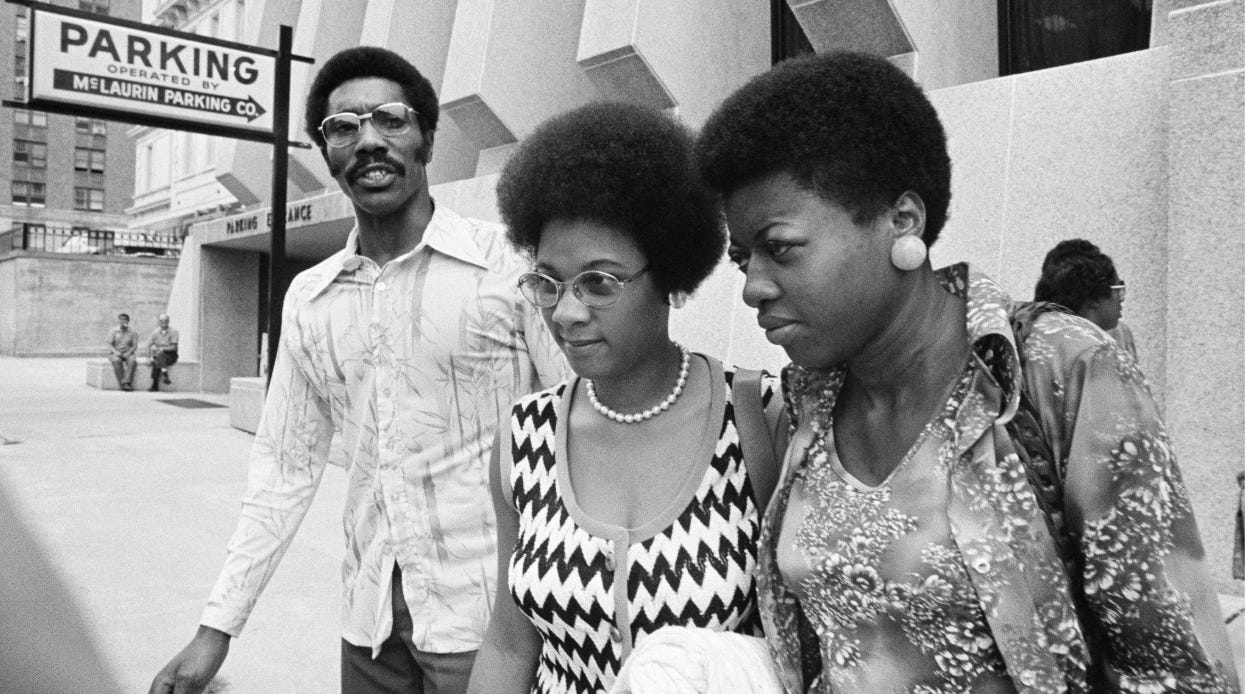
And so we have a moment at the end of the film where we have current survivors testifying, you know, who are survivors of sexual assault in prison.
Vanessa: It’s rampant. It’s totally rampant. I mean, it’s just…
Yoruba: Yeah. Oh my gosh. Absolutely. Men and women, women and men.
Vanessa: Right. But it’s a sick kind of joke among men who go to prison, or that we think about in association with men. It almost always makes it sound like it’s inmate-to-inmate raping. Like it’s a joke. But it’s real! And for women, really serious.
Yoruba: Right. Yeah. But when you put people in cages and dehumanize them, I don’t know what else you’re gonna get, you know, and lock them away from society.
I’ve done some really powerful Q&As with organizations like Survived & Punished, Release Aging People in Prison. We’re actually doing another screening near the Bedford women’s prison next week. I was onstage with formerly incarcerated people who, you know… It’s really powerful for them to see the film, respond to it, and talk about how this continues today, and that there is no rehabilitation that is a part of it. That’s not what this is about.
And when you put people in cages like that, then people act like… You know, that’s how people are gonna act. I mean, that doesn’t excuse it, but if we really wanna deal with being the country with the largest number of people incarcerated, you know, with women, at least at some point, recently, being the fastest-growing population that was incarcerated… We have to understand, we have to really reassess our whole system here.
Vanessa: Yes. Thank you, Ava DuVernay. Also, there’s power in these films. These films can make a difference. .
Yoruba: Yes. Absolutely. Bryan Stevenson. Yeah. I mean, the one thing I will say that to me seems different, even in my own time on this earth, is that we do have these stories and these narratives that are out here in a way. I mean, you mentioned Ava’s film really reshaped how so many people who were not even thinking about this understood the carceral system.
Vanessa: Yeah.
Yoruba: We are talking about it more than ever. And, you know, so that’s something.
Vanessa: Mm. Yes. And when you think about legacy in relation to your film, it feels like the title, Free Joan Little, it’s a demand. It’s not just a title. What do we hope is gonna come from the impact of this film, which really needs to be out there and seen and make its impact?
Yoruba: It’s a demand, exactly. Yeah. Well, one of the most exciting things about making this film is the relationships that we’re starting to build with these kinds of organizations who are working in all different ways. You know, from, as I said, Release Aging People in Prison, which focuses specifically on the elder population, in prison, to California Coalition for Women Prisoners, which focuses on women.
Building these kinds of community spaces, events, to inspire people, figure out how the film can be used to do many different aspects of the anti-incarceration work that needs to be done. You know, I’m not an expert myself, but the partnerships that we have made, and that I want to continue to grow. I’m just so excited about being able to do it. And it’s a short, so it’s useful for folks. Yeah, so that’s what I’m really excited about.
Vanessa: You did a brilliant job directing it. It’s powerful, it’s moving, it’s so well told. It’s ultimately inspiring, despite being a very, very serious and ongoing issue we should all be trying to do something about, everything we can do. And we’re gonna tell people that they can find the film on the portal. That means Academy voters, pay attention.
Yoruba: Thank you. Yeah.
Vanessa: But where can we tell people to see this film?
Yoruba: In the immediate, we do have screenings coming up, which we can post, in New York and L.A. And they can contact me directly for a community screening. And we’ve been doing amazing community screenings, so that’s, as I said, one of the really exciting parts about it.
And then next year, in 2027, it will premiere on PBS.
Vanessa: Great.
Yoruba: In April, on the Reel South strand of PBS, which is a national strand. So we’re really excited about that too.
Vanessa: That’s amazing. Congratulations. That is so well deserved. And before April, when it’s available on PBS, we want everyone to start talking about it, get out there, build their community and their community screenings.
Thank you so much for your amazing work.
Yoruba: Absolutely. Thank you, Vanessa.
Director and Producer Yoruba Richen is an award-winning documentary filmmaker who won a Trailblazer Award from Black Public Media. Her most recent film, “American Coup: Wilmington 1898,” was nominated for a Peabody Award. Her film “The Rebellious Life of Mrs. Rosa Parks” won a Peabody Award, a Gracie Award, and was honored by the Television Academy. Other recent works include the Emmy-nominated films “American Reckoning,” “How It Feels to Be Free,” “Greenbook: Guide to Freedom and “The Sit-In: Harry Belafonte Hosts the Tonight Show. Her film “The Killing of Breonna Taylor” won an NAACP Image Award. Yoruba is the founding director of the Documentary program at the Craig Newmark Graduate School of Journalism at CUNY.
WHERE TO SEE FREE JOAN LITTLE
GO TO THEIR WEBSITE FOR MORE:
https://retroreport.org/free-joan-little/